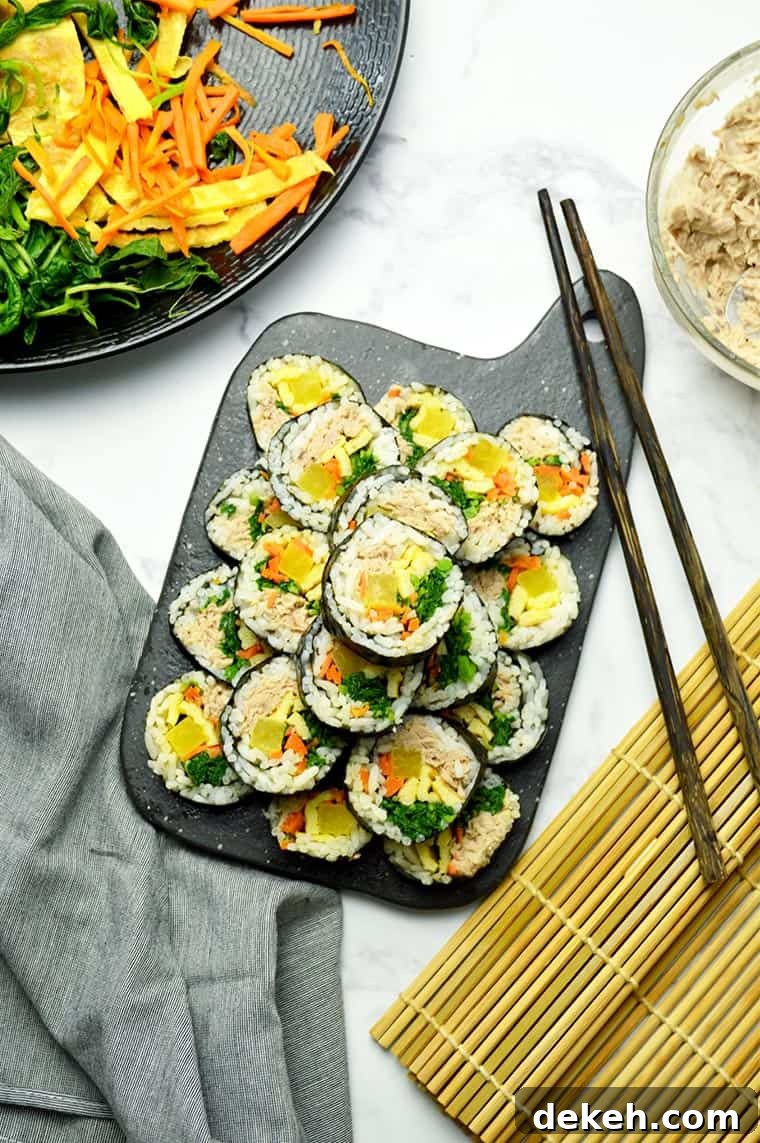
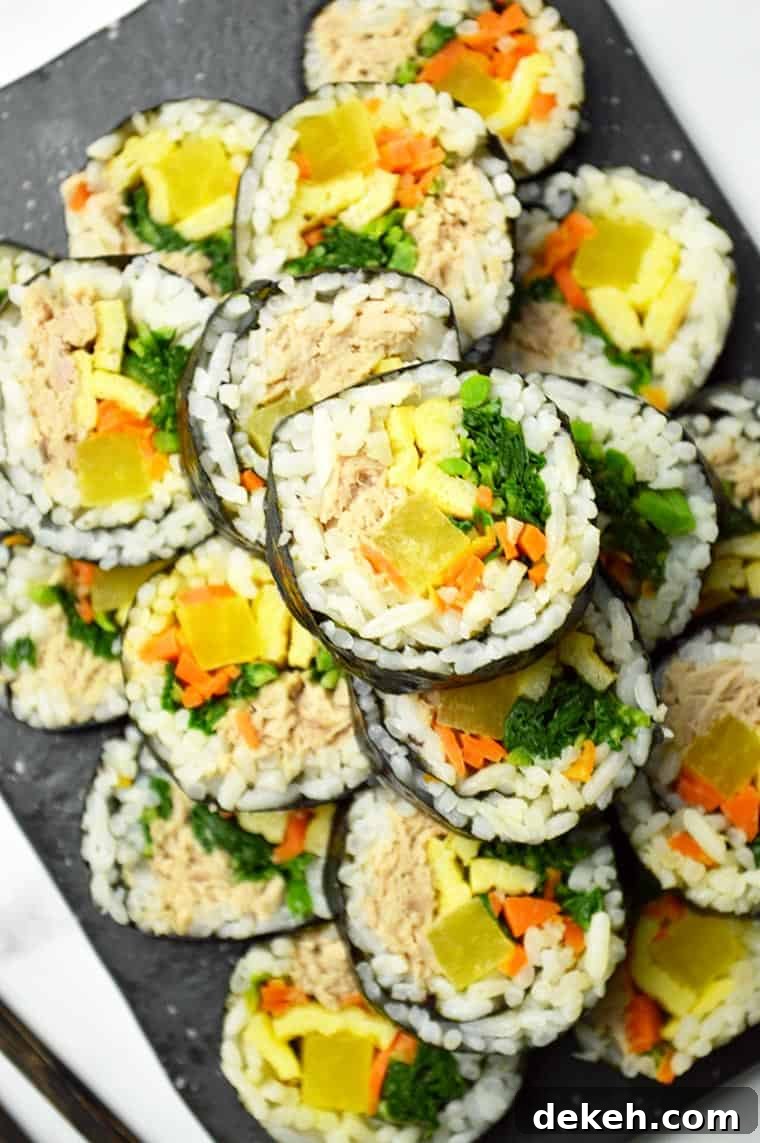
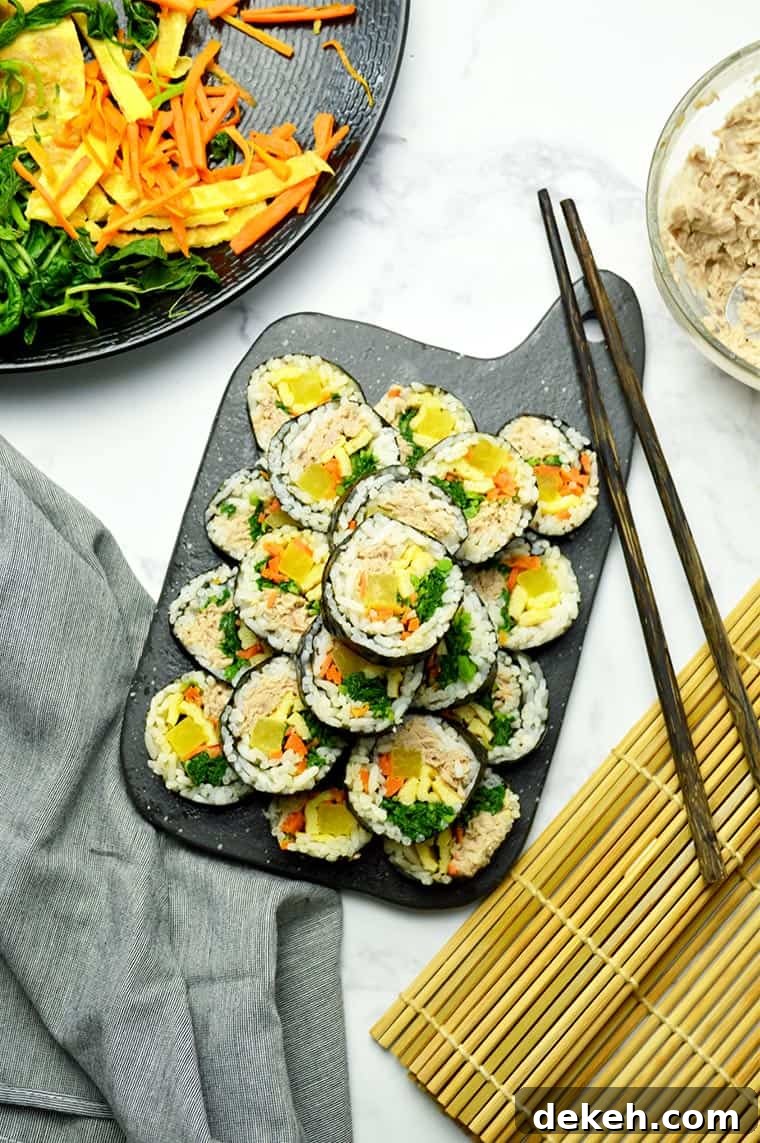
Tuna Kimbap, also known as Chamchi Gimbap (참치김밥), are flavorful and nutritious seaweed rice rolls filled with canned tuna and a variety of vegetables. These compact rolls are convenient, portable, and perfect for picnics, lunchboxes, or a simple meal at home.
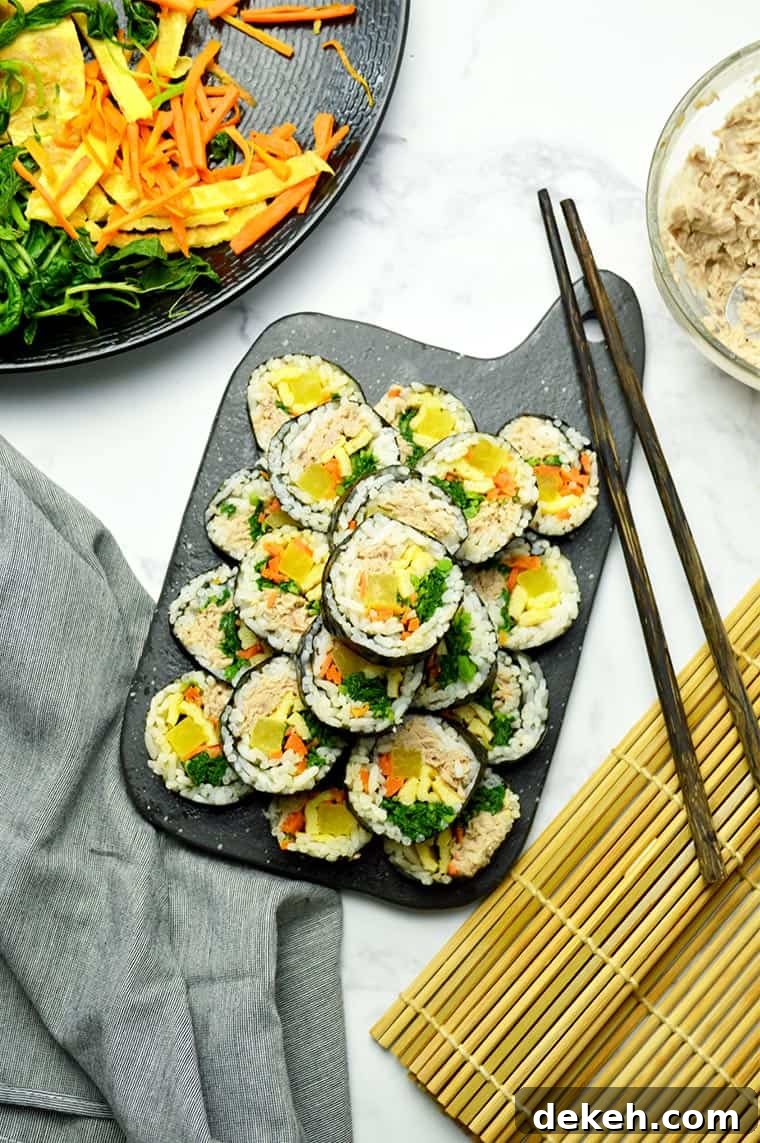
This is another easy and tasty kimbap variation. If you like classic kimbap or kimchi kimbap, you’ll enjoy this version that uses canned tuna as the main protein. Kimbap is deeply tied to Korean everyday life and celebrations alike—commonly prepared for school outings, picnics, and family gatherings, yet also sold everywhere from convenience stores to cafes.
The versatility of kimbap is one of its greatest strengths. You can adapt fillings, seasonings, and shapes to create your own signature roll. Tuna kimbap typically features a Korean-style tuna mayo, combined with rice and several pickled or fresh vegetables to give texture and bright flavor.
About Tuna Kimbap
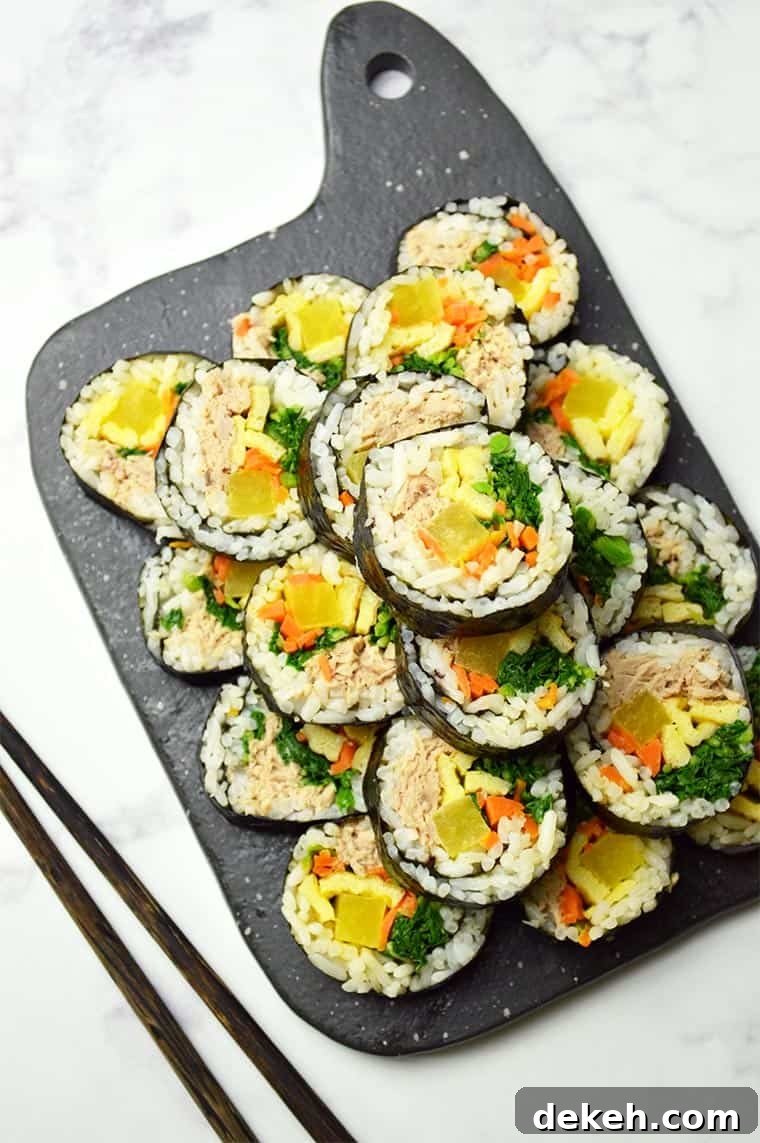
Tuna Kimbap is a modern, popular take on traditional kimbap. The filling is usually a tuna and mayonnaise mixture, lightly seasoned and rolled together with rice and vegetables. Perilla leaves are a common addition in Korea for an aromatic, slightly minty note, but other greens and crisp vegetables work just as well.
If perilla leaves aren’t available, substitute with spinach, lettuce, or other leafy greens. This recipe mirrors classic kimbap in structure but swaps bulgogi or other proteins for a simple tuna mayo. Another must-have for authentic texture and color is danmuji (yellow pickled radish), which provides a crunchy, sweet-sour contrast.
What Fillings Go With Kimbap?
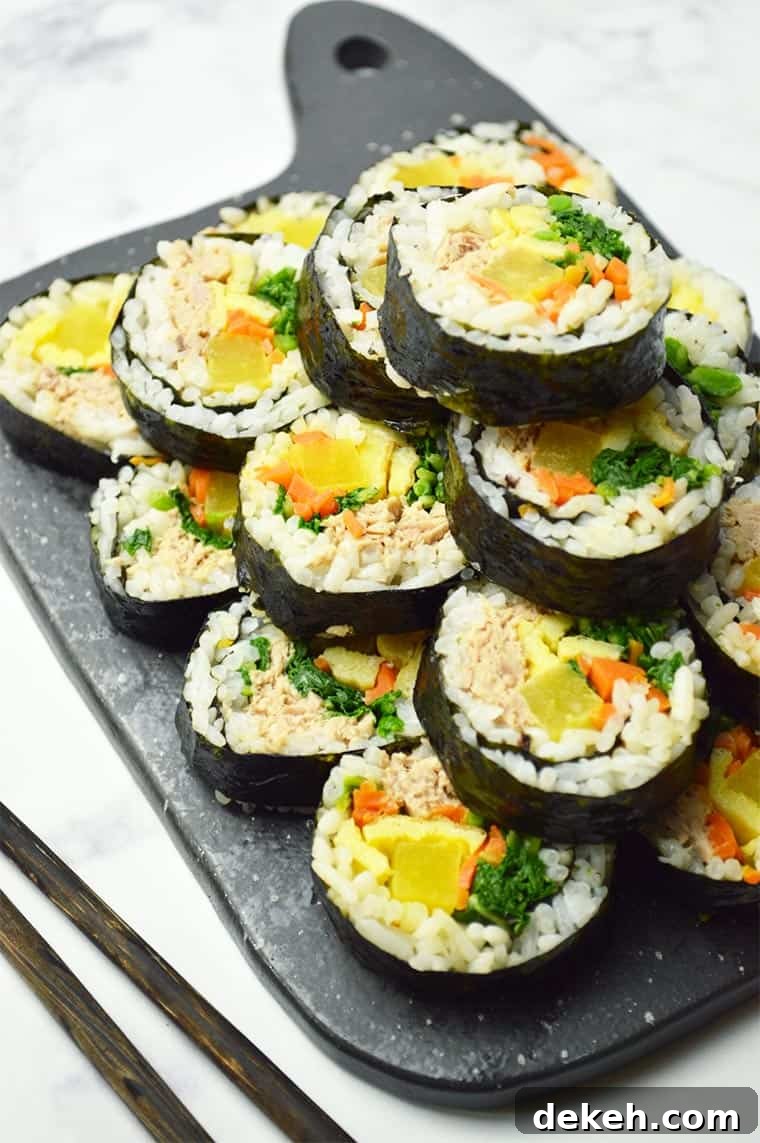
Kimbap is highly customizable. As long as the ingredients can be layered and rolled into neat cylinders, you can mix and match to suit taste and availability. Common components include:
- Rice: short- or medium-grain white rice (or brown rice for a whole-grain option).
- Protein: canned tuna, bulgogi or ground beef, cooked chicken, omelette strips, ham, fish cake, imitation crab, or cheese.
- Vegetables: kimchi, julienned carrot, blanched spinach, zucchini, cucumber, perilla leaves, burdock root, danmuji (pickled radish), or daikon.
More Korean Recipes
If you enjoy Korean flavors, here are some classic dishes to try alongside kimbap: kimchi pancake, bibimbap, kimchi fried rice, rice cake churros, and rabokki. These dishes highlight savory, spicy, and comforting elements common in Korean home cooking.
- Kimchi Pancake
- Bibimbap
- Kimchi Fried Rice
- Rice Cake Churros
- Rabokki
Tuna Kimbap
Ingredients
- 5 sheets roasted seaweed
- 4 cups steamed short grain white rice
- 2 tsp sesame oil
- 1/2 tsp salt
- sesame oil, for serving
Tuna Mayo
- 2 cans (340 gr) tuna
- 2-3 tbsp mayonnaise
Egg Strips
- 3 eggs
- 1/4 tsp salt
Vegetables
- 1 bunch spinach
- 1 medium carrot, julienned
- 1 tsp sesame oil
- 1/2 tsp salt
- vegetable oil, for frying
- 5 strips danmuji / pickled radish
Instructions
Rice
-
Place freshly cooked rice in a large bowl. Gently fold in 2 tsp sesame oil and 1/2 tsp salt with a rice paddle. Allow the rice to cool until it is warm but not steaming, then cover and set aside.
Tuna Mayo
-
Drain the tuna thoroughly and press with a spoon to remove excess liquid.
-
Mix the drained tuna with 2–3 tbsp mayonnaise until evenly combined. Set aside.
Egg Strips
-
Beat the eggs with 1/4 tsp salt in a medium bowl.
-
Heat a non-stick pan over low–medium heat with a little vegetable oil. Pour the egg mixture and spread into a thin, even circle. When the bottom is set, carefully flip and cook briefly. Remove and let cool, then cut into 1/2-inch strips.
Vegetables
-
Sauté julienned carrot with a few drops of vegetable oil and 1/4 tsp salt until tender. Stir in 1/2 tsp sesame oil and set aside.
-
Blanch spinach in boiling water briefly, then plunge into ice water. Squeeze out excess water and season with 1/2 tsp sesame oil and 1/4 tsp salt. Set aside.
Assemble
-
Place a sheet of nori on a bamboo mat, shiny side down. Spread about 3/4 cup of rice evenly over the nori, leaving a 1-inch border at the top. In the center, layer tuna mayo, a few egg strips, carrot, seasoned spinach, and a strip of danmuji.
-
Using the mat, roll the nori tightly over the fillings, pressing gently to shape a firm cylinder. Remove the mat and repeat with remaining ingredients to make a total of five rolls.
-
Brush the finished rolls lightly with sesame oil. With a sharp knife moistened or wiped clean between cuts, slice each roll into 1/4-inch bite-size pieces. Serve immediately or pack for lunch.