Looking to plant tomatoes in your garden this early summer? One of the first decisions is how far apart to space your plants. There’s no single right answer, but a few key factors will help you choose the best spacing for healthy plants and a generous harvest. Read on for clear, practical guidance.
A common guideline is to plant tomatoes 18 to 24 inches apart. That range works for many situations, but the ideal spacing depends on whether you’re planting in containers or the ground, the tomato variety (determinate vs. indeterminate), plant size, and the kind of support you plan to use.
Tomato spacing by plant type
How does spacing vary by type and variety? Tomatoes are typically classified as determinate or indeterminate, and they range from compact varieties to large, vigorous plants. Variety and growth habit strongly influence how much room each plant needs to grow well and produce fruit.
Determinate vs. indeterminate varieties
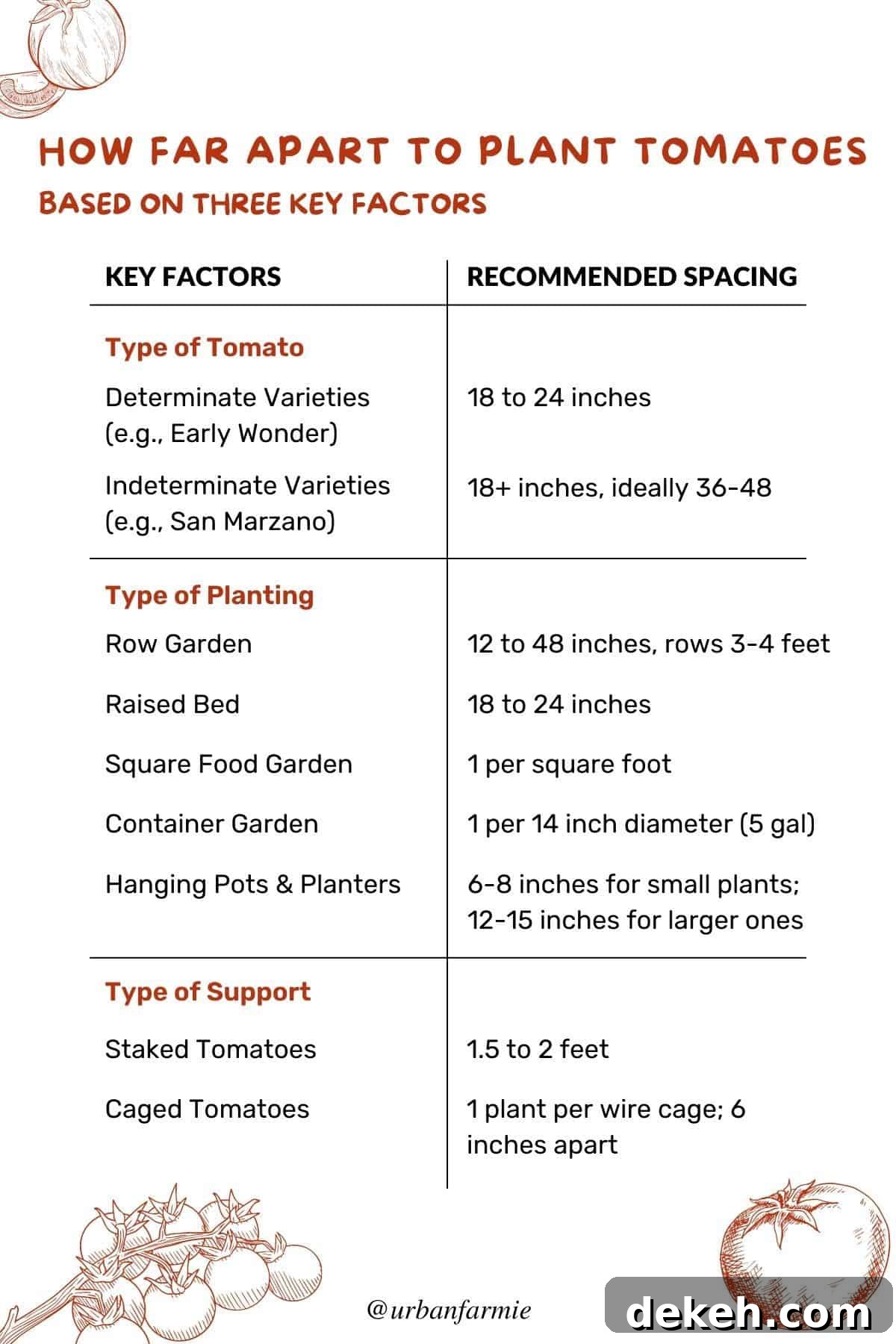
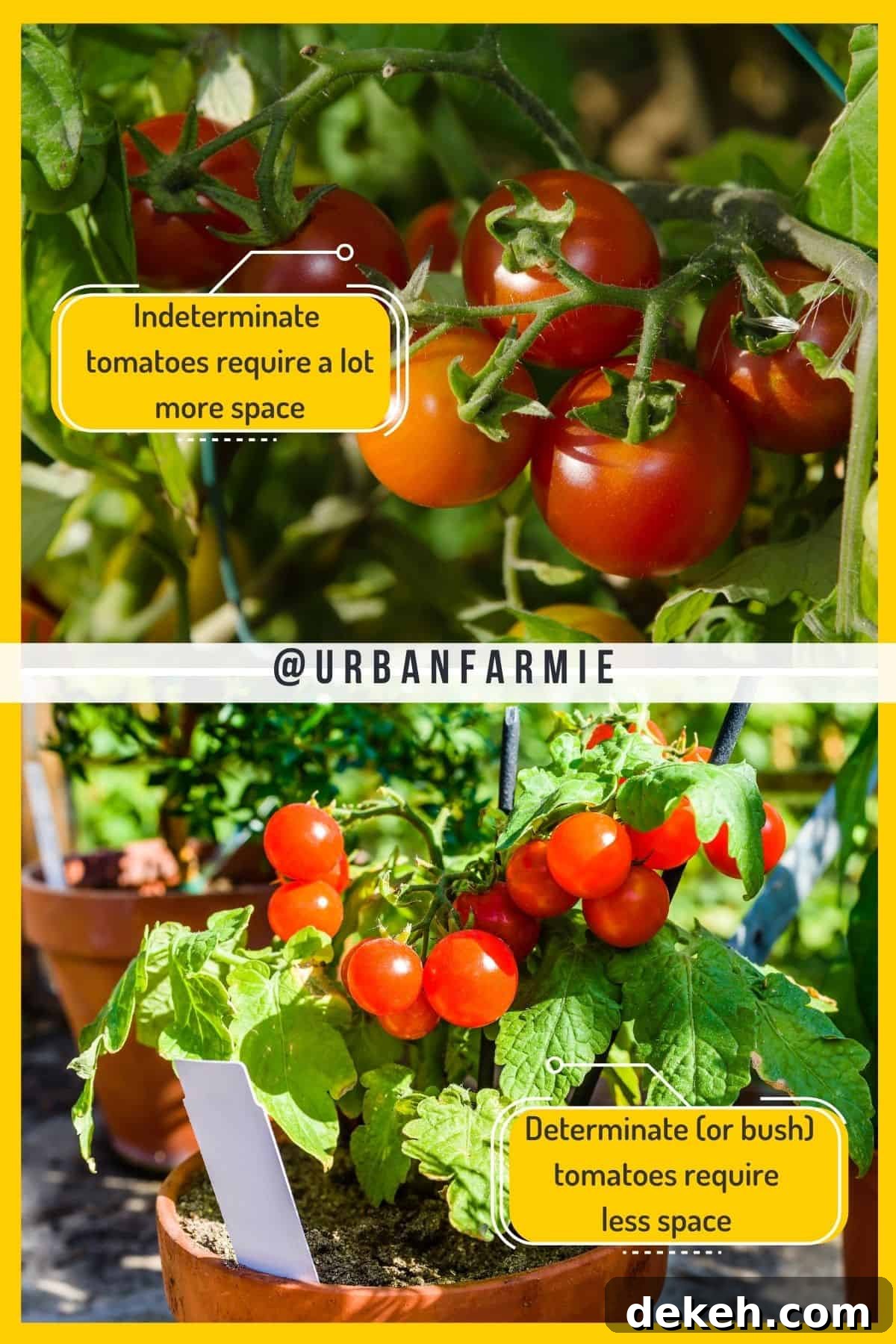
Determinate varieties are generally more compact and produce most of their fruit within a shorter window. They need less space and are well suited to closer spacing. If planting from seed, small determinate seedlings can start 1.5–2 inches apart in trays; when transplanting starts into the garden, plan on about 18–24 inches between plants.
Indeterminate varieties keep growing and producing fruit throughout the season until frost. They tend to be larger and more vigorous, often producing multiple stems and heavier foliage. For indeterminate plants, allow more room: at least 18 inches, but preferably 3–4 feet between mature plants in open beds or rows to ensure good airflow and sunlight.
Compact tomatoes vs. large tomatoes
Compact types like cherry and grape tomatoes typically do well spaced 12–18 inches apart. Larger slicing tomatoes, such as beefsteaks or other big-fruited varieties, usually need 18–36 inches or more depending on how vigorous the variety is and how you train it.
Tomato spacing by garden type
Where you plant tomatoes affects spacing. Beds, rows, and containers all have different space limitations, so choose varieties and spacing that fit your garden layout while leaving enough room for roots, air, and light.
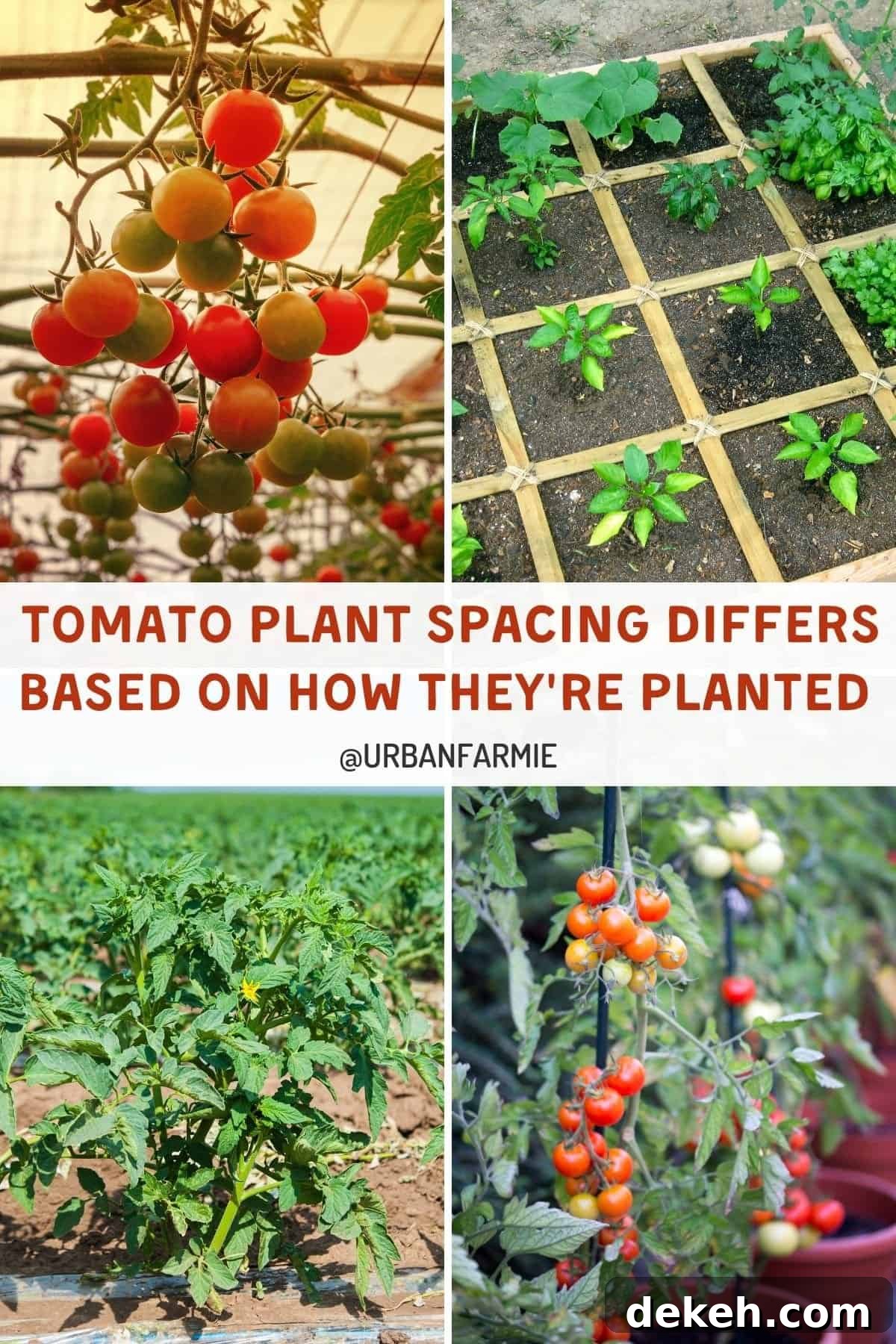
Planting in a traditional row garden
In a row garden, spacing depends on the variety and how you plan to manage the plants. A broad range is typical: 12 to 48 inches between plants, with rows at least 3 to 4 feet apart. If space is limited, choose smaller varieties that can be planted closer together (12–18 inches). Larger or indeterminate plants need more space to avoid crowding.
Spacing in raised beds
Raised beds work well with 18–24 inches between tomato plants. That distance lets the plants develop without becoming too crowded. If you plant several in a single bed, stagger them or alternate sides to improve air circulation and reduce disease risk.
Square foot gardening spacing
In square foot gardening, the typical guideline is one tomato plant per square foot. This compact method works best with determinate or compact varieties. Arrange plants evenly across the bed so each receives adequate light and airflow.
Container garden spacing
For containers, use one plant per pot that is at least 14 inches in diameter and five gallons in volume. Larger containers can accommodate bigger varieties, but crowding reduces root space and increases competition for water and nutrients. Mulch or landscape fabric can help control weeds in container setups.
Pots and hanging baskets
Small containers or hanging baskets are best suited to compact varieties. In tight pots, leave about 6–8 inches between plants; in larger pots, 12–15 inches is preferable. Use stakes or supports as needed and rotate containers to keep growth balanced.
Whatever your garden type, give plants enough space and attentive care to encourage healthy growth and a reliable harvest.
Spacing based on support structures
How you support tomatoes affects spacing. Plants trained to grow upward on trellises or towers can be placed closer together than unsupported or sprawling plants, because vertical systems use airspace efficiently. In contrast, cages and stakes that allow plants to spread need more horizontal room to avoid crowding.
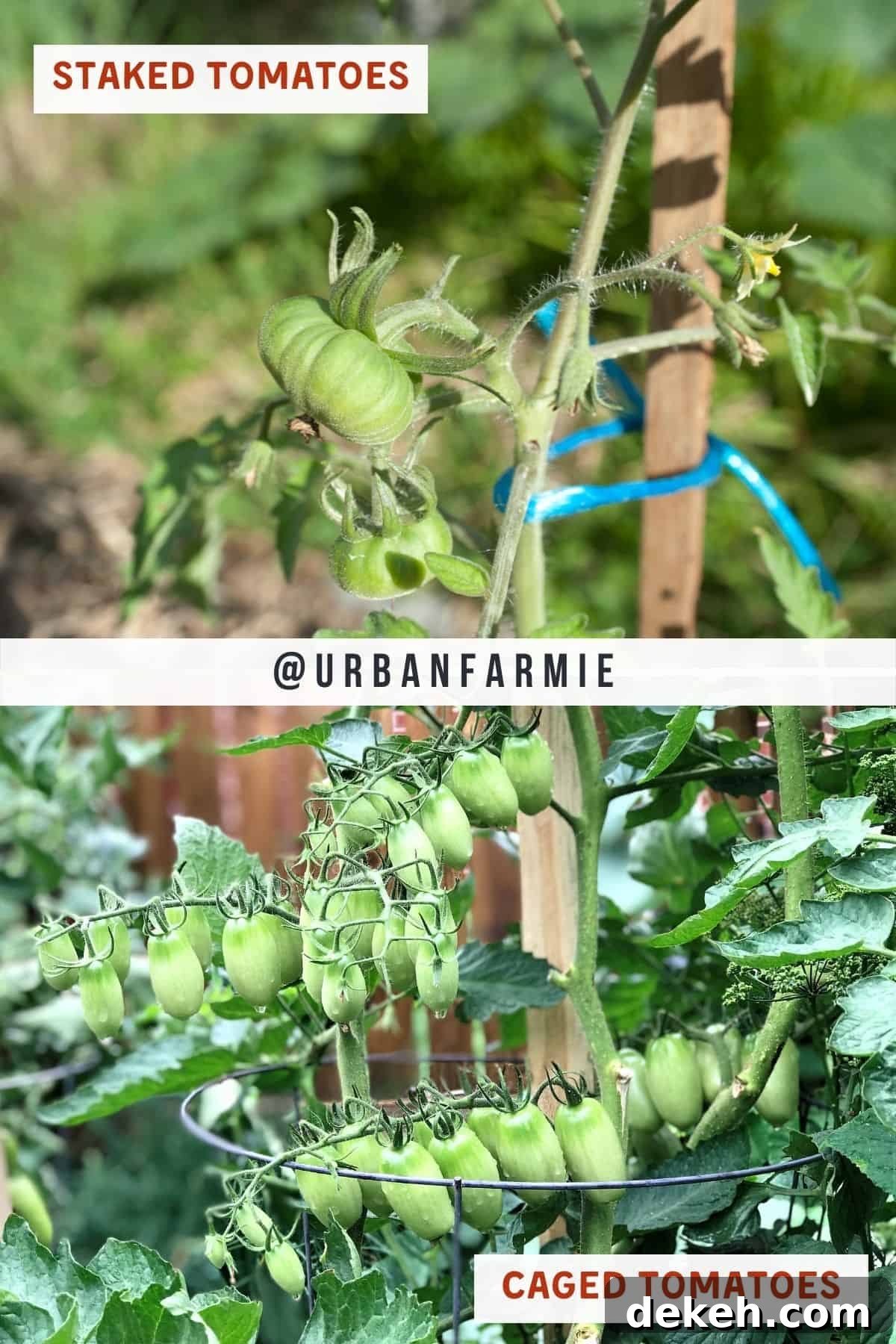
Spacing with wire cages
Wire cages are a popular, low-maintenance support. Plan to use one plant per cage and keep cages at least 6 inches apart; however, for larger varieties allow more space so foliage and fruit are not crowded. The mature plant size should guide final placement.
Spacing for staked tomatoes
Staked tomatoes generally do well spaced 18–36 inches apart along the row. For reliable yields, a common recommendation is to space staked plants 1.5–2 feet apart, but adjust according to plant habit—bushier determinate varieties need less room than sprawling indeterminate types.
Why proper spacing matters
Correct spacing improves plant health, fruit production, and accessibility. Properly spaced plants get better light, water, and nutrient access, experience improved pollination, and are less likely to suffer disease because air circulates more freely. Spacing also makes it easier to reach plants for pruning, harvesting, and pest management.
Plant health
Space reduces competition for resources and lowers disease pressure by improving airflow and drying between watering or rain events. Healthy plants produce higher-quality fruit and are easier to manage throughout the season.
Fruit production and growth
Too-close spacing can limit yields because plants compete for light and nutrients; too much empty space can reduce total output per area. Aim for the balance that suits your variety and garden layout to maximize fruit without stressing plants.
Ease of access
Proper spacing makes maintenance tasks—pruning, staking, watering, and harvesting—much simpler and less damaging to plants. It also helps you spot and address pest or disease issues early.
FAQs and Troubleshooting
Aim for 2–3 feet between average tomato plants. Closer spacing is possible with small varieties or vertical supports, but crowding increases competition and disease risk. If you have limited space, choose compact or determinate varieties to fit more plants without losing productivity.
Variety and intended use matter, but a practical starting point is about eight plants to provide a steady supply of fresh tomatoes and some for preserving. Adjust up or down based on how often you eat tomatoes and whether you want to can or share extras.
Good companions include basil, parsley, chives, marigolds, and borage; these can deter pests, attract beneficial insects, or improve growing conditions. Planting tomatoes near peppers, eggplants, or other compatible vegetables can work well, and rotating crops so tomatoes don’t follow themselves year after year helps preserve soil health.