
As a parent you carry many responsibilities: keeping your children safe, fed, warm, and loved. Beyond those basics, you influence how they see the world and how they come to understand their bodies. That responsibility can feel heavy, but it also gives you a powerful chance to shape their relationship with food and body image.

Many of us grew up surrounded by diet culture — messages about dieting, appearance, and moral judgments tied to food. Even if you’ve worked to change your own views, children are still exposed to these messages at school, online, and through well-meaning adults. That exposure can have real consequences if it goes unaddressed.
I still remember a summer before seventh grade when I had a long illness and lost weight. A parent of a friend commented that she wished she had caught my sickness because of the weight loss. I was thrilled to be well again; how I looked was the last thing on my mind. But that offhand comment revealed how deeply some adults equate worthiness with appearance.
So how do we protect our children from harmful messages about food and bodies? How do we teach them about nutrition in a neutral, supportive way? These are big questions, but there are practical approaches you can use to start meaningful, value-driven conversations at home.
What diet culture is (and why it’s harmful)
Diet culture promotes the idea that people should always be dieting—often through restrictive, extreme approaches—to meet changing beauty standards. It frames food and bodies in moral terms, rewarding thinness and stigmatizing other sizes or eating behaviors.
Some sources are obvious: magazine covers, extreme weight-loss programs, and flashy advertising. But diet culture can show up in subtler ways, too: “guilt-free” labels that imply other foods should provoke guilt, low-calorie marketing presented as inherently healthier, or casual comments from family members like “I could never eat that much.” Those everyday remarks reinforce the same harmful beliefs.
Why talking to kids about food and diet culture matters

Children are not immune to these messages. They hear about “good” and “bad” foods from peers, media, and adults. Research shows alarming trends: many children experiment with dieting and show body dissatisfaction at very young ages. Early exposure to diet messaging can lead children to internalize that their bodies are flawed and need to be changed.
Because of this, silence isn’t the safest approach. Not talking about food and nutrition leaves a vacuum that diet culture easily fills. Intentional conversations, framed in age-appropriate and nonjudgmental ways, are essential.
Why your relationship with food matters

If you were influenced by diet culture or are struggling with your own relationship with food, conversations about nutrition might feel uncomfortable or even performative. That’s normal. Parents’ attitudes about eating and bodies do shape children’s attitudes, which means you have both a responsibility and a chance to break harmful cycles.
You don’t need to be perfect. Making intentional changes and modeling different language and behaviors can help your children develop a healthy relationship with food and their bodies. Even small shifts—choosing different words, offering balanced messages—can make a big difference over time.
Parenting rarely feels effortless, but your efforts to talk about food and body image thoughtfully will help your children grow up with a more balanced perspective on health and appearance.

Talking about food: What not to say to kids
#1 Avoid “good food” vs. “bad food”
It’s tempting to simplify for kids by labeling foods as “good” or “bad,” but that framing attaches moral value to eating and can lead children to judge themselves based on food choices. Instead, aim for nuance: foods serve different roles, and none of them confer moral worth.
Food is composed of nutrients that affect our bodies in various ways. Some foods provide lasting nourishment, others offer quick pleasure or energy, but none are morally good or bad. Teaching this helps prevent perfectionism and shame around eating.
#2 Avoid biased or diet-culture terms
Try to avoid terms that position some foods as superior—words like “junk,” “unhealthy,” or “better for you.” Calories, fiber, and other nutritional differences are factual but not moral judgments. For example, brown rice has more fiber than white rice, which may be helpful in some situations but not always the “best” choice.
When we treat certain foods as objectively better, kids learn to chase an unattainable “perfect” diet, which can fuel anxiety and disordered eating. All foods can fit into a balanced diet depending on context, preference, and need.
Teaching nutrition to kids: What to say
There are many simple, age-appropriate ways to discuss nutrition that avoid moralizing and encourage curiosity. A helpful summary line is: “Some foods do more things in our bodies and some do fewer things, but it’s great to enjoy all foods.”

Here are practical strategies to guide conversations:
#1 Use age-appropriate terms
Adjust explanations to your child’s level. A toddler can understand that orange foods help us see, while an older child can handle more detailed information about vitamins and phytonutrients. Tailor the complexity to fit their curiosity and comprehension.
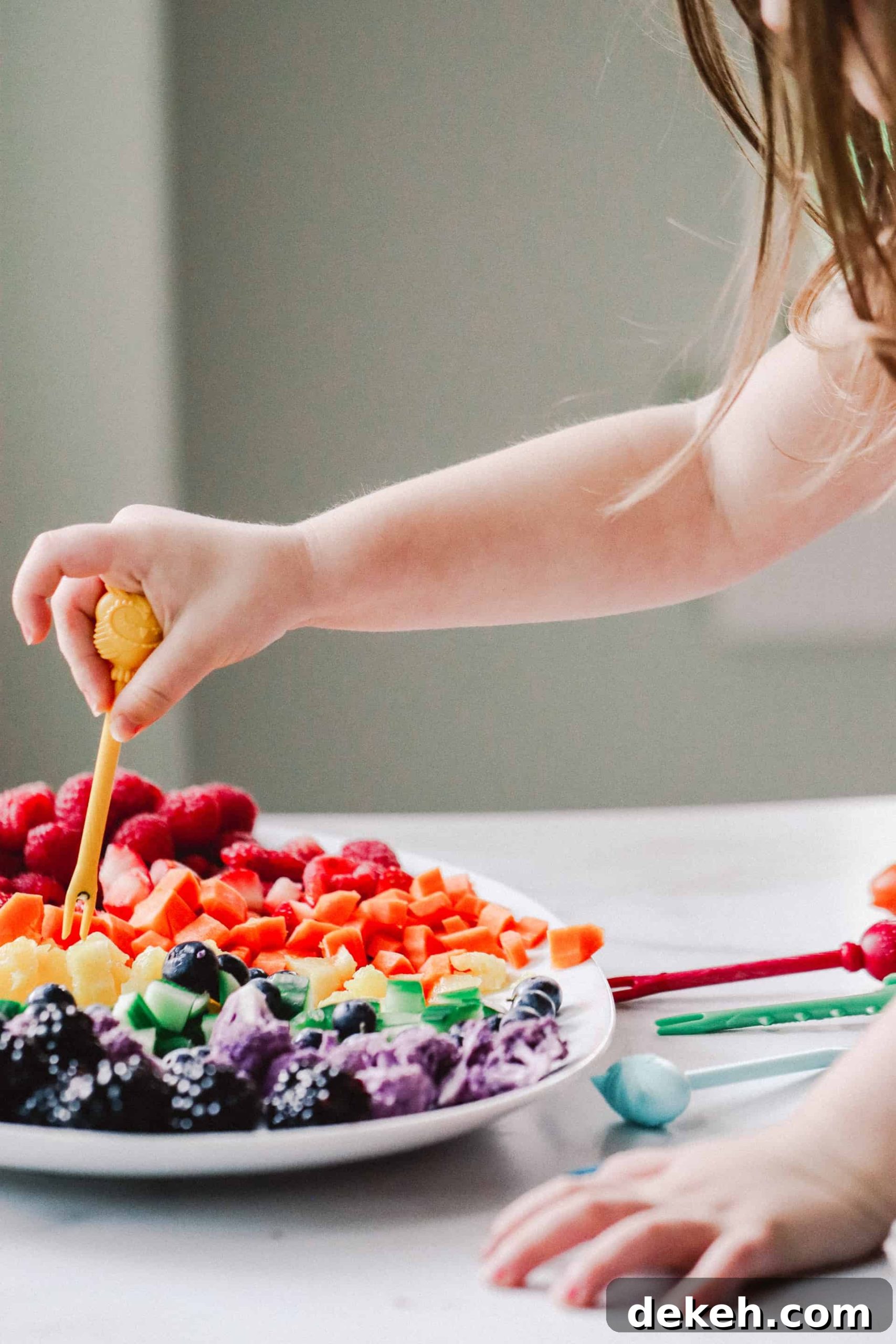
#2 Talk about the colors of food
Describing foods by color helps kids understand that different foods have different “jobs” in the body. Colorful plates are a simple visual cue that a variety of foods supports overall health.
#3 Talk about the energy food gives us
All foods provide energy. Explain that some foods give quick bursts of energy while others fuel the body for longer. This frames food functionally without moralizing taste or indulgence.
#4 Add foods instead of cutting them out
Promote variety and abundance rather than restriction. Encourage adding fruits, vegetables, and other nourishing items alongside treats, so children learn balance rather than deprivation.
#5 Use simple metaphors: “firecracker” foods vs. “fuel-up” foods
Metaphors can be useful. You might call sugary or highly processed items “firecracker foods” because they’re exciting and quick but don’t last. Pair that with the idea of “fuel-up” foods that keep us going. Framing some foods as “sometimes” foods helps children understand moderation without shame.
#6 Hold boundaries without shaming
It’s fine to set limits—such as portion sizes or timing of treats—but do so neutrally. Say something like, “That’s all the cookies for tonight; we’ll have more later this week.” This maintains structure without implying the child is wrong for wanting more.
#7 Model the behavior
Children learn more from watching than from hearing. Avoid negative self-talk about your own eating or body, and don’t habitually label foods as off-limits. Modeling a balanced, nonjudgmental approach to food teaches more than any scripted phrase.
#8 Talk about reasons to love moving
Frame physical activity as a joyful way to celebrate what bodies can do and to support muscles, bones, and overall well-being—not as punishment for eating. When you move in ways you enjoy, your children are more likely to develop a positive relationship with activity.

This is hard, but you can do it
These conversations aren’t always easy, and you don’t need perfect language to make an impact. Focus on the big-picture habits: offer variety, avoid labeling foods as morally good or bad, and celebrate bodies for what they do.
Give yourself grace if you’ve used diet-culture language before. Changing your approach takes time, but consistent, compassionate messaging will help your children grow into people who enjoy food, respect their bodies, and make choices that fit their needs and lives.