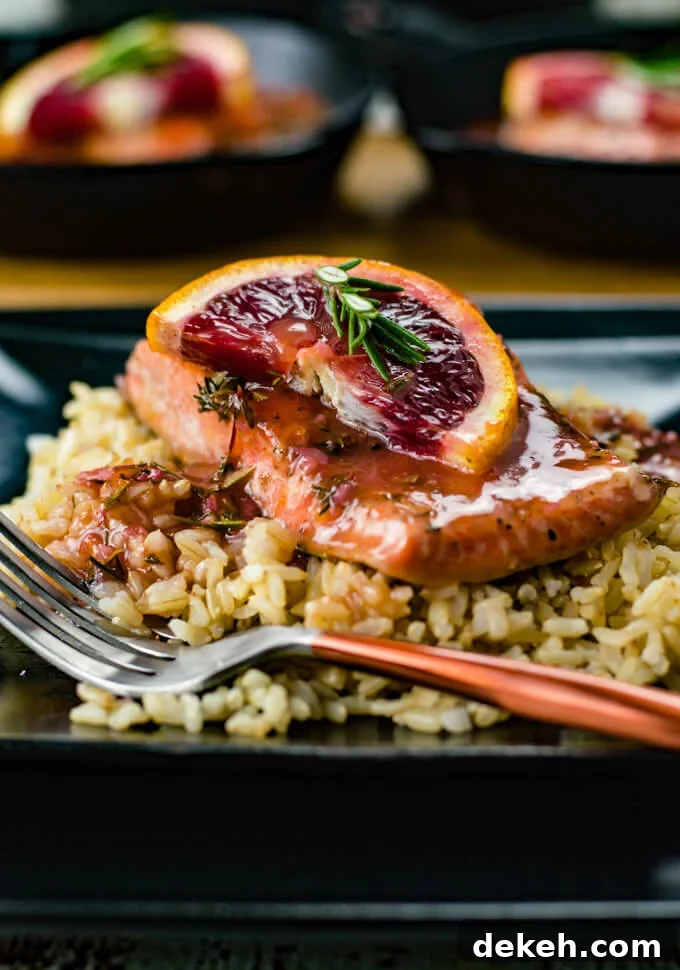
This cast iron salmon with blood orange sauce is as stunning as it is nourishing. Bright, tart blood orange juice reduces into a crimson glaze scented with garlic, fresh rosemary and thyme. The salmon cooks quickly to a flaky, tender finish and pairs beautifully with rice or roasted vegetables for a satisfying meal.
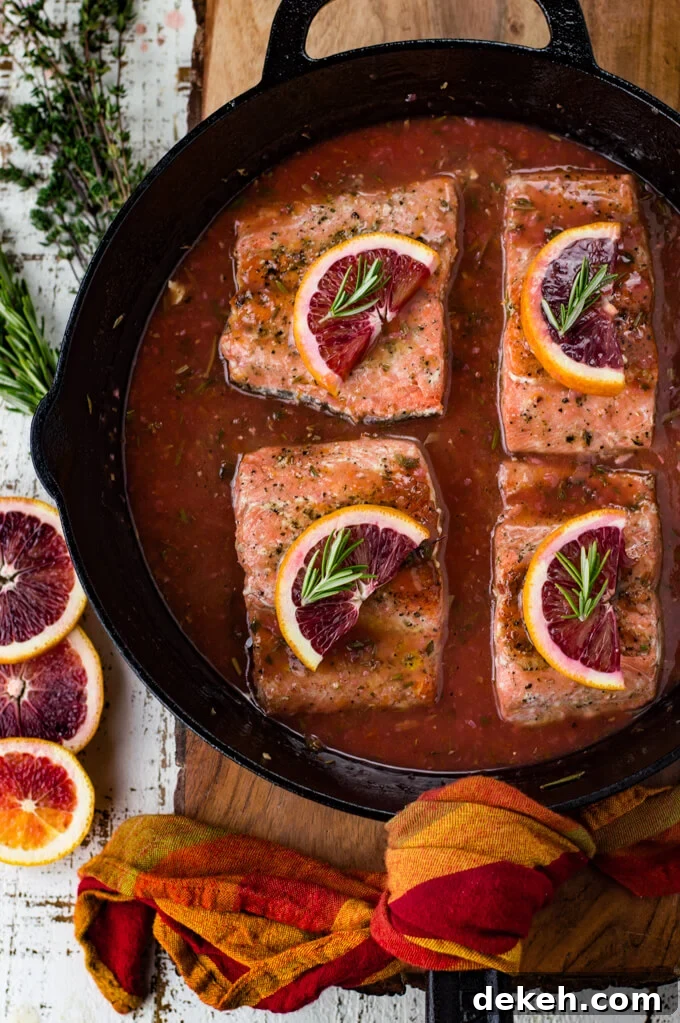
Many of us spend more time indoors and in front of screens, which can affect mood and energy. Adding more vitamin D–rich foods, like fatty fish, into your diet can help support mood and overall health. Wild-caught salmon is an excellent source of vitamin D and omega-3s, and when paired with a citrus-forward sauce it makes for a bright, nutrient-dense dinner.
This recipe combines the sweet-tart complexity of blood oranges with savory garlic and herbs to create a sauce that highlights the natural richness of salmon. If blood oranges aren’t available, a navel orange will work, though the blood orange brings a uniquely deep, fruity note.
The Ingredients for the Cast Iron Salmon:
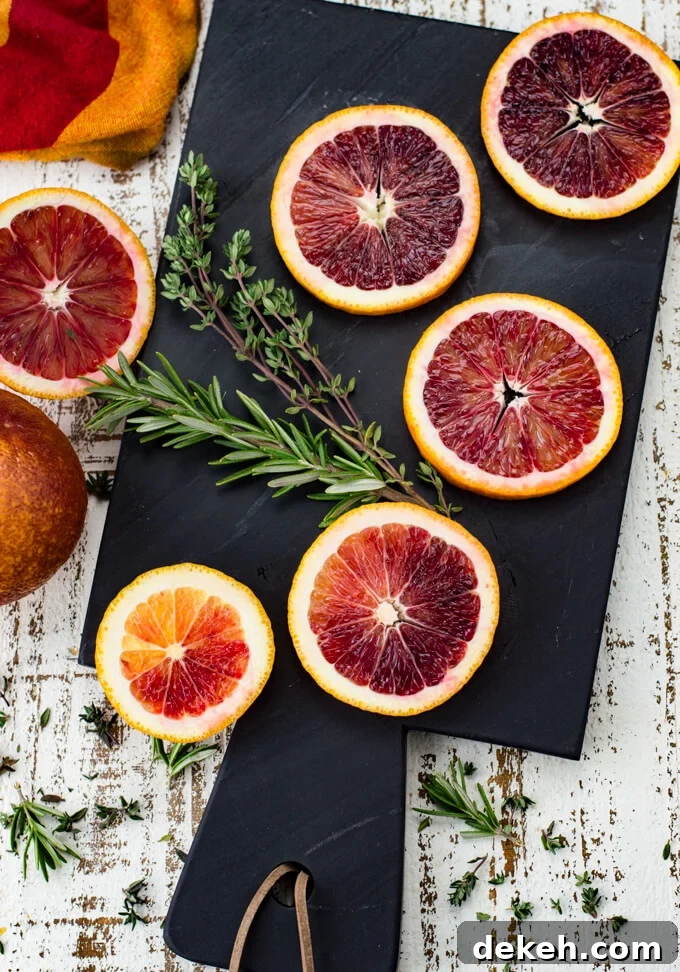
Blood Oranges
Blood oranges have a striking ruby interior and a flavor that blends orange with subtle grapefruit and raspberry notes. Their juice and zest give the sauce depth and color. If you can’t find them, regular navel oranges can be substituted, though the flavor will be milder.
Wild-Caught Sockeye Salmon
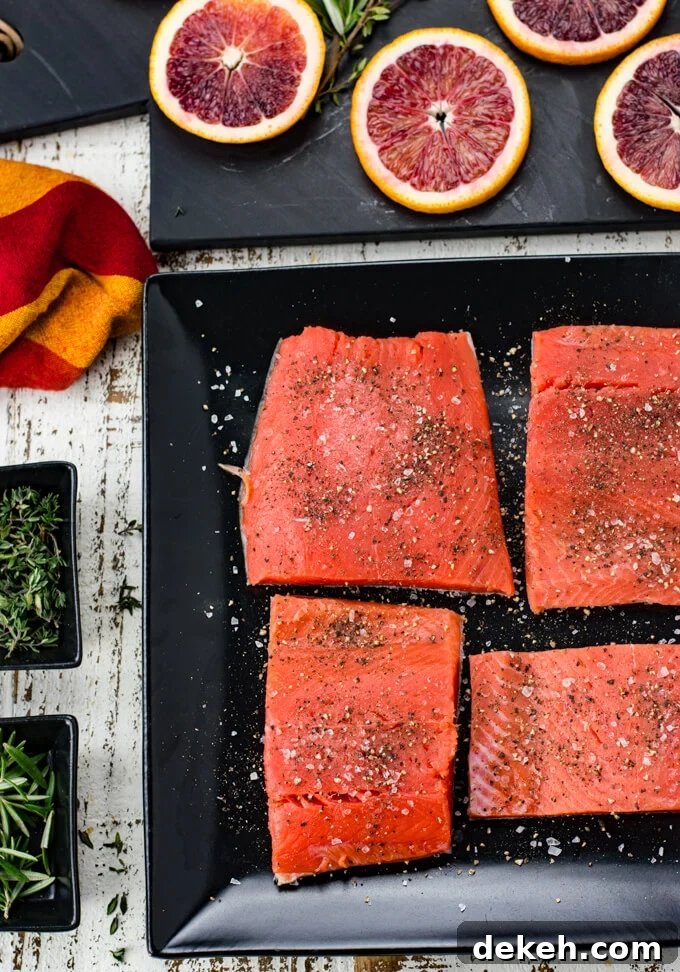
Choose wild-caught salmon when possible. Wild-caught fish typically has fewer additives than some farmed varieties. If fresh wild salmon isn’t available locally, look for flash-frozen fillets in the freezer section; they are often higher quality than fish that appears “fresh” but was previously frozen and thawed.
The Herbs — Rosemary and Thyme
Fresh rosemary and thyme complement the citrus in the sauce. Chop rosemary finely to avoid tough bites; thyme can be left with minimal chopping since the leaves are small and tender.
Minced Garlic
Use freshly minced garlic for the best flavor. Whole peeled garlic cloves can be kept for several days, but garlic loses potency after it’s chopped, so mince just before cooking.
Blood Orange Zest
Zest adds concentrated citrus flavor. Avoid the white pith beneath the skin when zesting, as it can be bitter.
Freshly Squeezed Lemon Juice
Fresh lemon juice brightens the sauce more than bottled juice; it adds acidity and balance to the sweet orange.
Raw Honey
Adjust honey to taste. Depending on how sweet your oranges are, 1–3 tablespoons will balance acidity and round the sauce.
Cornstarch
A small amount of cornstarch (about 3 teaspoons whisked into a few tablespoons of juice) thickens the sauce to a glossy glaze.
How to Cook this Cast Iron Salmon Recipe
This dish comes together quickly — the salmon sears in minutes, and the sauce reduces while you rest the fish. Total active time is short, making it ideal for weeknights.
Preparing the Salmon
- Remove the salmon from the refrigerator 15–20 minutes before cooking so it comes closer to room temperature for even cooking.
- Pat the salmon dry with paper towels to remove excess moisture. Dry fillets sear better, stick less and produce less splatter.
- Season the flesh side with kosher salt and freshly ground black pepper just before cooking; salting too early can draw out moisture.
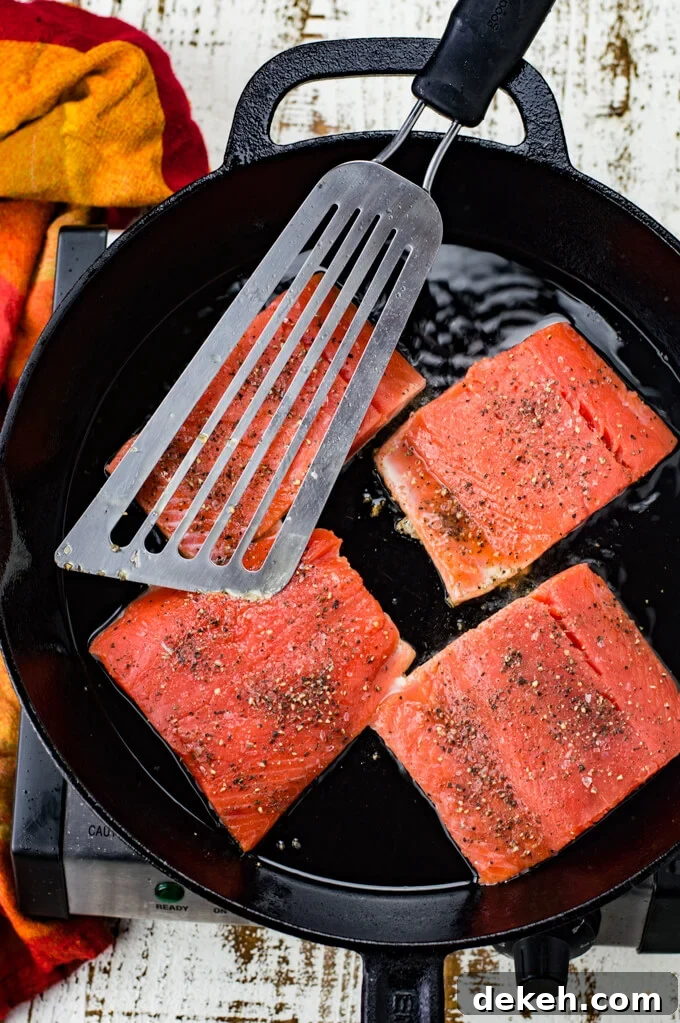
Pan Searing the Salmon
- You can use a cast iron or any heavy-bottomed skillet. Heat it over medium-high until very hot before adding oil.
- Start skin-side down. The skin protects the flesh and crisps nicely. Place the fillets in the pan and leave them undisturbed to form a good sear.
- Sear about 4 minutes skin-side down, then flip and cook another 2 minutes, depending on thickness. Target about 125°F for medium-rare and 130°F for medium; remove the salmon about 5°F below your target since it will continue to cook while resting.
- Transfer the salmon to a plate and loosely tent with foil while you make the sauce.
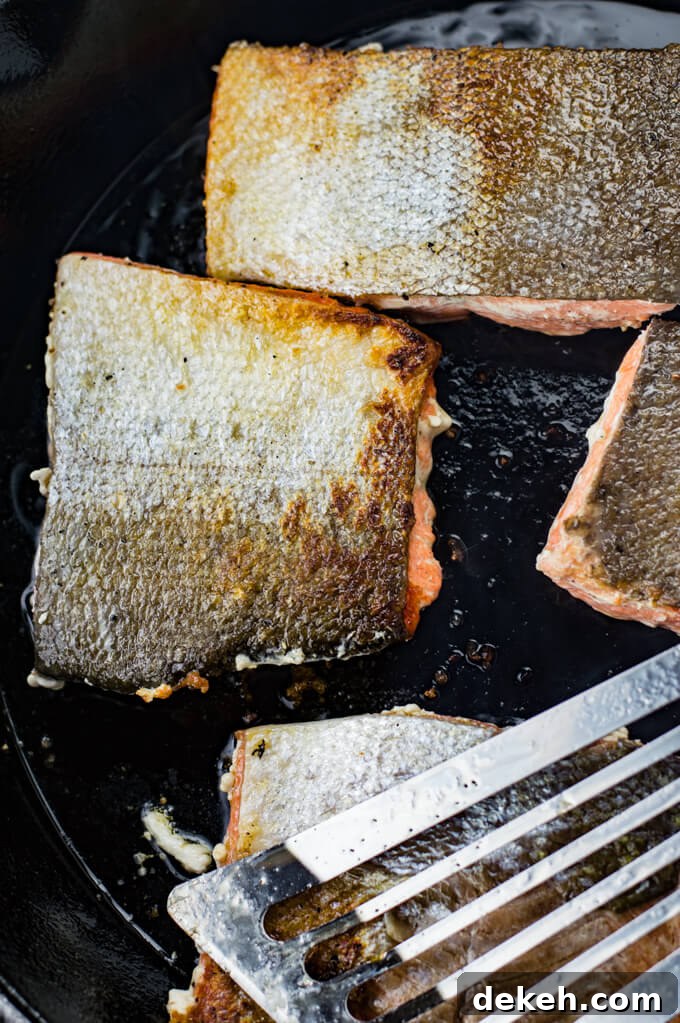
How to Make the Blood Orange Sauce
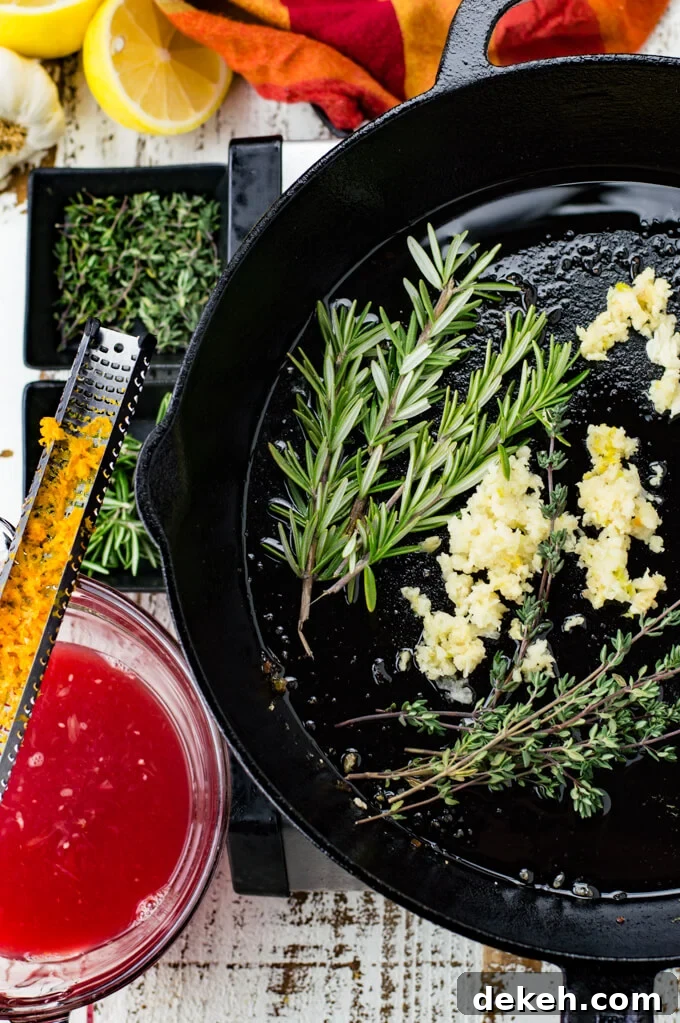
Cooking the Aromatics
- In the same skillet, add minced garlic, thyme sprigs and rosemary sprigs to the hot pan. Cook for about one minute, stirring constantly so the garlic softens but doesn’t brown and turn bitter.
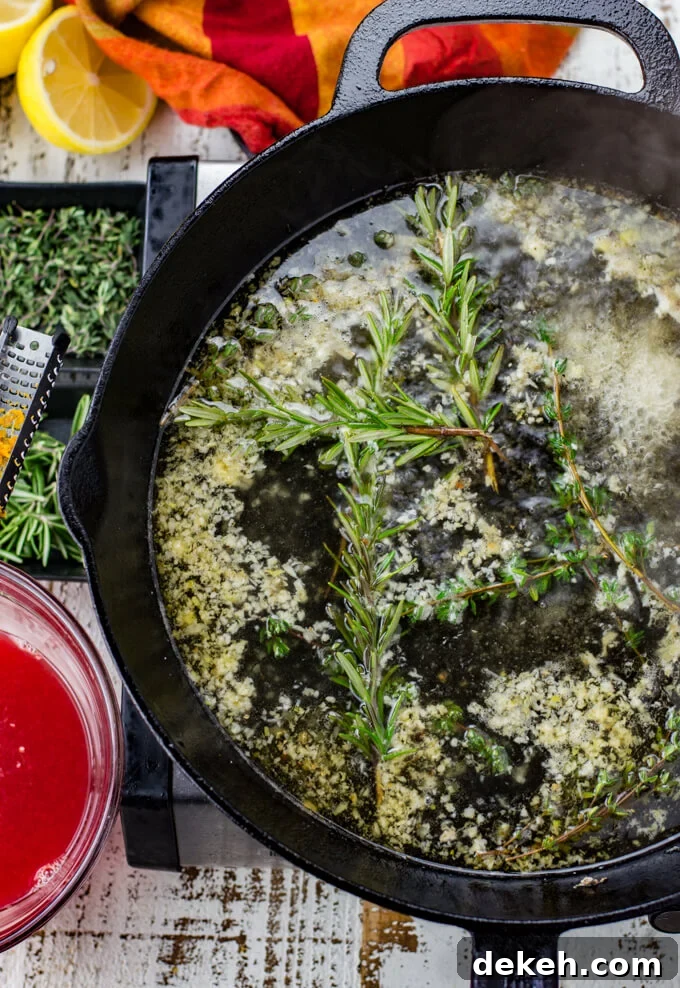
Deglazing the Skillet
- Add dry white wine and a splash of orange liqueur to deglaze the pan, scraping up browned bits from the bottom. Bring to a boil and reduce until most of the liquid has evaporated, then remove the herb sprigs.
Adding the Orange Juice, Zest and Chopped Herbs
- Add blood orange juice (about 1½ cups, roughly 4 large blood oranges), orange zest (about 3 teaspoons), freshly squeezed lemon juice and the chopped rosemary and thyme. Bring to a boil over medium-high heat.
- Remove 4 tablespoons of the sauce and whisk in 3 teaspoons of cornstarch until smooth, then whisk that back into the skillet and continue to cook until the sauce thickens to a glossy glaze. Add raw honey to taste — typically 2–4 tablespoons depending on your preference and the sweetness of the oranges.
- If the sauce needs more thickening, whisk an additional teaspoon of cornstarch into a couple more tablespoons of sauce and add it back, stirring until thickened.
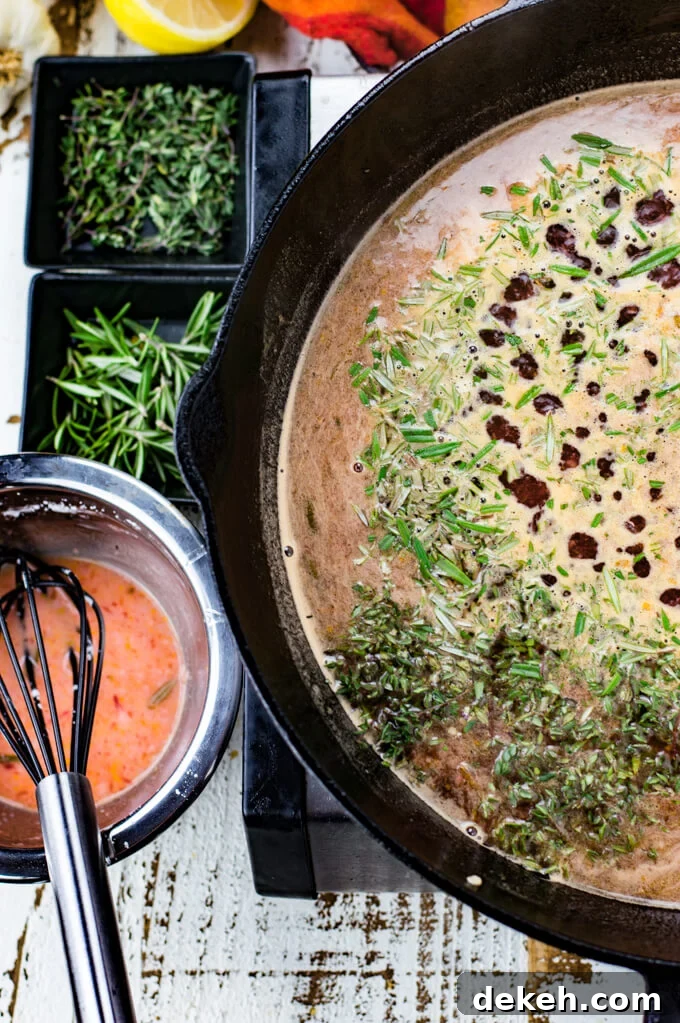
Finishing the Dish
- Return the seared salmon to the pan and spoon the blood orange glaze over each piece. Garnish with halved blood orange slices and small rosemary sprigs if desired.
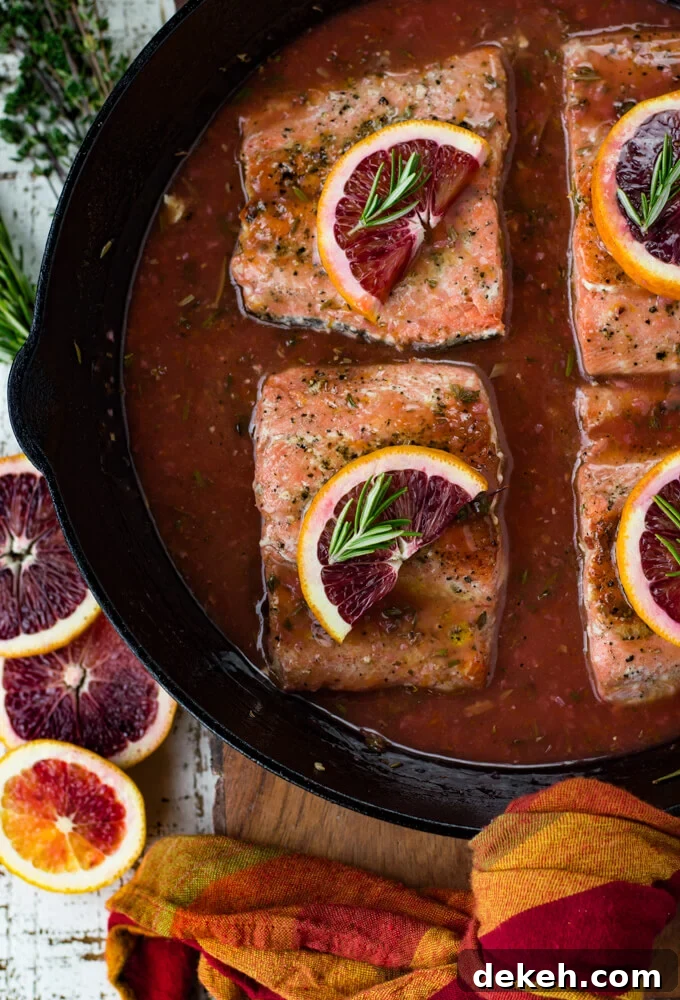
The result is a gorgeous plate of salmon bathed in a bright, herb-scented blood orange glaze. It’s fast enough for a weeknight but elegant enough for guests. Serve over brown rice or alongside roasted asparagus for a complete meal.
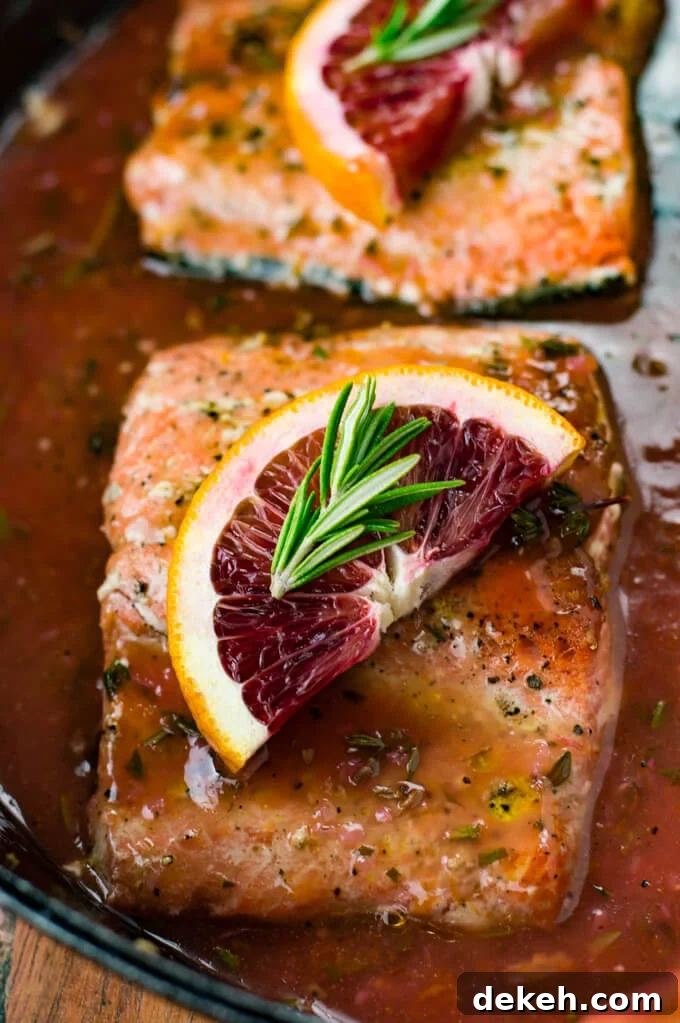
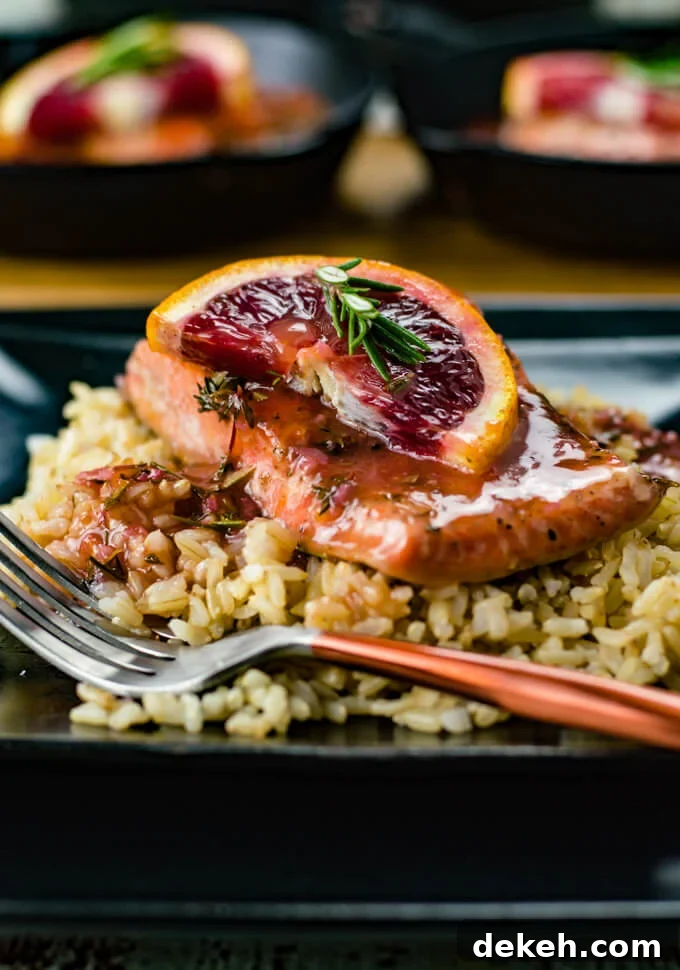
If you love seafood dishes, check out other recipes on the site.
Cast Iron Salmon in a Blood Orange Sauce
Cast Iron Salmon in a Blood Orange Sauce

This salmon dish is both beautiful and nutritious. The sweet and tart blood orange creates a lovely red glaze that is flavored with garlic and fresh herbs and is cooked to flaky perfection.
- Author: Kristy Murray
- Prep Time: 10 minutes
- Cook Time: 15 minutes
- Total Time: 25 minutes
- Yield: 4 servings
- Category: Seafood
- Method: Pan-Seared
- Cuisine: American
Ingredients
- 4 salmon steaks (4 pieces, about 6 ounces each), skin on
- Kosher salt and freshly ground black pepper
- 1 tablespoon olive oil
- 8 large garlic cloves, minced
- 5 large sprigs fresh thyme
- 3 large sprigs fresh rosemary
- 1 ½ cups dry white wine
- 5 tablespoons orange liqueur
- 3 teaspoons orange zest
- 1 ½ cups freshly squeezed blood orange juice
- 5 tablespoons freshly squeezed lemon juice
- 1 tablespoon fresh rosemary, finely chopped
- 1 tablespoon fresh thyme, chopped
- 2–4 tablespoons raw honey (to taste)
- 3 teaspoons cornstarch mixed with 4 tablespoons of the orange juice from the pan
- 2 slices blood orange, halved, for garnish (optional)
- Small rosemary sprigs for garnish (optional)
Instructions
- Remove the salmon from the refrigerator and let sit 15–20 minutes to come to room temperature. Pat dry with paper towels.
- Season the flesh side with salt and pepper.
- Heat a large cast-iron or heavy skillet over medium-high until very hot, add 1 tablespoon olive oil. Place salmon skin-side down and sear for about 4 minutes, then flip and cook 2 more minutes. Remove and tent with foil to keep warm.
- Reduce heat to medium. Add minced garlic, thyme and rosemary to the pan and cook 1 minute, stirring constantly. Add white wine and orange liqueur, bring to a boil, scrape up browned bits and simmer until most liquid has evaporated. Remove herb sprigs.
- Add orange zest, blood orange juice, lemon juice, chopped rosemary and thyme. Taste and add raw honey as desired.
- Remove about 4 tablespoons of the sauce and whisk in 3 teaspoons cornstarch until smooth. Whisk this mixture into the skillet and bring to a boil, whisking until thickened.
- Remove from heat, return seared salmon to the pan and spoon the glaze over each piece.
- Garnish with halved orange slices and small rosemary sprigs if desired. Serve and enjoy.
Notes
- If blood oranges are unavailable, use navel oranges as a substitute.
- Choose wild-caught salmon when possible; frozen, flash-frozen fillets are a good option if fresh wild-caught isn’t available.
- Do not overcook garlic; cook it briefly to avoid bitterness.
- When zesting, avoid the white pith to prevent bitterness.
- Pat salmon dry and season just before cooking for the best sear.
- Remove salmon from the pan about 5°F below your desired final temperature since it will continue to cook while resting.
- If the sauce needs extra thickening, whisk additional cornstarch into a small amount of sauce and add back to the pan.
Nutrition
- Serving Size: 1 salmon steak
- Calories: 423
- Sugar: 8 g
- Sodium: 361 mg
- Fat: 18 g
- Protein: 38 g
- Cholesterol: 105 mg