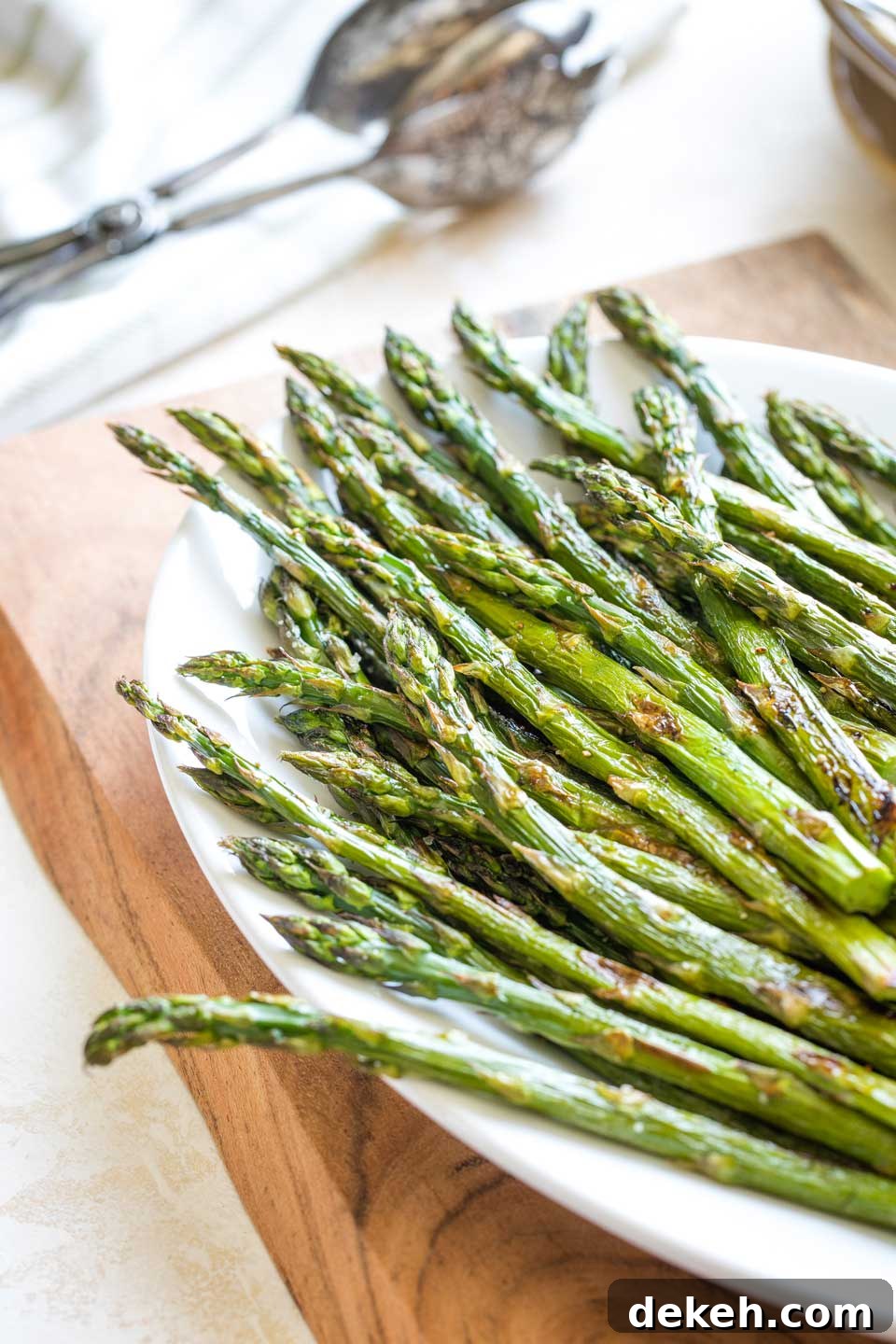
~ This ultra-easy Oven Roasted Asparagus uses a high-heat roasting method to deliver big flavor with very little effort. It’s essentially one main ingredient — a fast, no-fuss side that works for weeknight dinners, special meals, and holiday spreads. Below you’ll find tips to change it up depending on what you’re serving. ~
This Recipe Is: • Ready in 30 Minutes or Less • Includes Make-Ahead Steps • Vegan (and Vegetarian) • Gluten Free • Paleo •
Need a dependable side dish you can make again and again?
One that requires minimal thought or fuss, that your family will actually enjoy eating — often asking for seconds? This easy oven roasted asparagus checks all those boxes.
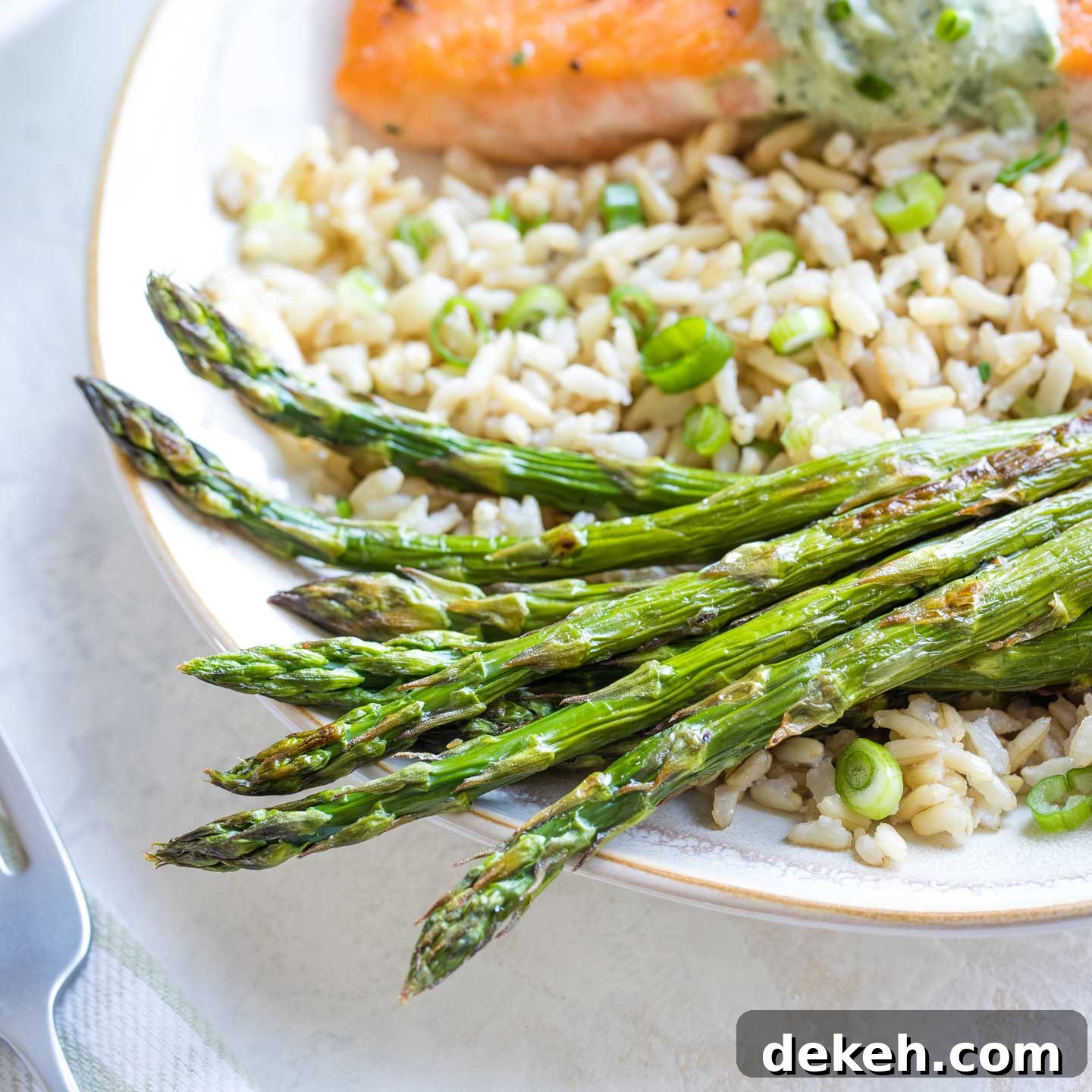
If I had to name the single most frequently made side in my kitchen, it would be this roasted asparagus.
I make it at least once every week or two, and I often double the recipe because it disappears fast.
Why You’ll LOVE This Asparagus Recipe!
It’s hard not to love this one:
√ One main ingredient (plus salt, pepper, and a little oil).
√ Only a few minutes of prep, and you can do much of that ahead of time.
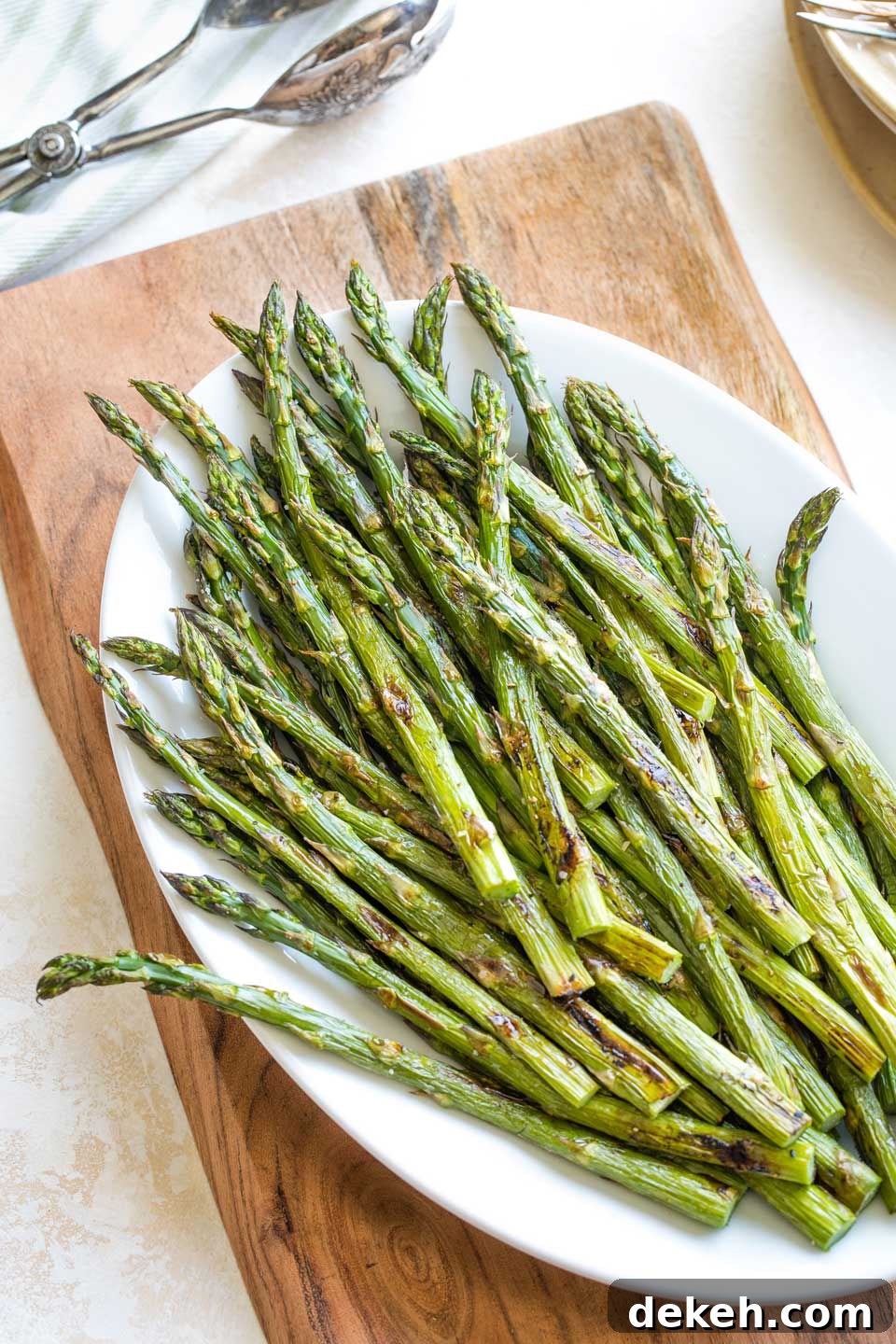
√ A simple high-heat technique that transforms the flavor — blistered, caramelized, and far more interesting than steamed or boiled asparagus.
High-heat oven roasting produces toasty brown spots and deeper, more complex flavors while maintaining a pleasant, slightly crisp interior.
Why Oven Roasting is Veggie Magic
Roasting concentrates natural sugars and creates caramelization that adds savory, nutty notes you won’t get with steaming or boiling. The result is vegetables that taste richer and often more appealing to kids and picky eaters.
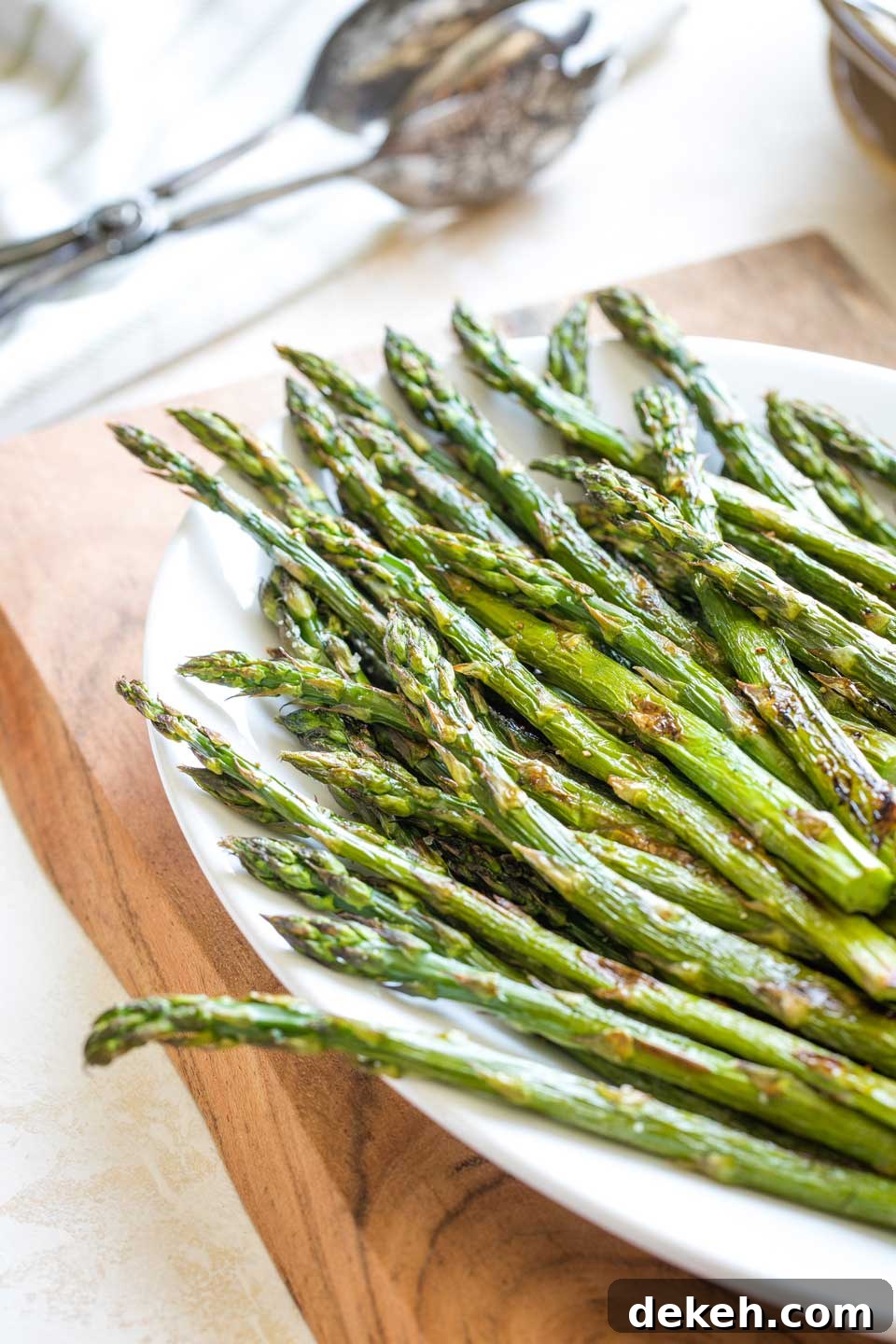
Roasting makes asparagus more exciting and satisfying — it really can change how people feel about their veggies.
How to Choose Asparagus for Roasting
Because the recipe is so simple, starting with good asparagus matters. Choose firm stalks with tight, fresh-looking tips. Avoid bunches that feel soft or limp or have dried, open tips.
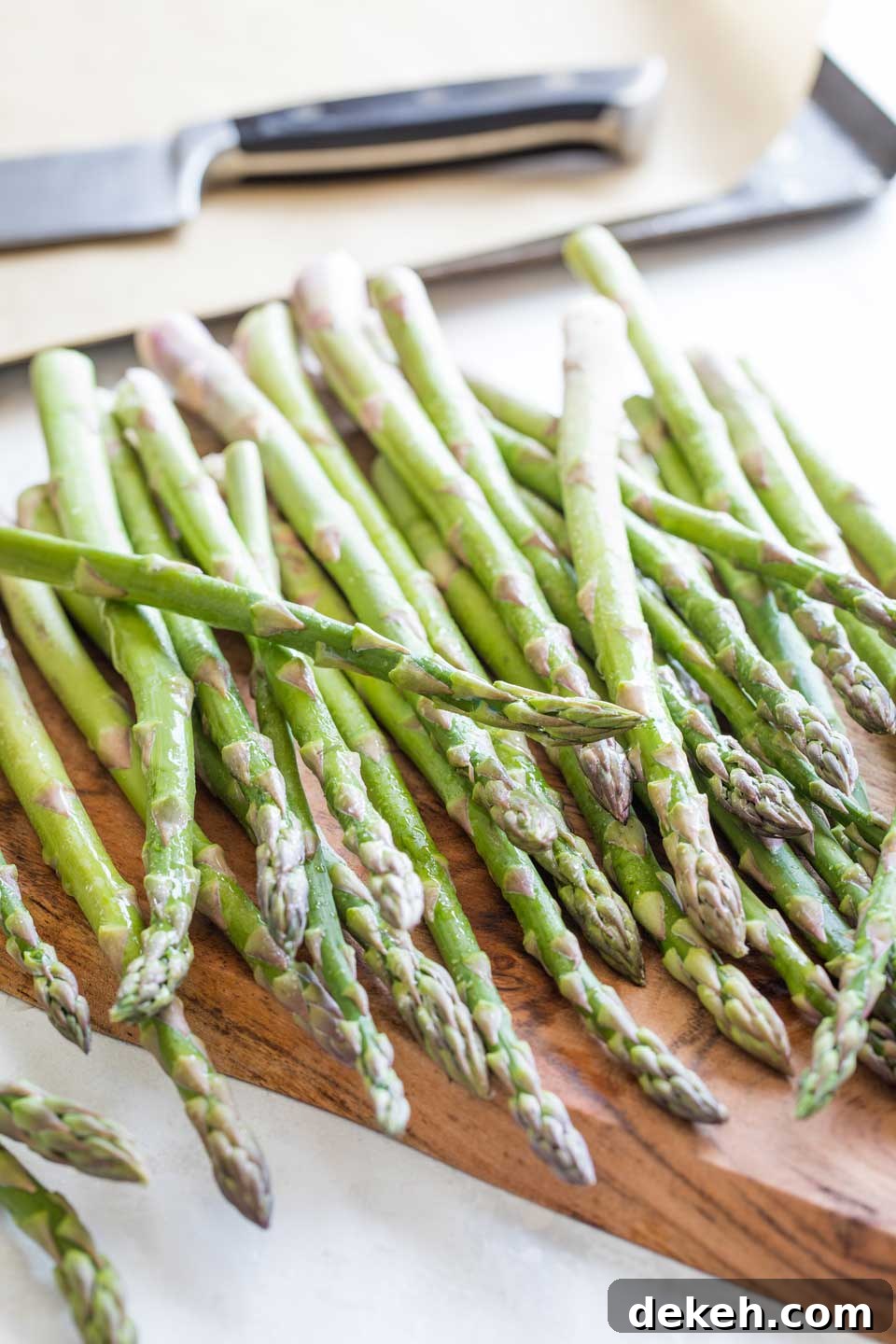
For roasting, medium-thin stalks are ideal. They caramelize nicely without becoming overly soft inside. Very thick stalks tend to become mushy after roasting, while extremely thin ones can cook too quickly.
How to Roast Asparagus
Step #1 – Remove the Ends
Snap the woody ends off by gently bending each spear; it will break where the tender part begins. For a cleaner look, trim the ends with a knife after snapping a few to mark the right spot.
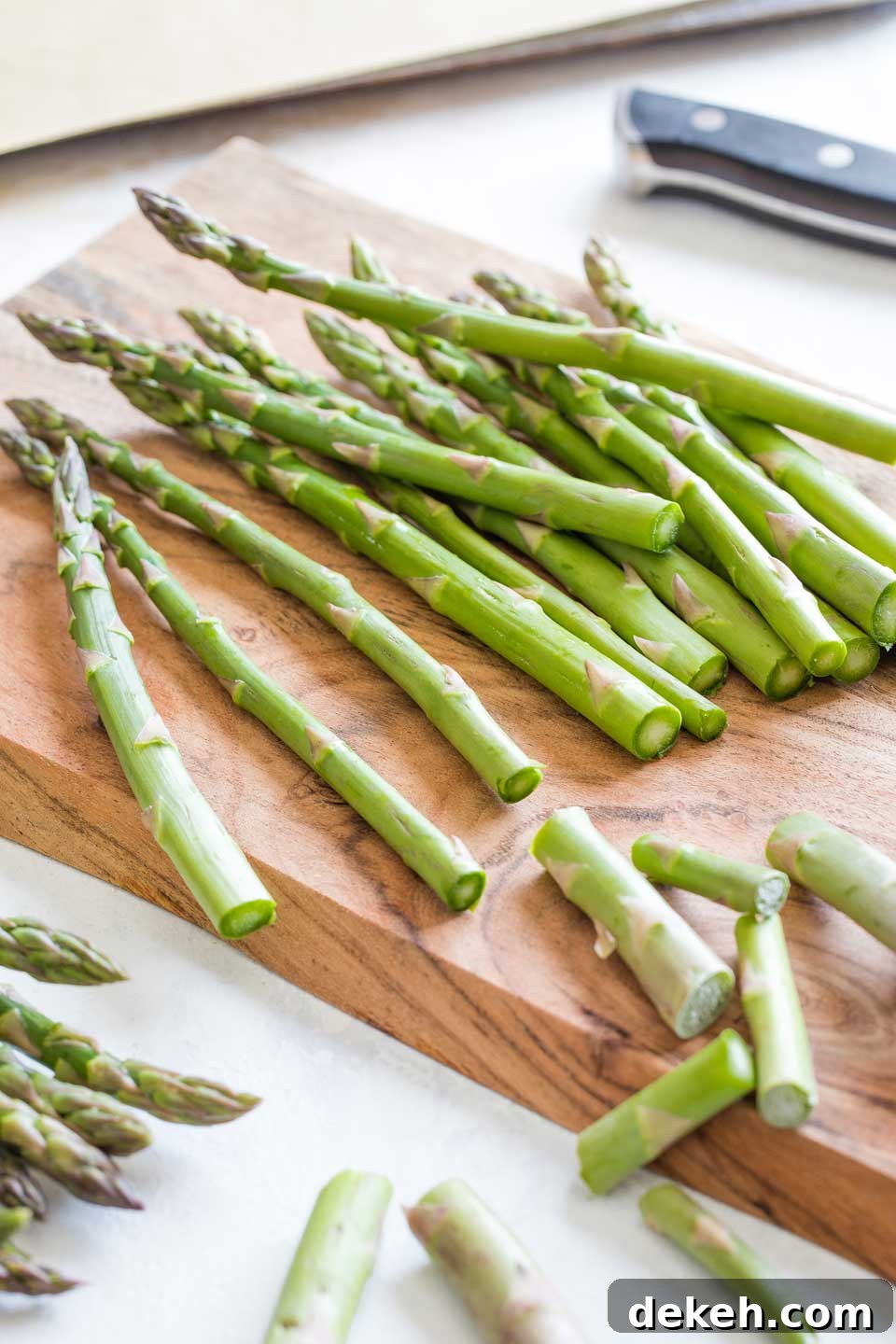
Step #2 – Prep for the Oven
Rinse the spears and dry them thoroughly — damp asparagus won’t roast properly. Spread them in a single layer on a parchment-lined baking sheet.
Pro tip: Arrange the spears with the tips pointing inward toward the center of the sheet. Ovens are usually hottest at the edges, so placing thicker stalks there and the tips in the center helps them cook evenly.
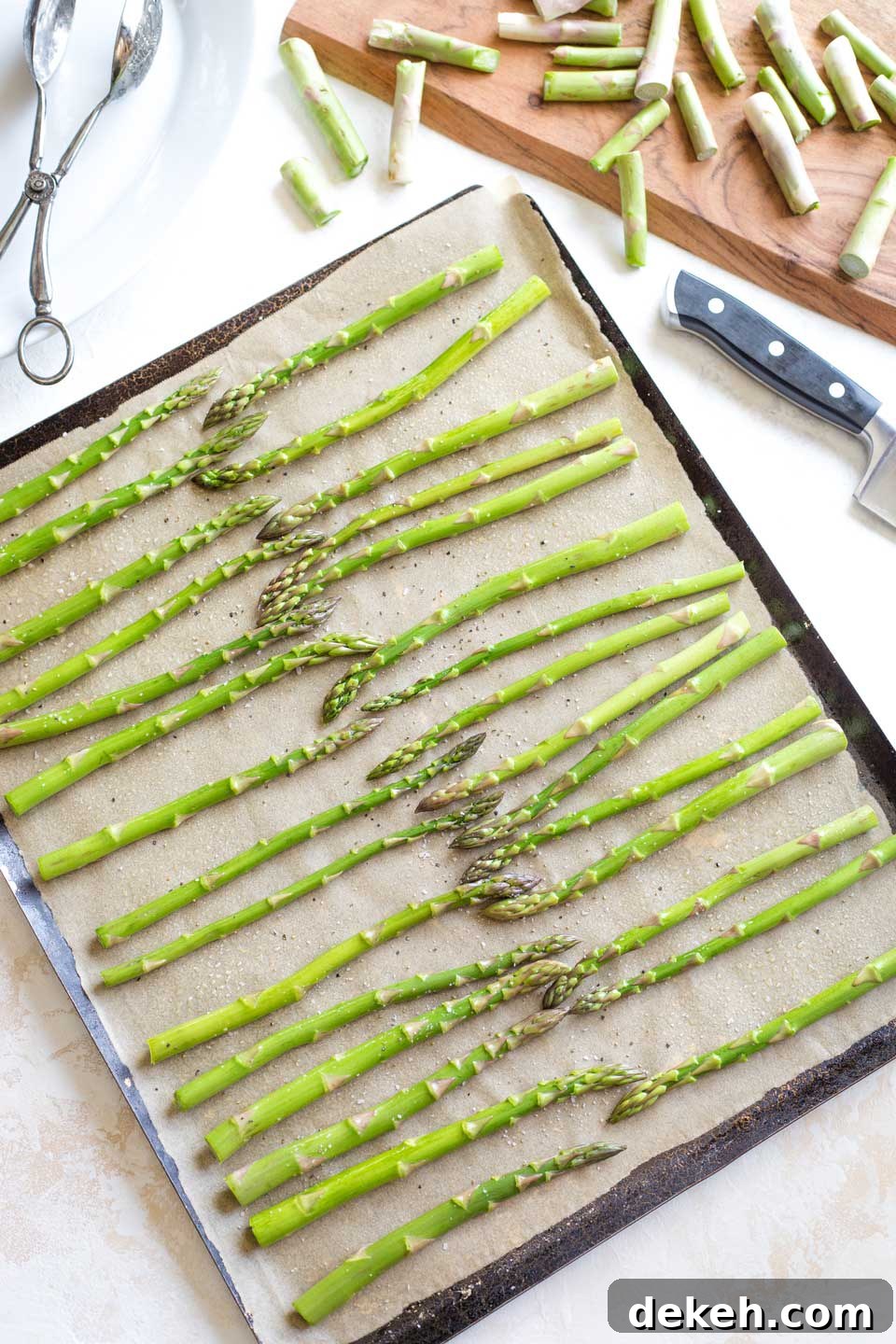
Lightly spritz the spears with olive oil or cooking spray, then sprinkle with kosher salt and freshly ground black pepper.
Step #3 – Bake!
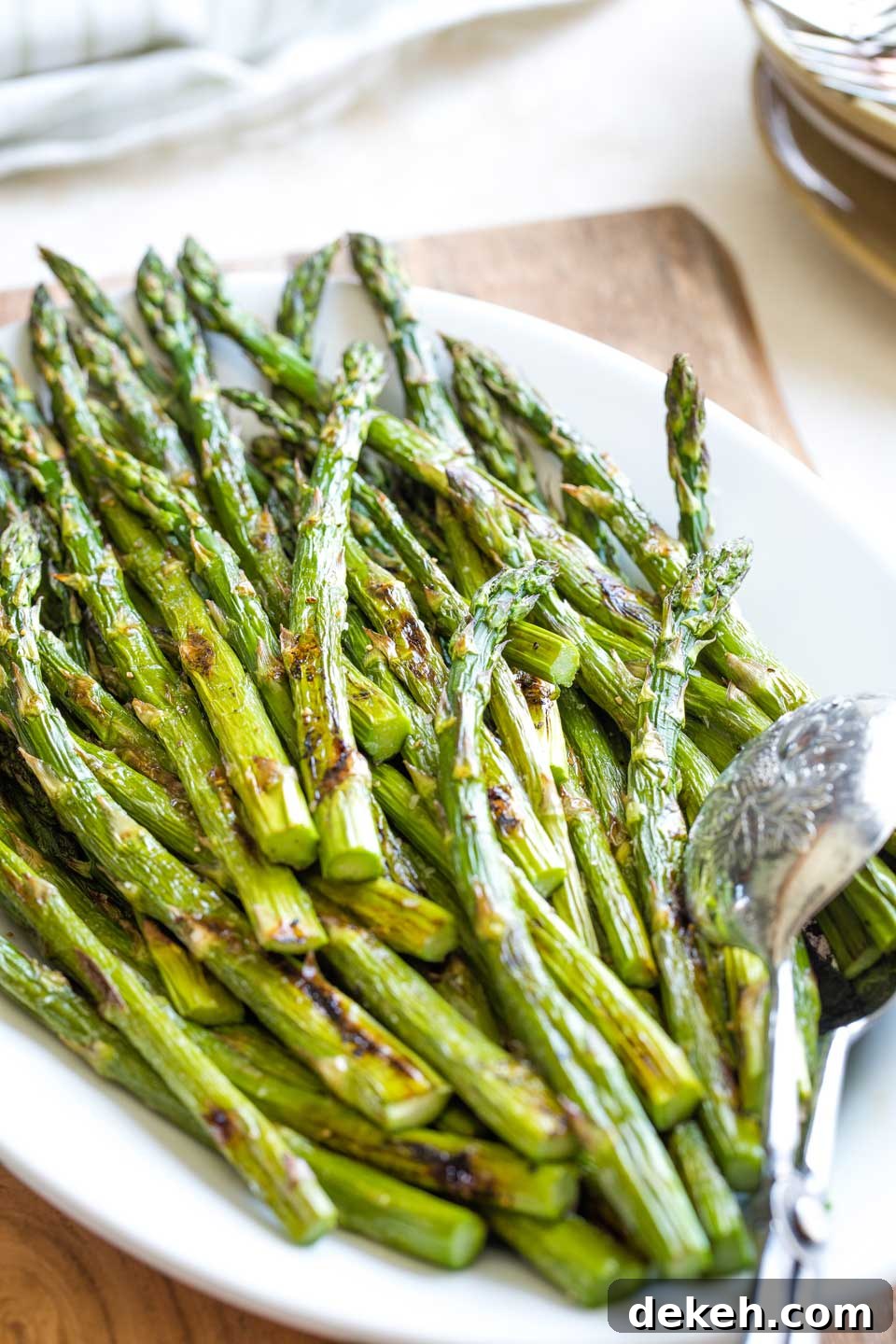
Roast the asparagus without turning so the bottom develops nice seared spots. This short, high-heat cooking gives you blistered exteriors and tender-but-firm interiors.
Best Temperature for Oven Roasted Asparagus
Set your oven to 475°F. This higher temperature mimics the flavor effects of grilling by quickly caramelizing the spears without overcooking them. Many recipes recommend lower temperatures, but 475°F produces the best blistering and depth of flavor.
If your oven runs hot or cool, adjust slightly and consider using an oven thermometer to check the actual temperature.
How Long to Roast Asparagus
Start with about 8 minutes at 475°F for thin to medium spears. Thicker spears may need 10 minutes. Look for browned, blistered spots on the bottom of the spears and slightly blistered tips while keeping the interior crisp-tender. Since ovens and stalk thickness vary, you may need to adjust timing to suit your preference.
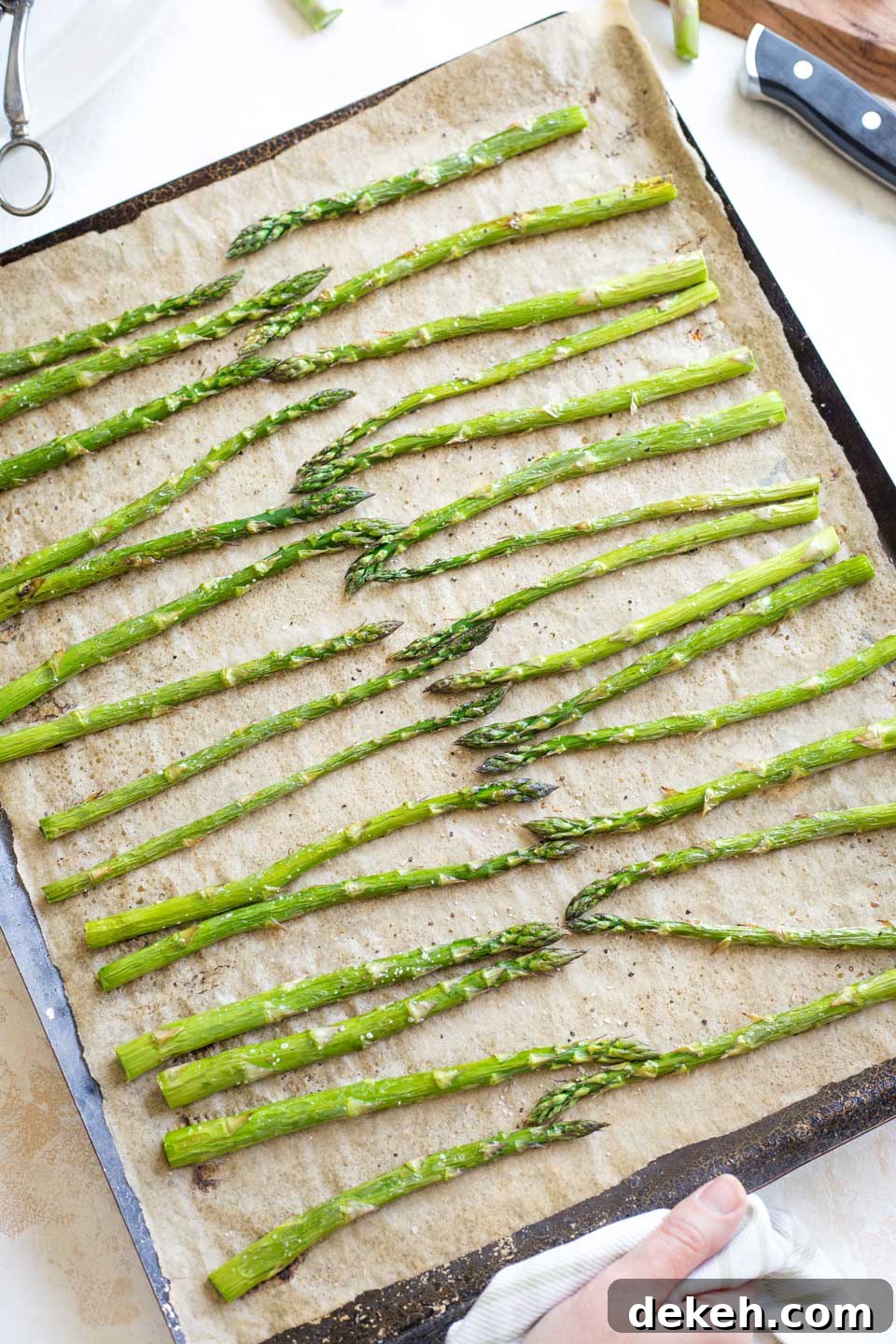
Note: Most of the visible browning will be on the bottom side of the spears, so check underneath for caramelization.
Pro tip: Move the baking sheet closer to or further from the heating element to control how blistered the spears become. The bottom oven rack gives the most caramelization.
Adapt the Asparagus to Match Your Main Dish
Roasted asparagus is delicious on its own, but it’s easy to customize:
- Sprinkle with grated parmesan or another cheese that complements your main course (feta for Mediterranean, queso fresco for Mexican flavors).
- Squeeze fresh lemon juice over the spears for brightness.
- Drizzle with a sauce or vinaigrette you’re serving with the main dish, such as browned butter, balsamic glaze, or a maple-balsamic vinaigrette.
- Add toasted pine nuts, sliced almonds, or other nuts for crunch.
What to Serve With Your Asparagus
This roasted asparagus pairs with a wide variety of mains:
- Steak — it’s a classic pairing for beef and grilled cuts.
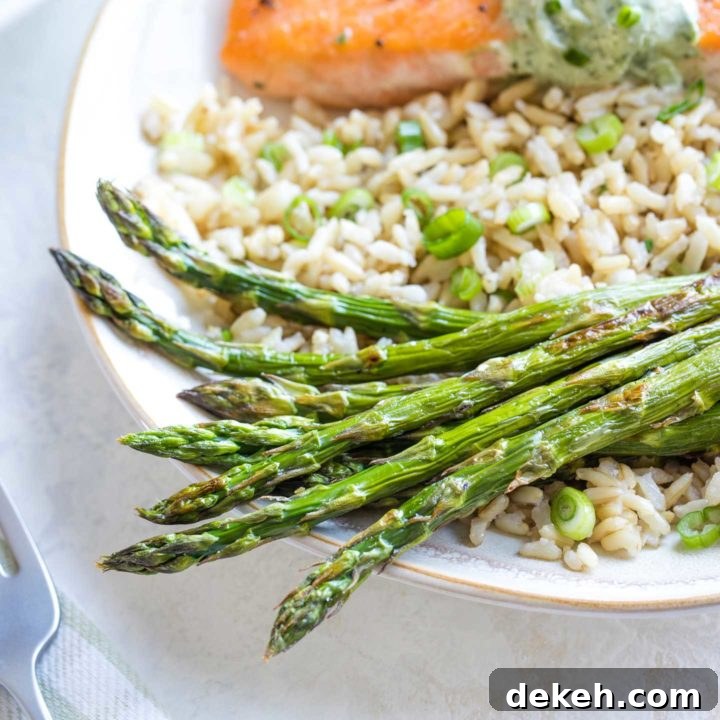
- Fish — salmon or pan-seared fillets complement the roasted flavor beautifully.
- Roasted or baked chicken — the tender green flavor balances savory poultry dishes.
- Pasta with marinara or a sausage-and-greens dish for a hearty, vegetable-forward plate.
- Holiday mains such as Easter ham — asparagus is especially lovely in spring.
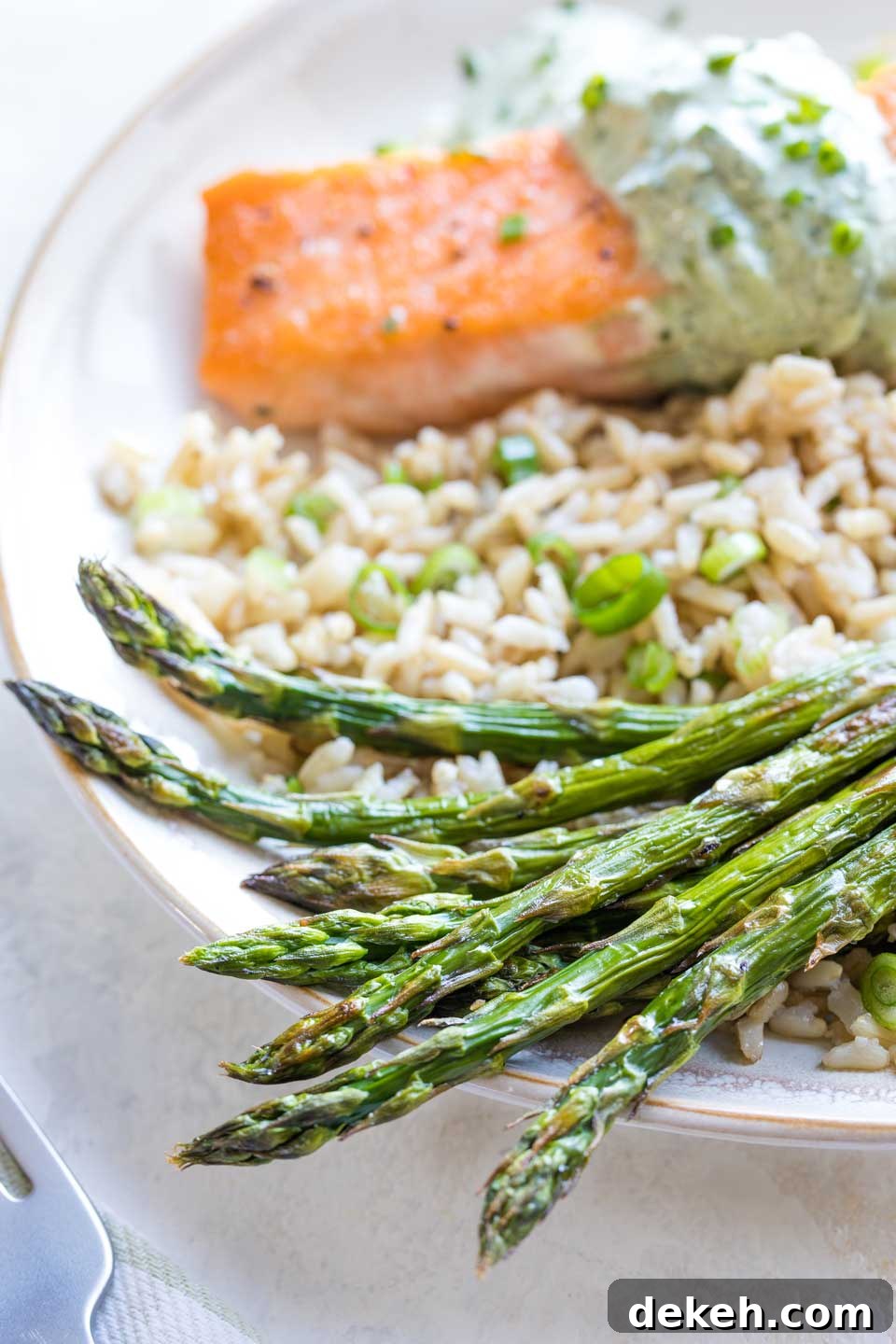
I make this roasted asparagus constantly because it’s fast, versatile, and consistently delicious.
FAQs At-a-Glance
Yes. The key is not to overcrowd the baking sheet. Overcrowding causes steaming rather than roasting and prevents caramelized spots. Use multiple sheets and rotate them as needed, opening the oven quickly to retain heat.
With a short, high-heat roast, leaving the spears undisturbed gives better deep caramelization on one side. Flipping mid-roast can be awkward and prevents either side from developing the same sear.
Stand trimmed asparagus upright in a jar or glass of water (like a bouquet), cover loosely, and refrigerate. This helps keep the spears hydrated and fresh for several days.
Peeling is usually unnecessary if you trim the tough ends and choose tender stalks. You can peel the bottom inch or two on very thick spears if desired.
Medium-thin stalks are best for high-heat roasting because they hold a pleasant firmness while still achieving good caramelization. Avoid very thick or extremely thin stalks for this method.
Weights vary by store, but a typical bunch often weighs about 1 pound. Adjust seasoning slightly if your bunch is larger or smaller.
Over time this roasted asparagus has become my go-to vegetable side for nearly every meal. When I’m unsure what to serve, I grab asparagus — problem solved.
Try the high-heat roasting method and this may become your new favorite side too — simple, fast, and surprisingly addictive.

~ by Shelley
Love the Recipe? • Were My Tips Helpful?
__________
Please leave a 5-star rating by clicking on the stars in the recipe card below. I truly appreciate your feedback!
Easy Oven Roasted Asparagus
4 servings
3 minutes
8 minutes
11 minutes
High-heat roasting delivers big, grill-like flavor with almost no work.
• Ready in 30 Minutes or Less • Includes Make-Ahead Steps • Vegan (and Vegetarian) • Gluten Free • Paleo
Ingredients
- 1 pound asparagus
- Olive oil spray or cooking spray
- 1/4 teaspoon kosher salt
- 1/16 teaspoon black pepper
Instructions
- Preheat oven to 475°F. Line a baking sheet with parchment paper.
- Snap or cut off the tough ends. Rinse the asparagus and dry completely.
- Arrange spears in a single layer on the baking sheet, tips pointing toward the middle. Don’t overcrowd.
- Lightly spray with olive oil and season with salt and pepper.
- Roast about 8–9 minutes (longer for thick spears) without flipping, until browned blistered spots form underneath and the spears are crisp-tender.
- Transfer to a platter immediately and adjust seasoning if needed.
Notes
Doneness: For a more blistered finish, place the sheet closer to the oven’s heating element. For less blistering, move it to a higher rack.
Make-ahead: Snap, rinse, and dry the spears, then arrange on parchment-lined baking sheet and wrap. Refrigerate for a few hours until ready to roast.
Nutrition Information:
Yield: 4 servings
Serving Size: 1/4 of recipe
Amount Per Serving:
Calories: 26Total Fat: 0gSodium: 148mgCarbohydrates: 5gFiber: 2gProtein: 3g
Nutrition values are estimates and can vary by ingredients and preparation.
Did You Make This Recipe?
We’d love to hear! Please leave a rating and tag us on Instagram.