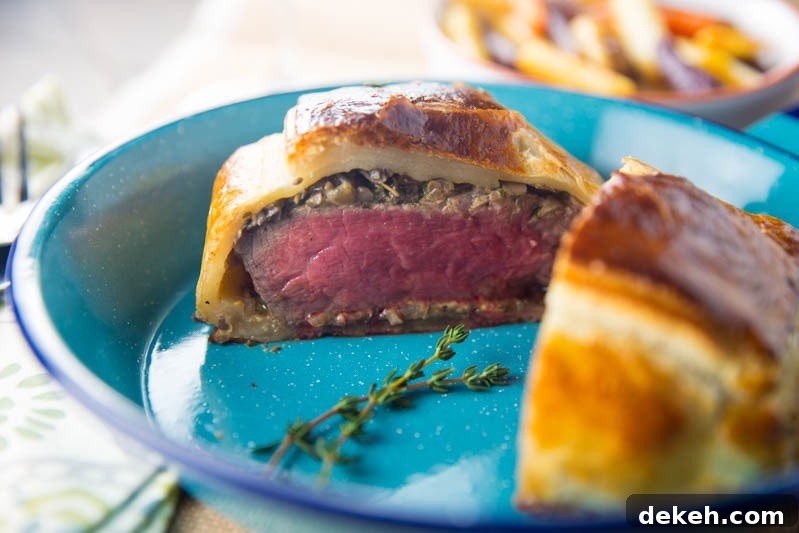
Mastering an Individual Beef Wellington on the Big Green Egg blends classic steakhouse technique with the unique benefits of a kamado grill. While ceramic grills are often used for low-and-slow barbecue, the Big Green Egg also excels as an outdoor oven. The gentle charcoal smoke adds a subtle, desirable note to the beef tenderloin while the Egg’s exceptional heat retention yields an even, golden puff pastry. The keys are a strong initial sear to lock in juices, a dry mushroom duxelles that protects the pastry from steam, and careful temperature control during the indirect bake.
Step 1: Selecting the Perfect Cuts of Beef Tenderloin
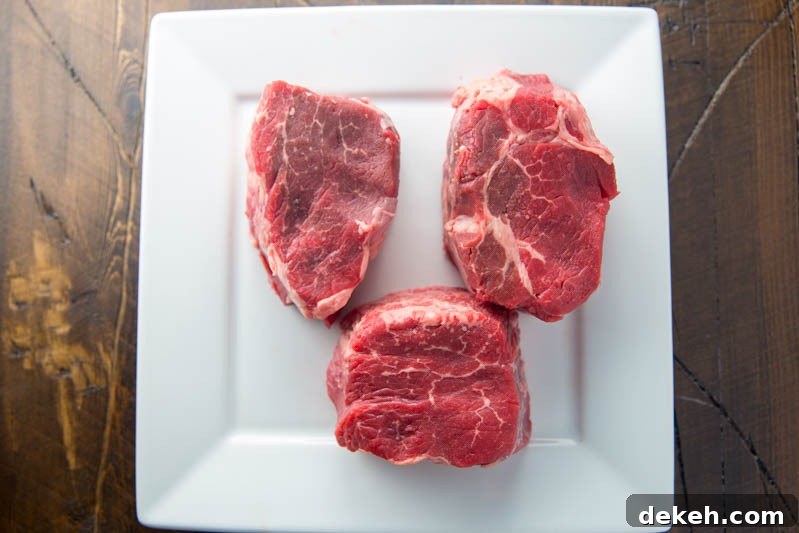
Begin with two center-cut beef tenderloin steaks (filet mignon) for even, individual portions. Aim for pieces about 1½ to 2 inches thick so the exterior can develop a rich sear while the interior remains tender and rosy. Choose cuts with minimal external fat and good internal marbling — this balance keeps the meat succulent without excess grease. Trim any silver skin but preserve the overall shape so the pastry wraps uniformly.
Step 2: Preparing and Sautéing the Mushroom Duxelles
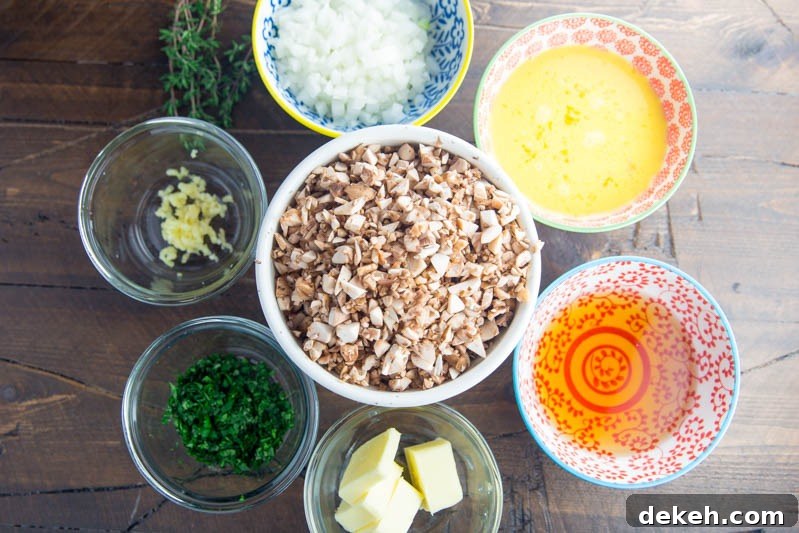
A dry, concentrated mushroom duxelles is essential to prevent a soggy pastry and to add savory depth. Finely chop baby bella mushrooms and sweat them with sweet onion and minced garlic in unsalted butter. Add a sprig of fresh thyme, kosher salt, and freshly ground pepper, and cook over medium-high heat until all moisture has evaporated and the mixture forms a paste. Deglaze with dry sherry, stir in chopped parsley, then cool completely before assembly. The goal is an intensely flavored, thick duxelles that will hold its shape around the beef.
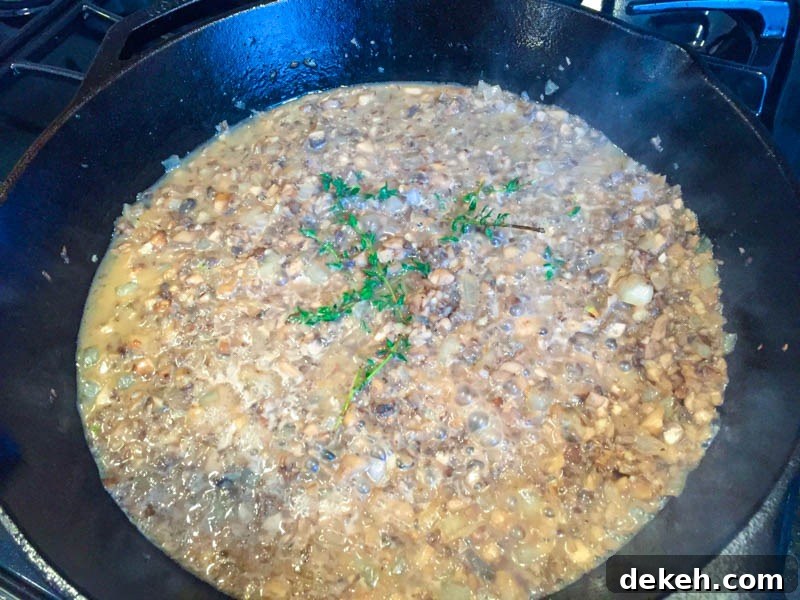
Step 3: Searing the Filets and Rapid Cooling
Sear the filets quickly over very high heat to build a flavorful crust while keeping the interior rare. Heat a heavy skillet with a tablespoon of vegetable oil until nearly smoking. Sear each side and the edges for about 60–90 seconds per side, just long enough to develop a deep mahogany color. Immediately transfer the seared filets to the freezer or an ice bath briefly to halt carryover cooking. Chilled meat is far easier to wrap and prevents premature melting of the pastry during the bake.
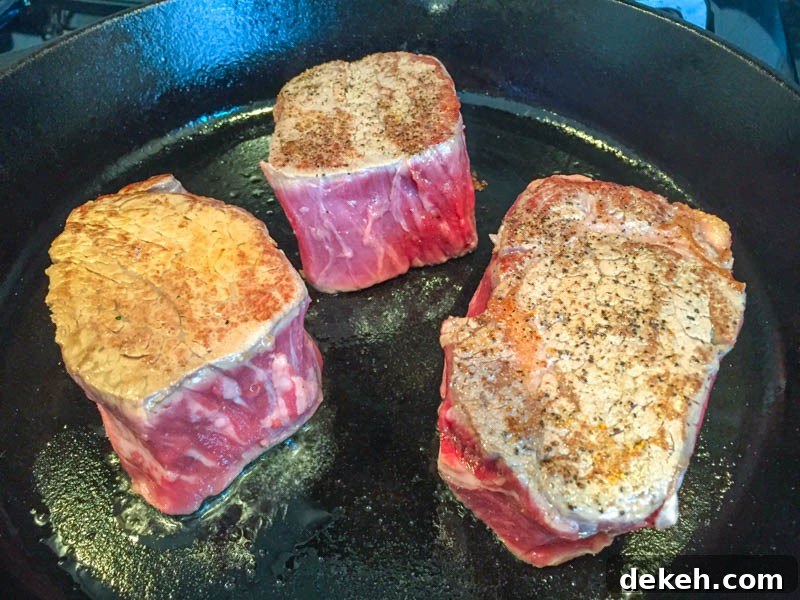
Step 4: Assembling the Individual Beef Wellington
Work with cold ingredients to preserve pastry structure. Roll out half sheets of puff pastry on a lightly floured surface. Spread a thin layer of cooled mushroom duxelles in the center, brush the seared filet with Dijon mustard, then place the meat atop the duxelles. Wrap the pastry tightly around the tenderloin, sealing edges with a little egg wash. Using a smaller sheet of dough avoids excessive thickness at the base and keeps the finished Wellington balanced and flaky.
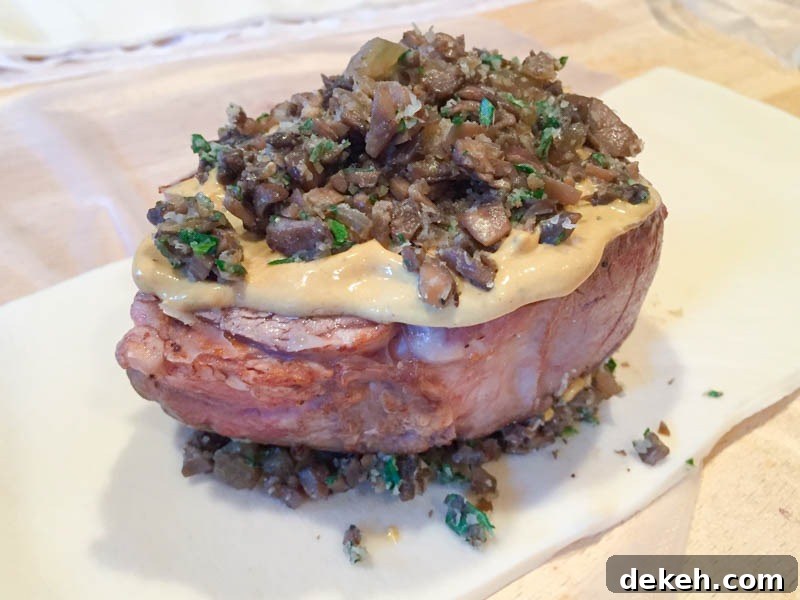
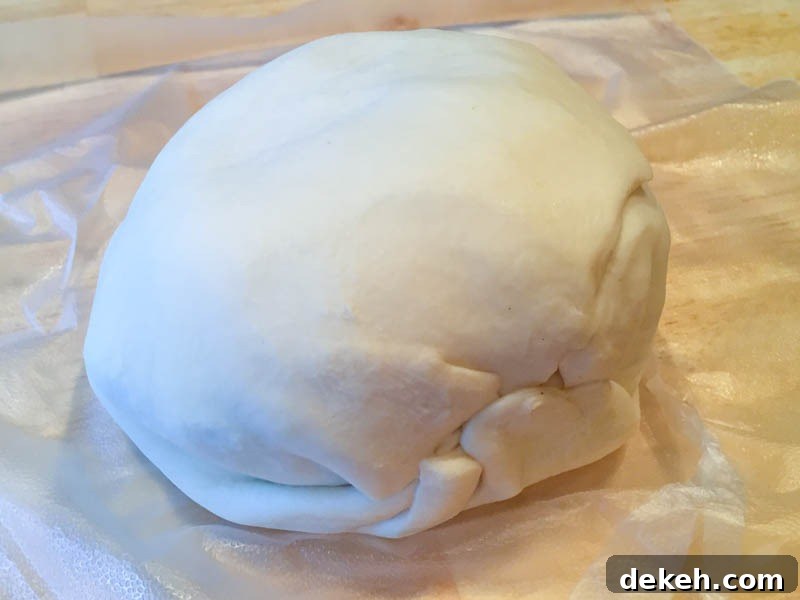
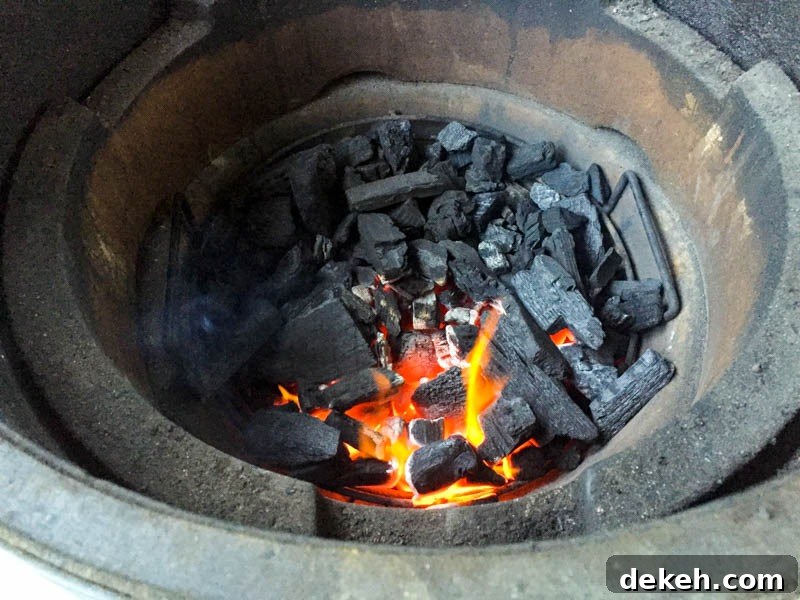
Step 5: The Indirect Big Green Egg Bake
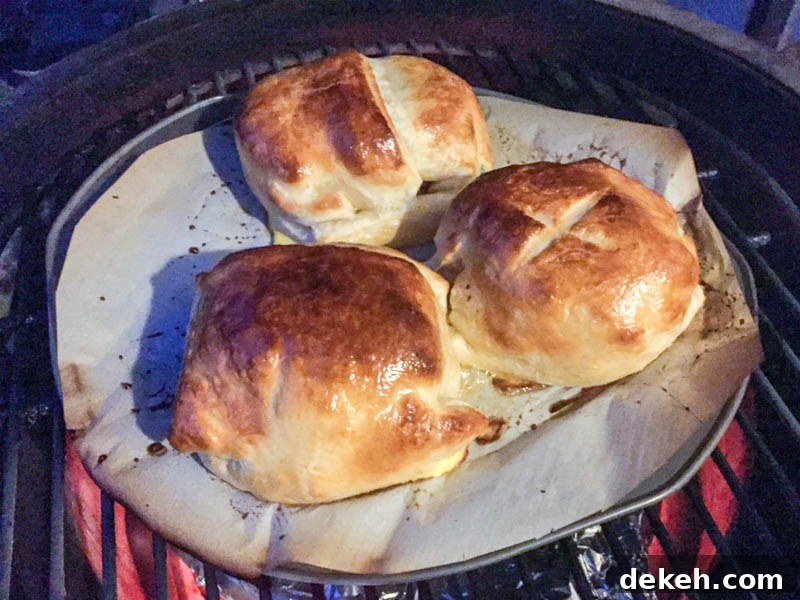
Preheat the Big Green Egg to a stable dome temperature of 425°F and configure for indirect cooking so the pastry browns evenly without direct flame contact. Use a plate setter, heat deflector, or similar accessory to block direct heat and encourage convection. Place the Wellingtons on a parchment-lined baking sheet or raised grid to allow air circulation and even browning. The consistent ceramic heat encourages the pastry to rise into flaky layers while the beef cooks gently to the target temperature.
Step 6: Brushing the Egg Wash and the Final Bake
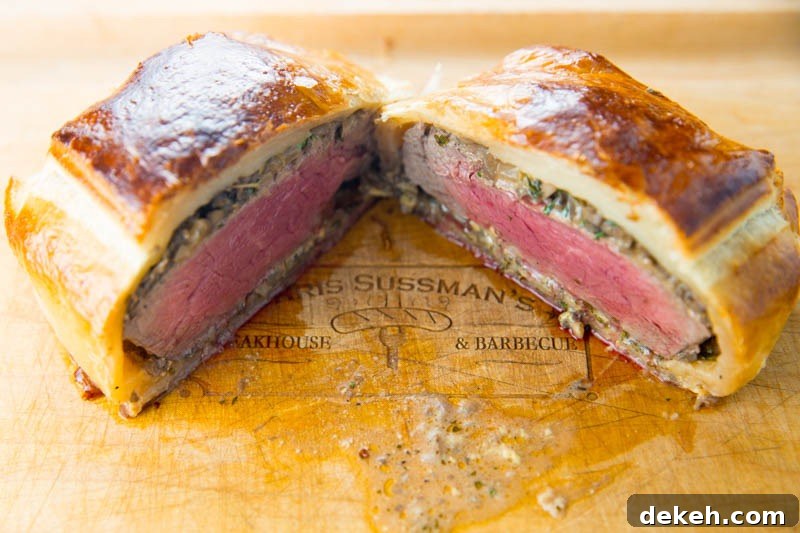
Brush the tops of the chilled Wellingtons with an egg wash (one beaten egg mixed with a tablespoon of milk) for a glossy, deep-golden finish. Bake indirectly for roughly 20–30 minutes, or until an instant-read thermometer inserted into the center of the filet registers about 130°F for medium-rare. Time will vary slightly by thickness and individual grill conditions; the thermometer is the most reliable indicator. Remove promptly when the target temperature is reached.
Step 7: The Final Rest and Serving
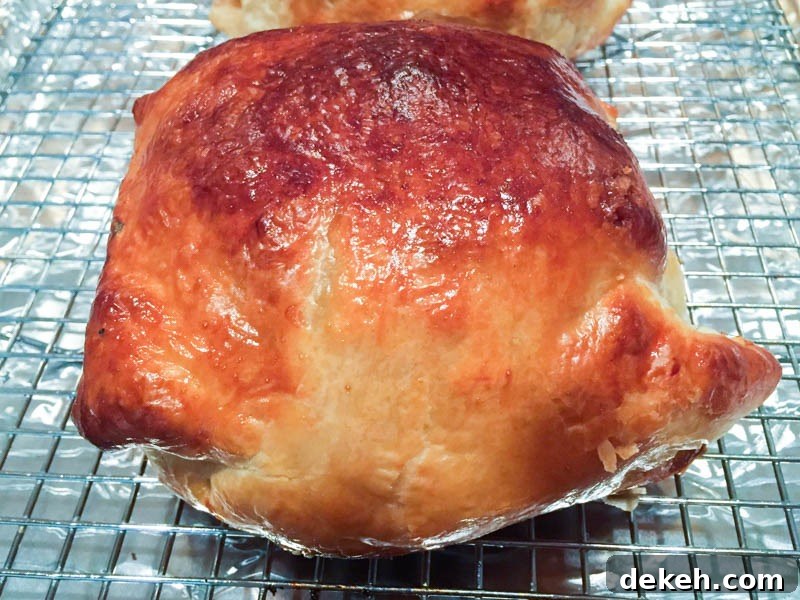
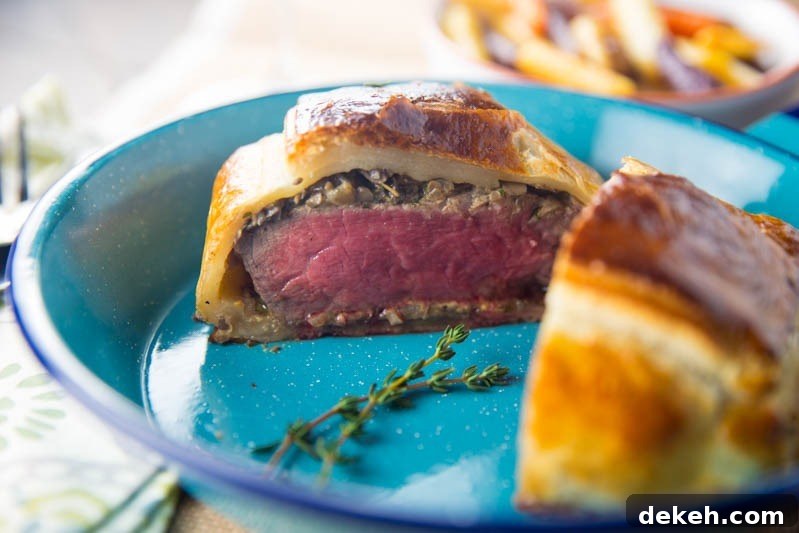
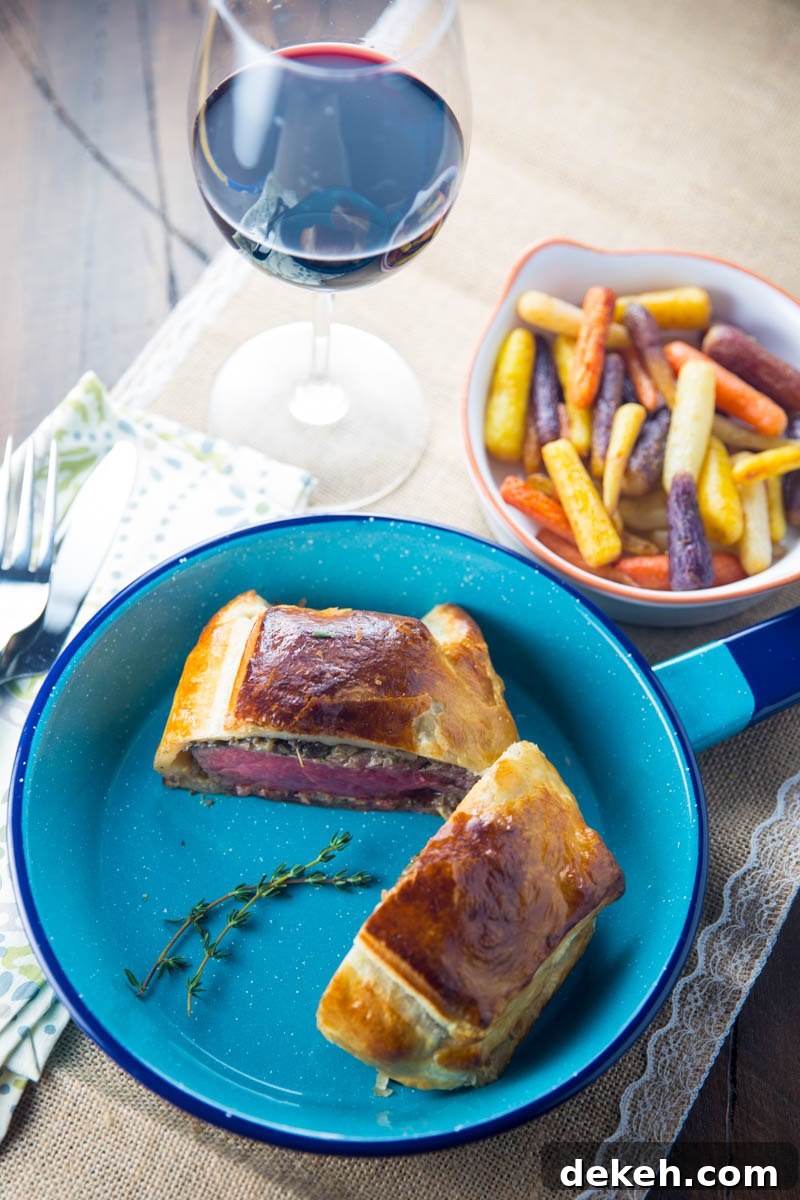
Rest the Wellingtons on a wire rack for about 10 minutes to allow juices to redistribute and the pastry base to stay crisp. Avoid placing hot pastries on a flat plate or board where steam can collect and soften the bottom. After resting, slice to reveal a rosy center surrounded by the mushroom coating and flaky pastry. Serve with simple sides that cut the richness — roasted asparagus or creamy mashed potatoes work well — and consider a light red wine reduction or peppercorn sauce if you want an extra finishing touch. Enjoy the contrast of buttery pastry, earthy duxelles, and tender beef.
Final Thoughts: Steakhouse Elegance in Your Backyard
Making individual Beef Wellington on the Big Green Egg demonstrates how versatile a ceramic grill can be. When you combine a quick, high-heat sear with a controlled indirect bake, the result is a restaurant-quality dish with the subtle, clean flavors of charcoal. The mushroom duxelles and Dijon mustard add savory layers that complement the beef while the puff pastry delivers a buttery, flaky shell. With attention to temperature and timing, this method produces reliably tender, medium-rare Wellingtons that are perfect for special occasions.
People Also Ask (PAA)
- How do I prevent a soggy bottom on my Beef Wellington? Cook the mushroom duxelles until all moisture has evaporated and use chilled components. Rest finished Wellingtons on a wire rack to keep the base crisp.
- Can I prepare Beef Wellington ahead of time? Yes. Assemble and refrigerate the wrapped Wellingtons for a few hours before baking; keeping them cold helps the pastry rise and stay flaky during the final bake.
- What is the best internal temperature for Beef Wellington? Aim for about 130°F before resting for a perfect medium-rare; carryover cooking during a 10-minute rest brings it to final temperature.
Ingredients
- 2 beef tenderloin pieces (2½–3 inches tall total, about ¾ lb)
- 1 tbsp vegetable oil
- 3 tbsp unsalted butter
- 6 oz finely chopped baby bella mushrooms
- 1/3 cup finely chopped sweet onion
- 1 large clove garlic, minced
- 1/2 tsp kosher salt, to taste
- Freshly ground pepper, to taste
- 1/4 cup dry sherry
- 1 large sprig fresh thyme
- 1 tbsp chopped fresh parsley
- 1 sheet puff pastry (half a box)
- 1 tbsp Dijon mustard
- Egg wash: 1 beaten egg + 1 tbsp milk
Instructions
- Prep the duxelles: Sauté mushrooms, onion, and garlic in butter with thyme, salt, and pepper. Cook until dry and paste-like. Deglaze with sherry and stir in parsley. Cool completely.
- High-heat sear: Heat oil until very hot and sear filets on all sides for about 60–90 seconds per side. Chill quickly to stop carryover cooking.
- Assembly: On a floured surface, spread a thin layer of duxelles on each pastry sheet. Brush filets with Dijon, place on duxelles, and wrap tightly. Seal edges with egg wash.
- BGE setup: Preheat to 425°F and configure for indirect heat using a heat deflector to allow even convection heat.
- Bake: Brush with egg wash, bake 20–30 minutes until internal temp reaches about 130°F for medium-rare.
- Rest: Rest on a wire rack for 10 minutes, then serve immediately with complementary sides.
Nutrition information is approximate and will vary with ingredient brands and portion sizes.