
Want to discover the real cost of hunting for meat? Use my free chart to determine whether hunting is cost-effective for your household.

Have you ever wondered, is hunting for meat cheaper than buying it? My partner and I asked the same question after we set a significant financial goal: move to the countryside, build a cottage and save for land and a home.
We planned to keep chickens and bees, maybe a goat or two, and to give our future children room to roam. To do it, we needed to save a large down payment—so every expense came under review.
Meat is one of the biggest grocery expenses for most families. Although we were hunters by upbringing, we had never actually calculated the full cost of our wild game. Was it truly cheaper to hunt for meat, or were we better off buying it?
The Cost of Hunting for Meat
Raised in hunting families, our instinct was to continue putting wild game on our table. But with tight savings goals, we needed a clear answer. We created a practical chart to track every hunting expense and weighed our results after a season. The findings were revealing.

Before you grab the free chart, here are the common costs most hunters should include when calculating the true price of harvested meat.
Cost 1: Hunter Education and Permits
Most regions require some form of hunter education before you can hunt with a firearm or bow. In addition to the time invested, these courses often carry a fee. Some places also require licenses that must be renewed periodically, such as a Possession and Acquisition License in Canada.
Cost 2: Licenses and Tags
Annual licenses and animal tags are recurring costs for hunters. Prices vary by location and species, but they should always be included in your per-pound cost calculation. If these were the only expenses, hunting would be comparatively inexpensive, but there are several other factors.

Cost 3: Hunting Equipment
Equipment can be a major upfront expense. Rifle hunters account for the rifle, scope, ammunition and maintenance. Archery hunters factor in a bow, sights, arrows and broadheads. Depending on where you hunt, you may also need binoculars, a spotting scope, quality camping gear, tree stands, or specialized clothing. These costs amortize over time and should be spread across seasons when calculating per-pound cost.
Quality knives and field tools matter for efficient, safe harvesting; their cost should be included as well.
Cost 4: Transportation and Fuel
Fuel is often underestimated. Driving to remote areas or towing equipment can consume significant fuel. Even a 30-minute drive each way adds up over multiple outings. Our hunting ground is relatively close—10–15 minutes—but many hunters travel far longer, which increases the effective price of each pound of meat.
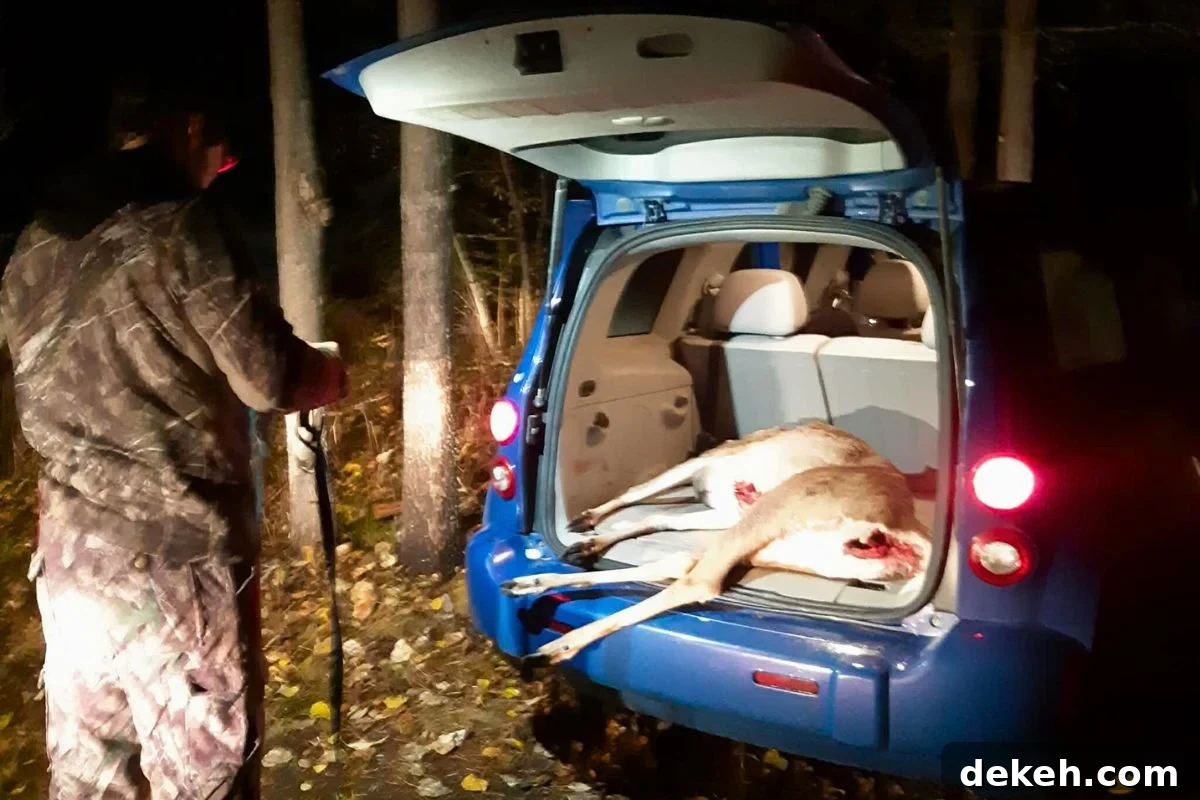
Cost 5: Time Off Work
If you take paid vacation days hunting, the opportunity cost is lower than unpaid leave. But if you miss work without pay, that lost income must be factored into the meat’s cost. Calculate how many work days you spend hunting in a season and multiply by your daily earnings to include this expense.

Cost 6: Processing and Storage
After a harvest, processing and storage add further expense. If you have a cool place to age meat and the tools and experience to butcher and wrap it, your processing cost is low. If you rely on a butcher, factor in their fees. Proper packaging, freezing and storage space should also be part of the per-pound calculation.

All of these elements influence the actual price of your meat and should be included when you tally costs.
Charting Your Hunting Expenses
We kept a simple spreadsheet-style chart to record every expense during our season: education fees, licenses, tags, equipment amortization, fuel, time off and processing. When our animals were processed and wrapped, we weighed the packaged meat and divided total expenses by total pounds to determine a per-pound cost.
You can use the same approach: track all costs, weigh your processed meat, and calculate the final per-pound price. That gives a clear comparison to local grocery prices or farm-raised beef and pork.
For context, locally raised beef cost us roughly $10 per pound at the time of our calculation. Using our chart, our harvested wild game worked out to about $3 per pound, after all costs were included. That represented a substantial annual saving for our family—but your results will depend on your region, travel distance, and how much you spend on gear and processing.
How to Calculate the Cost of Your Wild Harvested Meat
To calculate your own cost per pound:
- Record every hunting-related expense for the season.
- Include education, licenses, tags, equipment (amortized), fuel, time off and processing fees.
- Weigh the finished, packaged meat after processing.
- Divide total expenses by total pounds of packaged meat.
I created a blank chart to help you track these items and calculate the true cost of your venison or other wild game. Print the chart, complete it over a season, and compare the result to local retail prices. Then decide whether hunting is the right economic choice for your household.
In your situation, is hunting for meat actually cheaper than buying it? Try the chart and find out.