
Do you remember when sleep came easily—falling into bed and waking up hours later feeling refreshed? As children many of us were told to “roll over and go to sleep,” and we did. We could nap for hours or stay up late and still bounce back the next day. Back then, sleep happened in large, effortless amounts.
Today, sleep often feels elusive. We lie awake staring at the ceiling, wake up throughout the night, or find ourselves wide awake for hours despite feeling exhausted. Sleep has become a source of stress rather than restoration.

When it comes to body composition and weight management, sleep—along with nutrition, hydration, and stress management—plays a critical role. Sleep affects more than energy levels; it influences hormones, recovery, appetite, and metabolic health. Improving sleep habits can make a meaningful difference for wellness and fat loss.
Many people dismiss poor sleep as something they’re simply “bad at,” but like most areas of health, there are practical habits and strategies that substantially improve sleep quality. Below are straightforward, research-backed steps you can adopt.
First: Go to bed and wake up at the same time every day. Our bodies thrive on routine. Consistent sleep and wake times strengthen your internal clock, making it easier to fall asleep and wake up feeling rested. Aim to keep the same schedule even on weekends when possible; occasional disruptions are unavoidable, but be intentional about which nights you allow to vary.
Second: Watch caffeine timing and intake. Try to finish caffeine no later than noon, and if you enjoy an afternoon cup, opt for decaf or stop by 2pm. While some people feel unaffected by late caffeine, its half-life means a significant amount can remain in your system for six hours or more—and for some individuals it can linger up to ten hours. If sleep troubles persist, experiment with cutting afternoon caffeine for a few weeks to see if it helps.
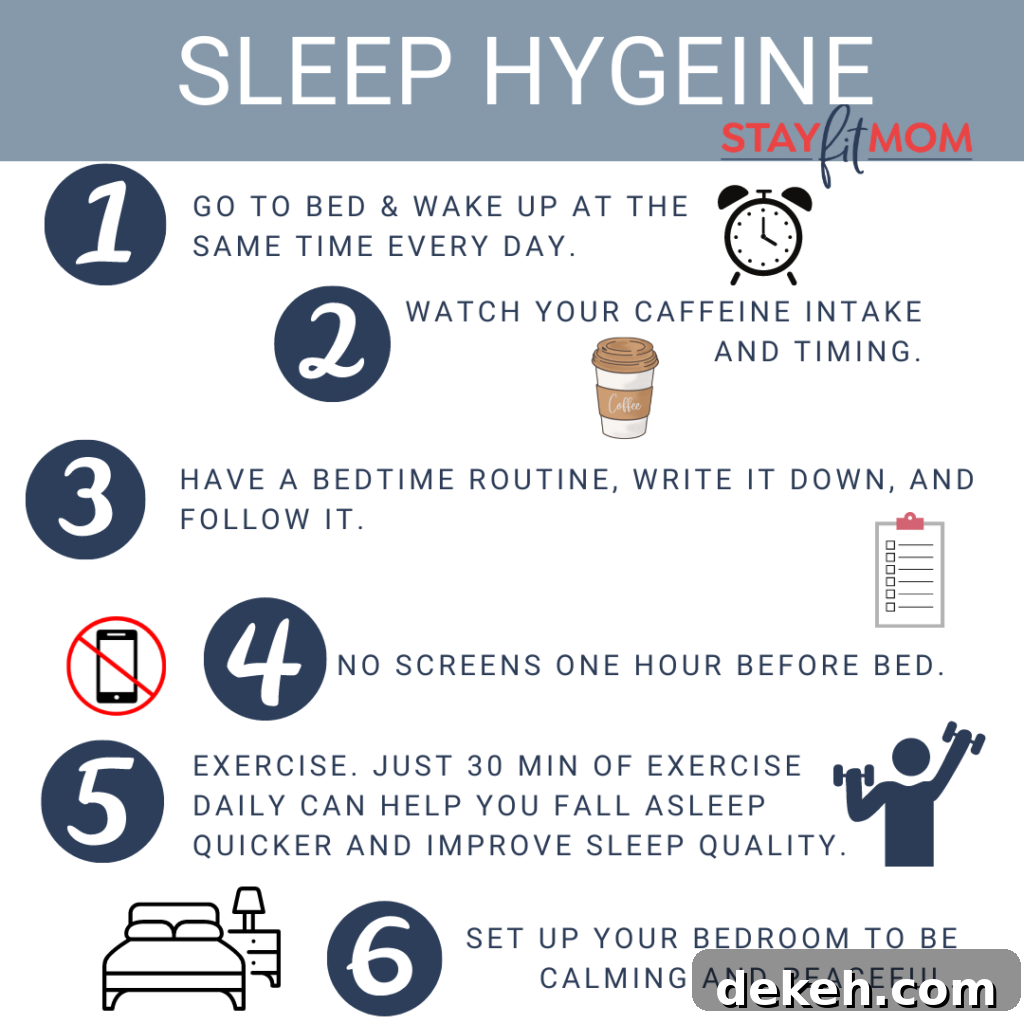
Third: Create and follow a bedtime routine. Bedtime rituals work for children because they signal the body it’s time to sleep; the same applies to adults. Pick calming activities and perform them in the same order nightly. Write the routine down and assign times so it becomes automatic. For example, if your target lights-out is 10:00 pm, a routine might look like:
- 9:00 pm: screens off
- 9:00–9:10 pm: light evening snack
- 9:10–9:25 pm: quick household tidy, check on kids, lay out clothes for morning workout
- 9:25–9:35 pm: wash face, skincare, brush teeth
- 9:35–9:55 pm: read a physical book in bed
- 9:55 pm: lights out
Fourth: No screens for one hour before bed. Electronic devices emit blue light and keep the brain engaged, both of which can delay sleep onset and reduce sleep quality. Replace scrolling with quiet activities—talk with your partner, read a book, or journal—to help your mind transition toward rest.
Fifth: Exercise regularly. Physical activity helps you fall asleep faster and improves sleep quality, with benefits sometimes appearing the same night. Even a single 30-minute session can make a noticeable difference. Avoid intense workouts immediately before bed, however, since exercise temporarily raises alertness and body temperature.
Sixth: Make your bedroom a calming sleep environment. Invest in comfortable bedding and pillows, keep lighting soft, and clear clutter. A tidy, peaceful space signals your brain that this is a place for rest. Keep a notebook on your nightstand for late-night thoughts so you don’t lie awake rehearsing them. A white noise machine or fan can mask disruptive sounds, and if a partner’s snoring is an issue, consider discussing medical options or simple aids like nasal strips.
Sleep may not always come easily, but you can stack the odds in your favor by adopting consistent habits and creating a supportive environment. Don’t settle for poor sleep—treat it as an essential pillar of health and a tool to help you reach your wellness goals.
Read more about sleep and how it impacts fat loss.