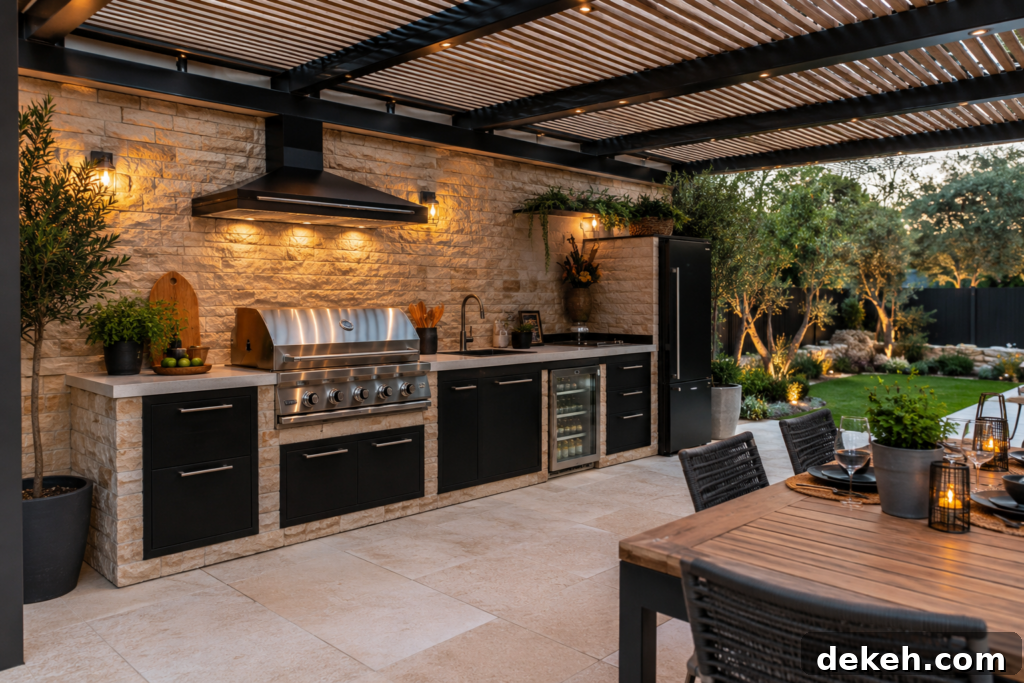
From the first warm days of spring, the outdoor kitchen reclaims its place at the heart of the garden. It becomes the spot for simple meals, long apéritifs that stretch into the night, and relaxed evenings in pleasant weather. Today an outdoor kitchen is no longer just a distant barbecue on the terrace; it is conceived as a genuine living space, designed with as much care as an indoor kitchen.
To be comfortable and functional every day, an outdoor kitchen needs a minimum of organization. Location, materials, circulation, sun protection, storage and appliances—all these details matter when creating a durable and enjoyable space. Here’s what to consider before you start.
Choosing the right location for your outdoor kitchen
Many people instinctively place the kitchen at the far end of the garden, but that’s not always the most practical solution. When the outdoor kitchen is too far from the house, frequent trips back and forth for dishes, glasses or forgotten ingredients become tedious.
A spot close to the house is generally preferable, with easy access to water and electricity. This simplifies technical connections and keeps installation costs down.
Exposure to sun and wind also matters. A south-facing kitchen without shade can become stifling in strong heat, while a very windy location makes cooking difficult and mealtimes less pleasant. Aim for a balance of light, shade and airflow.
Define your needs before buying equipment
Before purchasing any equipment, take time to reflect on how you’ll use the space. Some want a convivial corner for grilling in summer; others dream of a fully equipped kitchen with a sink, refrigerator, plancha and pizza oven.
Lifestyle greatly influences the layout: a household that frequently hosts guests will need different features than a couple who use the space only on weekends.
Ask yourself a few practical questions:
- How many people will regularly use the space?
- Do you plan to prepare full meals outdoors?
- Do you need substantial storage?
- Will the kitchen be used only during summer?
Clear answers help avoid unnecessary spending and poorly thought-out installations.
Organize functional zones
Traffic flow is as important as in an indoor kitchen. A well-designed outdoor kitchen allows you to cook comfortably without getting in each other’s way.
The most practical setup divides the area into distinct functional zones.
Cooking zone
This is the centerpiece: charcoal barbecue, gas plancha, kamado or wood-fired oven—the choice depends on cooking habits and the ambiance you want to create.
The plancha has surged in popularity because it offers quick, social and relatively healthy cooking while producing less smoke than a traditional barbecue.
Preparation zone
A proper work surface is essential. Too small and it becomes frustrating; too fragile and it will deteriorate quickly from humidity and temperature changes.
A comfortable countertop makes a big difference: it allows multiple people to prepare food, provides space for utensils, and improves overall flow.
Washing zone
An outdoor sink may seem optional at first, but it quickly proves indispensable. It lets you rinse vegetables, wash hands and clean a few utensils without going back inside.
Dining and relaxation zone
An outdoor kitchen should invite lingering. A large table, comfortable seating and a few decorative touches create a welcoming atmosphere that encourages guests to stay.
To structure the lounge area, many homeowners add a retractable awning or other shading solution to enjoy the outdoors even on very hot days.
Materials for a durable outdoor kitchen
Outside materials face sun, rain, humidity, wind and temperature swings, so durability and low maintenance are key. Choose materials that withstand the elements while keeping a clean, attractive look.
Stainless steel
Widely used in professional kitchens, stainless steel is a reliable choice outdoors. It resists humidity, is easy to clean and lends a contemporary appearance.
Natural stone
Stone like travertine, granite or limestone adds character and warmth, especially suited to Mediterranean-style gardens.
Polished concrete
Polished concrete has become trendy for its minimalist look and robustness. It fits well in modern outdoor designs.
Wood
Wood brings timeless warmth but requires more maintenance. Durable species such as teak or certain exotic woods hold up well outdoors.
Protecting the kitchen from sun and weather
Protection from sun and rain is crucial. Without it, an outdoor kitchen can become uncomfortable during heatwaves or unusable in bad weather.
Many homeowners choose adjustable pergolas with louvers to control shade, ventilation and light throughout the day. Retractable awnings are another excellent option for existing terraces, and motorized models make it easy to manage shade according to the time of day.
Create a warm atmosphere with lighting
Lighting transforms the mood of an outdoor kitchen. Harsh light spoils ambiance, while soft, well-distributed illumination invites you to linger into the evening.
A mix of light sources usually works best:
- pendant lamps over the dining table,
- LED string lights,
- lanterns,
- and a few recessed spots near the work surfaces.
Together these create a cozy atmosphere without sacrificing visual comfort for cooking and dining.
Equipment that makes everyday life easier
Some appliances seem nonessential at first but quickly become indispensable once installed.
Outdoor refrigerator
Handy during summer meals, it avoids constant trips inside for drinks or ingredients.
Built-in storage
Integrated storage keeps the area organized: utensils, cushions and accessories remain protected and easy to access.
Pizza oven
A pizza oven immediately adds a convivial touch and turns meals into shared experiences.
Common mistakes to avoid
Certain mistakes recur when planning an outdoor kitchen.
Choosing unsuitable materials
Low-quality furniture deteriorates quickly in outdoor conditions. It’s worth investing in durable materials from the start.
Underestimating electrical needs
Blenders, lights, refrigerators or speakers often require more power points than expected—plan accordingly.
Overcrowding the space
An overly cluttered kitchen becomes uncomfortable. Ensure clear circulation around all functional zones.
Neglecting sun protection
Cooking in full sun during a heatwave is exhausting. Effective solar protection dramatically improves usability.
What budget should you plan for?
Budget depends on chosen equipment and materials. A simple setup with a barbecue and countertop can start around 2,000 euros.
A more complete kitchen with a sink, storage and integrated appliances typically ranges between 5,000 and 15,000 euros.
High-end or custom installations can exceed these amounts, but coherence in design and function often matters more than size: a small, well-thought-out kitchen can be more comfortable than a large, poorly organized one.
Why outdoor kitchens are so popular today
Outdoor living spaces have gained importance in recent years. Gardens and terraces are now extensions of the home where people relax, entertain and savor life outdoors.
An outdoor kitchen supports this slower, more social lifestyle: you can cook while staying with your guests, share meals more easily and enjoy a relaxed atmosphere. It also enhances the visual appeal of the exterior and can increase a property’s attractiveness.
FAQ: key questions before you build
Do you need a permit to install an outdoor kitchen?
It depends on size and planned connections. Some installations require a prior declaration to the local municipality.
What surface is comfortable for an outdoor kitchen?
An area of 10 to 15 m² usually provides a comfortable layout.
Which materials resist outdoor conditions best?
Stainless steel, natural stone and certain concrete finishes are among the most weather-resistant options.
Can you install an outdoor kitchen on a terrace?
Yes, provided the terrace structure is strong and stable enough to support the installation.
Does an outdoor kitchen increase a home’s value?
Often yes—well-designed outdoor spaces are highly valued by buyers.
Conclusion
Designing an outdoor kitchen is ultimately about creating a new way of living at home. It’s not just a place to cook, but a setting to host, share and make the most of good weather.
With thoughtful planning, the right materials and a few well-chosen appliances, your garden can quickly become the favorite spot in the house.