
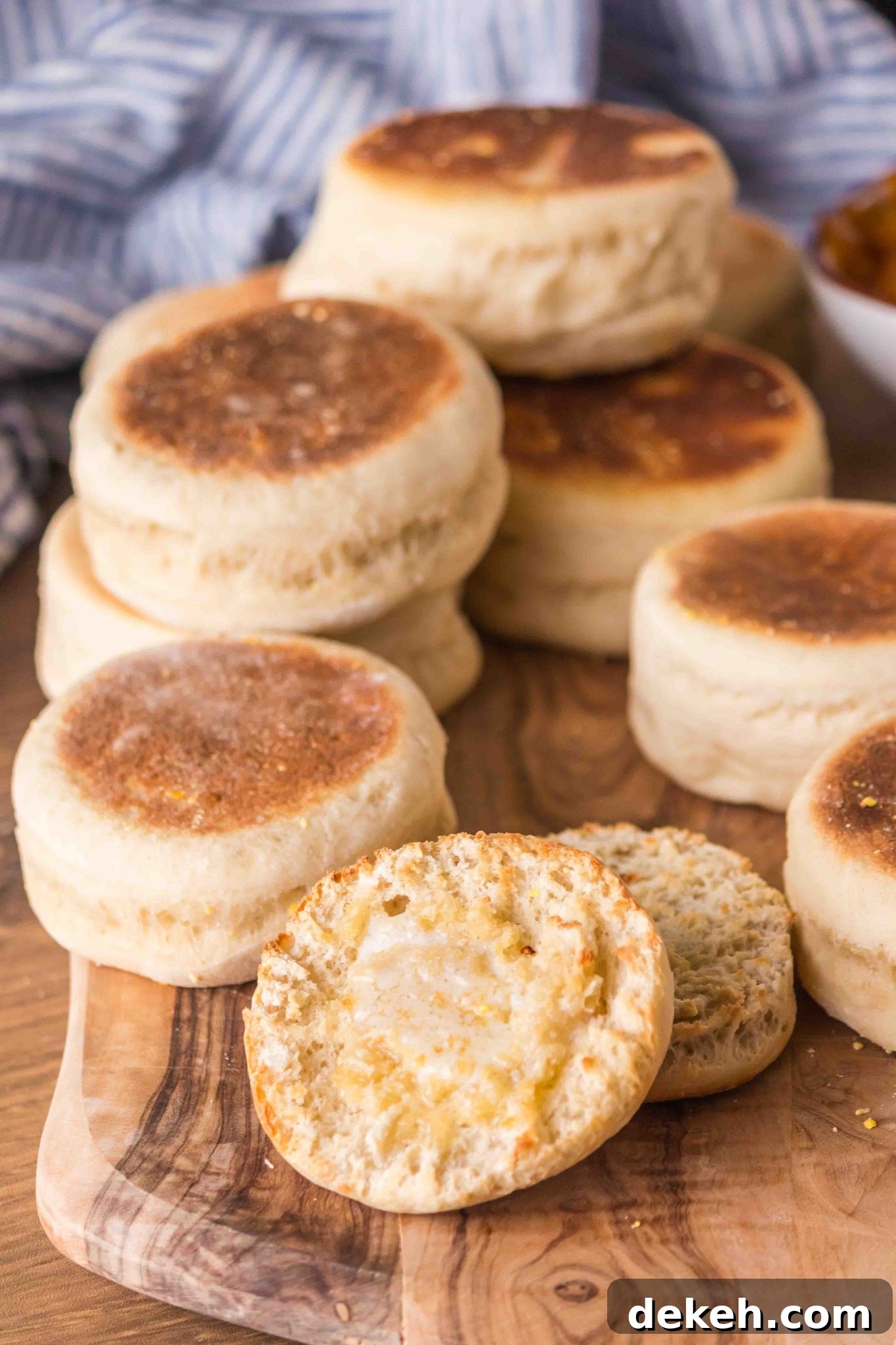
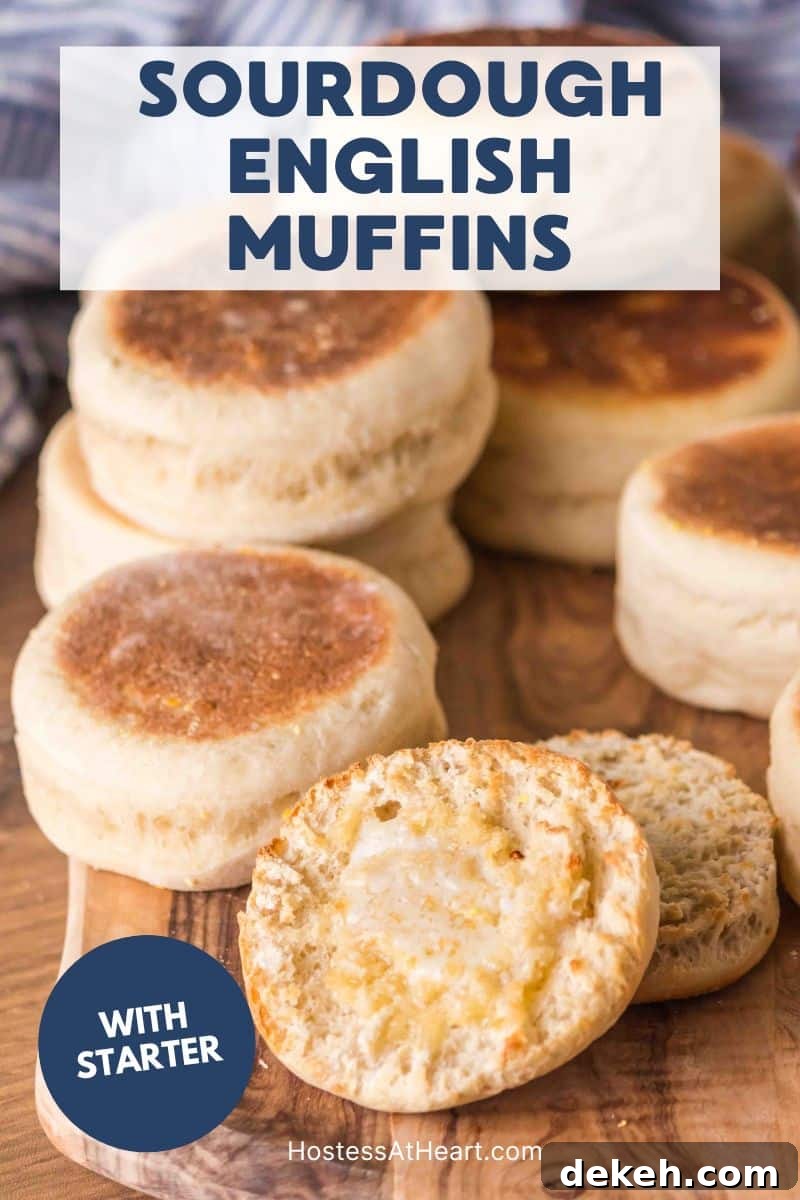
If you have an active sourdough starter on your counter, these homemade Sourdough English Muffins should be your next recipe. They’re light, tender, and cooked on the stovetop in a cast-iron skillet—no oven required. The nooks and crannies are far better than store-bought, and they’re perfect split, toasted, and buttered.
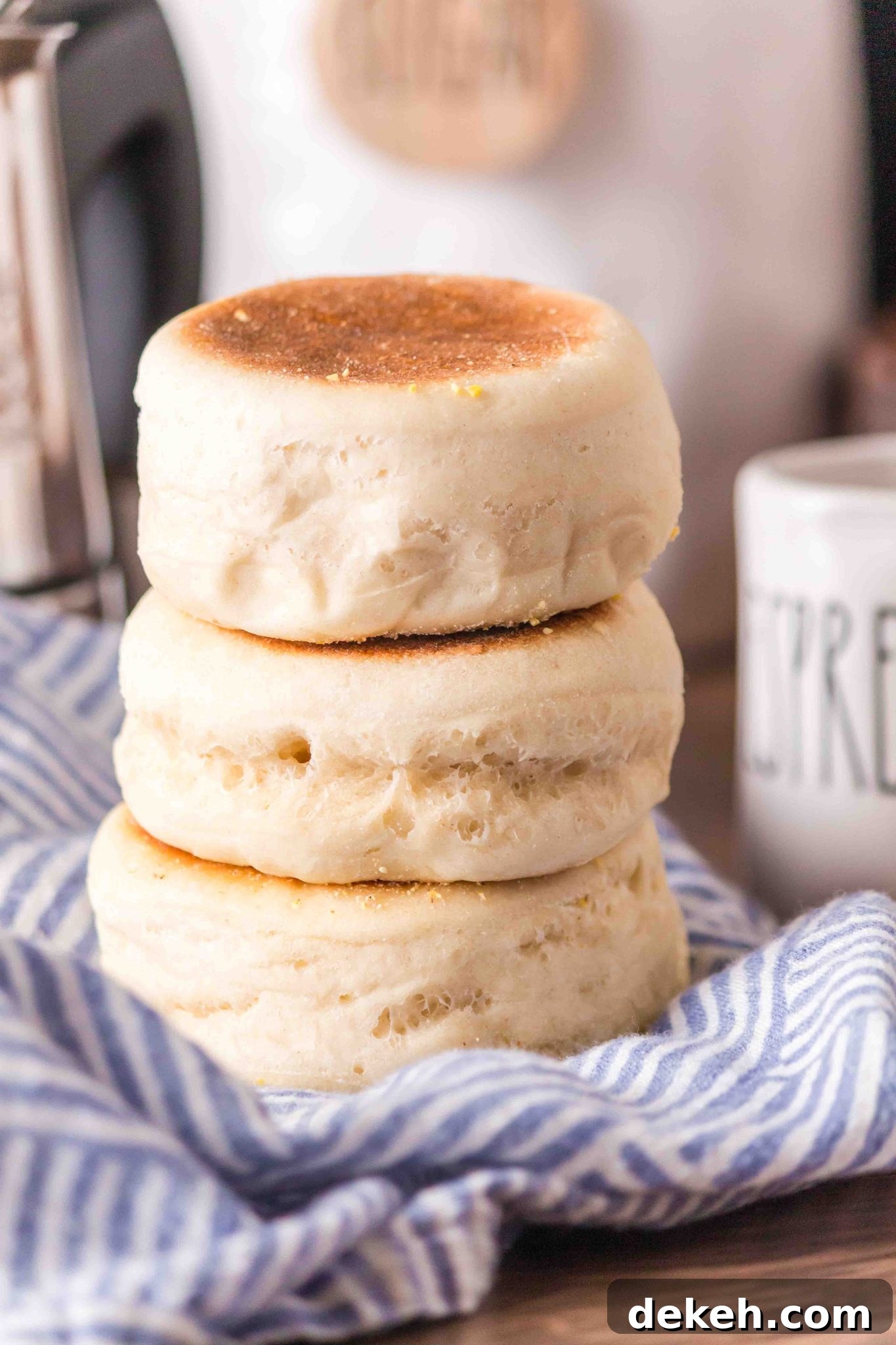
These muffins are easy to make with your own active sourdough starter. The process—mixing, shaping, cutting, and stovetop cooking—is straightforward and rewarding. Follow the steps below, and you’ll be enjoying a warm breakfast in a few hours.
Why You’ll Love Sourdough English Muffins
- Great use for active starter. This recipe calls for a bubbly, recently fed starter. Feed it the night before or about four hours before you begin so it’s active and lively.
- Fresh, flavorful bread. These muffins are ideal for breakfast sandwiches and keep well when made in a batch for the week.
- Better than store-bought. Homemade sourdough brings tang and texture that supermarket varieties can’t match.
Ingredients
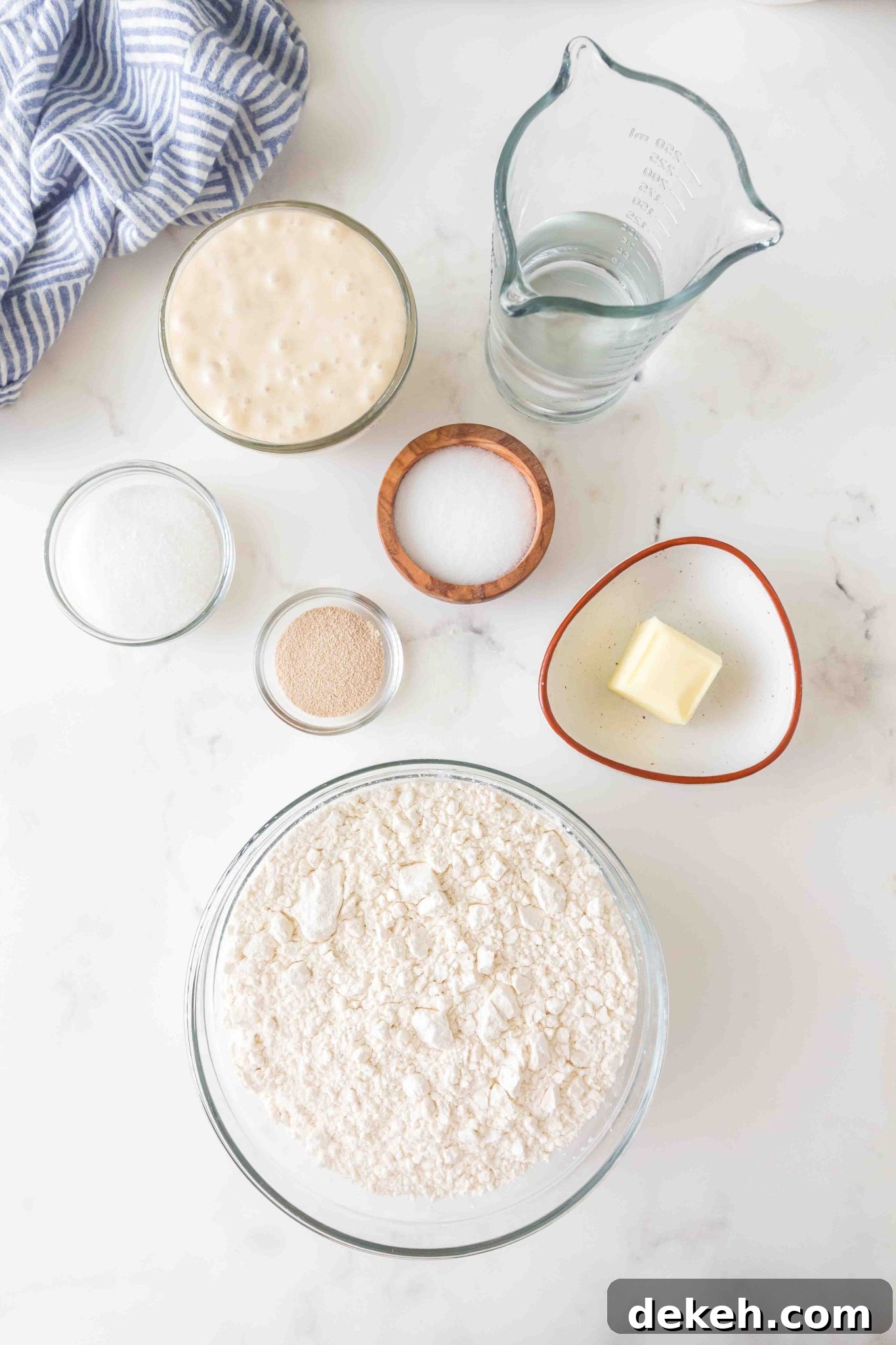
- Warm water – 95°F to 105°F.
- Instant dry yeast – Combined with sourdough starter for reliable rise and great texture.
- Sourdough starter – Use an active, bubbly starter (not discard).
- Sugar – Granulated white sugar.
- All-purpose flour – Bleached or unbleached works fine.
- Salt – Kosher or fine sea salt recommended to avoid pockets.
- Butter – Melted and cooled; salted or unsalted is fine.
- Cornmeal – Optional but recommended to prevent sticking and preserve airiness.
How To Make Sourdough English Muffins
This recipe is mixed by hand so you can feel the dough. It’s not overly wet, and using your hands helps judge the texture.
Step One: Proof the yeast
Melt the butter and let it cool. In a large bowl, combine warm water, instant yeast, active starter, and sugar. Let the mixture sit until the yeast and starter begin to activate.
Step Two: Mix the dry ingredients
Add flour and salt to the liquid and mix until nearly incorporated. Then add the cooled melted butter and continue mixing.
Step Three: Mix the batter
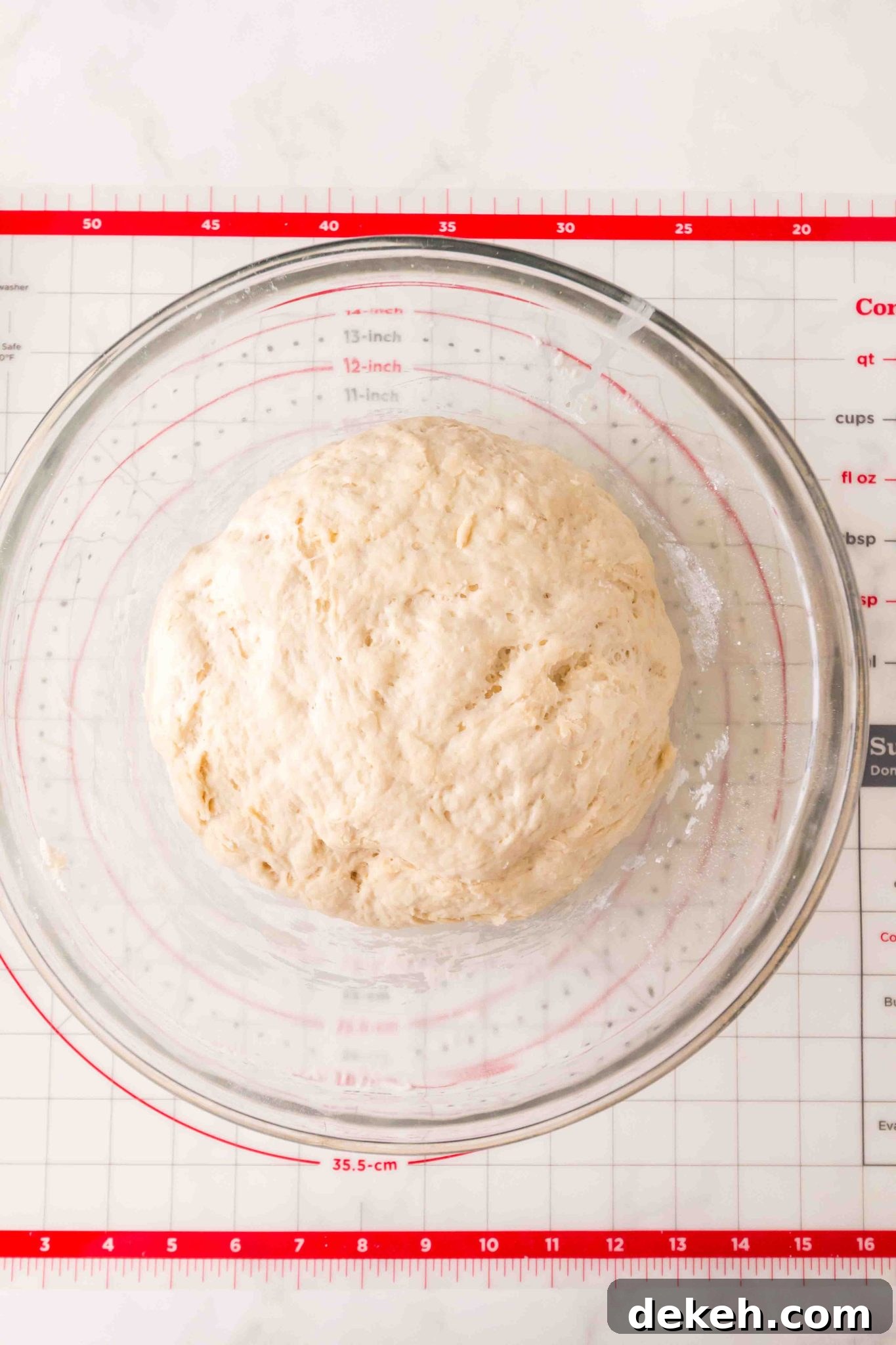
Use a Danish whisk or wooden spoon to bring the dough together. When it becomes too thick to stir, use your hands to finish incorporating the flour and shape the dough into a ball.
Step Four: First rise
Place the dough ball in the bowl, cover with plastic wrap, and let it rise 90 minutes in a warm, draft-free spot. If your starter is young, allow more time.
Step Five: Prepare a cornmeal-lined tray
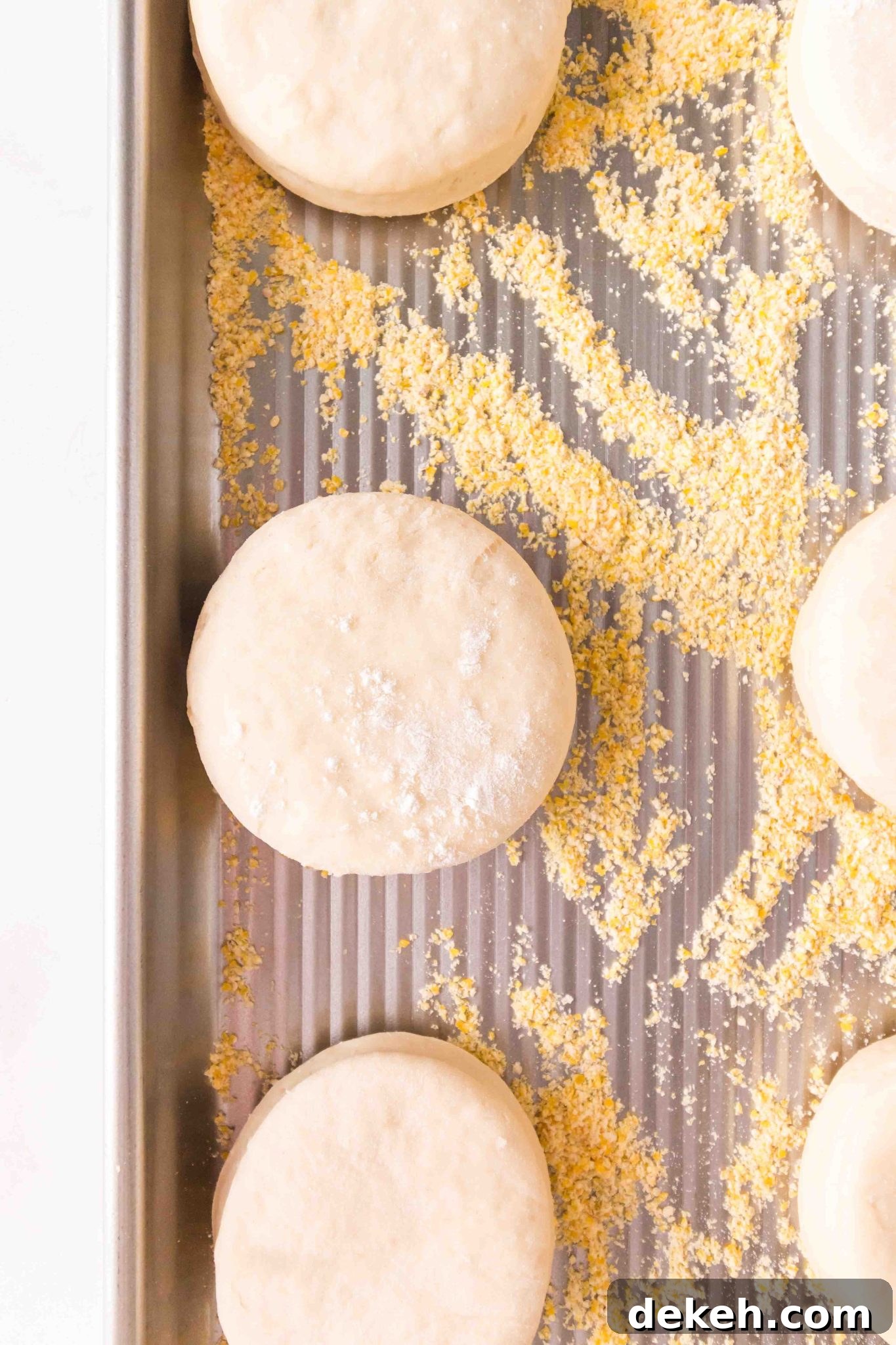
While the dough rises, spread cornmeal on a cookie sheet or large plate and set aside.
Step Six: Roll out the dough
Turn the dough onto a lightly floured surface and roll it to about 1/2 inch thick. Use a 3-inch biscuit cutter or English muffin rings to cut rounds. Re-roll scraps and cut until all the dough is used.
Step Seven: Second rise
Place the cut muffins on the prepared pan dusted with cornmeal, cover with a towel, and let them rise 45 minutes in a warm, draft-free place.
Step Eight: Cook on the stovetop
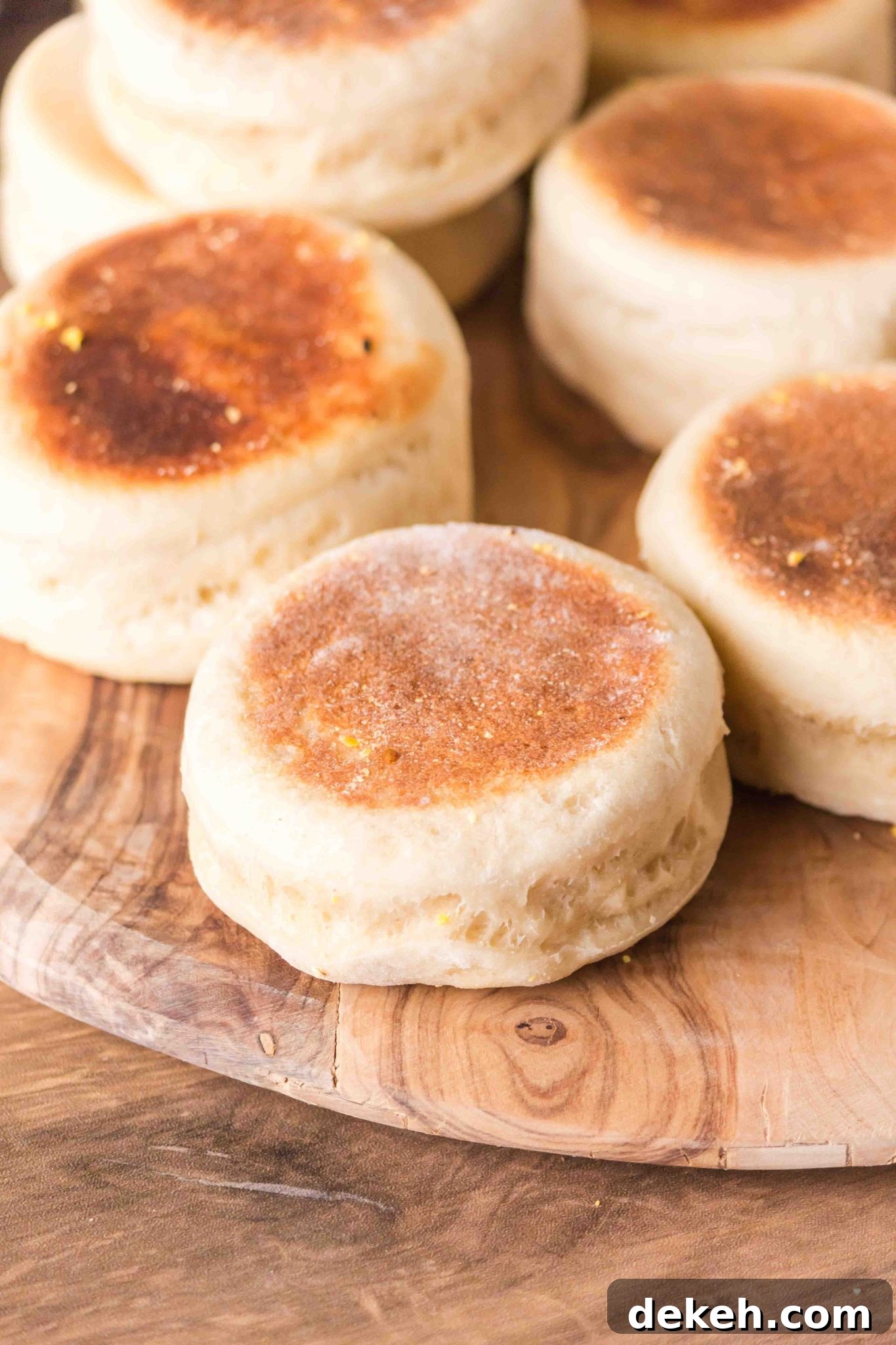
Heat a non-stick pan or well-seasoned 10-inch cast-iron skillet over medium and cover it. Add 3–4 muffins at a time and cook covered for about 5 minutes on the first side, then flip and cook 4–5 minutes on the second side. The internal temperature should reach 190°F. Cool on a wire rack before splitting with a fork or cutting with a serrated knife.
Variations & Flavor Ideas
- Make them larger: Use a 4–5 inch cutter for sandwich-sized muffins, keeping thickness at 1/2 inch.
- Spicy: Fold in shredded pepper jack or sprinkle red pepper flakes; or add cooked bacon pieces.
- Herbed: Mix in chopped rosemary or dill for savory muffins.
- Seasonal: Add cinnamon or pumpkin pie spice for a warm fall flavor.
Storage & Reheating
Store cooled muffins at room temperature in a freezer-quality zip-top bag. For longer storage, freeze individually on a tray, then transfer to an airtight container. Reheat by toasting or briefly in an air fryer for a few minutes.
Tips for Perfect English Muffins
- Water temperature: Keep water between 95–105°F. Too cool delays yeast; too hot kills it.
- Adjust for humidity: Add a little flour or water as needed. The dough should be tacky, not sticky—similar to playdough.
- Use cornmeal: It prevents sticking and helps preserve air bubbles when transferring the muffins to the pan.
- Handle gently: After the second rise the dough is full of air. Use hands, a bench scraper, or a fish spatula to lift each muffin without deflating it.
- Cover the pan: Cooking covered creates steam so the muffins cook through without over-browning the exterior.
Troubleshooting
- Flat muffins: Starter wasn’t active enough or muffins were handled roughly. Feed your starter 4–8 hours before using and be gentle when transferring.
- Doughy inside: Ensure the pan is covered while cooking. Cook until internal temperature reaches 190°F.
- Few nooks and crannies: Avoid overmixing and do not deflate the dough when moving it to the skillet.
- Discard vs active starter: This recipe requires active starter plus yeast for a dependable rise. Discard won’t produce the same lift.
Frequently Asked Questions
How do I know when muffins are done?
Use an instant-read thermometer; remove from the pan when the internal temperature reaches 190°F.
Do I need a cast-iron skillet?
No. A non-stick skillet with a lid works well. The lid is essential to trap steam and ensure even cooking.
Can I refrigerate the dough overnight?
Yes. After mixing, cover and refrigerate for the first rise. Bring to room temperature for about 30 minutes before rolling, cutting, and finishing the second rise.
Why use both starter and yeast?
Combining both delivers the tangy flavor of sourdough and the predictable rise provided by commercial yeast.
What to Serve With Sourdough English Muffins
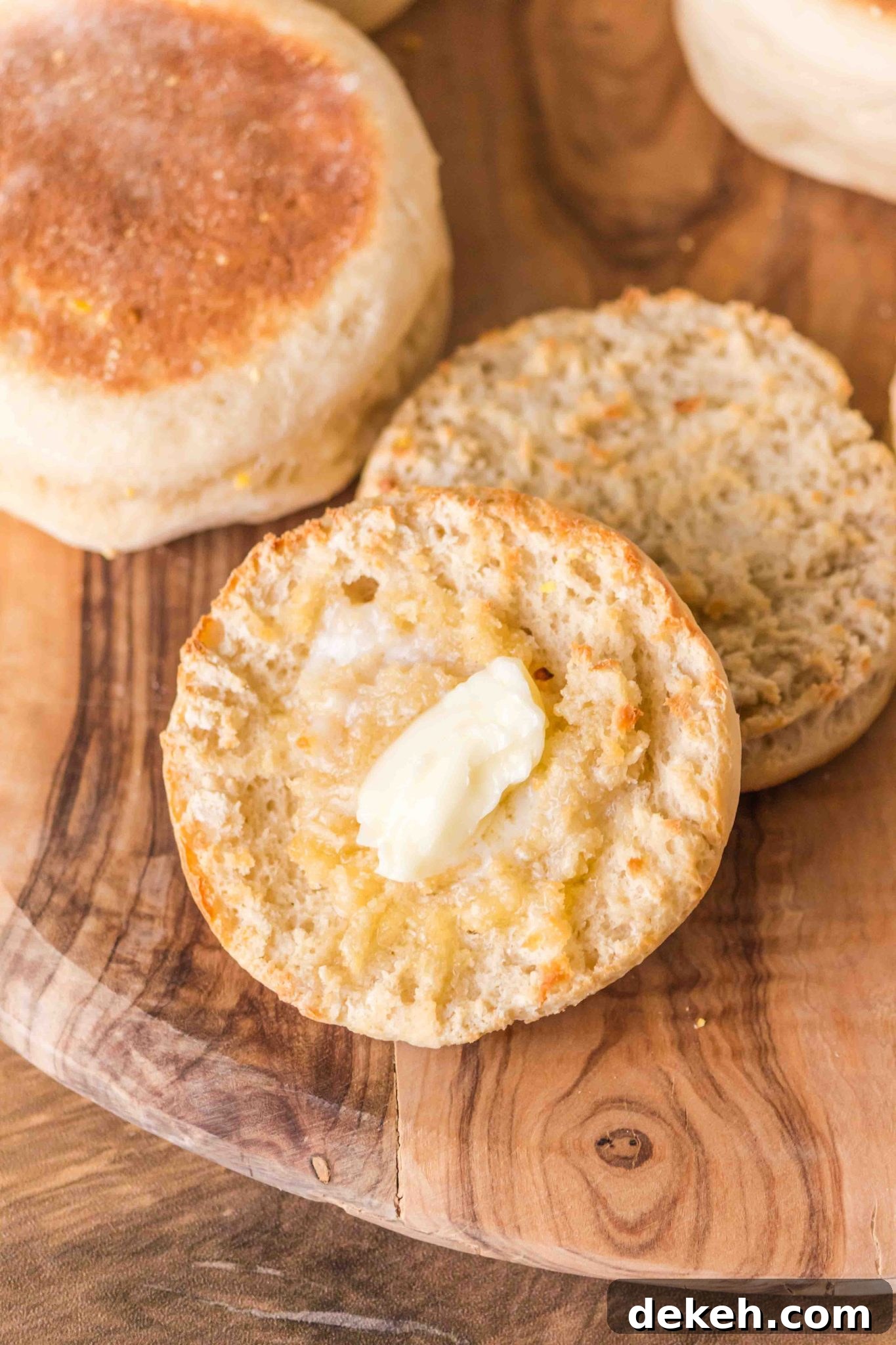
Serve warm or toasted with butter or jam. They’re excellent for egg sandwiches, BLTs, or topped with a poached egg. Kids will love them as mini pizza bases topped with sauce and cheese.
Please try the recipe and share your results. Comments and ratings help others decide if it’s right for them.
Originally published: June 4, 2024. Recently updated March 26, 2026 with clearer instructions, tips, and serving ideas. No changes were made to the recipe itself.