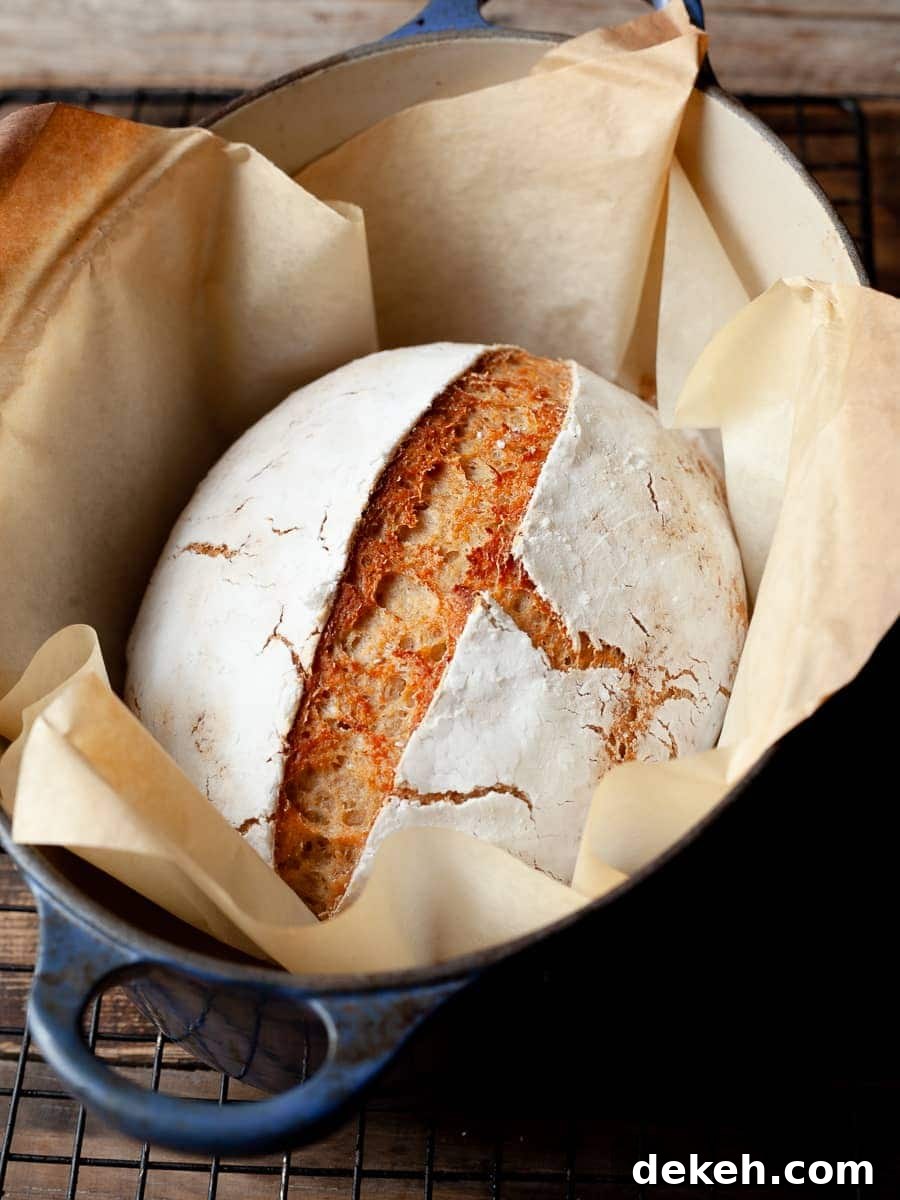
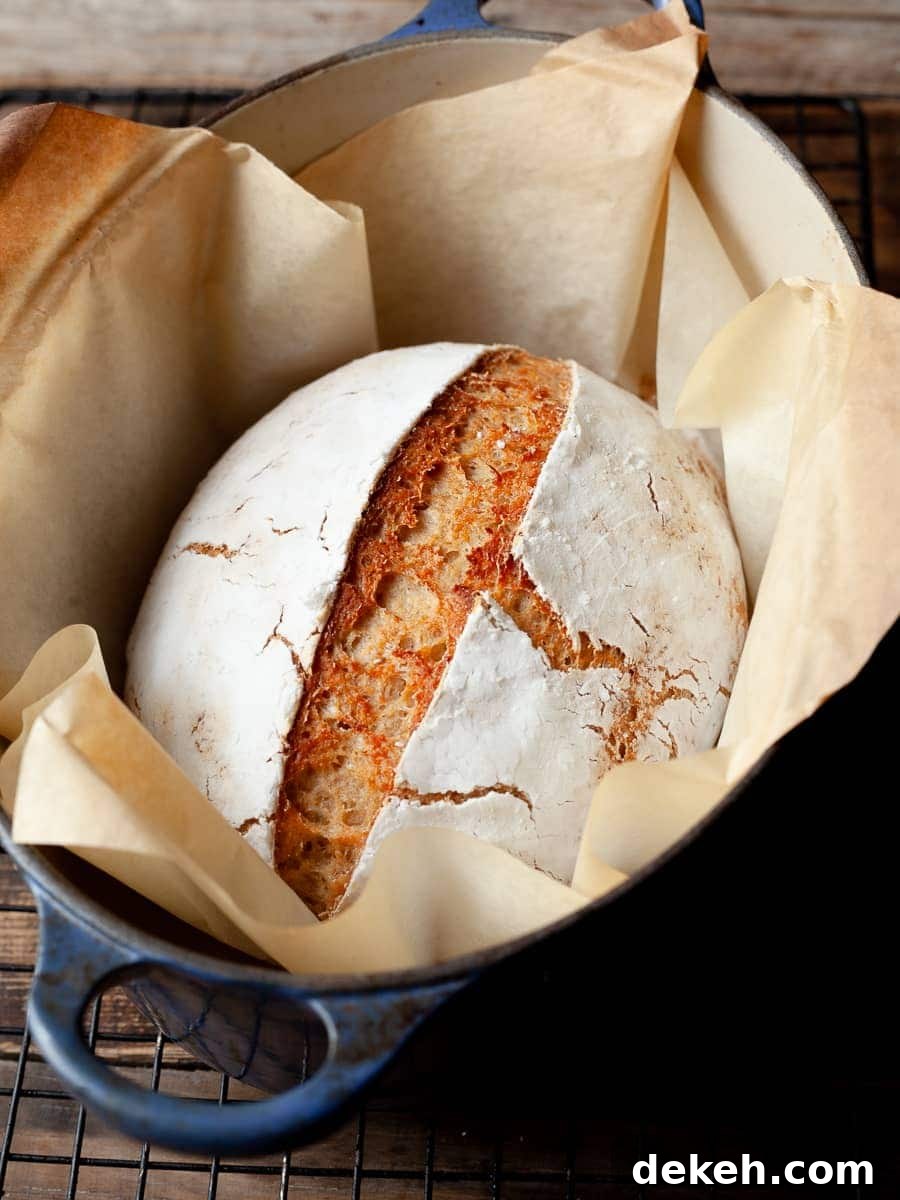
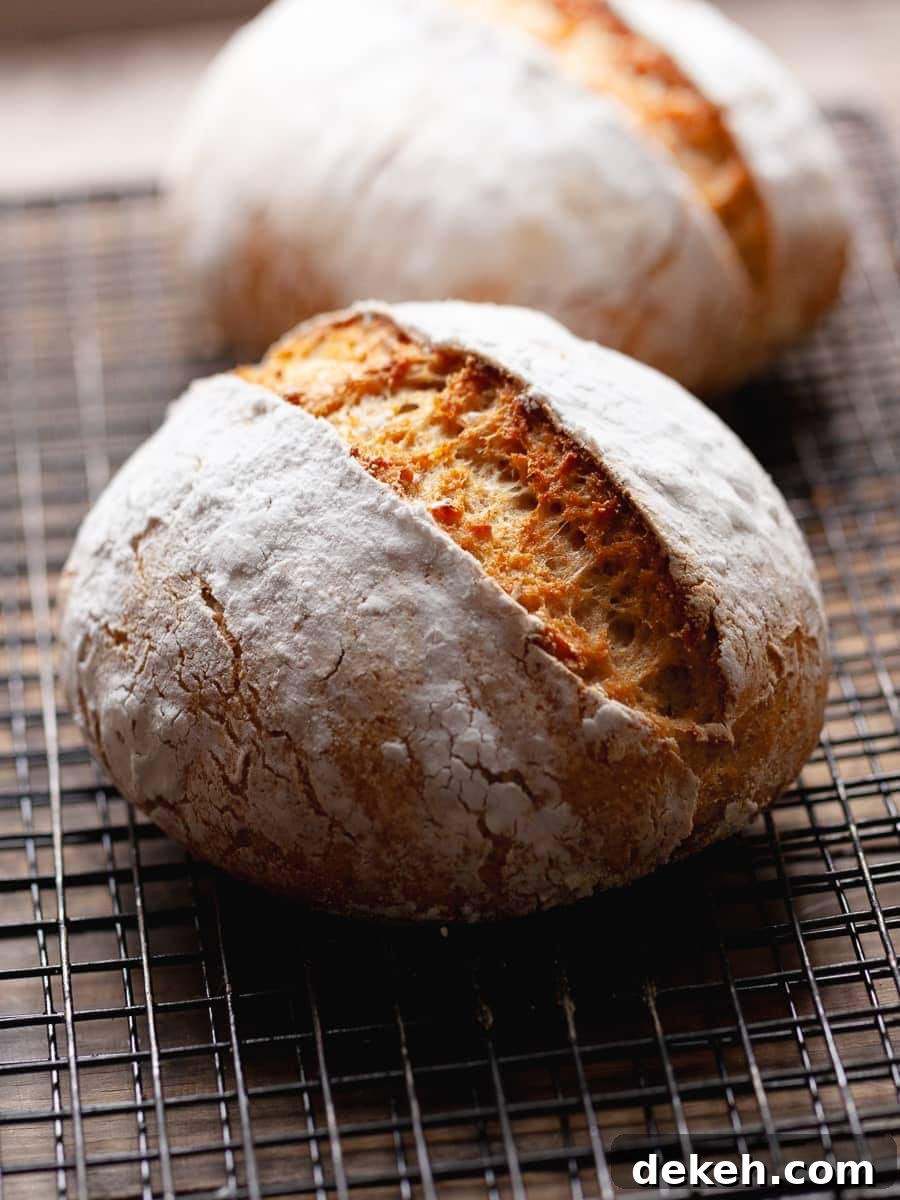
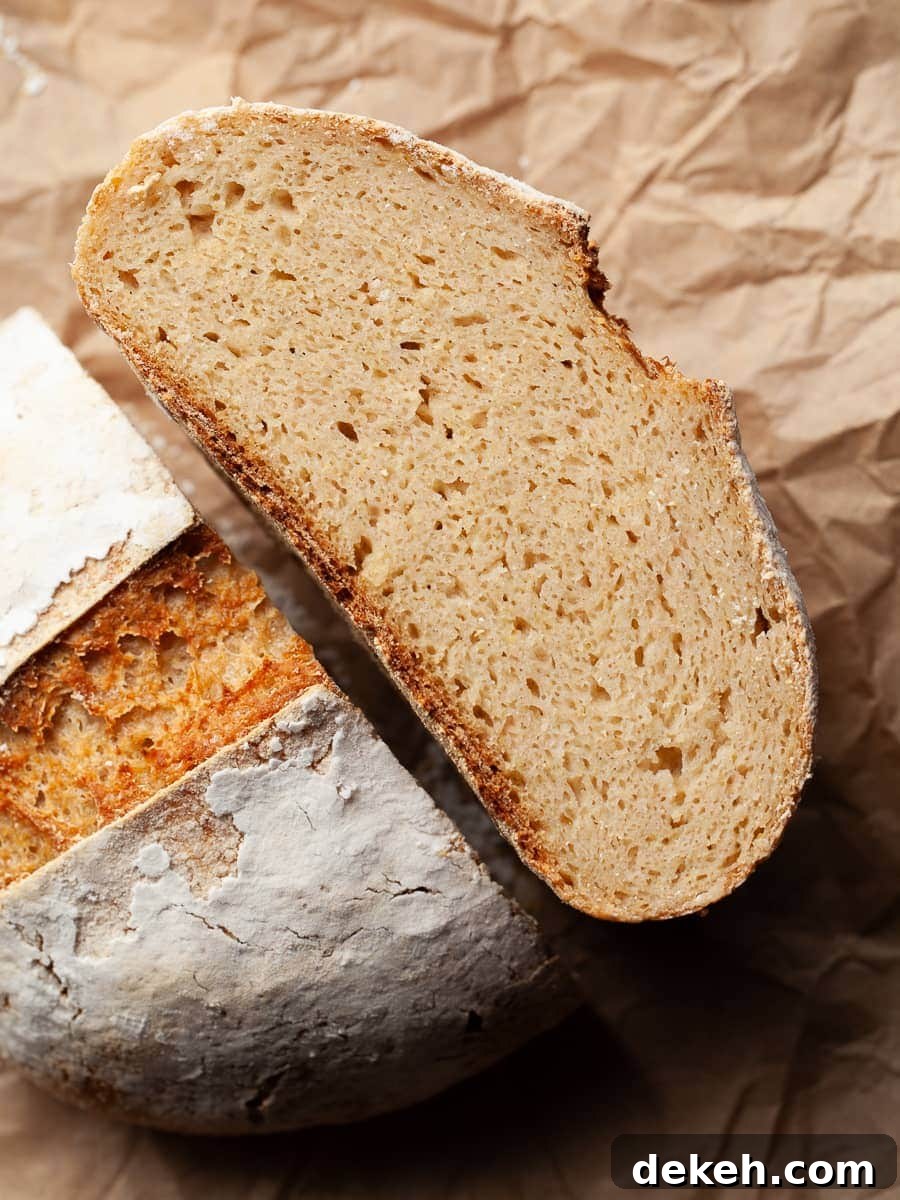
I have been developing this Gluten Free Artisan Dutch Oven Bread for a while. After some testing and adjustments, I’m pleased to share a straightforward recipe that produces a golden, crusty loaf with a pleasant open crumb and great flavor. Baked in a Dutch oven, this bread holds up well for sandwiches, and it’s ideal for mopping up stews, soups, or chili. It brings back memories of the breads I enjoyed growing up in Austria.
Recipe Ingredient Notes
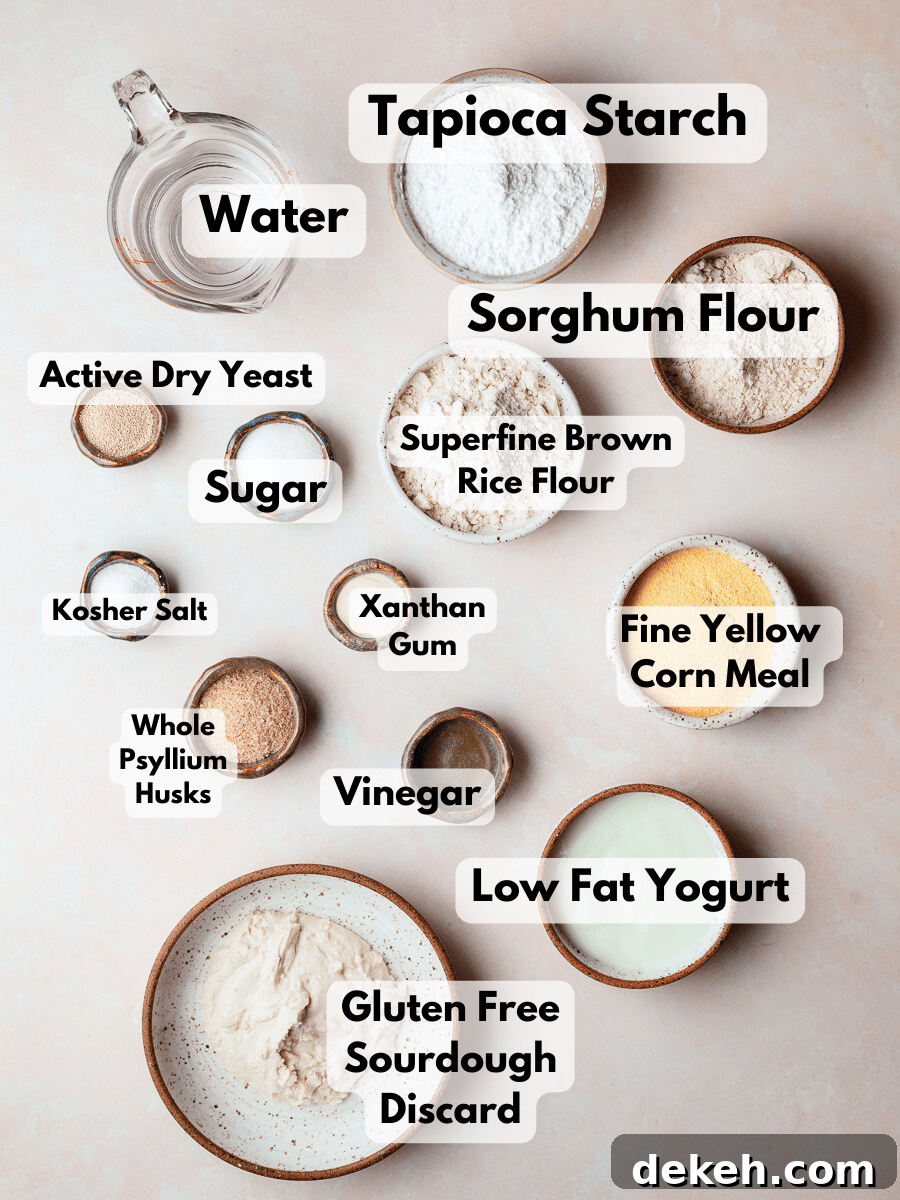
Super Fine Brown Rice Flour: This flour gives structure without grittiness. Regular brown rice flour can be coarse and white rice flour is too low in protein, which may cause a gummy crumb—so I don’t recommend substituting it.
Tapioca Starch: Tapioca adds chew and helps with browning. Without a starch component, gluten-free bread can turn out dry and dense.
Sorghum Flour: Sorghum is a soft, higher-protein flour with a mild flavor that deepens the loaf’s taste. Buckwheat can be used as an alternative, though it will change the flavor profile.
Fine Yellow Cornmeal: Finely ground cornmeal adds texture and a subtle corn flavor. This is not cornstarch—use a true finely ground cornmeal.
This recipe will not perform well with most store-bought all-purpose gluten-free blends (like 1:1 blends). Those mixes are formulated for quick baked goods and not for yeasted doughs. The flours listed here are the same base I use in my own gluten-free blend and are worth keeping in your pantry if you bake gluten-free often.
Whole Psyllium Husks: Whole psyllium helps bind the dough and produces a structure closer to wheat bread. I use whole husks rather than the powdered form for the best texture.
Low-Fat Yogurt: Yogurt improves tenderness and moisture in gluten-free loaves. I prefer low-fat yogurt but sour cream or a low-fat non-dairy yogurt can be used in a pinch. Yogurt supports the crumb but does not replace gluten’s structural properties.
Gluten Free Sourdough Discard: Use unfed discard from a 50:50 gluten-free starter (equal parts superfine brown rice flour and water) at room temperature. The discard adds flavor and acidity but does not replace the active yeast in this recipe.
Tools Needed
You’ll need a few basic tools—many are common in home kitchens.
Digital Kitchen Scale: Baking by weight is far more accurate than measuring cups, especially with gluten-free flours.
Stand Mixer: A mixer with a dough hook makes mixing easier, though you can mix by hand if necessary. Expect a sticky dough.
Dutch Oven: A heavy Dutch oven (cast iron or enameled) creates the steamed environment necessary for a crisp crust. A 6-quart or similar size works well for this loaf.
Strainer and Towel: If you don’t have a banneton, an 8″ strainer lined with a clean flour towel and dusted with starch is an easy substitute for proofing.
Bread Scoring Tool: A bread lame or a very sharp knife (or razor) will do the job of scoring the loaf before baking.
Water Spray Bottle: Optional — a few spritzes before proofing can help the dough’s surface hydrate.
Why bake gluten free bread in a Dutch oven?
Using a Dutch oven for artisan-style bread creates the ideal baking environment:
- Heat retention and even distribution: Thick cast iron or enameled pots hold and distribute heat evenly, promoting reliable rising and baking.
- Steam retention: The lid traps moisture released by the dough, delaying crust formation and allowing full expansion for better oven spring.
- Improved crust: Trapped steam and steady high heat encourage a golden, crisp crust through the Maillard reaction.
- Easy handling and versatility: A Dutch oven is sturdy for moving dough in and out of the oven and can be used for many other dishes.
Baking with Sourdough Discard
Adding sourdough discard enhances flavor and texture. The discard contributes a mild tang and acidity that can improve crumb tenderness and shelf life. Although discard creates gas through fermentation, in this recipe it acts as a flavor and texture enhancer and does not replace the active dry yeast. The discard’s acidity also helps preserve the finished loaf.
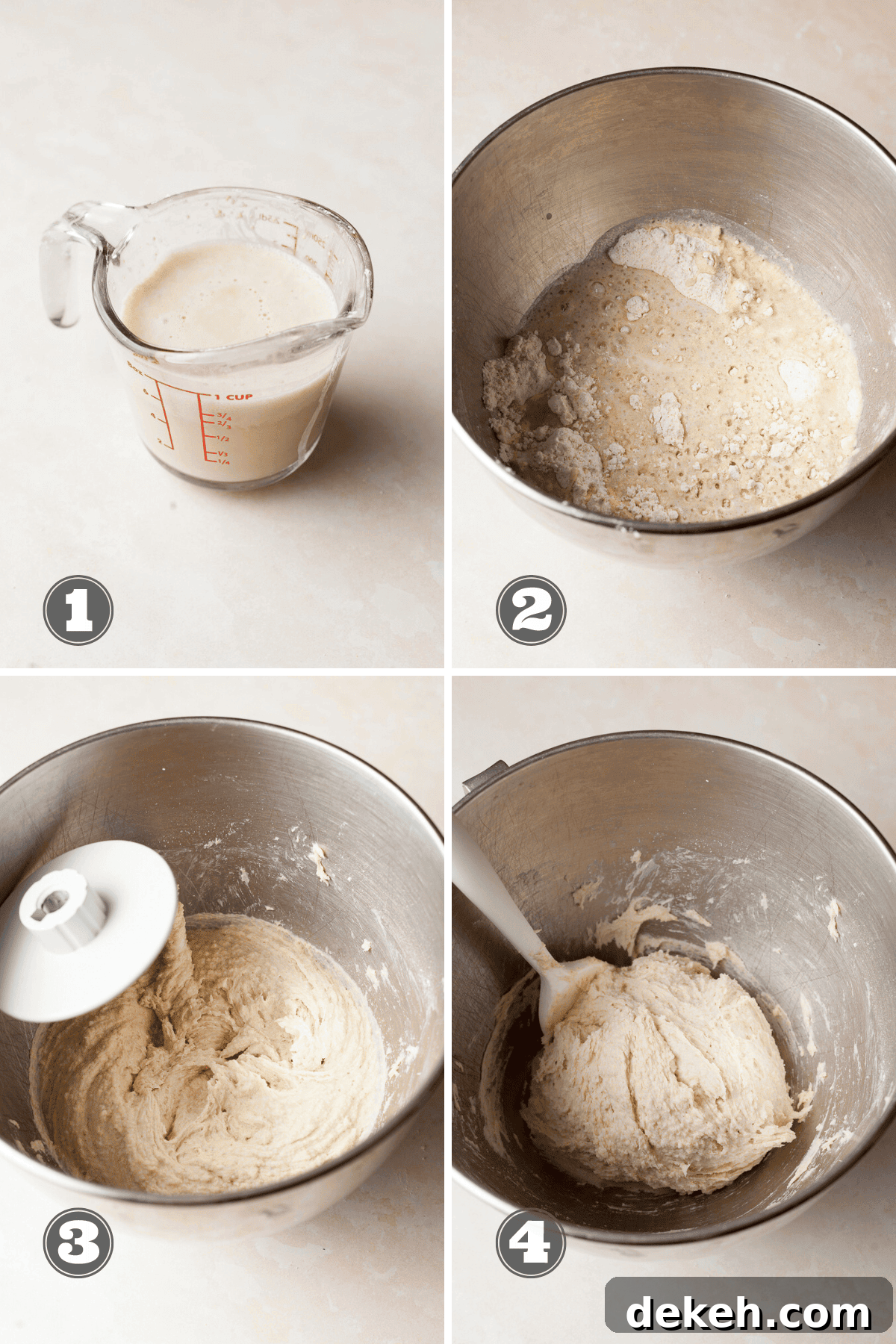
How to make Gluten Free Artisan Bread Dough
You can make the dough with a stand mixer (dough hook recommended) or by hand. The dough will be softer and stickier than traditional wheat doughs—this is normal for gluten-free loaves.
Step 1: Warm 175 grams of water to about 110–114°F (no hotter than 115°F). Sprinkle in 4 grams active dry yeast and a pinch of sugar. Let sit 10 minutes until bubbly and frothy.
Step 2: In the mixer bowl combine 50 g superfine brown rice flour, 100 g tapioca starch, 35 g sorghum flour, 35 g fine yellow cornmeal, 15 g sugar, 4 g xanthan gum, 4 g kosher salt, and 9 g whole psyllium husk.
Step 3: Add the activated yeast mixture, 50 g yogurt, 10 g vinegar, and 100 g unfed sourdough discard. Mix low until combined, then increase to medium-high and mix 3–4 minutes. The dough will be soft but cohesive.
Step 4: Scrape the bowl, cover, and let rest 15–20 minutes at room temperature so the flours and psyllium fully hydrate.
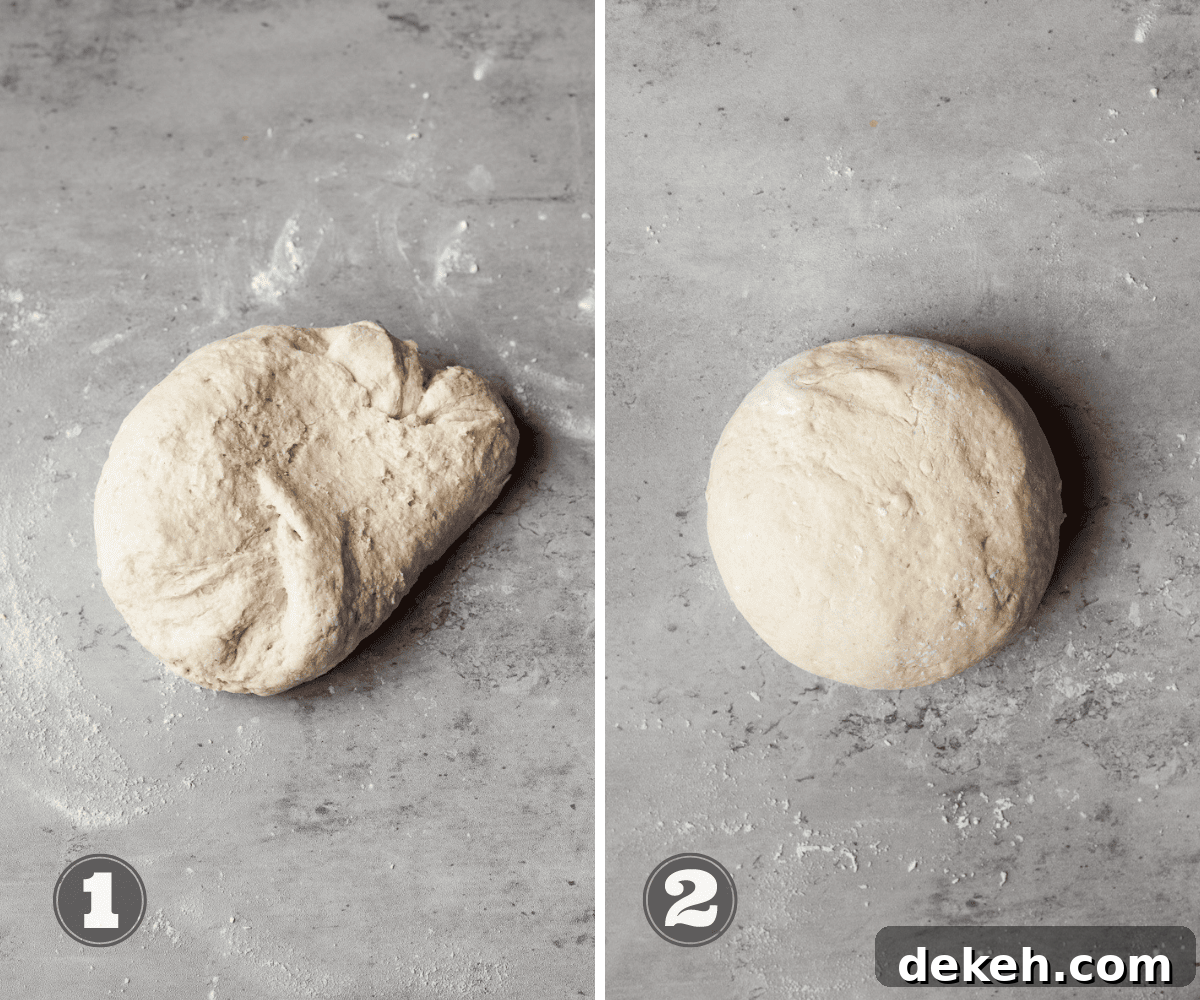
Shaping and Proofing
After resting, shape the dough quickly on a lightly floured surface (use superfine brown rice flour). Have your proofing basket or improvised strainer and a clean towel dusted with tapioca starch ready.
Step 1: On a floured workspace, quickly bring the dough together into a smooth round by folding the edges toward the center, flipping seam-side down, and tightening the surface with your hands.
Step 2: Let the shaped loaf rest briefly while you prepare your proofing basket. Line an 8″ strainer or banneton with a towel and dust it with tapioca starch so the dough won’t stick.
Step 3: Place the loaf seam-side up in the proofing basket and lightly mist with water. Cover with the towel and proof in a warm place about 1 hour, or until nearly doubled. You can proof overnight in the fridge, but rising will be much slower.
Baking Gluten Free Dutch Oven Bread
Preheat the oven and the Dutch oven together for at least 30 minutes before baking.
Step 1: Place the empty Dutch oven in a cold oven and preheat to 450°F, with the rack in the middle position.
Step 2: Prepare a piece of parchment large enough for the loaf and dust it with fine cornmeal to prevent sticking and help protect the bottom crust.
Step 3: Turn the proofed loaf out onto the cornmeal-lined parchment and reshape gently if needed to fit your pot.
Step 4: Score the loaf about 1/4–1/2 inch deep to control expansion during baking.
If your oven runs hot from the bottom and you’re worried about burning, sprinkling uncooked rice in the bottom of the Dutch oven before placing the loaf can act as a heat buffer and reduce scorching.
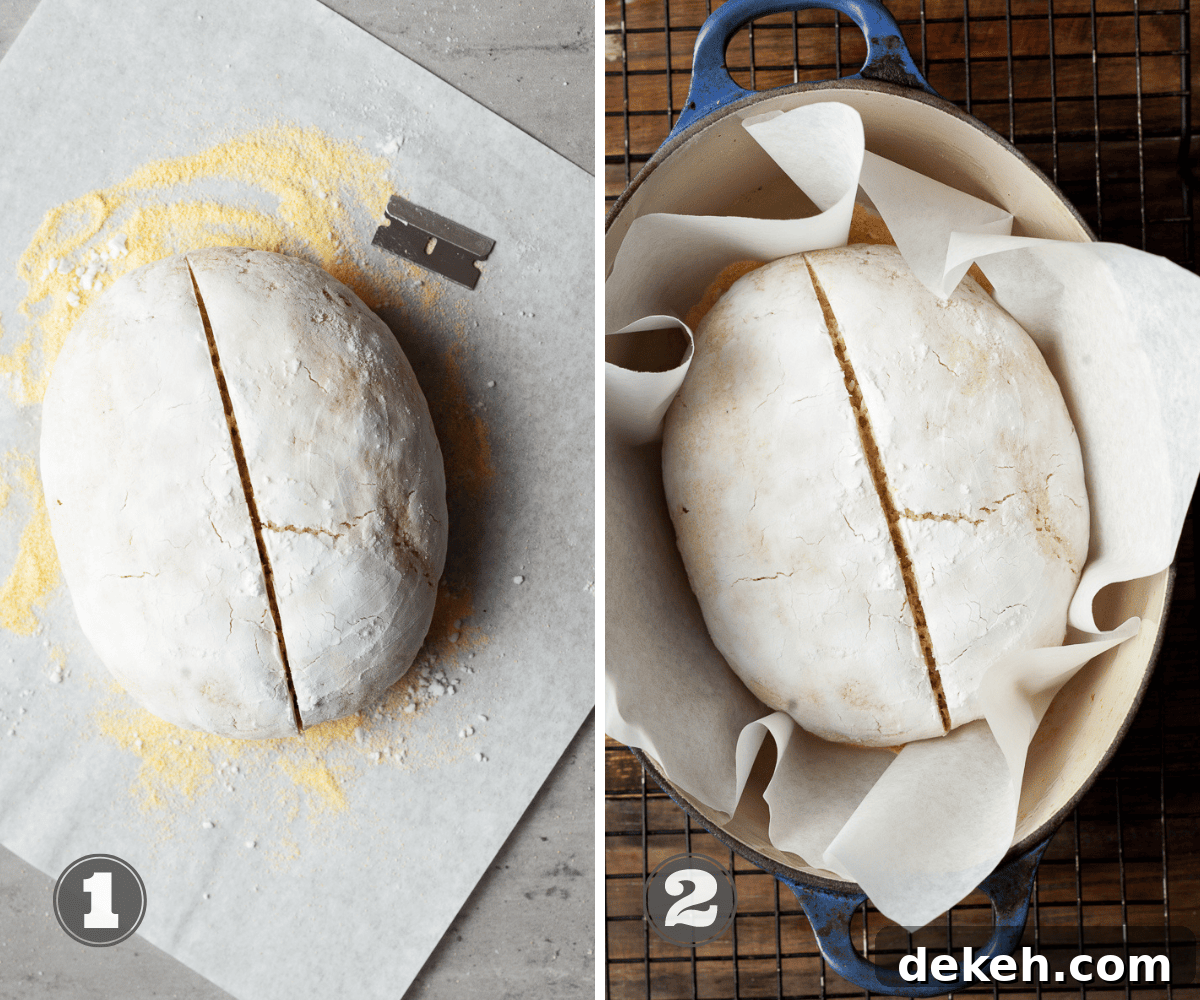
Step 5: Carefully remove the preheated Dutch oven, place it on a heatproof surface, and set the loaf (on the parchment) inside. Replace the lid and return the pot to the oven.
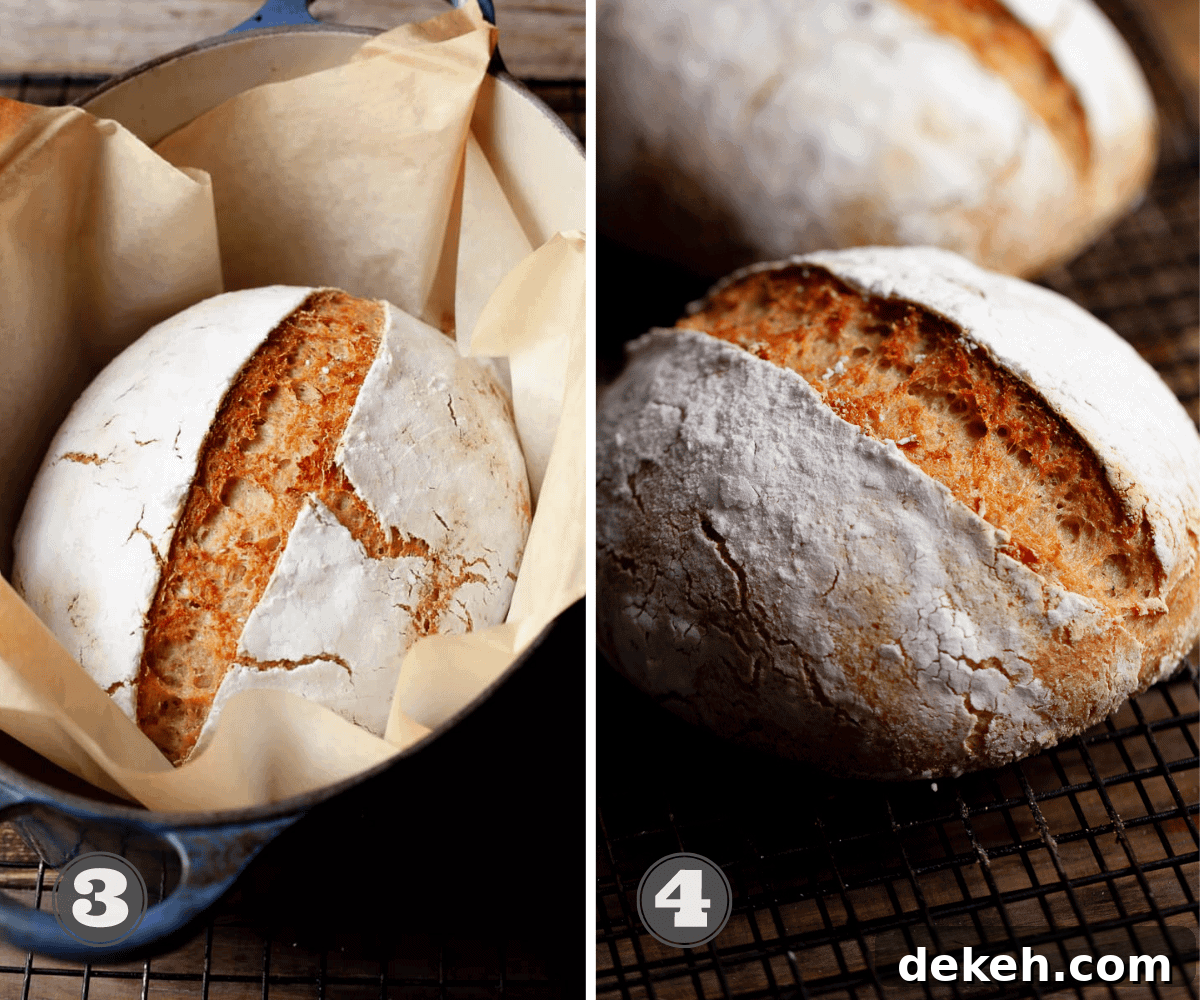
Step 6: Bake at 450°F with the lid on for 40 minutes. Remove the lid, reduce the oven to 430°F, and bake an additional 15–20 minutes until the crust is a deep golden brown. For accuracy, an internal temperature of 200–210°F indicates doneness.
Step 7: Remove the pot and, using the parchment, lift the loaf out onto a cooling rack. Tap the bottom—if it sounds hollow, the bread is done.
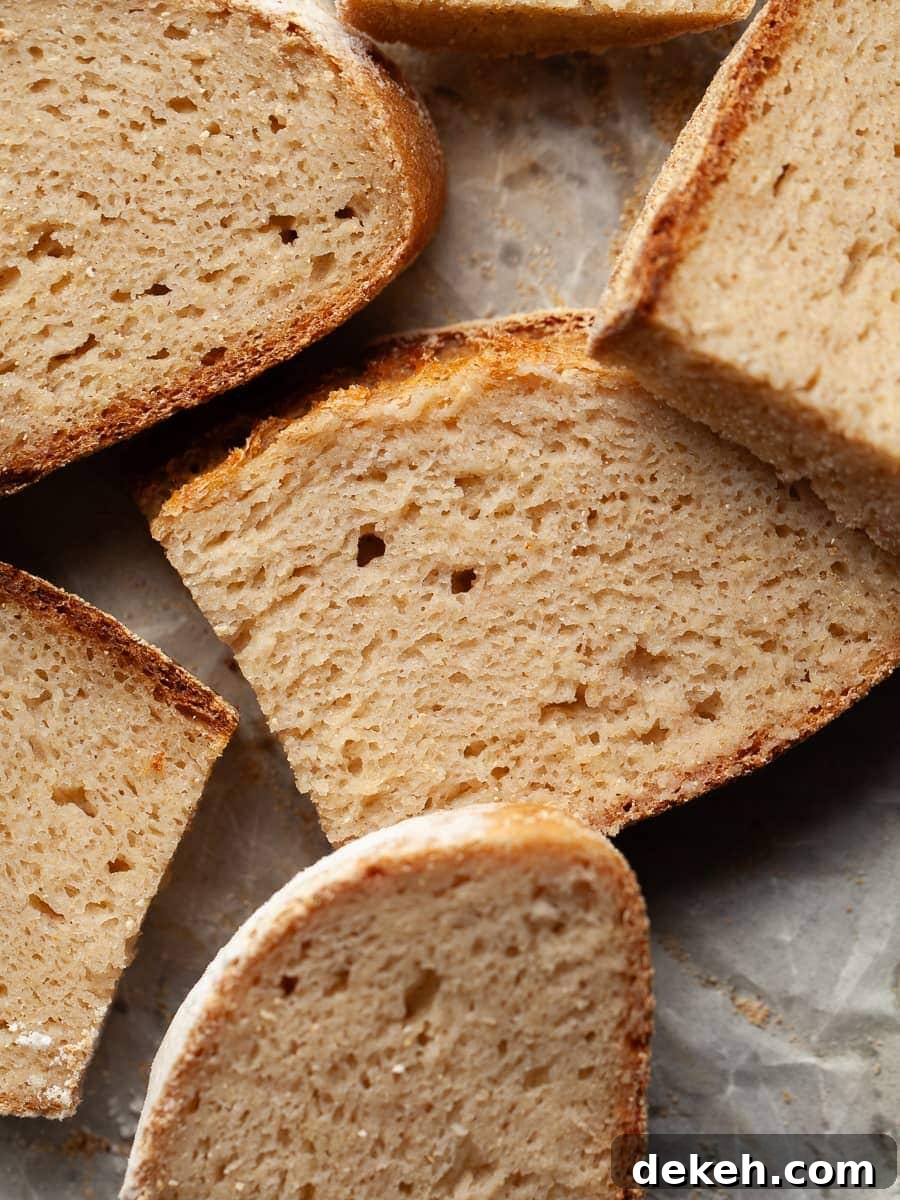
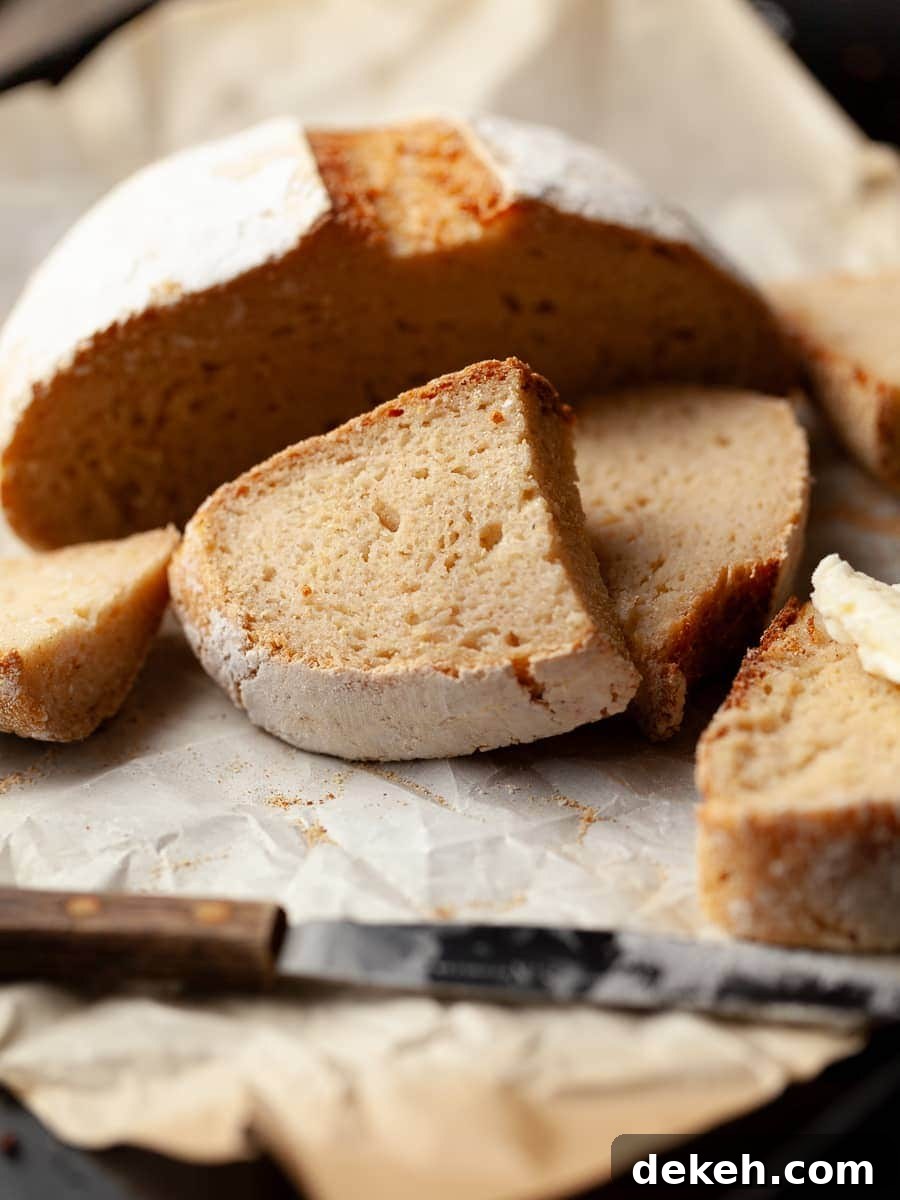
Step 8: Allow the loaf to cool completely before slicing. Cooling can take several hours; slicing too soon may result in a slightly gummy crumb.
Why cool artisan bread completely before slicing
Cooling is critical for texture, moisture balance, flavor, and slicing:
- Texture and crumb: Cooling lets starches set so the crumb firms up properly.
- Moisture distribution: Heat-driven moisture redistributes as the loaf cools, preventing a gummy center.
- Flavor: Flavors mature and meld during cooling.
- Slicing: A cooled loaf slices cleaner without squashing the crumb.
- Crust crispness and safety: Cooling helps the crust crisp and makes handling safer.
Storage & Freezing
Store fully cooled bread in a paper bag or an airtight container for 3–4 days. Gluten-free bread dries faster than wheat bread, so fewer leftovers are usual. The crust will soften in storage but toasting quickly restores crispness. I find the flavor often improves a day after baking.
Ensure bread is completely cooled before storing to avoid condensation, which can cause sogginess or mold.
The loaf freezes well. Slice before freezing for easy portioning and store up to 2 months. Thaw at room temperature or in the fridge and briefly reheat in an oven or toaster to refresh the texture—avoid overheating, which dries gluten-free bread quickly.
FAQ – Gluten Free Dutch Oven Bread
Yes. This recipe is designed for a Dutch oven because the closed vessel traps steam and creates the conditions needed for a crisp, well-developed crust.
The recipe is tested with whole psyllium husks. If using powdered psyllium, reduce the amount to about 75% of the listed weight and expect some differences in texture.
No. The recipe uses sourdough discard for flavor and texture enhancement but also requires active dry yeast for reliable rise.
Join my Gluten Free Community!
Note about Salt in my Recipes
I use Diamond Kosher salt in my recipes. If you use a different salt (for example, Morton’s Kosher), adjust amounts accordingly because crystal sizes affect perceived saltiness.
Baking in grams
I publish recipes by weight because it is the most accurate method. Digital scales are inexpensive and much more reliable than cups—especially for gluten-free flours, which vary widely in density.
Note about Ovens and Oven Temperatures
My recipes are tested in conventional ovens with the rack in the middle position. Convection settings may require temperature and time adjustments. An oven thermometer helps ensure accuracy.
Substitutions and Modifications
Ingredient substitutions can change texture and flavor. This recipe has been tested as written; altering ingredients may affect the outcome.
More Gluten Free Bread Recipes to try
-
Gluten Free Soft Dinner Rolls
-
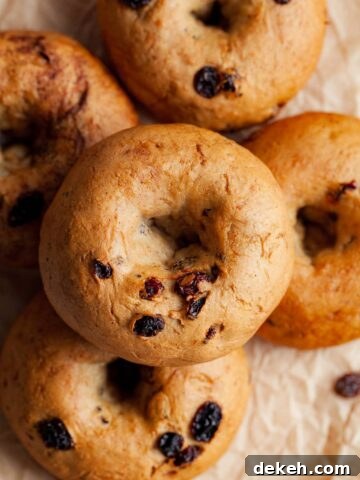
Gluten Free Cinnamon Raisin Bagels (Sourdough Discard Recipe)
-
Gluten Free No Knead Focaccia
-
Gluten Free Pretzel Buns


📖 Recipe
Gluten Free Artisan Dutch Oven Bread
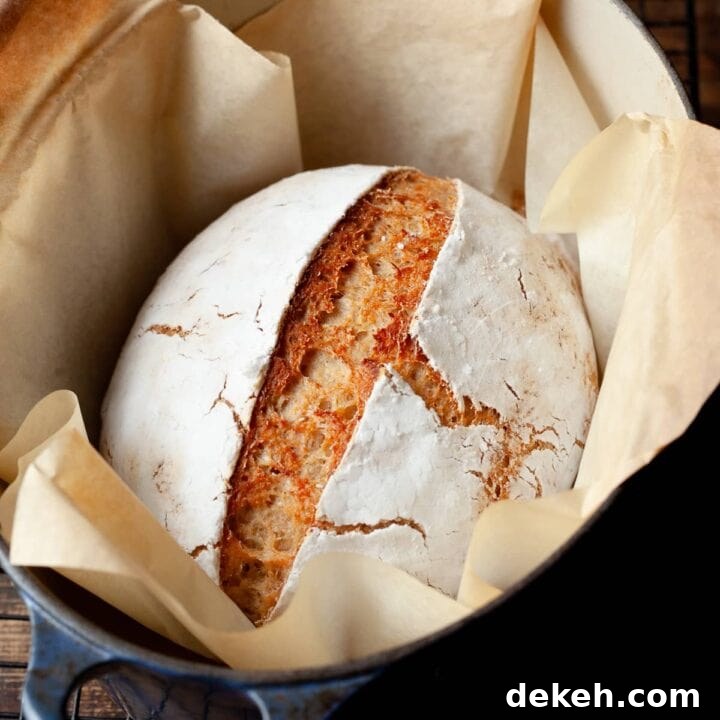
Baked in a Dutch oven, this loaf yields a golden-brown crust and a flavorful, tender crumb. It’s excellent on its own, with butter, for sandwiches, or served alongside soups and stews.
45 minutes
1 hour
1 hour 30 minutes
3 hours 15 minutes
Ingredients
To activate the yeast
- 175 grams water
- 4 grams active dry yeast
- Generous pinch of granulated sugar
Gluten Free Artisan Bread
- 50 grams super fine brown rice flour
- 100 grams tapioca starch
- 35 grams sorghum flour
- 35 grams fine yellow cornmeal (plus extra for baking)
- 15 grams granulated sugar
- 4 grams xanthan gum
- 4 grams kosher salt (1 teaspoon)
- 9 grams whole psyllium husk
- 10 grams white or apple cider vinegar
- 50 grams yogurt
- 100 grams sourdough starter, unfed or fed
- Additional superfine brown rice flour for shaping
- Additional tapioca starch for dusting the proofing basket
Instructions
How to make Gluten Free Artisan Bread Dough
- Warm 175 grams of water to 110–114°F.
- Add the yeast and a pinch of sugar; let sit 10 minutes until bubbly.
- Combine the flours, tapioca, cornmeal, sugar, salt, psyllium husk, and xanthan gum in a mixer bowl.
- Add the yeast mixture, yogurt, vinegar, and sourdough discard. Mix low until combined, then medium-high for 3–4 minutes until cohesive.
- Cover and rest 10–15 minutes to hydrate the flours.
Shaping and Proofing
Lightly flour your workspace and have your proofing basket prepared.
- Quickly shape the dough into a smooth round on a floured surface.
- Bring edges to the center, flip seam-side down, and create a taut surface.
- Let the shaped dough rest briefly while you prepare the proofing basket.
- Line an 8″ strainer or banneton with a towel and dust with tapioca starch.
- Place the dough seam-side up in the basket and mist lightly with water.
- Cover and proof in a warm place about 1 hour, or until nearly doubled. Alternatively proof in the fridge overnight (much slower rise).
Baking Gluten Free Dutch Oven Bread
Preheat oven and Dutch oven at least 30 minutes before baking.
- Place the empty Dutch oven in a cold oven and preheat to 450°F.
- Line parchment with cornmeal and turn the loaf out onto it.
- Reshape if needed and score the loaf 1/4–1/2 inch deep.
- Carefully remove the hot Dutch oven, place the loaf (with parchment) inside, cover, and return to the oven.
- Bake 40 minutes with the lid on. Remove the lid, reduce heat to 430°F, and bake 15–20 more minutes until deeply golden. Internal temperature should reach 200–210°F.
- Remove the pot, lift the loaf out on the parchment, and confirm doneness by a hollow tap.
- Cool completely on a rack before slicing—this can take several hours.
Notes
Why no ice cubes? I found that adding ice to the Dutch oven reduced crust development and produced a softer, gummy loaf—so I don’t recommend it.
Avoid burned bottoms: If your oven has intense bottom heat, uncooked rice scattered in the Dutch oven can act as a heat buffer to reduce scorching.
Baking times vary by oven: Use an oven thermometer to confirm temperatures for consistent results.
Read the full instructions above the recipe card for tips and troubleshooting. This recipe works best when followed as written.
Nutrition Information:
Yield:
12
Serving Size:
1
Amount Per Serving:
Calories: 149
Calories are an estimate.
Did you make this recipe?
If you try it, please leave a comment and rating on the blog.