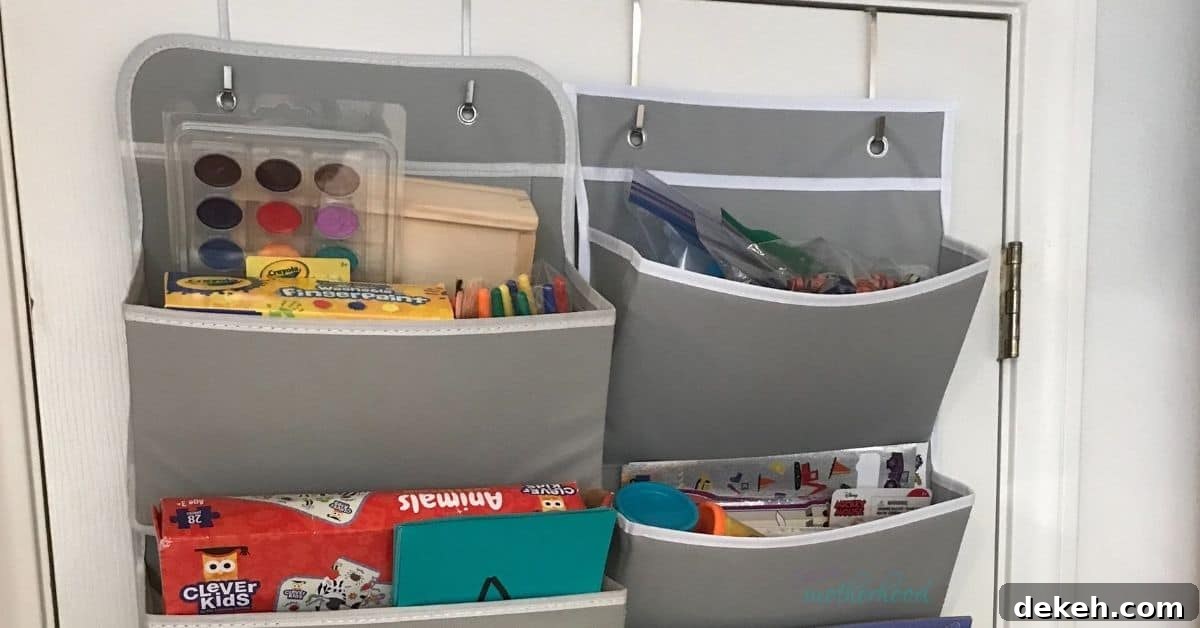
Do you have a toddler who needs something to do while you prepare dinner? Or has your child’s stuff taken over your counters and tables? If so, this guide will show you how to create a kids activity center that keeps everyday toys and craft supplies organized and provides hours of quiet play. My toddler loves puzzles, so a big portion of our activity center is devoted to storing and organizing puzzles.
The project is simple. If you can use a closet or pantry door, you may not need any tools. If you prefer to mount organizers to a wall, you’ll need a few basic tools and hardware.
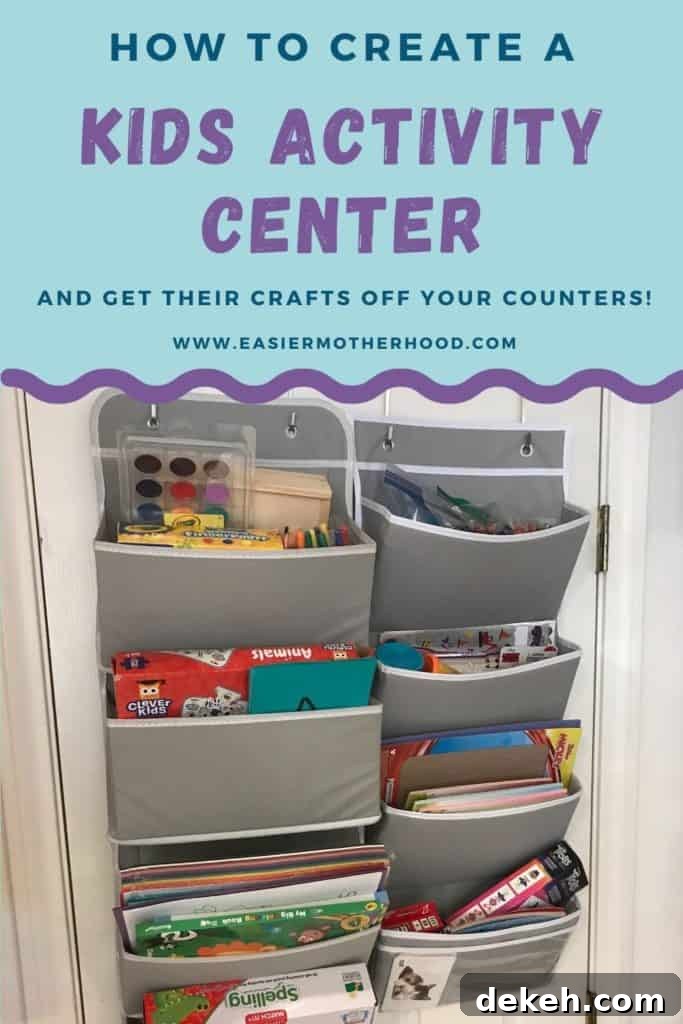
This post contains affiliate links, which means I receive a small commission, at no additional cost to you, if you make a purchase using this link.
Step 1: Choose the right location for your kids activity center
Place the activity center where your children spend time and where it will be convenient for you to access. I mounted ours on the inside of the kitchen pantry door so it’s within reach during meal prep and easy to install. Think realistically about your space: a Pinterest-perfect setup is only useful if it fits your home.
For example, I used two different over-the-door organizers because one needed to be slimmer to avoid blocking the freezer door. If I had used the larger organizer on both sides, the freezer wouldn’t open properly. Measure openings and consider nearby doors or appliances before choosing your organizers.
Step 2: Plan vertical storage based on your needs
Decide how many hanging organizers you need. One, two, or more will depend on how many children you have, what activities they use most, and how much vertical space you have. If your kids paint often or use many materials, you’ll need more room. Consider whether you want shared storage or individual spaces for each child. Because these organizers are easy to change, you can tweak the layout as your children grow or your needs shift.
Step 3: Install the organizers
Over-the-door organizers are the quickest option if you have a suitable door. If you must mount organizers to a wall, there are a few reliable methods:
- Use heavy-duty picture hangers for an easy install. They’re quick and strong, though the top of the organizer may not sit perfectly flush against the wall.
- Thread a durable fabric strap through the organizer’s mounting holes, secure it, and hang the strap on a single wall hook. This allows the hook to sit above the organizer and can look neater.
- For the most secure mount, find studs and use screws or anchors. This method takes tools but provides the strongest hold.
Step 4: Fill the activity center with essential items
Store items you want to be easily accessible: puzzles, workbooks, coloring supplies, and frequently used craft materials. Don’t try to put everything inside—this space is for items used daily or weekly. Less-frequent items can stay in closet bins or another storage area. For safety, keep paints and other hazardous materials on higher shelves out of reach of little hands.
Step 5: Enjoy the cleared surfaces
A tidy, visually calm space makes life easier. Clearing counters and tables of scattered craft supplies reduces clutter and can make your home feel more peaceful. Take a moment to relax with a cup of coffee or tea and enjoy the result.
Tips for toddler moms: what to store where
Many toddler families share the same go-to items. Here are practical storage suggestions for common supplies found in kids activity centers:
Puzzles
Original boxes can be bulky or get damaged, so store puzzles in zip-top bags, clear pencil pouches, or the plastic bags sheets sometimes come in. Puzzles usually don’t make a big mess, so keep them on lower shelves where kids can reach them easily.
Paint
Keep paints on the highest shelf or in a high pocket to prevent accidental spills. If possible, keep paints in their original containers; if not, use a sturdy, sealable bag or container that will contain spills if lids aren’t fully closed.
Stickers
Store sticker sheets behind other items in higher baskets so they aren’t easily grabbed during brief unsupervised moments. For large collections, use file folders to organize sticker sheets neatly in wall pockets.
Coloring supplies
Markers and pens can be tempting for little hands, so place them on a higher shelf. Washable crayons and crayons that wipe easily are good options for lower shelves. Keep paper and coloring books in a mid-level basket so children can access them without needing additional materials.
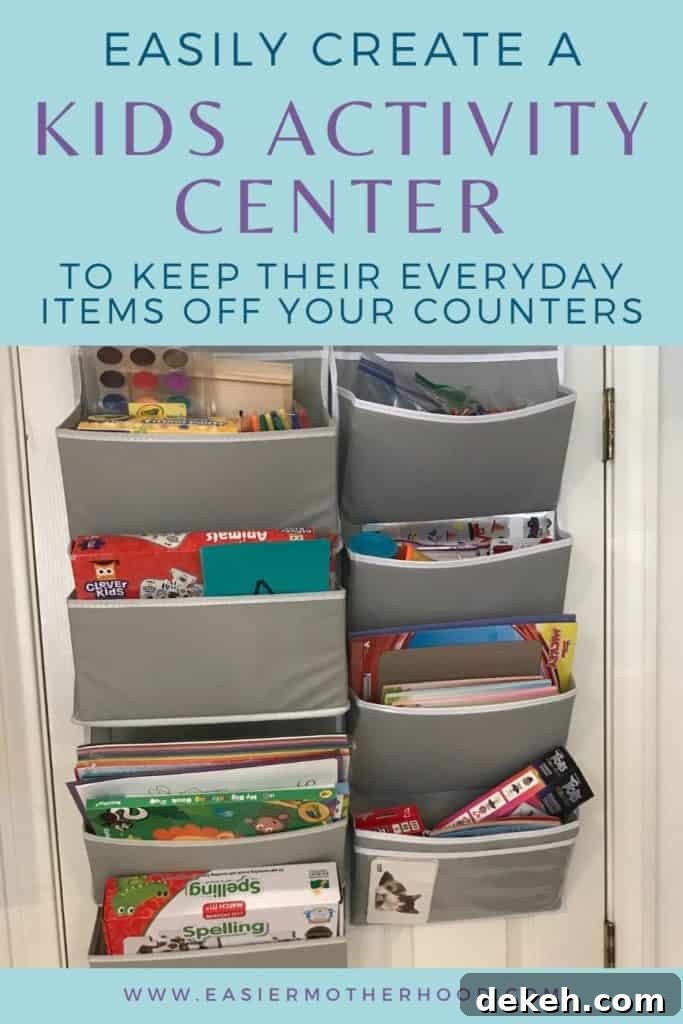
How much to store in your kids activity center
When the organizers fill up, remember this space is intended for items you want on hand regularly. It doesn’t have to hold your entire craft collection. Keep a few favorites in rotation—three or four tubs of play-doh, a handful of puzzles, a couple of coloring books—and store extras in a closet or another room. Limiting options can be a benefit for young children: fewer choices often leads to less overwhelm and more focused play.
What do you keep in your kids activity center?
Every family’s needs are different. Some prefer this to be the primary storage for all craft supplies; others use it for rotating, everyday items while bulk supplies live elsewhere. Consider what works best for your space and your children’s ages, then adapt the system as needed.