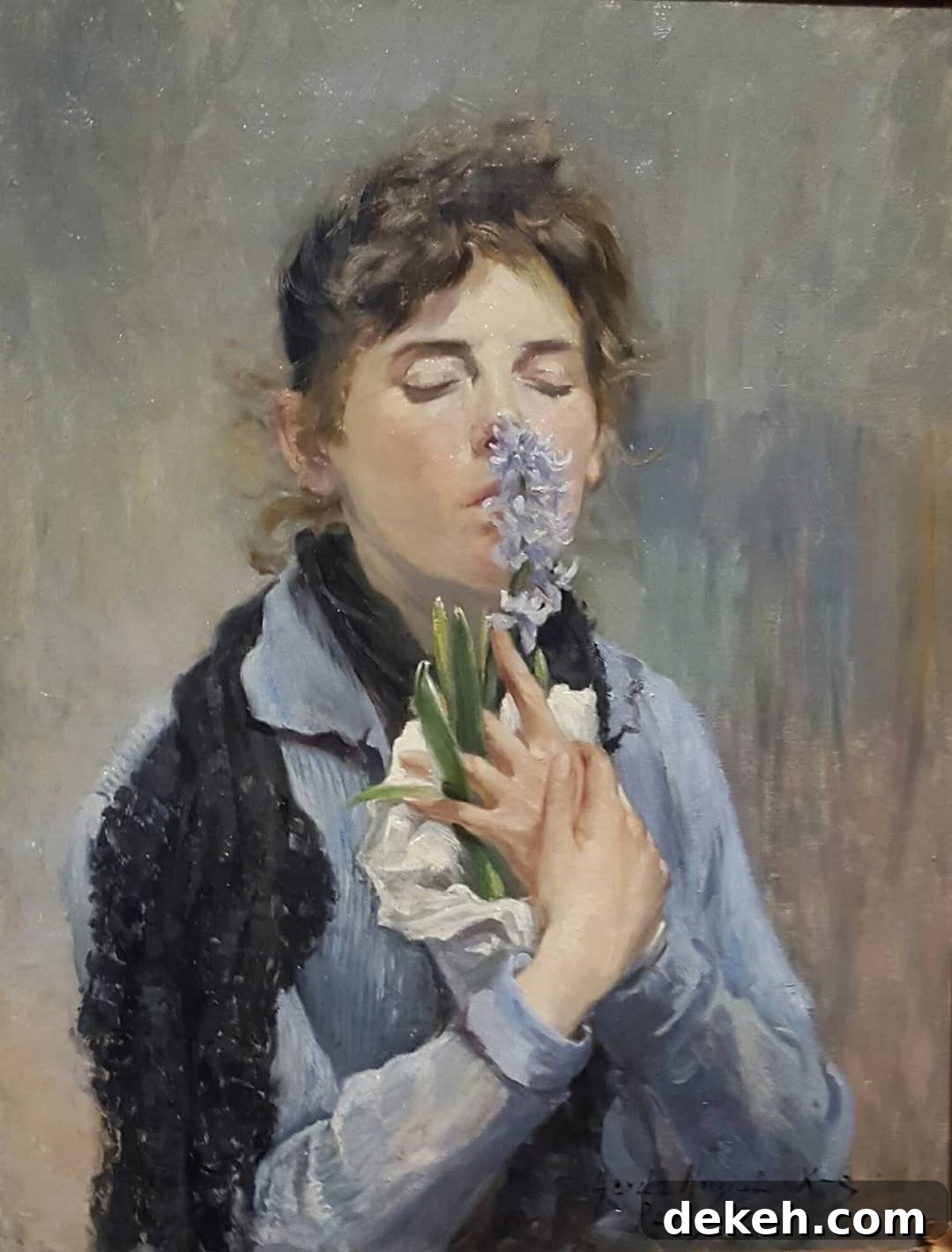
Artist Gerda Roosval-Kallstenius (Swedish painter) 1864 – 1939
I thank my friend Lynn Marks Bowden for introducing me to this lovely painting by Gerda Roosval-Kallstenius, paired here with a short poem attributed to the 13th-century Persian poet Muslih-ud-Din Abdullah Saadi Shirazi.
If, of thy mortal goods, thou art bereft,
And from thy slender store two loaves
alone to thee are left,
Sell one & from the dole,
Buy Hyacinths to feed the soul.
This short quatrain does not appear in Saadi’s collected, published works; it likely draws inspiration from a verse in his Gulistan (The Rose Garden). In Persian it reads:
اگر نان داری و دل خرم، چه غم؟
گل بخر، که جان را خوشی است دم به دم
A close translation is:
“If you have bread and a cheerful heart, what sorrow?
Buy flowers, for they bring joy to the soul at every moment.”
Saadi’s sentiment — that material sustenance alone cannot fulfill the human spirit — echoes a theme found across religious and literary traditions. In the Christian New Testament, the Gospel of Matthew records a related saying: “Not by bread alone shall man live, but by every word that proceeds from the mouth of God.” The Greek reads:
“Οὐκ ἐπ’ ἄρτῳ μόνῳ ζήσεται ἄνθρωπος, ἀλλ’ ἐπὶ παντὶ ῥήματι ἐκπορευομένῳ διὰ στόματος Θεοῦ.”
Matthew’s citation traces back to Deuteronomy 8:3, where the Hebrew scripture teaches a similar truth: human life depends on spiritual nourishment as much as physical bread. The Hebrew text and the King James Version translation of Deuteronomy 8:3 read:
וַיְעַנְּךָ֮ וַיַּרְעִבֶךָ֒ וַיַּאֲכִֽלְךָ֤ אֶת־הַמָּן֙ אֲשֶׁ֣ר לֹא־יָדַ֔עְתָּ וְלֹ֥א יָדְע֖וּן אֲבֹתֶ֑יךָ לְמַ֨עַן הוֹדִיעֲךָ֗ כִּי לֹ֤א עַל־הַלֶּ֙חֶם֙ לְבַדּ֔וֹ יִחְיֶ֖ה הָאָדָ֑ם כִּי עַל־כָּל־מוֹצָא־פִ֥י יְהוָ֖ה יִחְיֶ֥ה הָאָדָֽם׃
“And he humbled thee, and suffered thee to hunger, and fed thee with manna, which thou knewest not, neither did thy fathers know; that he might make thee know that man doth not live by bread only, but by every word that proceedeth out of the mouth of the Lord doth man live.”
This recurrent idea — that food alone cannot fully satisfy human needs — appears across many cultures. Desert monotheistic traditions emphasized spiritual nourishment and obedience to divine revelation as essential to human flourishing. At the same time, poets such as Saadi, influenced by Sufi thought and humanist sensibilities, express the same truth in gentler, more personal terms: tending the heart with beauty, art, and simple pleasures like flowers is a valid and necessary nourishment for the soul.
Gerda Roosval-Kallstenius’s painting, paired with Saadi’s lines, beautifully illustrates that balance: the daily necessities of life and the small, chosen acts that feed our inner life. Whether one prefers scripture or poetry, the message is similar — to live fully we must feed both body and spirit.