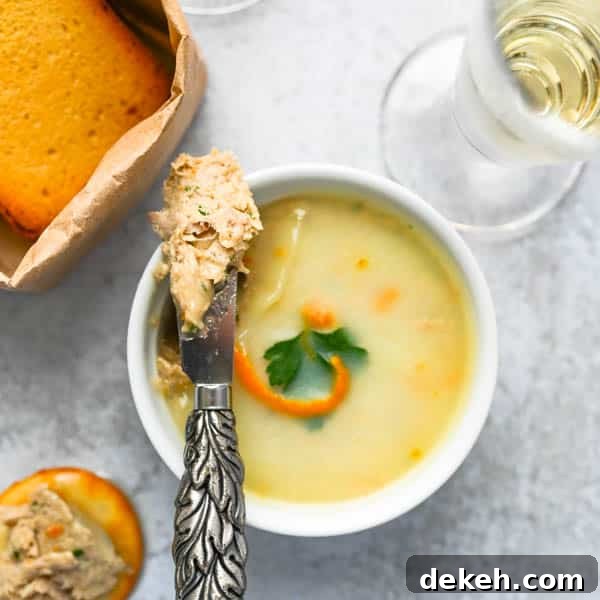
Looking for an impressive French duck recipe that’s actually simple to prepare? Try this pâté de canard — or duck rillettes. It sounds fancy, but the technique is straightforward. A blend of herbs, spices and a splash of cognac creates an aromatic spread that makes a perfect cocktail hors d’oeuvre, a tasty starter with a green salad and toasted baguette, or a thoughtful hostess gift. If you’re unfamiliar, rillettes are similar in concept to potted meat, but with much more flavor and nuance. This recipe requires some resting time, so plan to make it a few days before serving.
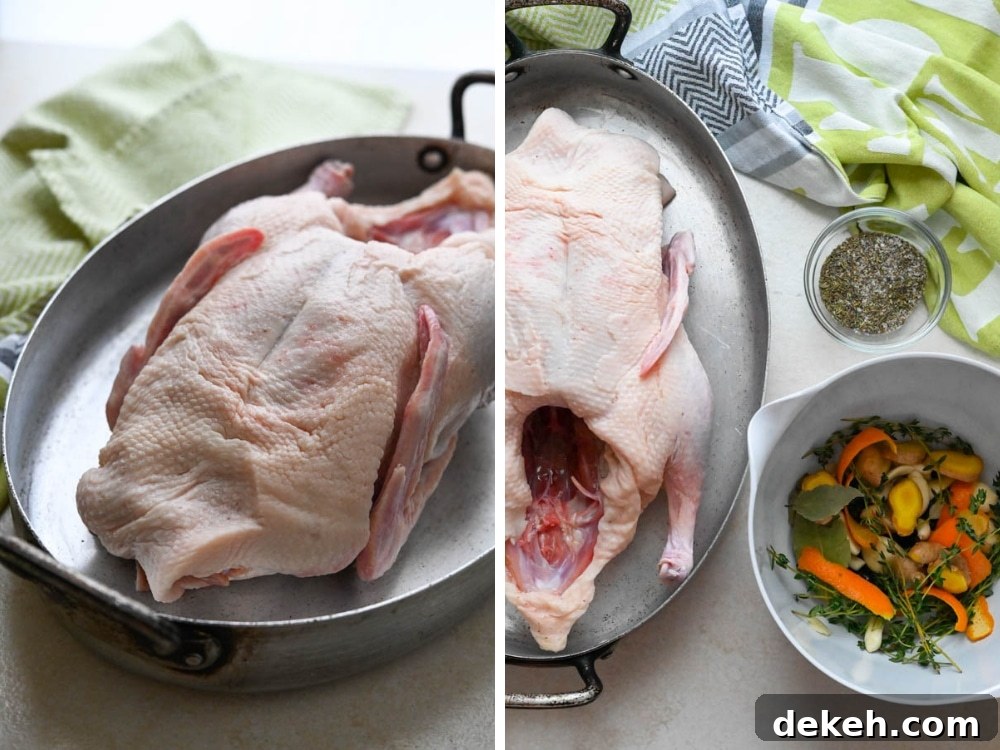
Familiar French Duck Recipes
Rillettes (pronounced “ree-yet”) are a rustic French preparation that elevates preserved meat into something deeply flavorful. Think of it as potted meat refined: the slow-roasted duck yields tender meat, rich stock and rendered fat that combine into an elegant spread. This recipe uses a whole duck roasted low and slow, producing the components needed for rich, aromatic rillettes.
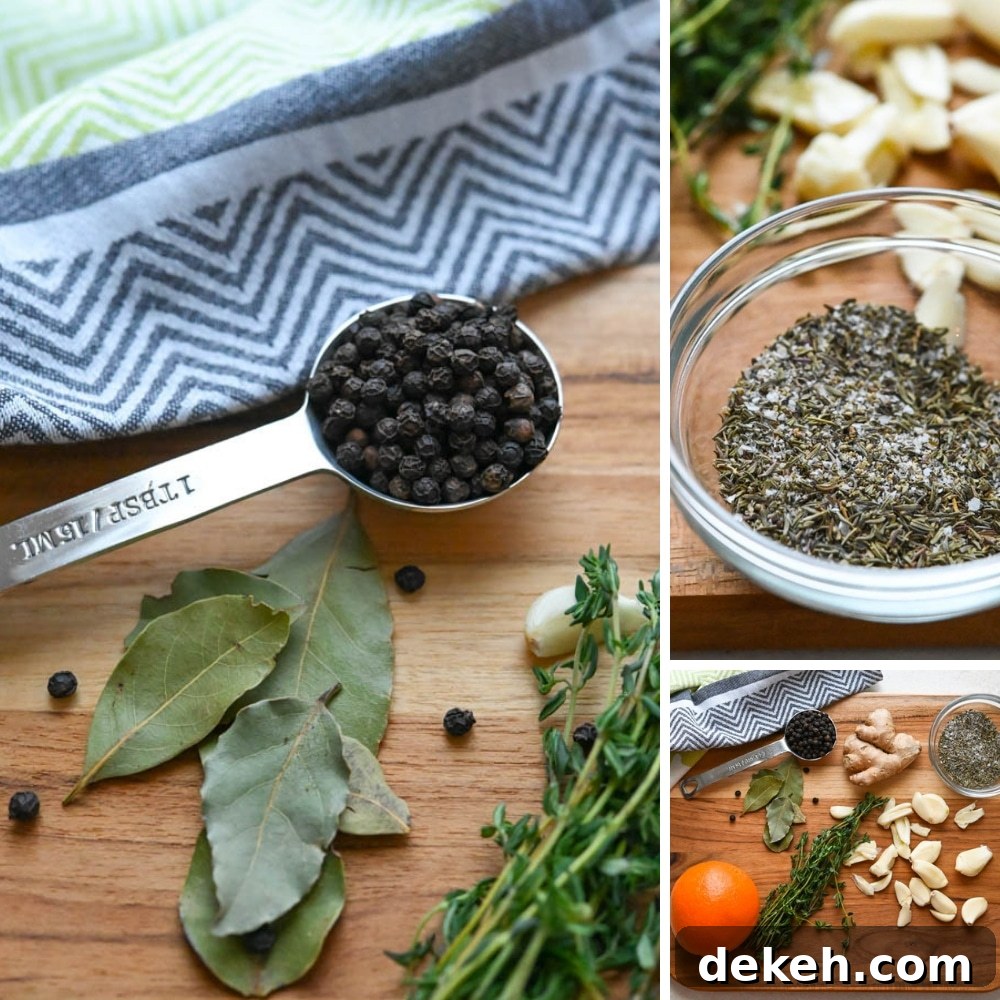
Ingredients:
- Whole duck – about 5–7 pounds; frozen is fine if thawed before cooking.
- Rendered duck fat & stock – these will render from the duck while roasting; separate them after cooling.
- Salt – kosher salt is recommended.
- Freshly ground black pepper.
- Dried thyme – for the spice rub.
- Garlic – fresh cloves, crushed.
- Ginger – a knob, sliced, for a bright, peppery note.
- Bay leaves – three or four.
- Orange zest – remove only the colored outer peel, avoiding the bitter pith.
- Fresh thyme – a small bunch for the cavity.
- Whole peppercorns – for the aromatics in the cavity.
- Cognac – or brandy, armagnac or a touch of sherry as an alternative.
- Unsalted butter – room temperature for the final mix.
- Fresh parsley – chopped, flat-leaf preferred.
- Dijon mustard – for subtle acidity and depth.
- Cayenne pepper – a pinch for warmth.
Although the list looks long, many items are pantry staples. These aromatics are what lift this from simple preserved meat to a fragrant pâté de canard.
Sourcing a Duck
Finding a whole duck can take a little searching. They may be tucked away near turkeys or game birds at the market, or you may need to order one in advance. Defrost the duck the day before you plan to cook. Discard any unneeded sauce packets that sometimes come with packaged birds.
Preparing Pâté de Canard
This version streamlines classic techniques while keeping the deep, slow-roasted flavors. The duck cooks low and slow to render fat and concentrate the stock, which you then separate and use in the rillettes. Give the finished spread a few days in the refrigerator for the flavors to marry.
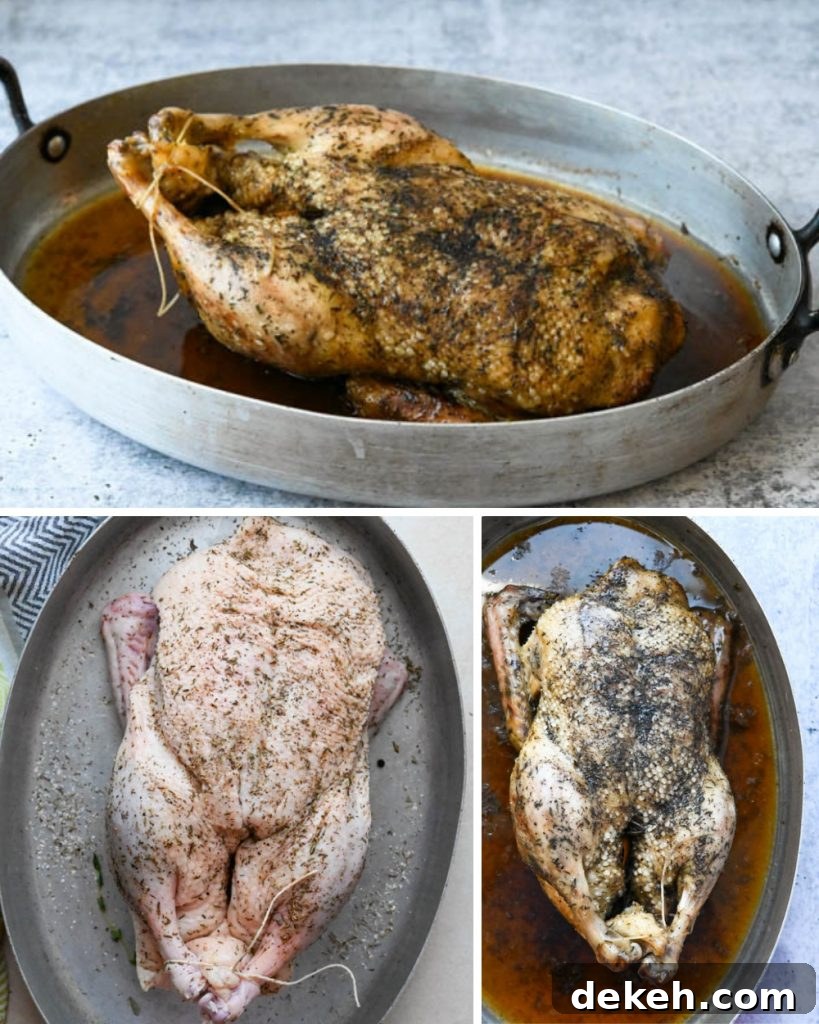
Making Duck Rillettes
This recipe takes two days: about an hour or so of active prep, seven hours of slow cooking, and then chilling time so the fat and stock separate. The resting time is important for texture and flavor.
- Preheat the oven to 250°F (120°C).
- Combine kosher salt, freshly ground black pepper and dried thyme to make a dry rub.
- Mix the garlic, sliced ginger, bay leaves, orange peel, fresh thyme and whole peppercorns to form the cavity aromatics.
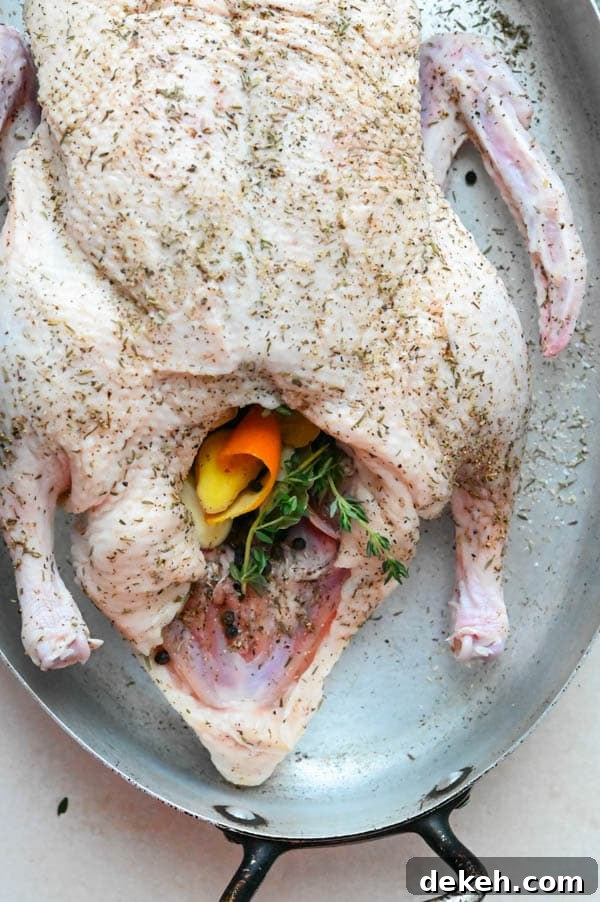
- Place the duck in a roasting pan. Rub the exterior and cavity with the spice mixture, and pack the aromatics into the cavity.
- Roast the duck low and slow for about 7 hours, or until the meat easily pulls from the bones and a generous amount of fat has rendered.
- Carefully lift the duck from the pan, drain any excess fluids, and transfer the drippings and stock through a fine sieve into a jar. Seal and refrigerate.
- Remove skin and pull the cooked meat from the bones. Transfer the meat to a container and refrigerate overnight.
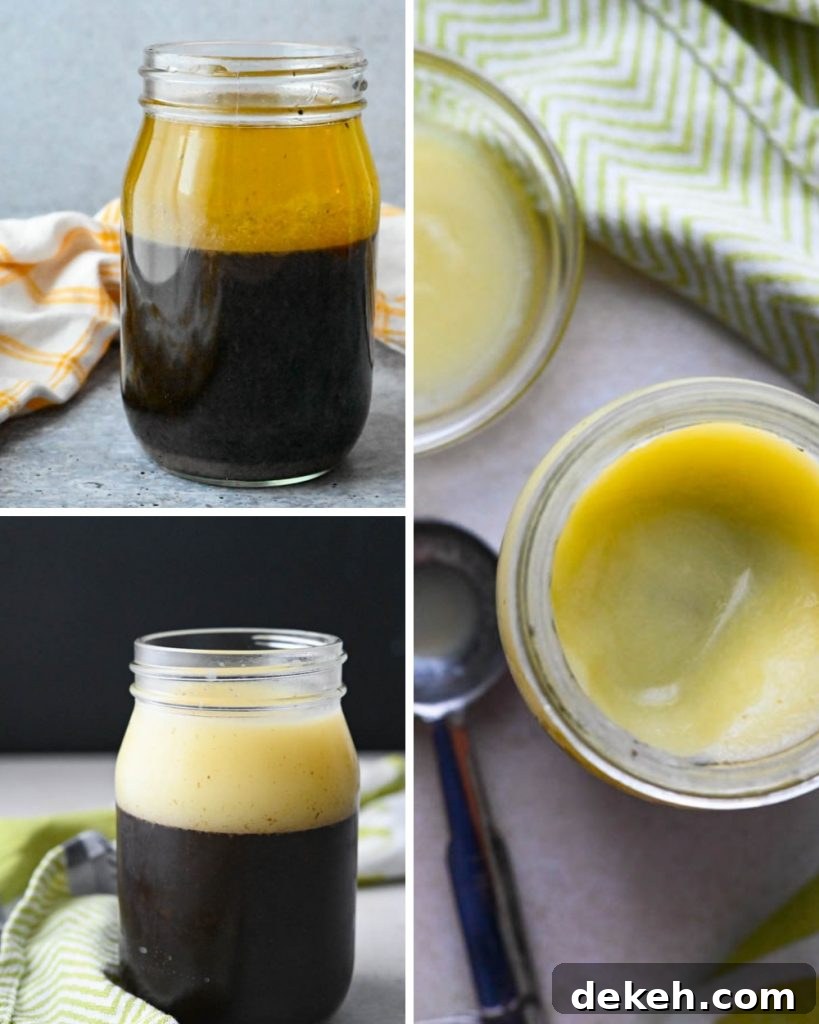
After refrigeration the drippings will separate into a solid layer of duck fat on top and a gelatinous stock below. You need both: a few tablespoons of fat and stock go into the rillettes, and the rest can be saved for other uses.
Separating Duck Broth from Fat
There are simple ways to separate the two:
- Use a spoon to skim the solid fat from the top.
- Use a gravy separator if you have one to pour off the stock from the bottom.
- Refrigerate until the layers solidify; the fat will be firm and pale, and the stock will gel, making it easy to scoop the fat away. This is the easiest method.
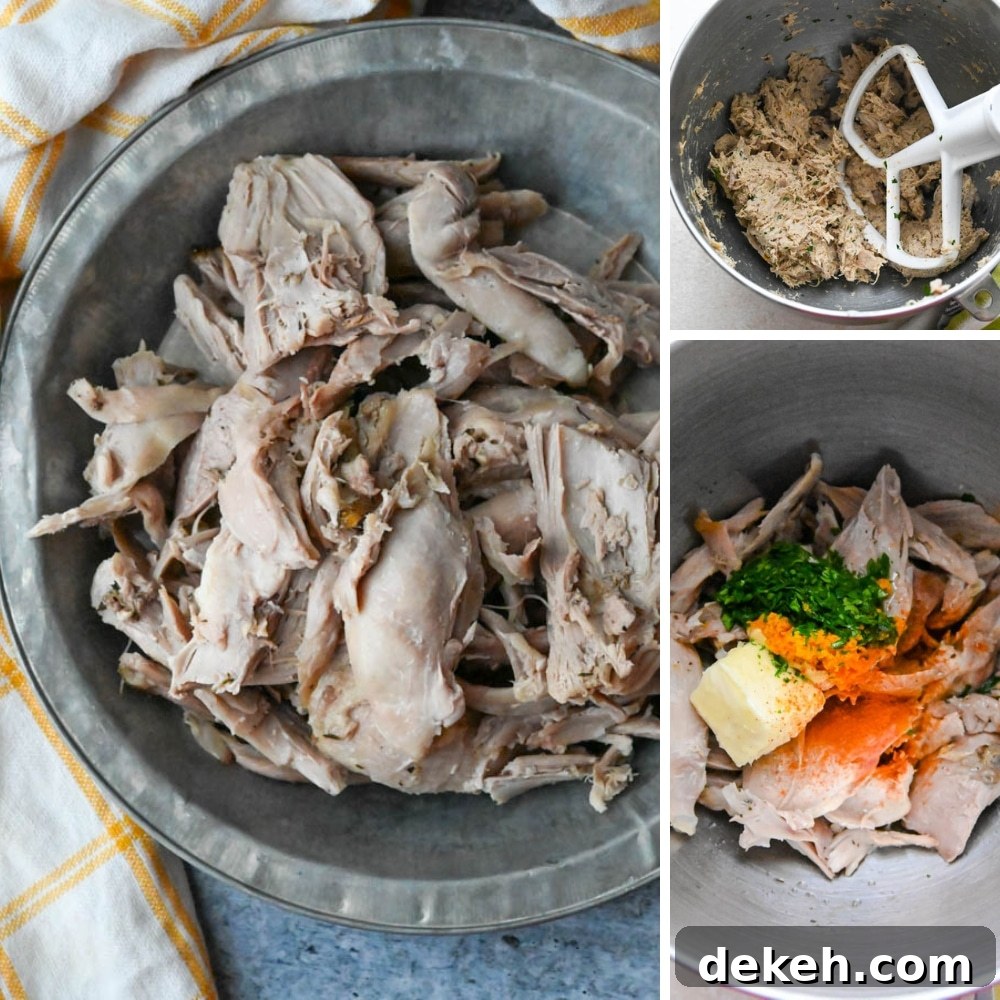
Assembling the Duck Rillettes
- The next day, scoop the solidified duck fat from the top of the jar and warm a small portion so it becomes pourable.
- Combine the cold duck meat in a stand mixer or a bowl. Add 1½ tablespoons cognac, 2 tablespoons room-temperature unsalted butter, 2 teaspoons chopped parsley, 1 teaspoon orange zest, 1 teaspoon Dijon mustard and a dash of cayenne. Add 2–3 tablespoons warm duck fat and 2 tablespoons warm duck stock.
- Mix on low speed with the paddle attachment until the meat breaks apart and the mixture is cohesive, or work it by hand with a wooden spoon until fairly smooth and well combined.
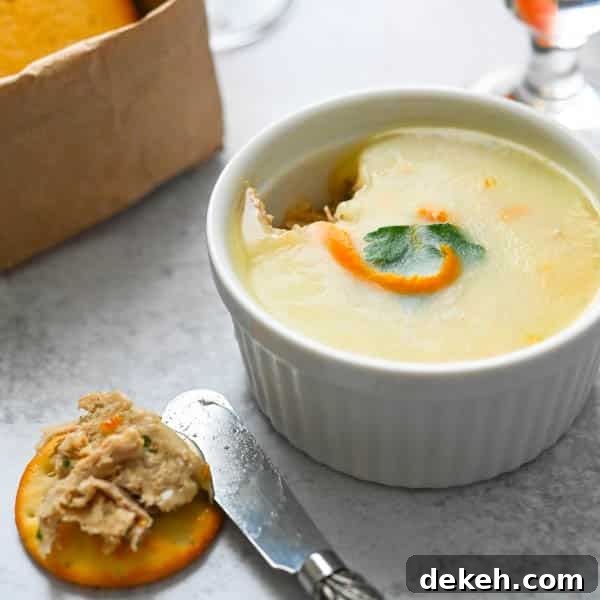
- Pack the mixture into ramekins, small jars or crocks. Smooth the tops and garnish with a bit more orange zest, parsley or cracked black pepper if desired.
- Pour 1–2 tablespoons of warm duck fat over each jar to seal the rillettes, then cover and refrigerate for several days, up to a week, to let the flavors deepen.
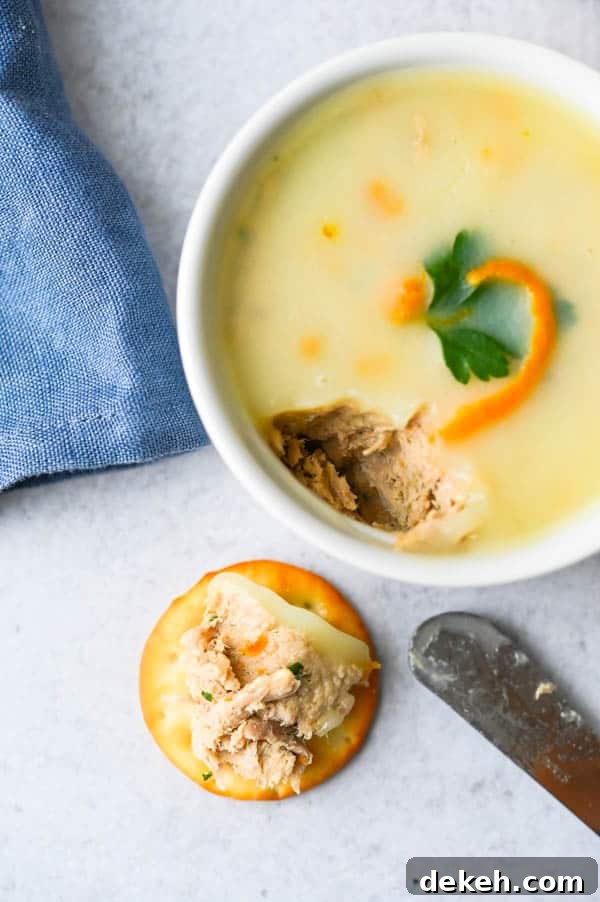
- Serve at room temperature (let sit out 20–30 minutes) spread on crostini, baguette slices or crackers with a sparkling wine or cocktail.
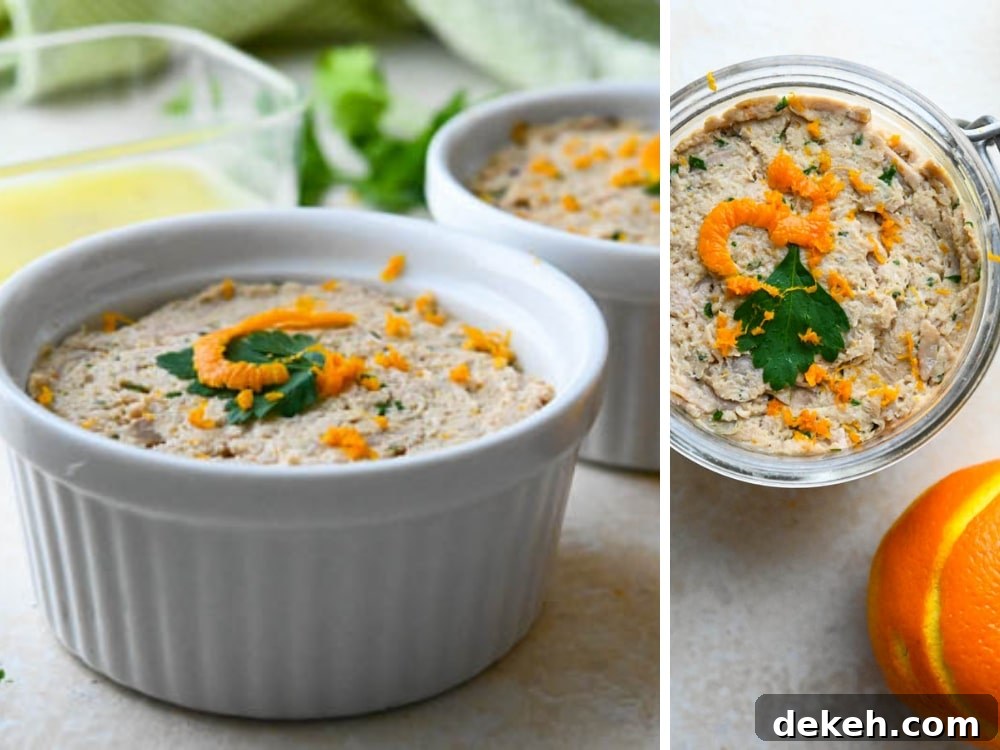
Best Containers for Storing & Gifting
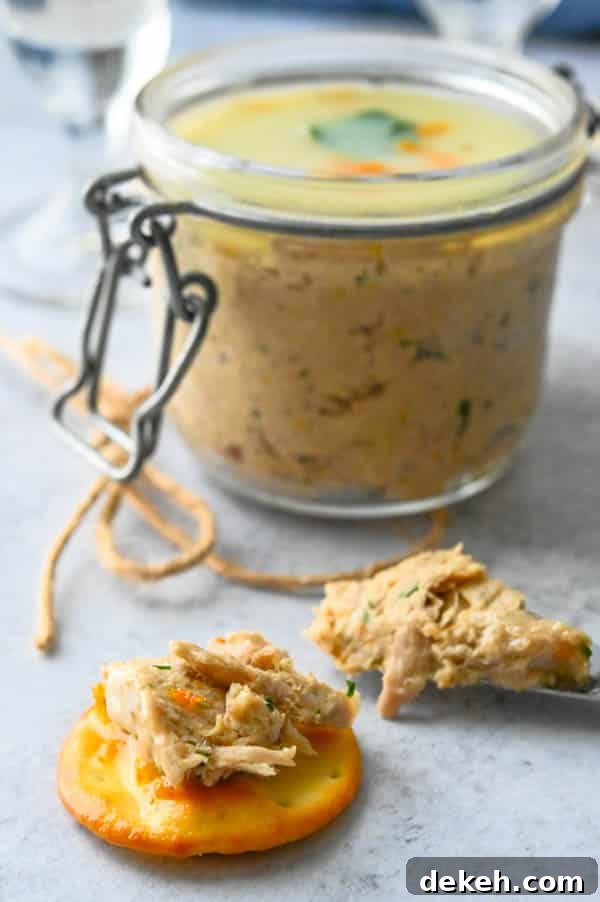
For serving at home, white porcelain ramekins look elegant. For gifting, small half-pint canning jars, Weck jars or similar glass crocks make a beautiful presentation. Tie with a ribbon and include a small spreader or a sleeve of good crackers for a complete gift.

Plan Ahead
Rillettes improve with time. I like to prepare them three to four days before serving, and they can keep up to a week refrigerated when properly sealed with fat.
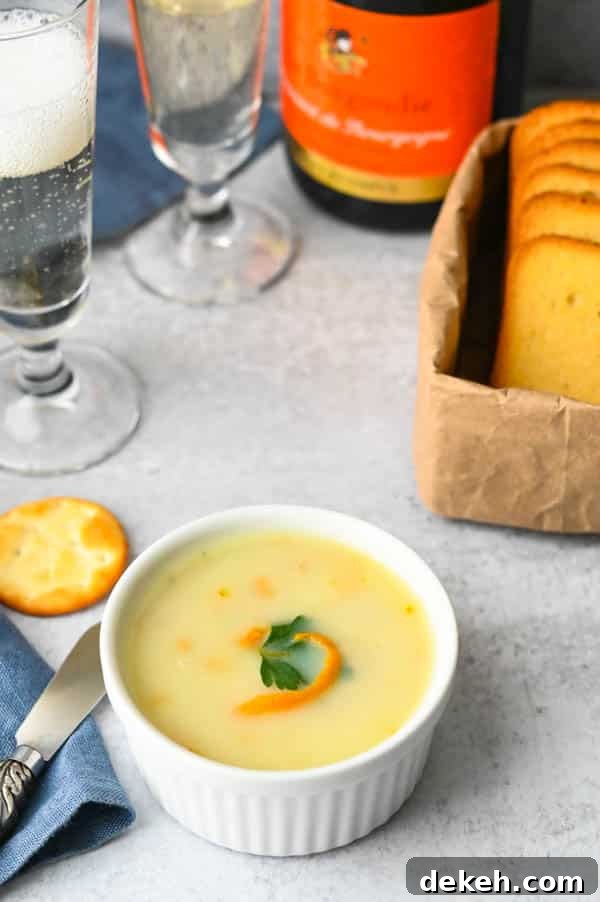
Don’t Serve Rillettes Cold
Bring rillettes to room temperature before serving. The fat softens and the texture becomes silky, allowing the flavors of orange, thyme and cognac to shine. Spread on toasted bread or crackers for the best experience.
Ideas for Gifting Aromatic Duck Rillettes
Three simple gift ideas:
- Inexpensive: Fill a jar, tie with a ribbon and include a sleeve of crackers.
- Moderate: Add a small serving tray and a spreader knife for a nicer presentation.
- Splurge: Include the tray and spreader plus a special bottle of sparkling wine for a luxurious gift.
More Pâtés and Rillettes Recipes
- Veal and Pork Country Pâté
- Pork Rillettes
- Pâté de Campagne
Aromatic Duck Rillettes Recipe
INGREDIENTS:
- 1 whole duck, about 6 pounds
For the spice rub
- 2 tablespoons kosher salt
- 2 generous teaspoons freshly ground black pepper
- 2 heaping teaspoons dried thyme
For the aromatics
- 12 cloves garlic, crushed and peeled
- 3-inch knob fresh ginger, sliced into pieces (no need to peel)
- 3–4 bay leaves
- Peel from an orange (no white pith)
- 1 large bunch fresh thyme
- 1 tablespoon black peppercorns
To assemble rillettes
- Cold duck meat
- 1½ tablespoons cognac or brandy
- 2 tablespoons room-temperature unsalted butter
- 2–3 tablespoons warm duck fat (from roasting)
- 2 tablespoons warm duck stock (from roasting)
- 2 teaspoons chopped parsley
- 1 teaspoon orange zest
- 1 teaspoon Dijon mustard
- Dash of cayenne pepper
- Salt and freshly ground black pepper to taste
Optional garnish
- Additional orange zest
- Cracked black pepper
- Parsley leaves
Special equipment
- 4–6 ramekins, small jars or half-pint crocks
DIRECTIONS:
- Heat oven to 250°F (120°C).
- Mix kosher salt, black pepper and dried thyme in a small bowl and set aside.
- In a medium bowl combine garlic, ginger, bay leaves, orange peel, thyme and peppercorns. Toss to combine and set aside.
- Place the duck in a roasting pan. Sprinkle one-third of the spice rub inside the cavity, one-third on the back, and the remaining third over the breasts. Pack the aromatics into the cavity.
- Roast for about 7 hours, or until the meat pulls away from the bones and a large amount of fat has rendered. This low, slow method will produce a generous amount of drippings and stock.
- Lift the duck from the pan and drain any fluids. Strain the drippings through a sieve into a jar, seal and refrigerate.
- Remove the skin and flesh from the duck. Transfer the meat to a sealed container and refrigerate overnight. Reserve or discard bones and skin as you wish.
- Once chilled, the jarred drippings will be separated into a solid fat layer and a gelatinous stock layer. Scoop the fat from the top into a small bowl for use in the recipe; reserve the stock as well.
If using a stand mixer
- Place the cold duck meat in the bowl. Add cognac, softened butter, parsley, orange zest, Dijon mustard and cayenne. Add 2–3 tablespoons duck fat and 2 tablespoons duck stock.
- Fit the paddle attachment and mix on low until the meat breaks apart and incorporates, about 2–3 minutes.
If mixing by hand
- Use a wooden spoon to work the meat into the other ingredients until fairly smooth and well combined.
- Spoon the mixture into half-cup ramekins or canning jars and smooth the tops.
- Top each jar with a thin layer of warm duck fat to seal, cover and refrigerate for several days to a week to allow flavors to meld.
- Serve with crackers or crostini and a cocktail or sparkling wine.
NOTES:
One medium duck can yield about four half-pint crocks of rillettes, depending on the size of the bird and how much you trim away.
NUTRITION:
Nutritional Disclaimer
Nutritional information is an estimate and provided as a courtesy. Values may vary based on brands, measurements and substitutions. For precise guidance, consult a registered dietitian or use your preferred nutrition calculator.
Pin “Aromatic Duck Rillettes Recipe” for Later!
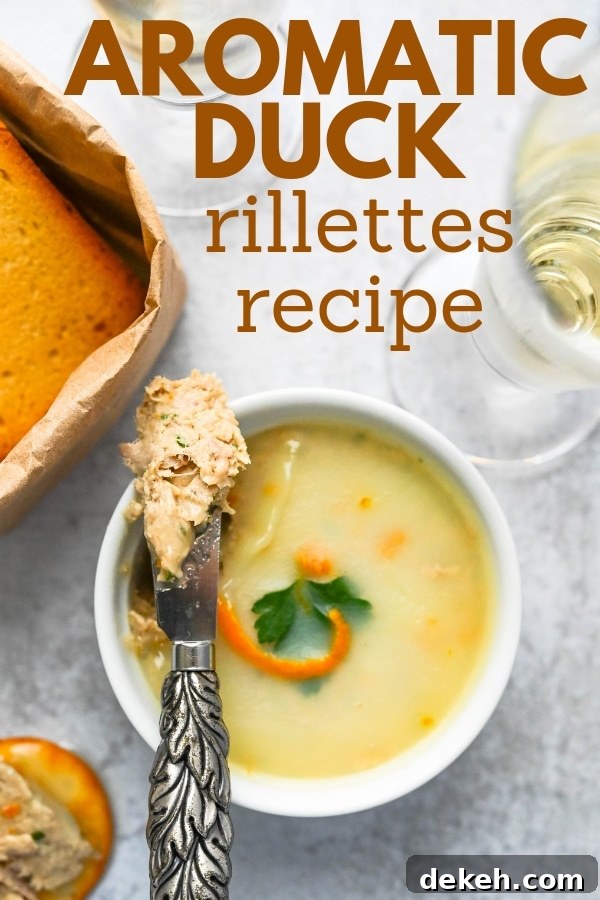
This aromatic duck rillettes recipe is a make-ahead crowd-pleaser: slow-roasted, richly flavored and ideal for entertaining or gifting. Follow the low-and-slow roast, separate the fat and stock, assemble with cognac and herbs, then let it rest — the result is a silky, savory spread worth the wait.