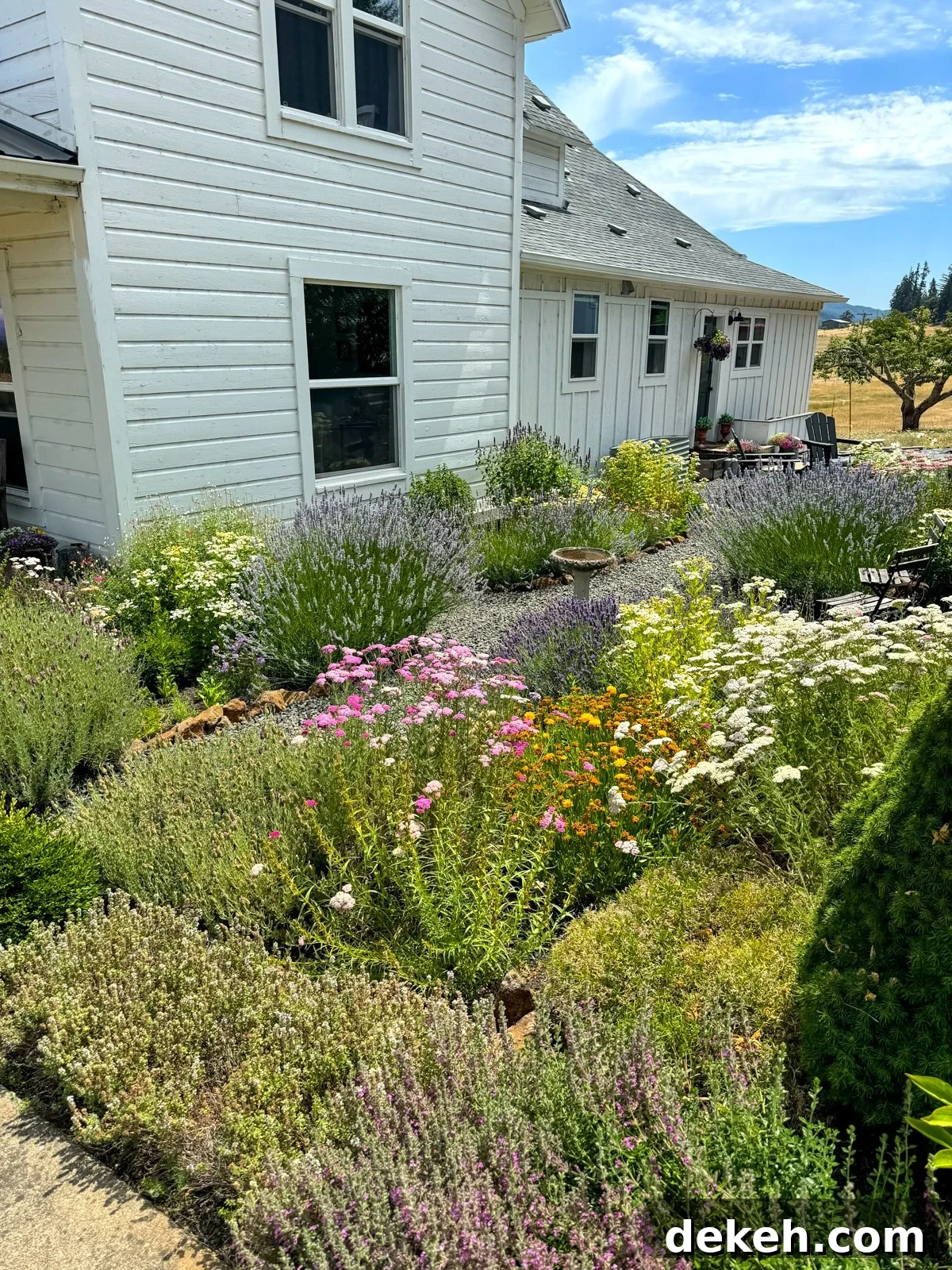
See how we’ve transformed our farmhouse’s herb and flower garden over four years into a peaceful, mostly deer-resistant sanctuary. Below I share the before-and-after progress, our simple DIY watering system, and why the maintenance remains low-effort.
Some links in this article are affiliate links and if you click on them I will receive a small commission at no cost to you.
Four years ago I planted a deer-resistant garden beside our farmhouse and it has filled in beautifully. We live in an area with lots of deer, yet with careful plant choices and a few practical systems, this garden blooms and thrives with minimal fuss.
The garden sits in a sunken area next to the house created when the foundation was installed, so I call it the Sunken Garden. Because deer are relentless, I avoided plants they favor—no roses, hostas, daylilies, or hydrangeas—and focused instead on aromatic herbs and deer-deterring perennials like lavender, rosemary, thyme, salvias, coneflowers, and penstemons.
Along the way I learned and refined a few low-cost approaches that made establishing and maintaining this space easy and affordable. I’ll cover how it started, how it looks now, and the practical systems that keep it healthy with little hands-on time.
The Garden’s Beginnings
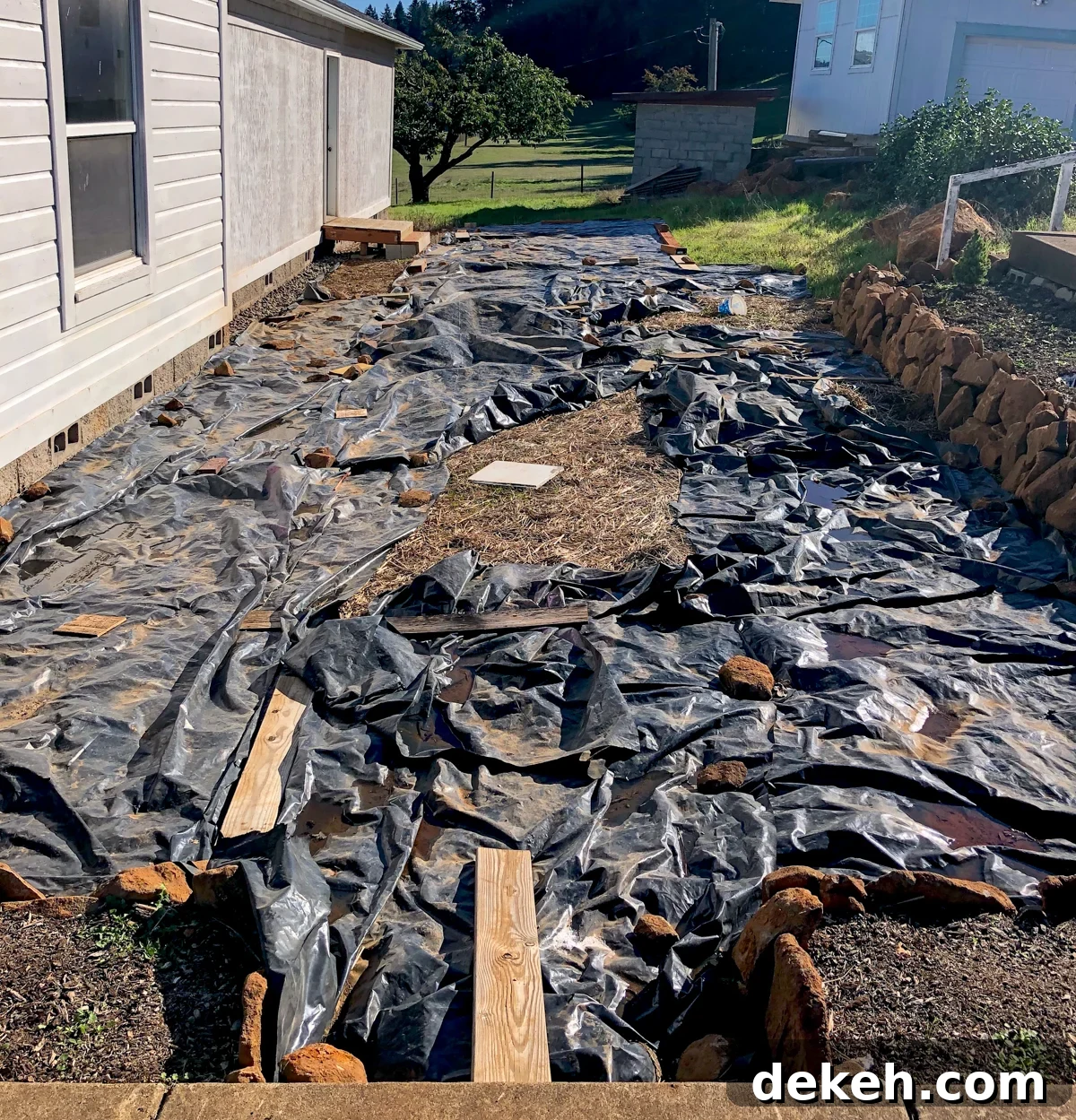
Before: The area needed excavation when the permanent foundation was added. The soil was full of rocks, so we built raised beds along the edges and covered the ground with plastic while we focused on the house work.
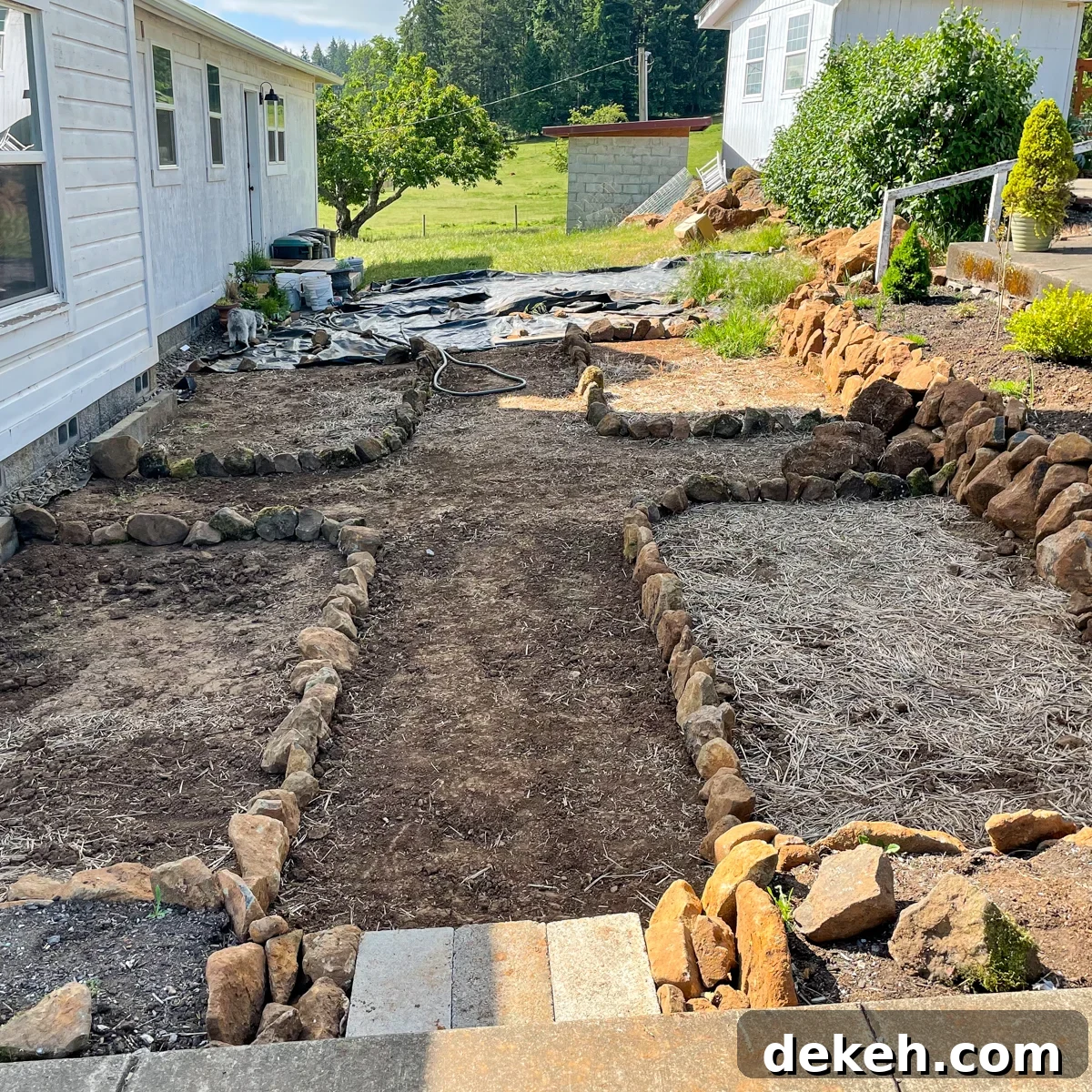
During: In spring 2021 I used more rock to outline the beds following a plan from my garden notebook. The project progressed in stages; some areas stayed covered until we could install a walkway and fire pit.
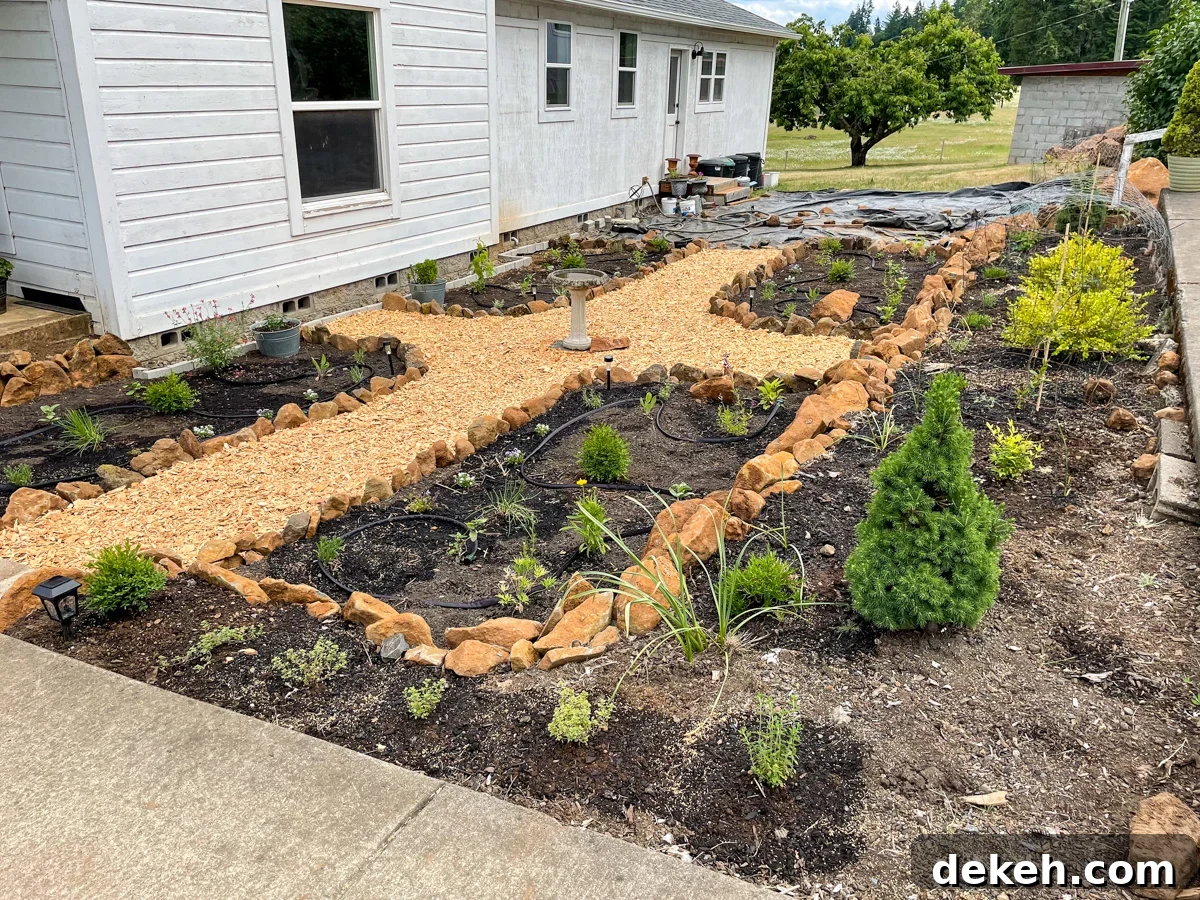
Planted — Year One (June): I built soil in the beds and planted inexpensive small herbs and annuals—thyme, lavender, germander, rosemary, oregano, black-eyed susans, zinnias, alyssum, and salvia—to fill the area affordably. I added compost as a top dressing, laid soaker hoses, and used wood chips for temporary paths until the remaining areas were completed.
I also included a few 1-gallon dwarf boxwoods for evergreen structure and used existing potted plants to add instant size where needed. The garden filled in dramatically by late summer of that first year.
The Garden at 2.5 Years
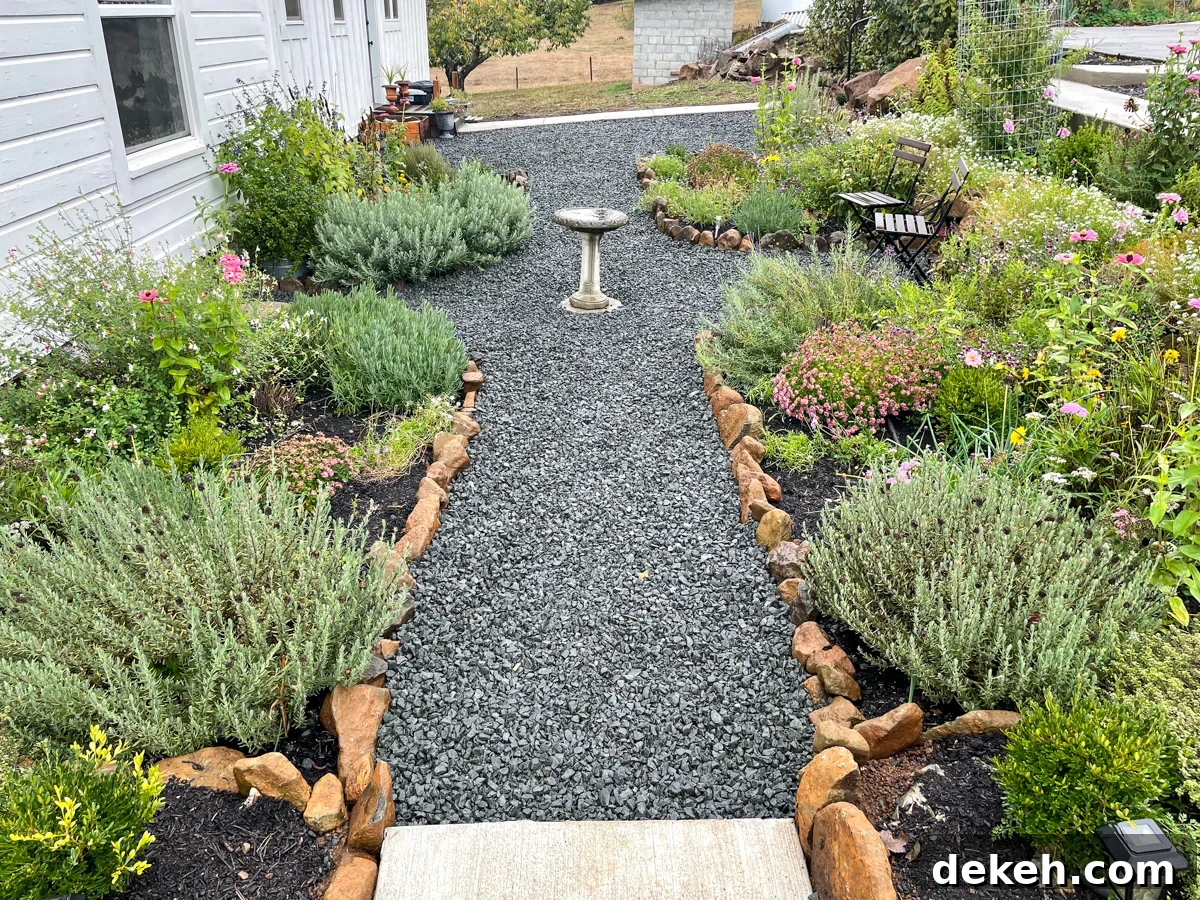
By about two and a half years the main path had been replaced with compact gravel to match the adjacent patio and fire pit. The beds had filled in nicely and a few additional seasonal plants were added or replaced as needed after winter losses.
The Garden at 4 Years + Tips
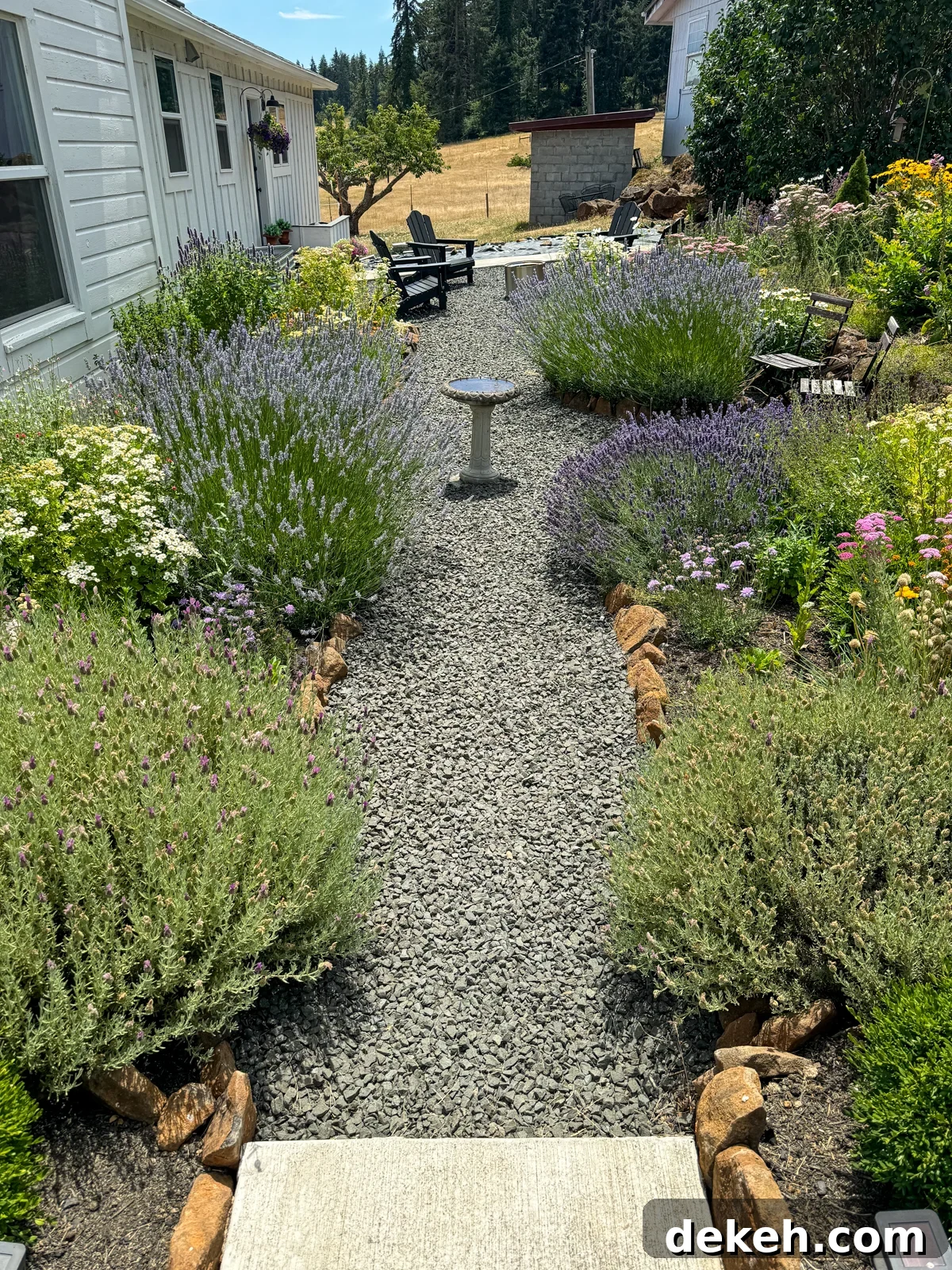
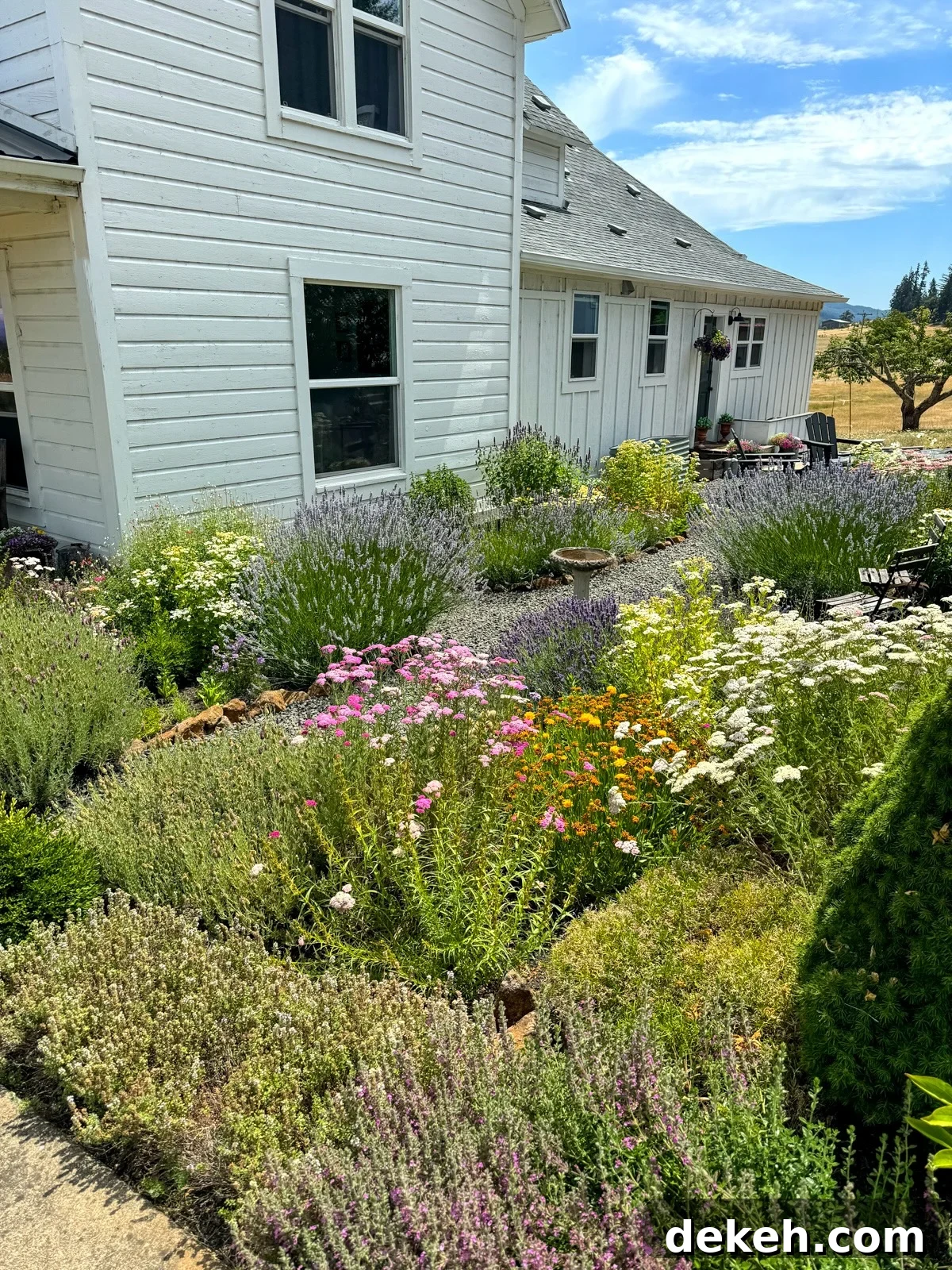
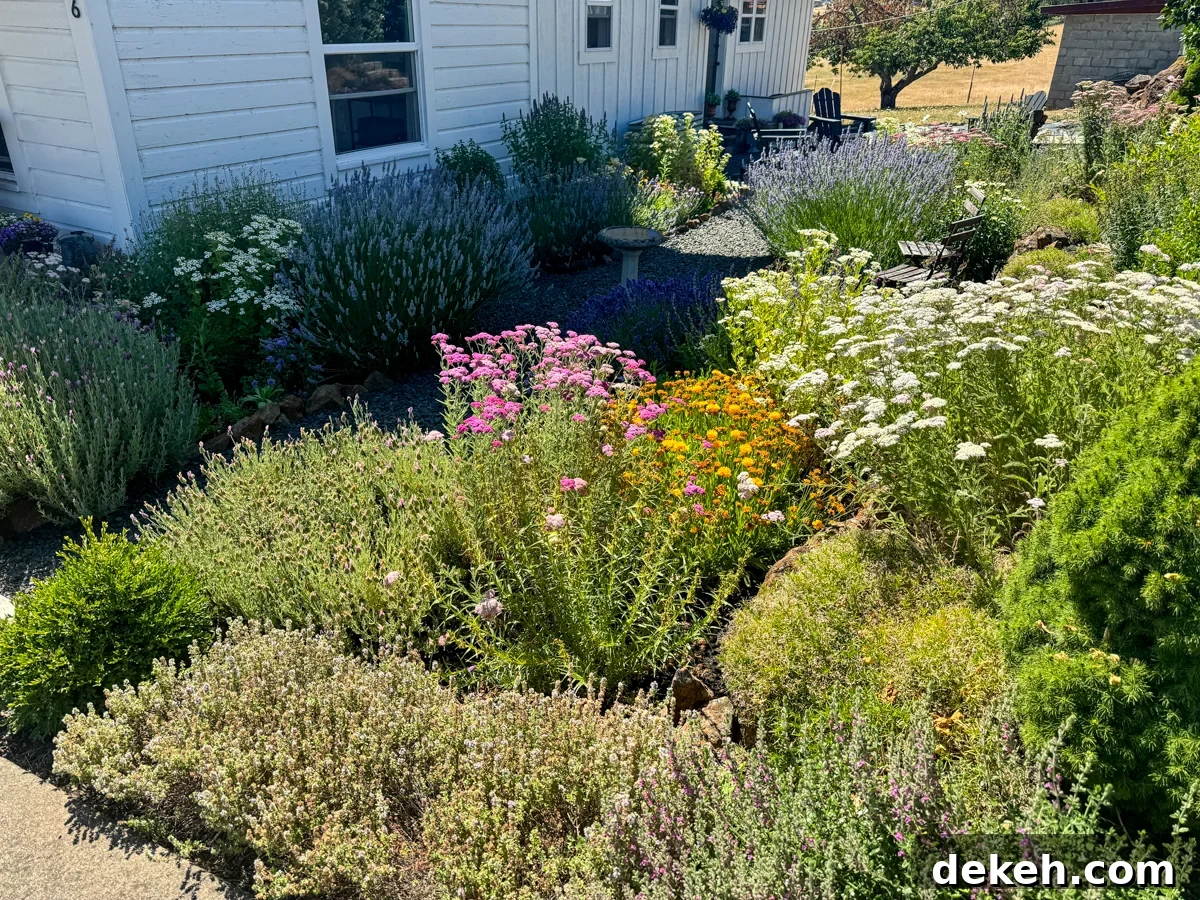
Now in its fourth year the garden is lush and quite full. Lavender is the star—overflowing in several areas and contributing to the classic cottage-garden feel. Different lavender varieties have performed differently: the Provence type has been the hardiest through winters and stays green year-round, while the English lavender is shorter and scraggly until late spring.
My “lavender test” began with seven varieties. The ones that have consistently survived four winters are the taller Provence, Spanish lavender near the step, and a shorter English lavender. The Provence looks lush but may be taller than ideal; I’m still deciding whether to keep it or replace it with more English varieties for height uniformity.
There are still patches of black plastic where I’m killing grass and plan future gravel beds or decorative features. This garden has been a work-in-progress that evolved over seasons rather than all at once.
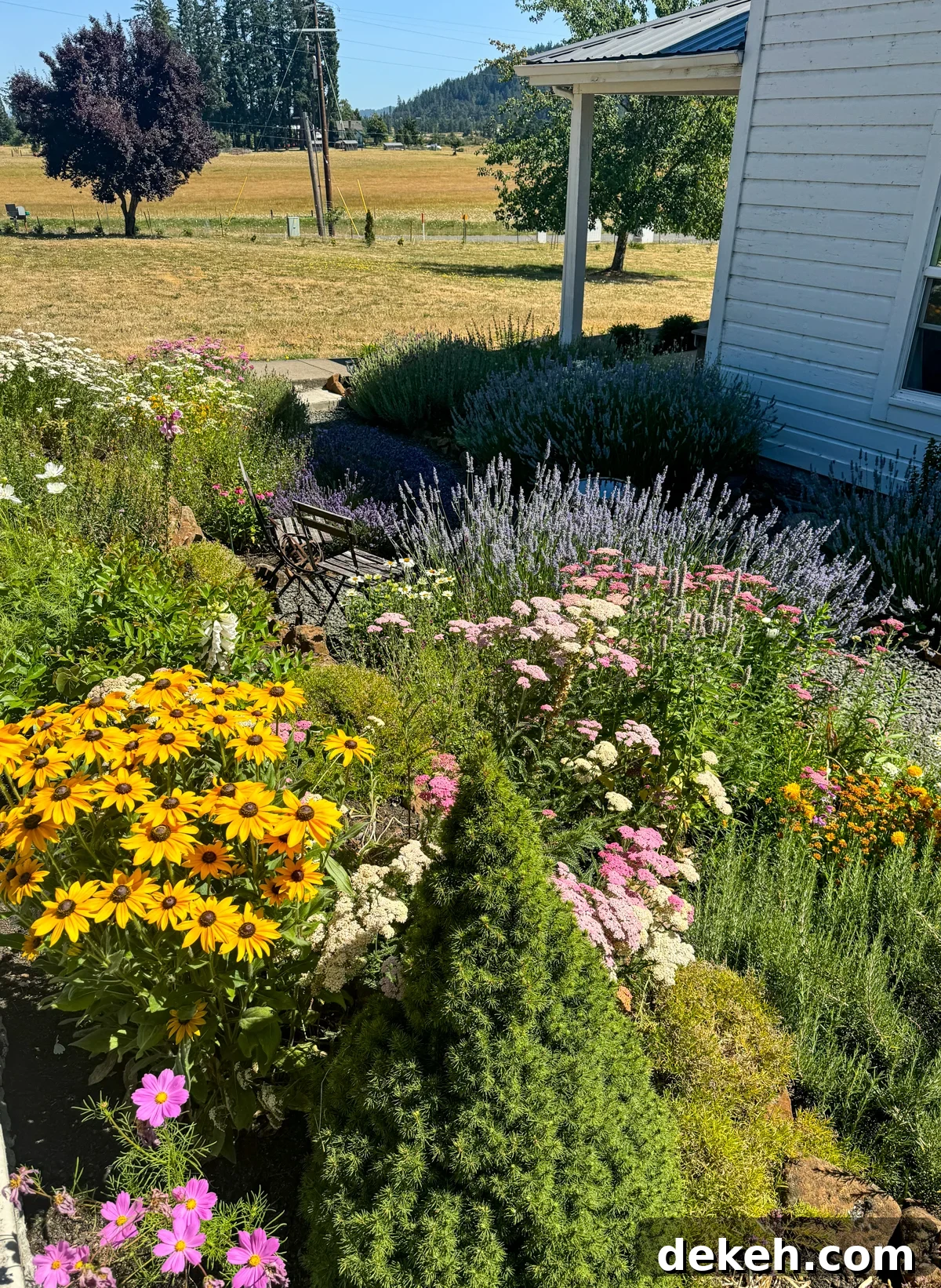
I’m pleased that deer leave most of these plants alone without frequent deterrents. If you’re starting a similar garden, a few key takeaways:
- Embrace the beginning look: Starting with small plants saves money and looks fresh; it will fill in over time.
- Use inexpensive herbs and annuals: They act as effective fillers while perennials establish.
- Build in stages: Temporary paths and plastic for killing turf let you prioritize work and budget over time.
- Enjoy the process: Gardening evolves—plan, adapt, and savor the progress.
Easy DIY Watering System
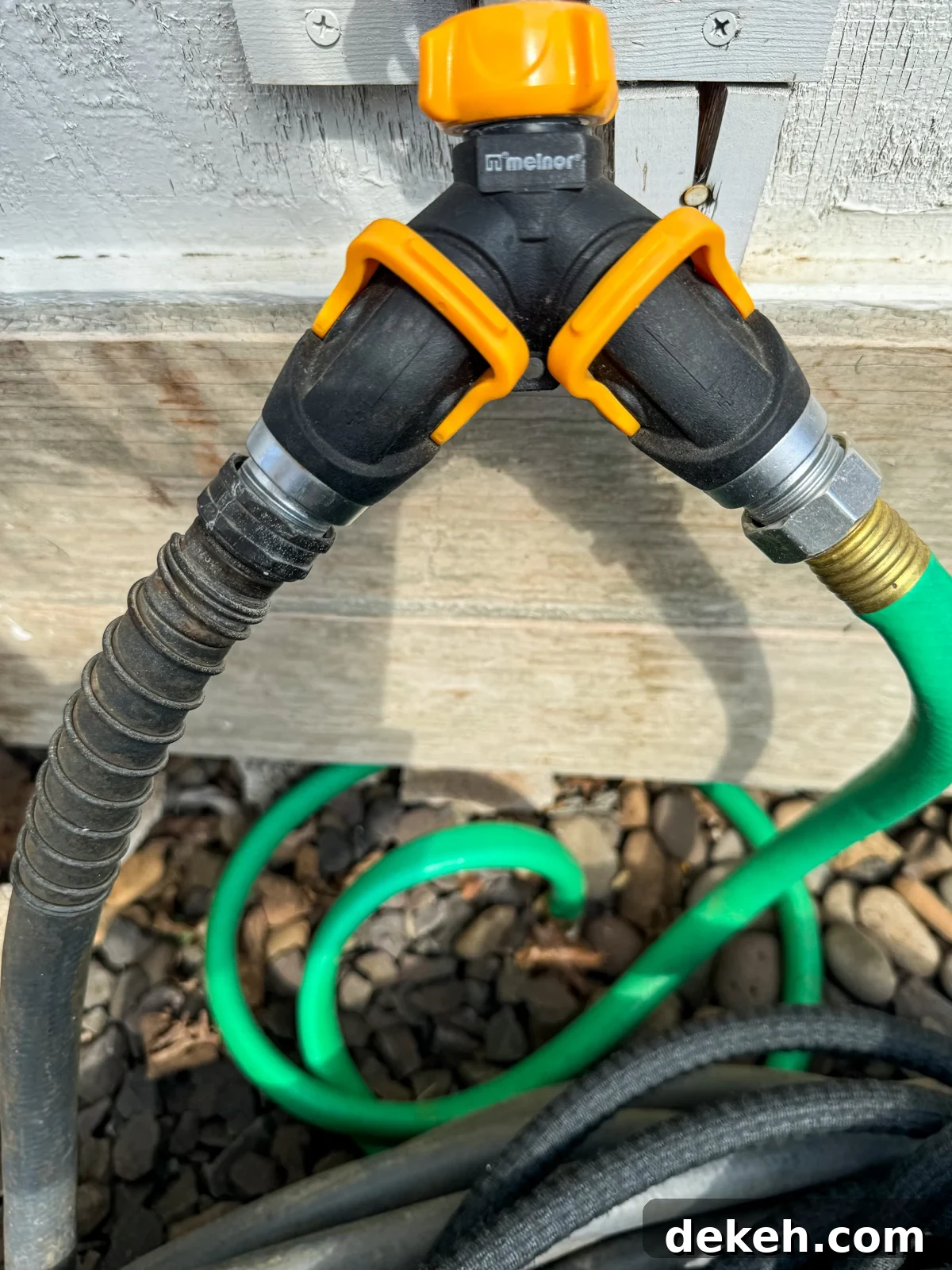
To simplify irrigation, we installed a PVC-and-soaker-hose system similar to the one used in our vegetable beds. A two-way hose valve at the spigot allows one lever for hand-watering and the other for a short hose that connects to the underground PVC network. With a simple lever flip—or a timer—you can water the entire area.
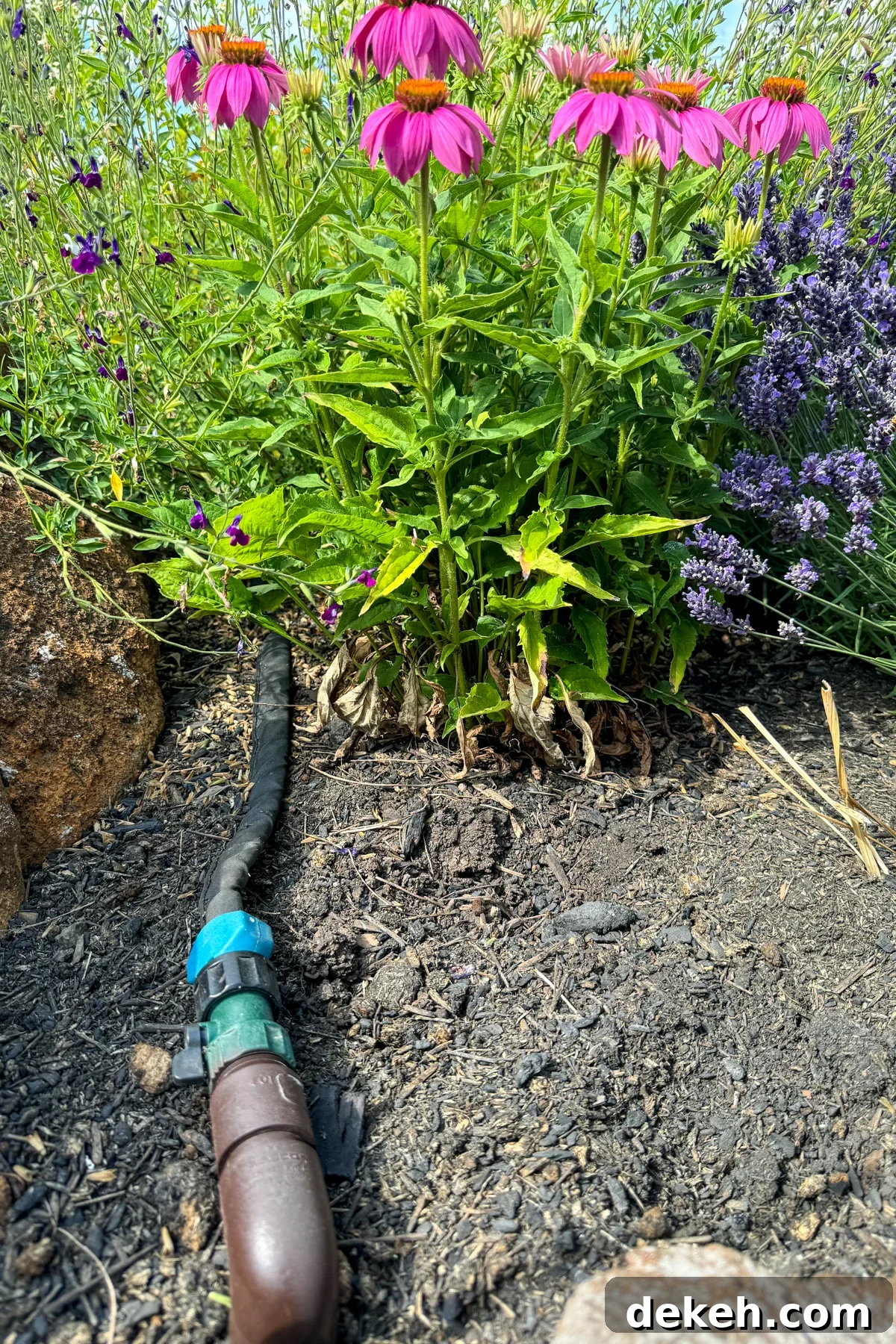
PVC trenches connect to on-off valves where cloth soaker hoses are attached. I lowered the PVC elbows closer to the ground and spray-painted them brown so they blend in. Cloth soaker hoses work best here: they’re flexible, easy to move, and durable. The hoses I bought have lasted several seasons without issue.
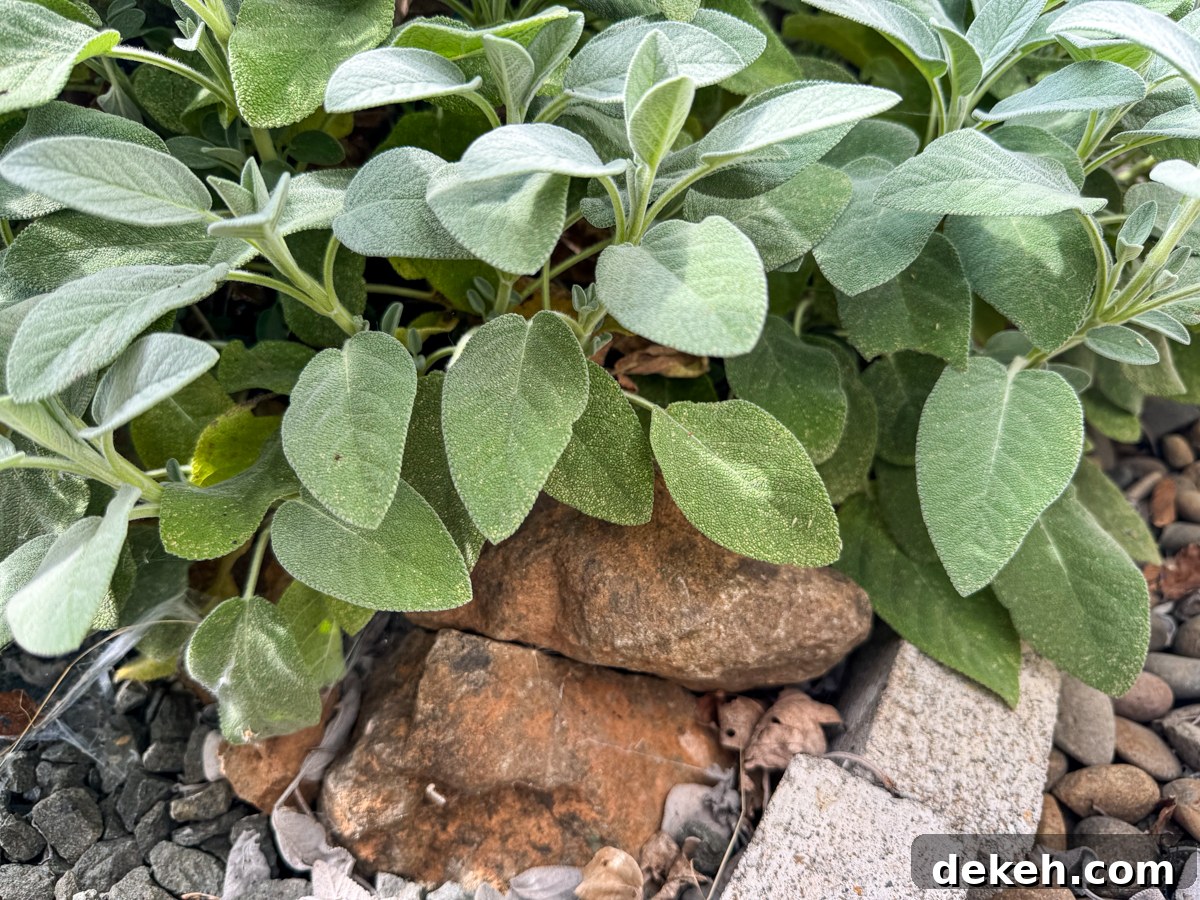
Most hose connections become concealed as plants establish. For example, a sage plant now completely hides one of the access points.
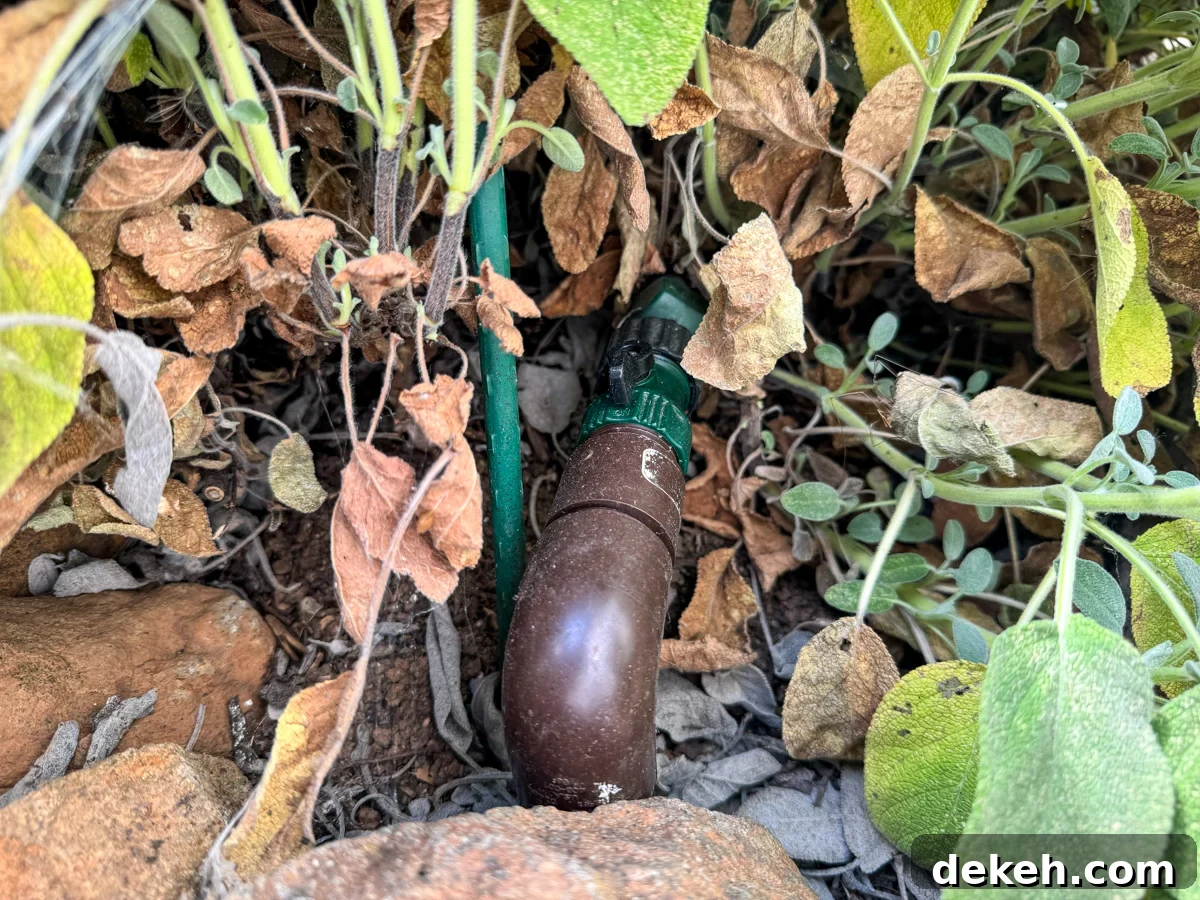
When I need access, the connection is easy to reveal and service by gently pulling back the surrounding foliage.
Low Maintenance Tips
Beyond irrigation, a few practices keep this garden low maintenance:
- Paper and mulch weed suppression: Using paper with a compost layer for the first few years reduced weeds while soil and plants established. Once beds matured I removed the paper and maintained a compost mulch layer.
- Choose low-prune plants: Pick varieties that don’t require constant shaping—dwarf boxwoods and compact perennials are good choices.
- Create permanent paths and patios: Wider paths and a dedicated patio reduce the area needing planting and trimming.
- Use clean gravel over plastic landscape fabric: I line paths with heavy plastic and use 3/4″ clean gravel (no fines). This combination prevents soil intrusion and minimizes weed growth better than fabric over time.
Routine Maintenance
- Late winter or early spring: cut back perennials (a hedge trimmer works well) and tidy the beds.
- Spring: spread a layer of compost mulch to feed soil—no extra fertilizer needed in these beds.
- Remove spent bulb foliage as it finishes in spring.
- Optional: plant annuals for seasonal color.
- Deadhead during summer as desired; it keeps the beds tidy and encourages reblooming but isn’t strictly required.
- Fall clean-up is optional; I prefer to leave seedheads for birds and clean up in late winter or early spring.
Bonus: Monthly garden task checklists can help you stay on track with seasonal chores and reduce last-minute work.
This update on the Sunken Garden shows that with planning, affordable plant choices, and a simple watering system you can create a beautiful, mostly deer-resistant garden that doesn’t demand constant maintenance. It’s been a rewarding, gradual process—and very achievable.
Disclosure: affiliate links in this article may earn a commission on purchases at no extra cost to you.