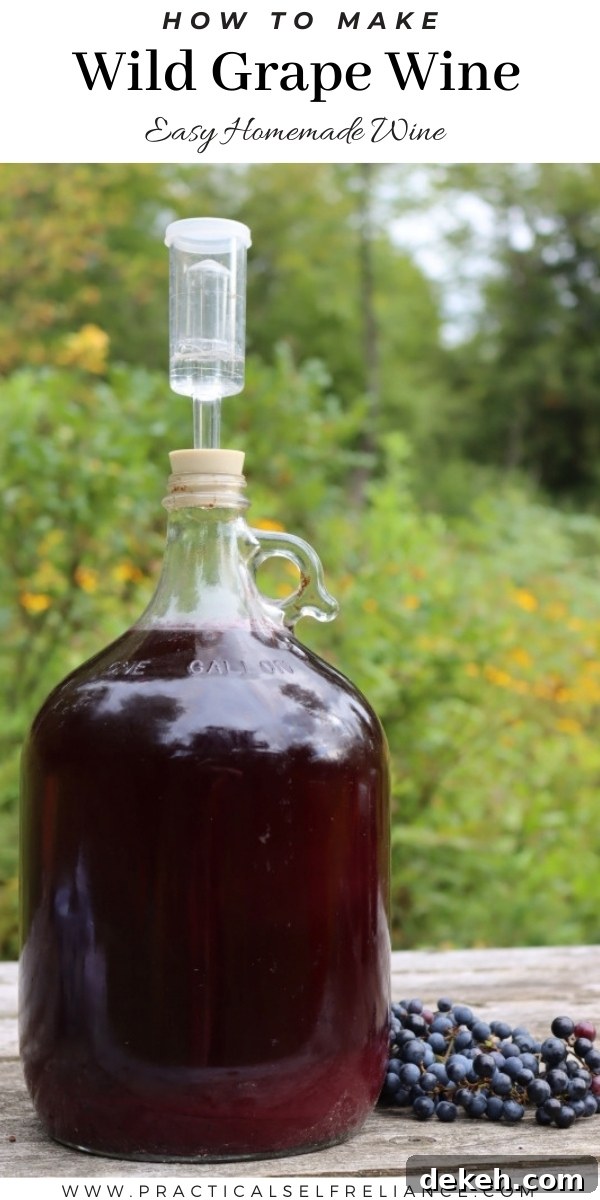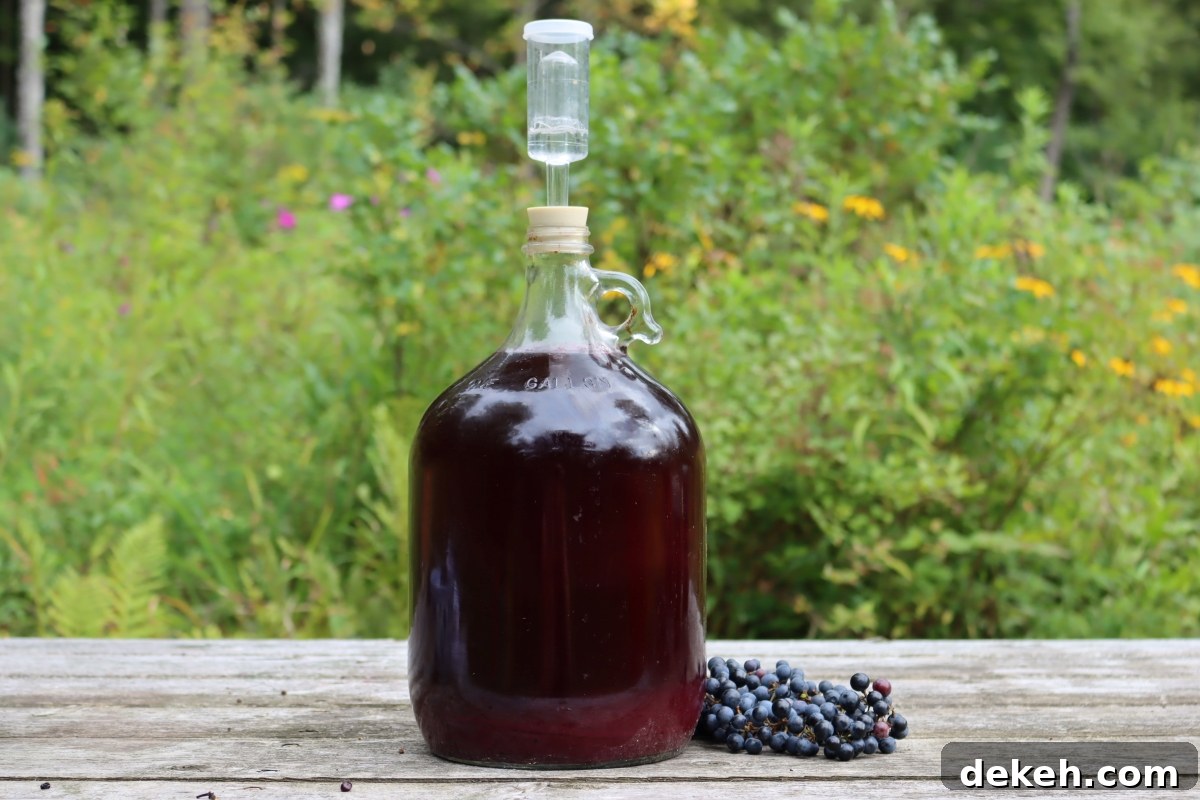
Wild grape wine is a wonderful way to use a foraged grape harvest.
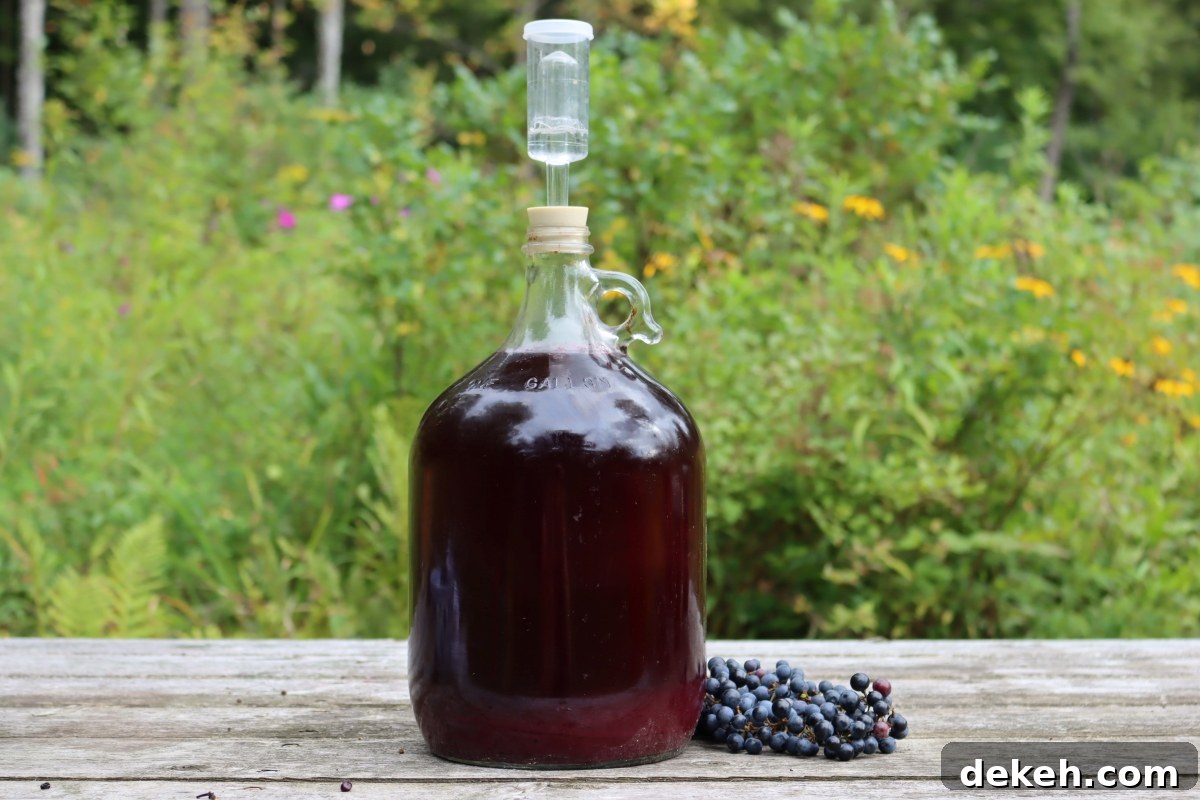
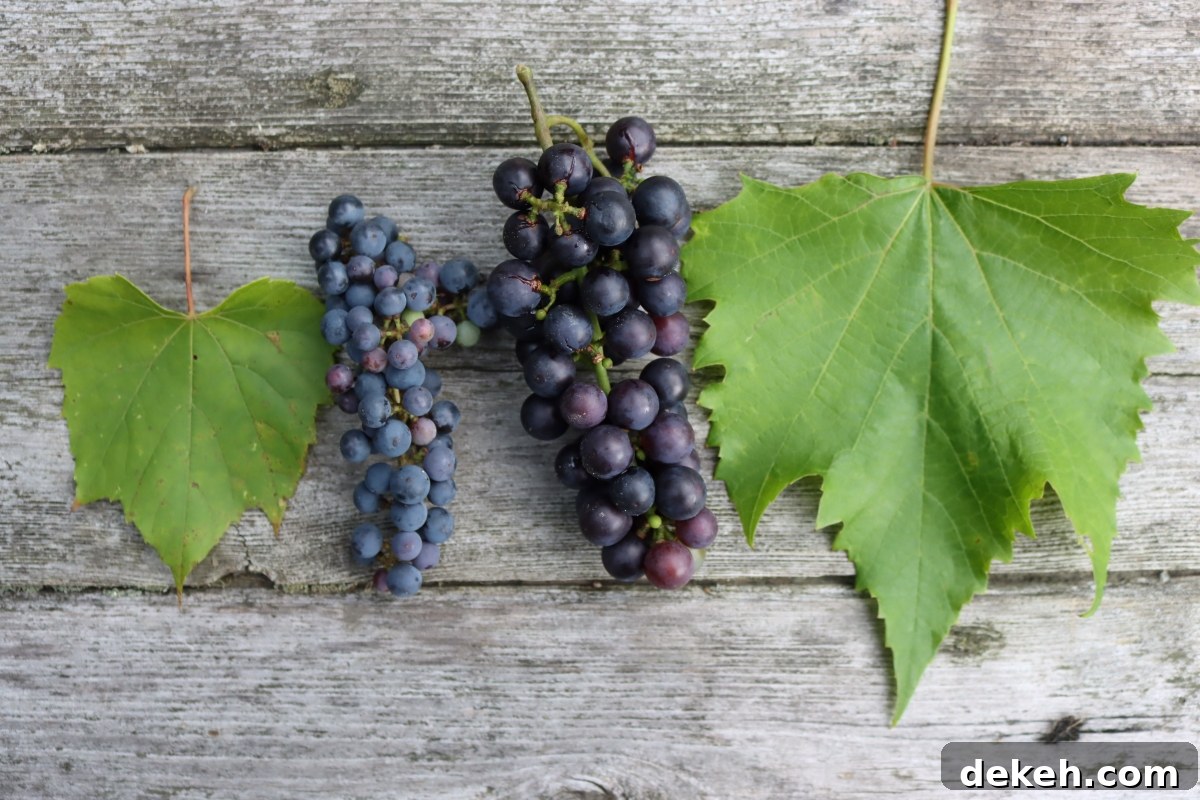
Wild grapes make excellent wine. They are usually smaller and more tart than cultivated grapes, but their bright acidity and concentrated flavor translate well into balanced, flavorful wines when combined with sugar or honey. Several species grow across North America — from fox grapes (Vitis vulpina) and summer grapes (Vitis aestivalis) to the common riverbank grape (Vitis riparia) — and most are suitable for winemaking.
Winemaking with wild grapes follows the same basic process as other small-batch fruit wines: extract juice (or ferment crushed fruit), add sugar and a few additives, allow primary fermentation, then transfer to a secondary vessel for slower fermentation and clearing. The typical additions are wine yeast, yeast nutrient, and pectic enzyme. No extra acid blend or tannin is usually necessary, since wild grapes tend to be quite acidic and have tannins in their skins and seeds.
Primary fermentation usually runs 7–10 days. After the vigorous stage subsides, siphon the wine off the solids and sediment into a clean carboy for secondary fermentation, add the remaining sugar, and allow the wine to ferment and clear for several weeks to months before bottling and aging.
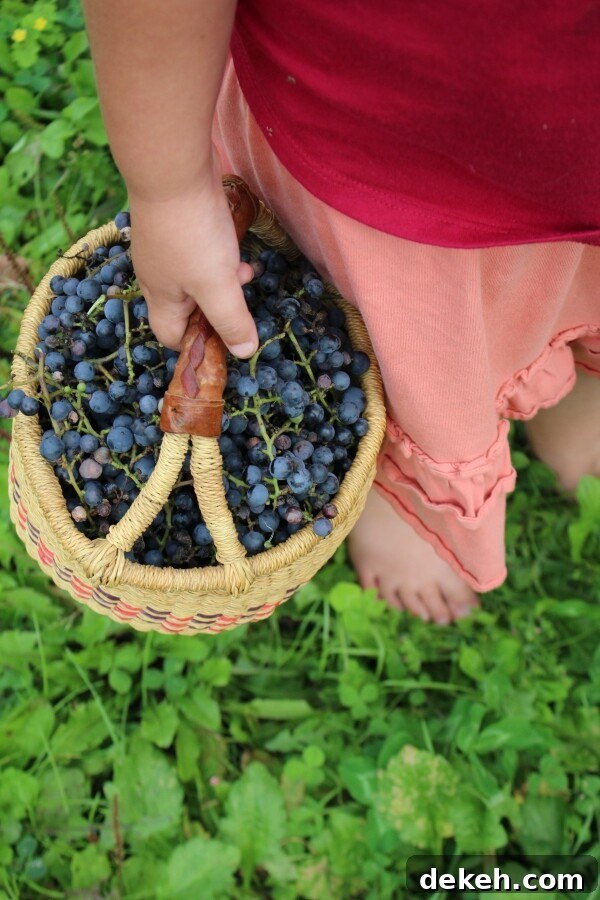
Ingredients for Wild Grape Wine
The ingredient list for a one-gallon batch is simple:
- 5–6 lbs wild grapes
- 2 lbs sugar (about 4 cups) — or honey if making a pyment/mead-style wine
- 1 tsp yeast nutrient
- ½ tsp pectic enzyme
- 1 packet wine yeast
- Water to fill
- Optional: Campden tablet and potassium sorbate for stabilizing (for backsweetening)
Recommended yeasts include Montrachet-style and Champagne strains such as Lalvin EC-1118 for a strong ferment, Pasteur Red for red styles, or Red Star Cote des Blanc as a general-purpose option. Yeast nutrient supports healthy fermentation, and pectic enzyme helps the wine clear since grapes contain pectin.
You can extract juice with a steam juicer or crush whole grapes and ferment them in a brew bag for primary fermentation. If you leave fruit in primary, use a wide-mouth carboy or a fermentation bucket with a brew bag; if you plan to use a narrow-neck carboy, juice first.
Equipment
- One-gallon carboy (wide-mouth if fermenting on the fruit)
- Narrow-neck carboy for secondary
- Airlock and stopper
- Brewing siphon (auto-siphon recommended)
- Bottles (wine bottles or flip-top bottles)
- Bottle corker and corks (if using corked bottles)
- Brewing sanitizer
- Brew bag (if fermenting on crushed fruit)
Making Wild Grape Wine
Decide whether to juice the grapes or ferment crushed fruit in a brew bag. If using whole fruit, stem the grapes before crushing.
1. De-stem and crush the grapes, or juice them. If using a brew bag, place crushed grapes into the bag and set it in your primary vessel.
2. Put the crushed grapes or grape juice into your carboy or fermentation bucket. Add about ½ gallon of water and 1 pound (about 2 cups) of sugar. Stir to dissolve.
3. Add the pectic enzyme and yeast nutrient, stirring to incorporate.
4. Rehydrate the wine yeast according to the manufacturer’s instructions and add it last. Rehydrating the yeast first reduces shock and improves fermentation performance.
5. Add water as needed to fill the carboy, seal with an airlock, and expect active fermentation within 24–72 hours. Primary fermentation should last 7–10 days; you’ll know it’s ready when vigorous bubbling subsides.
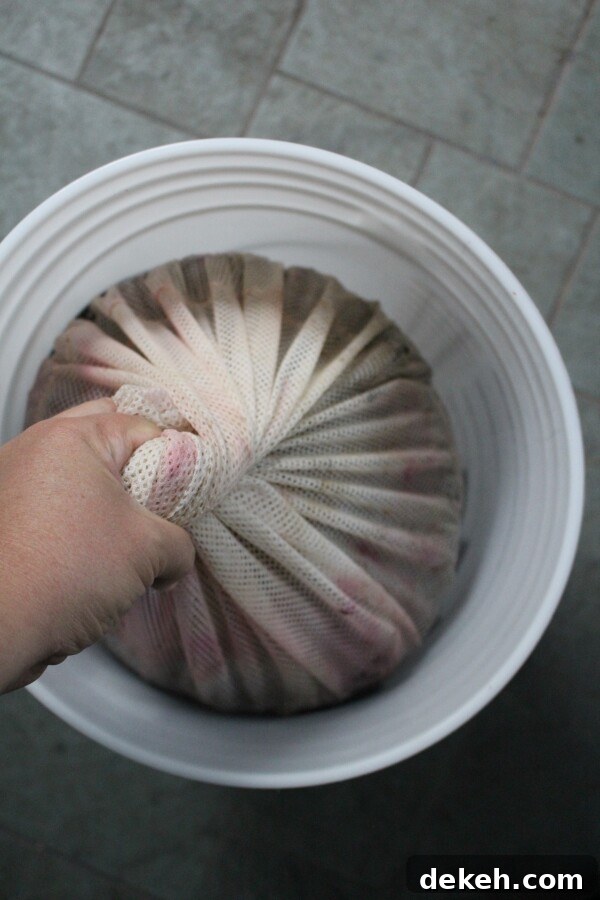
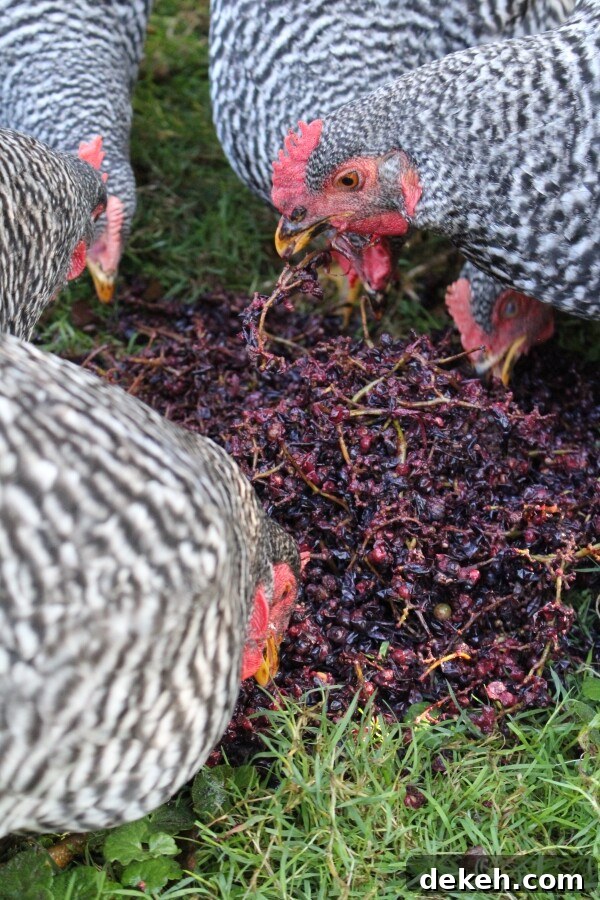
6. Siphon the wine off the fruit and sediment into a clean carboy for secondary fermentation, leaving the solids behind. If you fermented on the fruit in a brew bag, discard the pomace or repurpose it (compost or feed for chickens).
7. Add the remaining 1 pound (2 cups) of sugar dissolved in a little water, top with additional water if needed, and seal with an airlock. Allow the wine to ferment and clear. Rack again if sediment accumulates. Leaving sediment in contact with the wine can cause off-flavors, so periodic racking helps maintain flavor quality.
Secondary fermentation and aging can range from 4 weeks to several months. A minimum of about 4 months in secondary is recommended for wild grape wine; pyments (honey wines) may require longer ferment and aging due to honey’s composition — around 6 months or more is common.
8. Taste the wine at the end of secondary. If it’s too dry for your preference you can backsweeten: rack the wine, stabilize with a Campden tablet and ½ tsp potassium sorbate, wait 24 hours, then add simple syrup (equal parts sugar and water) to taste. Wait another week to ensure fermentation does not restart before bottling. Alternatively, allow the wine to ferment any added sugar until fermentation stops naturally.
9. Bottle the wine and allow bottles to age at least one month before drinking; longer bottle aging will improve flavors.
Ways to Preserve Wild Grapes
Wild grapes can be preserved in many ways beyond winemaking. Popular options include making wild grape jelly, canning grapes, or canning grape juice.
Notes and Tips
- Amount of fruit: Expect to need about 5–6 lbs of wild grapes to yield one gallon of wine. If you juice, you’ll usually dilute the juice with water because wild grapes are intensely flavored and very acidic.
- Yeast selection: Use a yeast with moderate alcohol tolerance. EC-1118 (Lalvin) is reliable for strong ferments. Choose a strain that fits the style you prefer.
- Stabilizing and backsweetening: To backsweeten safely, stabilize with Campden and potassium sorbate before adding simple syrup. Start modestly (for example, ½ cup simple syrup per gallon) and adjust to taste.
- Patience: Wild grape wines benefit from time. Allow adequate secondary aging and some bottle aging for the best results.
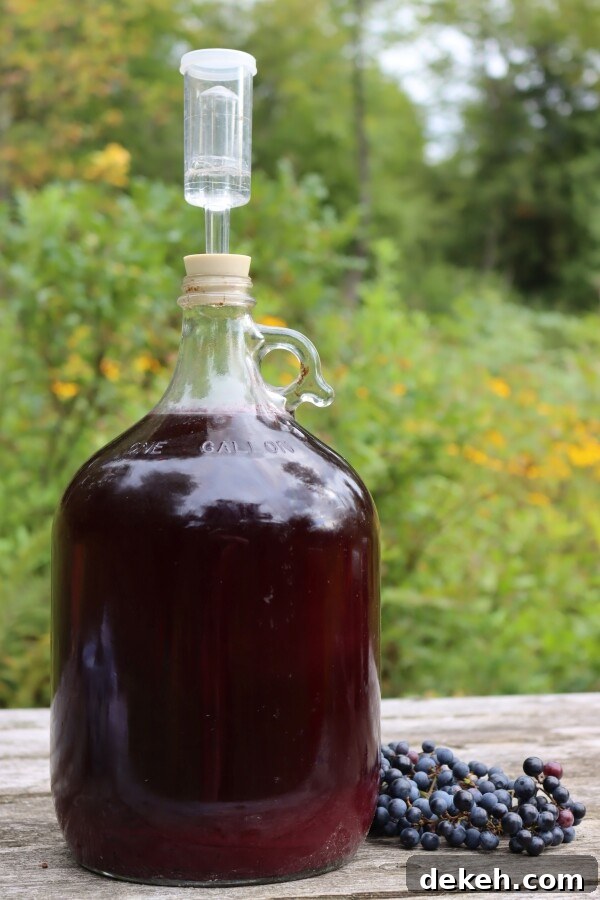
Other Fall Winemaking Ideas
If you enjoy wild grape wine, you might also try apple wine, cranberry wine, elderberry wine, persimmon wine, pomegranate wine, beetroot wine, or parsnip wine — each makes a distinctive seasonal country wine.