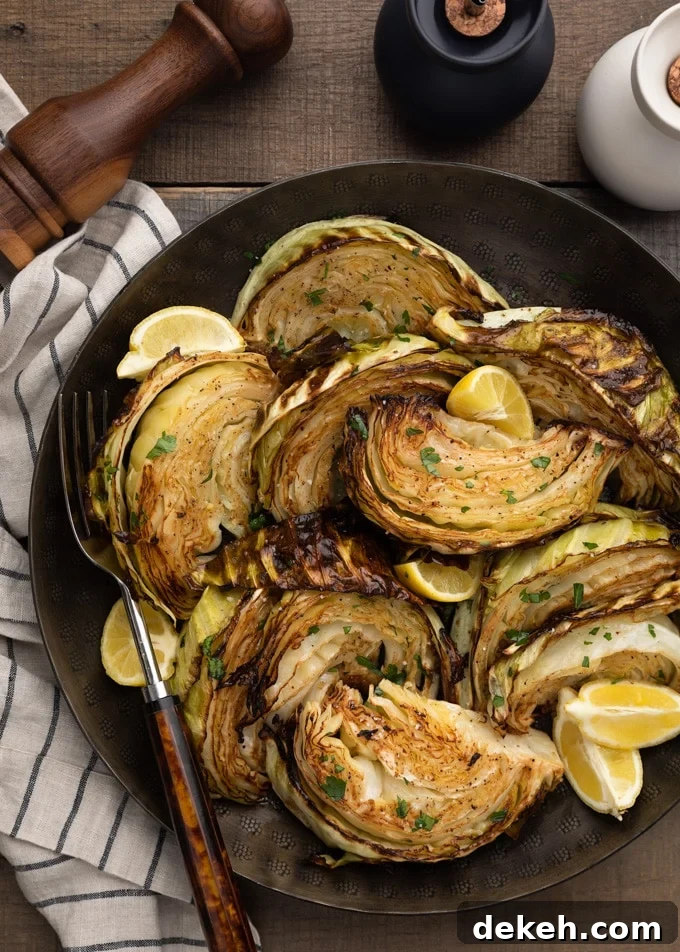
Treat your cabbage to a major flavor upgrade by roasting it! These caramelized roasted cabbage wedges are crispy on the outside, tender on the inside, and absolutely delicious. Don’t miss the “Variations” section for ways to flavor the basic recipe!
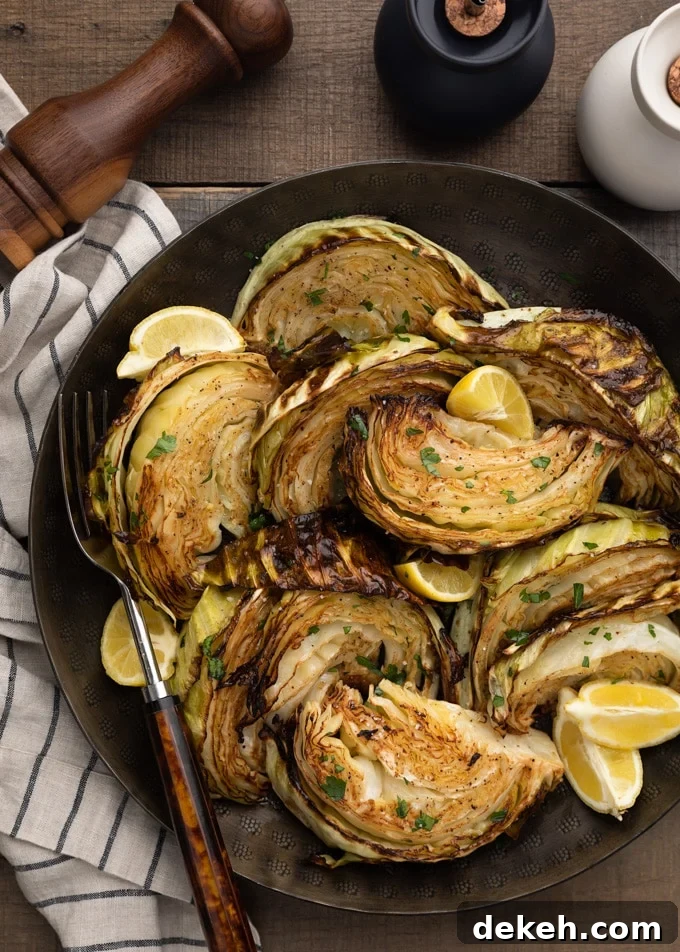
Why You’ll Love Roasting Cabbage
Many people call cabbage “bland,” usually because they’ve only had it overcooked or boiled. Roasting transforms cabbage: the outer leaves take on a crisp, slightly charred texture while the centers become tender without turning mushy. Browning concentrates the natural sugars, bringing out a subtle sweetness and deeper flavor.
Roasted cabbage wedges are an easy, impressive side—perfect for St. Patrick’s Day, weeknight dinners, or whenever you want a healthy vegetable that might just steal the show.
What Kind of Cabbage Can You Roast?
Cabbage is a cruciferous vegetable and, like broccoli, cauliflower, Brussels sprouts, and radishes, it responds beautifully to high-heat roasting. You can roast almost any variety, though cooking times and textures will vary.
Green and red cabbage are great choices because their tightly packed leaves make sturdy wedges that hold together while roasting. Savoy cabbage, with its lacy leaves, crisps quickly and can char faster, so watch it closely if you choose that variety.
How to Roast Cabbage
Prep It
You can slice cabbage into round steaks or cut it into wedges. For a side dish, wedges are my preferred shape.
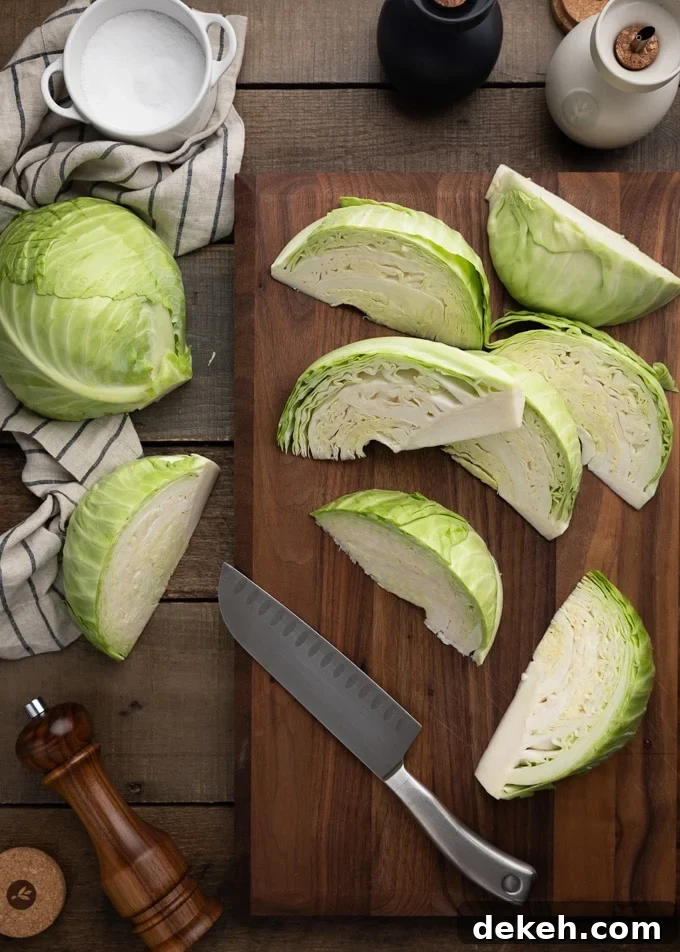
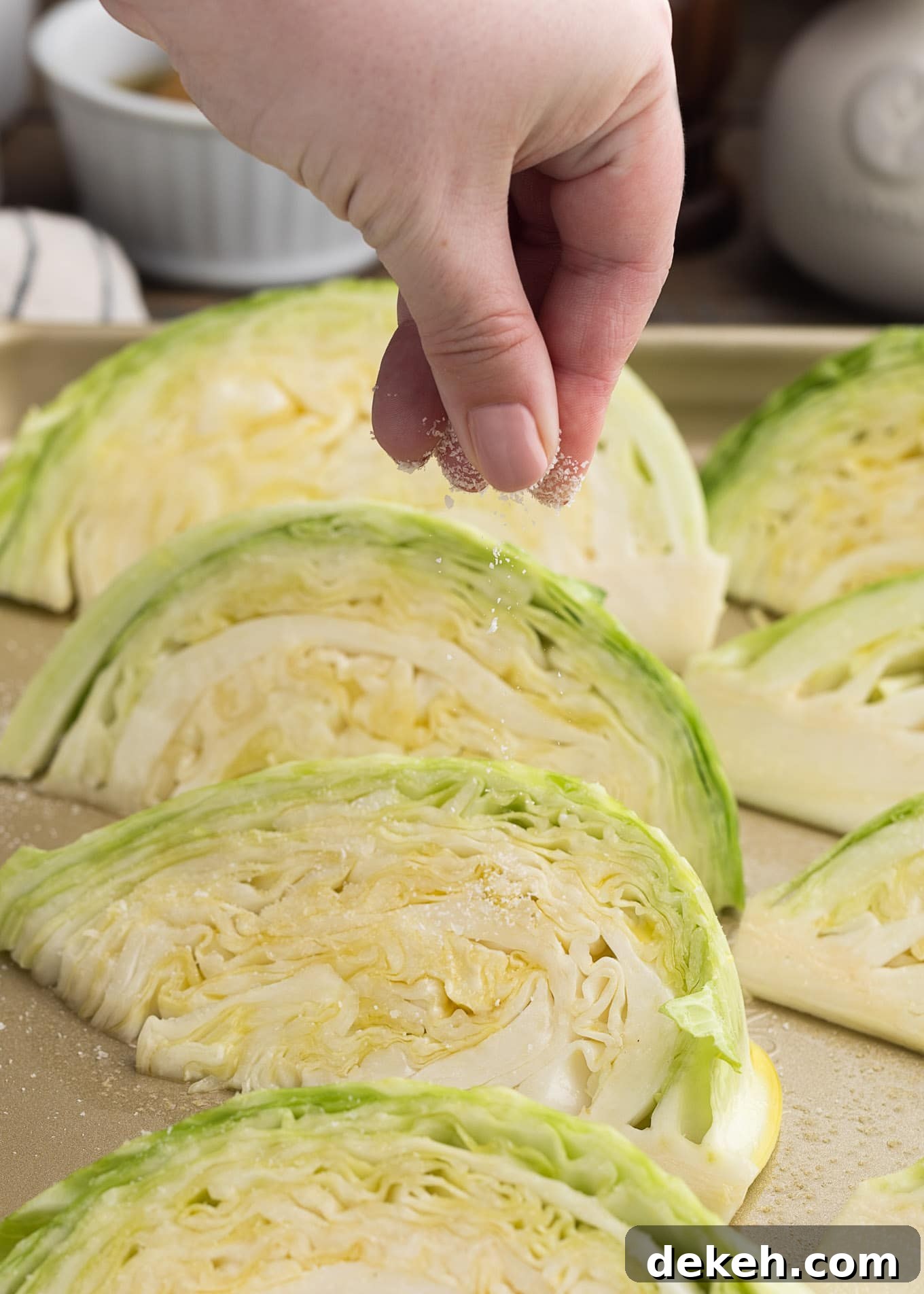
Remove any tough or wilted outer leaves. Cut the head in half vertically through the core, then cut each half into quarters and each quarter into two wedges, cutting through the core every time. Leaving some core attached helps the wedges stay intact while roasting. The core is edible and tasty when cooked.
Roast It
Arrange the wedges in a single layer on a large baking sheet—using a half-sheet pan works well. For easier cleanup, line the pan with foil.
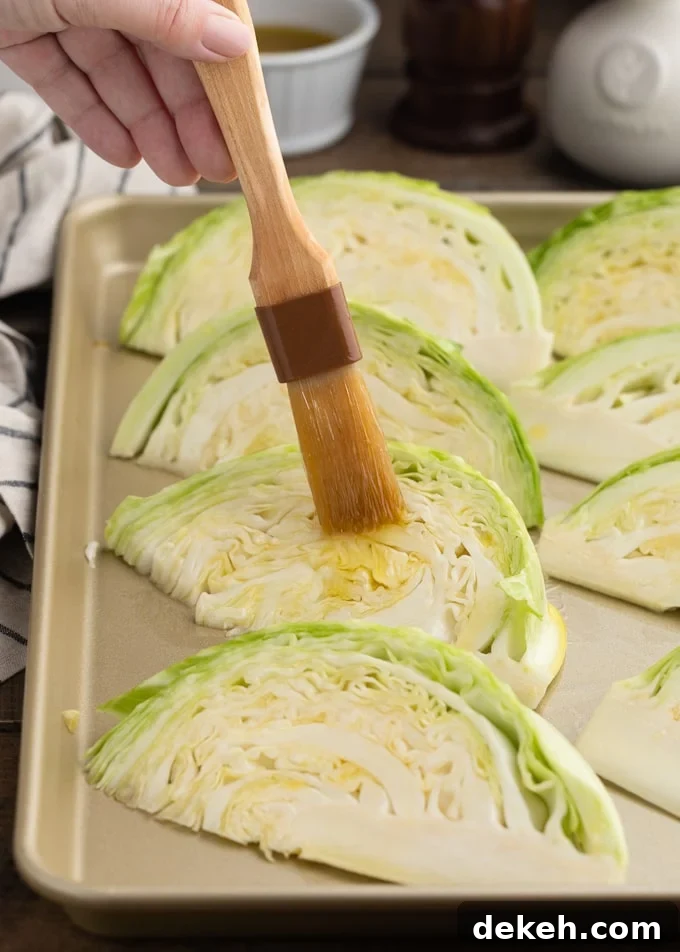
Brush each wedge on all sides with olive oil, allowing some oil to get between the layers, then season generously with kosher salt and freshly ground black pepper.
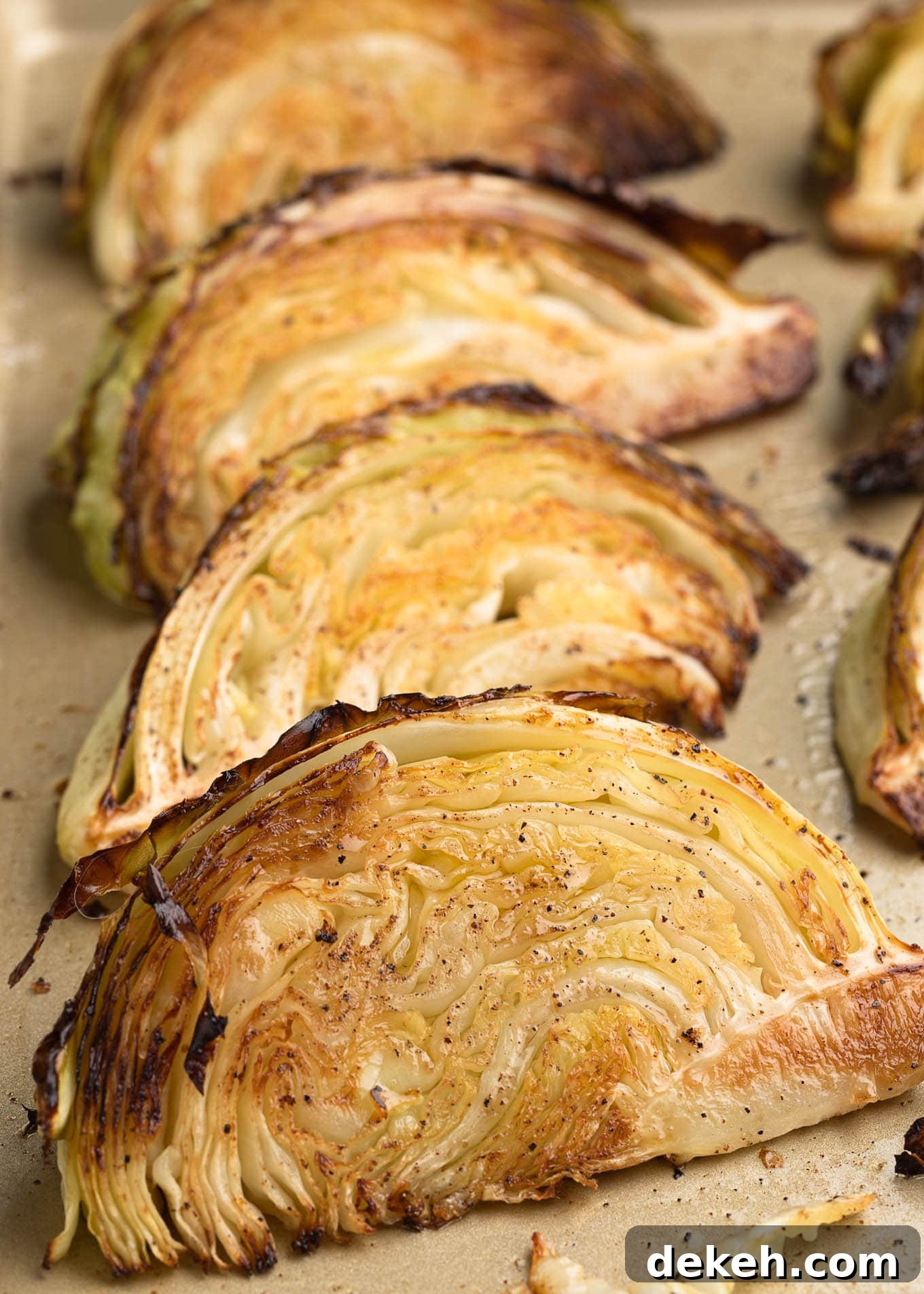
Roast at 425°F. Cooking time depends on wedge thickness and desired tenderness: plan for about 25–35 minutes total. Flip the wedges after about 15 minutes and continue until the outer leaves are nicely charred, the cut surfaces are caramelized, and the centers are tender but still have a little bite.
Variations For Flavoring the Dish
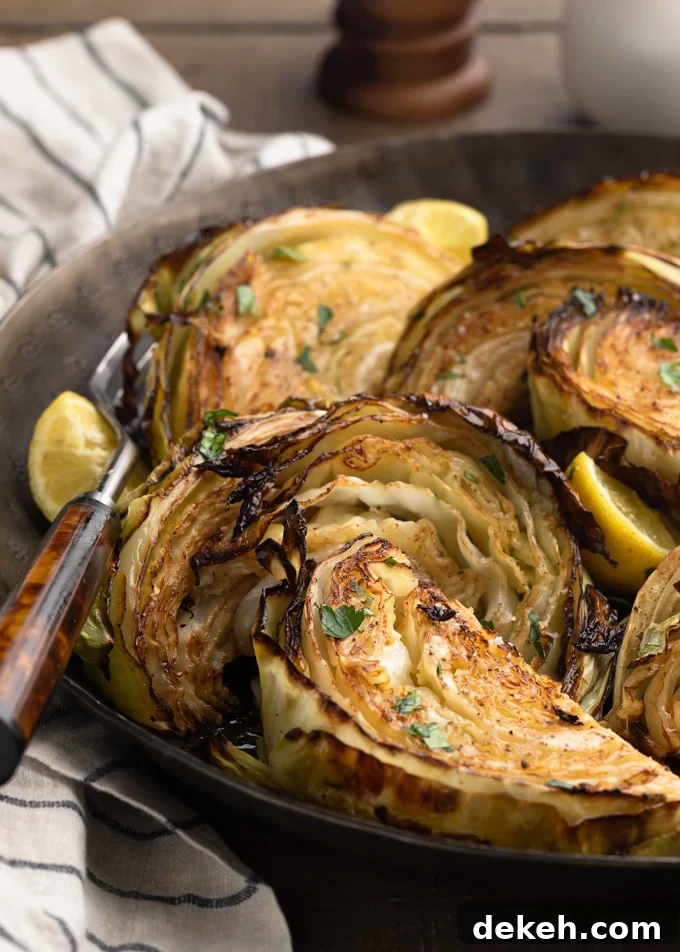
A simple finish of fresh chopped parsley and a squeeze of lemon brightens the cabbage, and crushed red pepper adds heat if you like. Beyond that, there are many easy ways to customize the flavor. Try one idea or combine a few:
- Add garlic powder and/or smoked paprika (about 1/2 to 1 teaspoon each) to the oil before brushing the wedges.
- Drizzle with chili oil for a spicy finish.
- Grate Parmigiano Reggiano over the hot cabbage so it melts slightly for a salty, nutty finish.
- Drizzle with a sweet-tangy dressing like a maple-Dijon vinaigrette or a balsamic reduction for contrast.
- For an Asian-inspired twist, finish with a plum vinaigrette or a light soy-sesame drizzle.
- Add crunch with toasted panko breadcrumbs tossed with garlic and herbs.
- Top with fresh seasonal herbs such as parsley, dill, or thyme.
What to Serve with Roasted Cabbage Wedges
Roasted cabbage pairs well with many mains. For a St. Patrick’s Day meal, serve it alongside corned beef or other braised beef dishes. It’s also excellent with pan-seared steak, pork chops, roasted chicken, or as a standalone meatless lunch when finished with bold toppings.
CRAVING MORE? Subscribe to the newsletter and follow for updates and recipes.
Roasted Cabbage Wedges
Ingredients
- 1 head cabbage (green or red cabbage works well)
- ¼ cup olive oil
- kosher salt and freshly ground black pepper
- lemon wedges for serving (optional)
- crushed red pepper flakes for serving (optional)
Instructions
-
Preheat the oven to 425°F. Line a half-sheet pan with foil if desired for easier cleanup.
-
Remove any wilted outer leaves. Cut the head into 8 equal wedges, cutting through the core so each wedge contains some core to hold it together.
-
Place the wedges in a single layer on the baking sheet. Brush all sides with olive oil, letting some oil get between the layers. Season generously with salt and pepper.
-
Roast for 15 minutes, then carefully flip the wedges. Continue roasting 10–20 minutes more until the cut sides are caramelized, the outer leaves are crisp and charred in spots, and the centers are tender but still slightly firm. Cooking times vary with wedge size.
-
Serve hot with lemon wedges and, if you like, a sprinkle of crushed red pepper flakes.
Notes
How to cut cabbage into wedges:
Start by cutting the cabbage in half lengthwise through the core. Halve each half, and then halve each quarter so you end up with eight wedges. Be sure to slice through the core each time so each wedge contains some core—this helps the wedges hold together while roasting. If there is a large stem at the bottom, you can trim it, but leave the core intact.
Nutrition Estimate
Nutrition information is automatically calculated and should be used as an approximation.
Please note that these recipes use US customary measurements and have not been tested for high altitude or elevation cooking.