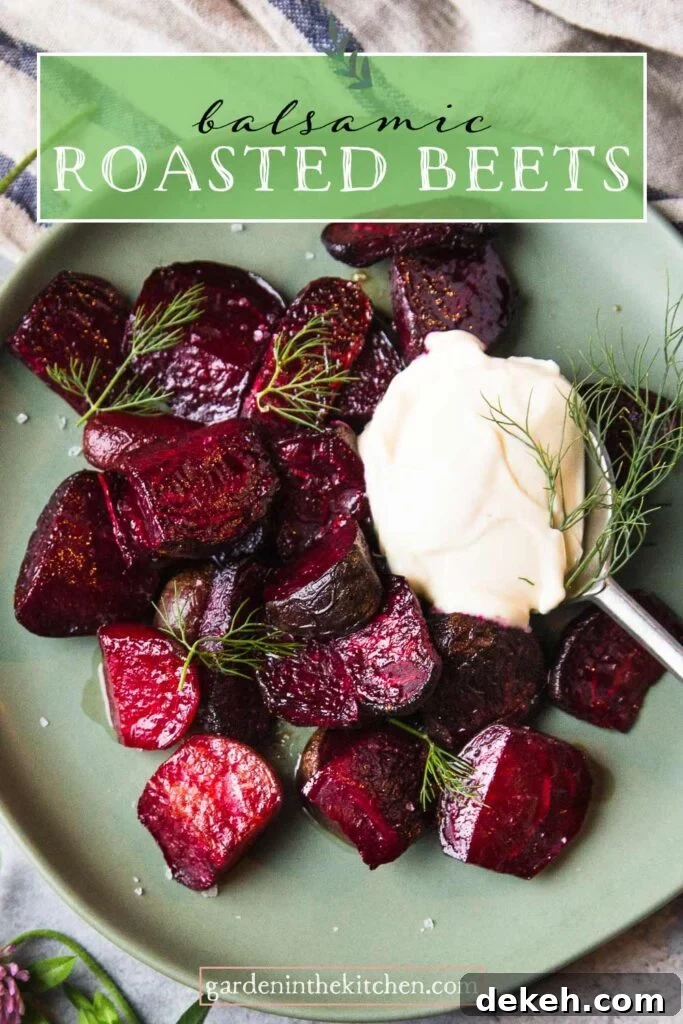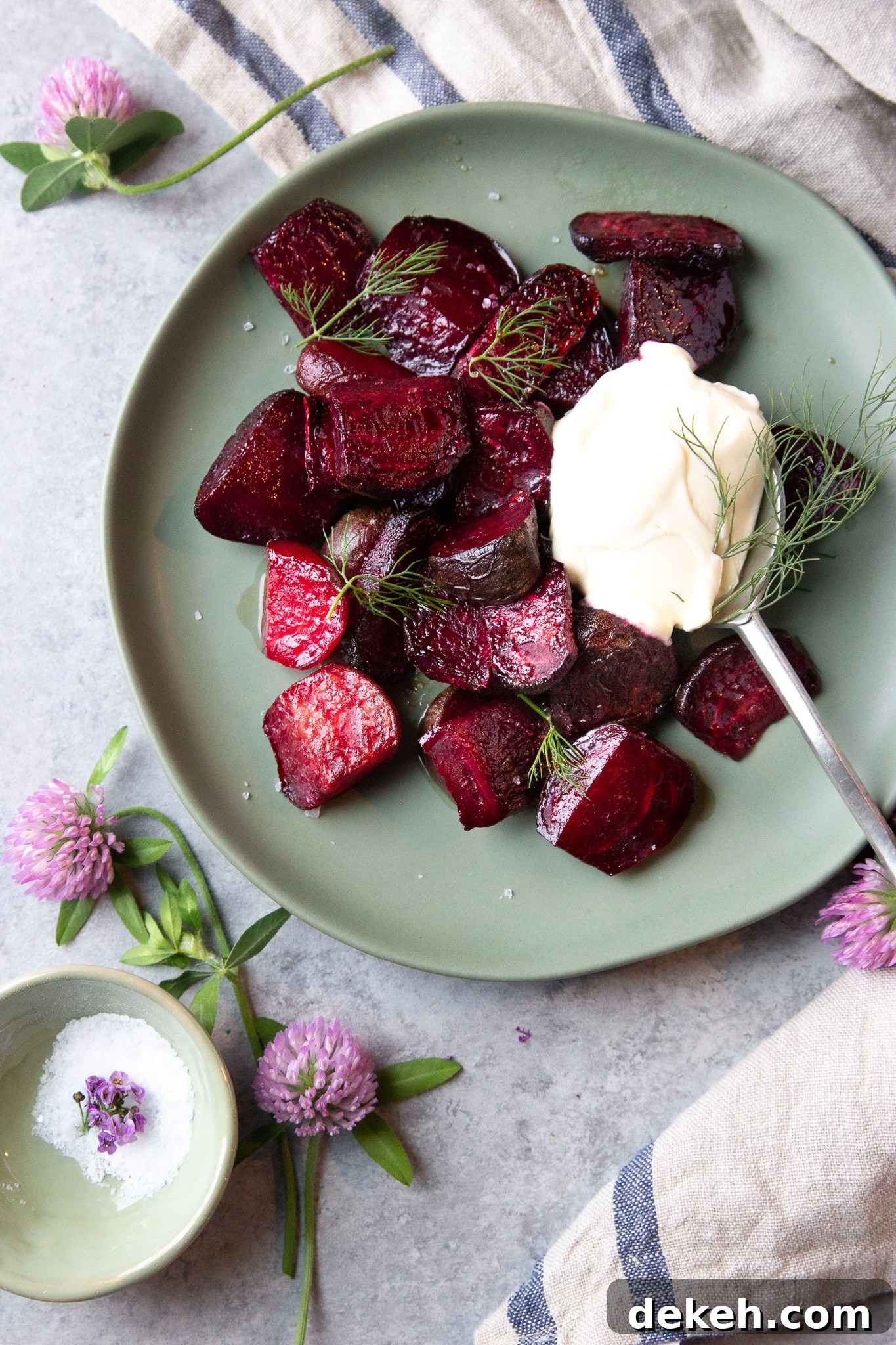
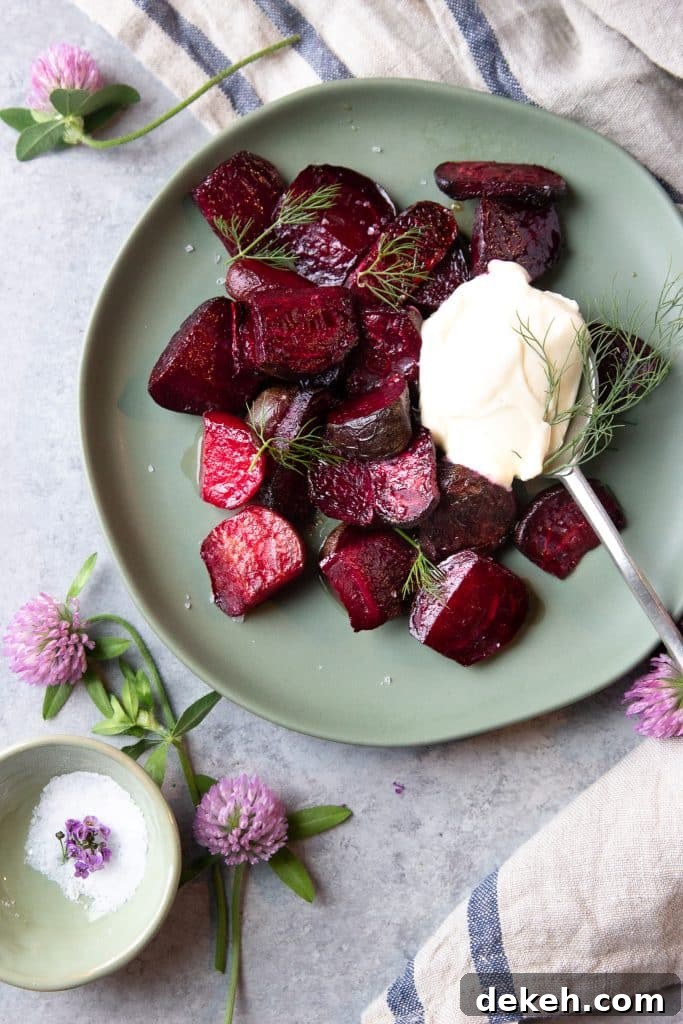
Easy balsamic roasted beets made with just a few ingredients. Enjoy them on their own, tossed into salads or soups, or served as a healthy side with fish or steak. Top with plant-based yogurt and fresh dill for extra flavor.
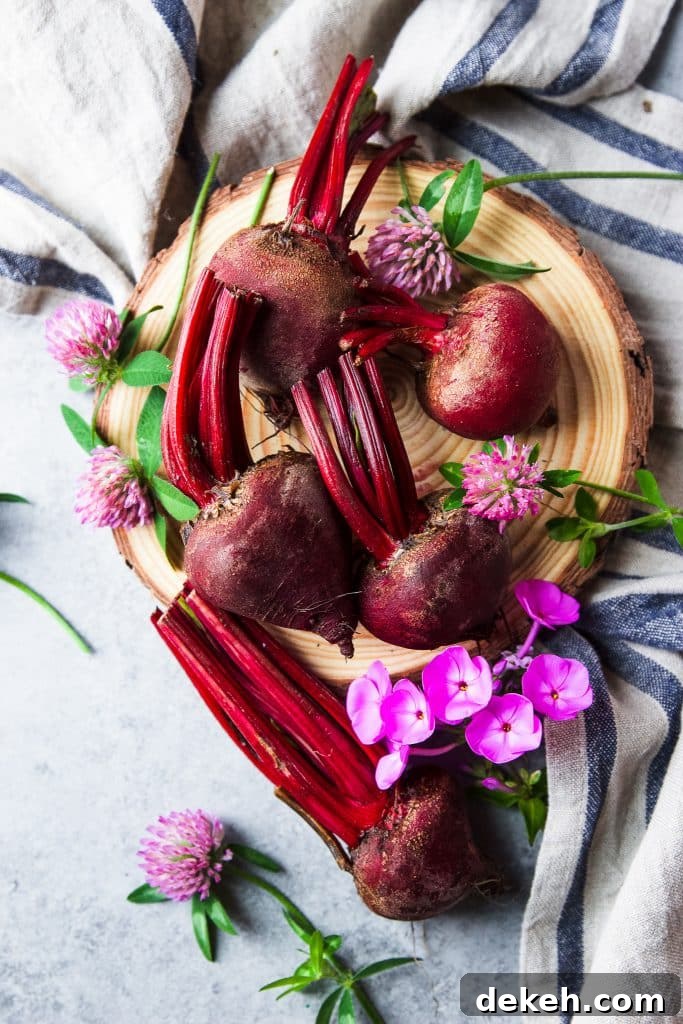
Beets are one of those root vegetables that often get overlooked or misunderstood. I owe my appreciation to my grandmother, who introduced me to beets early on. Without that, I might have dismissed them because of their deep red color, staining tendencies, or the earthy flavor that can seem intense at first.
Beyond their distinct color and taste, beets are delicious and highly nutritious. Traditionally they’ve also been used in natural remedies—my childhood memories include beet syrup given to help with colds and general wellness.
Beets are versatile in the kitchen: roast them, steam them, or sauté them, then add to salads or serve as a nourishing side dish.
However you enjoy them, your body will benefit from the vitamins, minerals and antioxidants packed into this humble root.
What are the health benefits of beets?
Beets are low in calories and fat while supplying a range of vitamins and minerals. A 3.5-ounce (100-gram) serving of cooked beetroot contains:
- Calories: 44
- Protein: 1.7 grams
- Fat: 0.2 grams
- Fiber: 2 grams
- Vitamin C: 6% of the RDI
- Folate: 20% of the RDI
- Vitamin B6: 3% of the RDI
- Magnesium: 6% of the RDI
- Potassium: 9% of the RDI
- Phosphorus: 4% of the RDI
- Manganese: 16% of the RDI
- Iron: 4% of the RDI
Is it better to peel beets before roasting?
Peeling isn’t necessary for roasting; the thin skin usually softens and becomes unnoticeable during cooking. If you can’t confirm the source of the beets or they are conventionally grown, consider peeling to reduce potential pesticide residue.
Do beets detox the body?
Beets contain compounds that support the body’s natural detoxification processes and provide antioxidants that help neutralize free radicals. That’s why beet juice and beet-based blends are common in detox drinks.
Is it better to drink beet juice or eat beets?
Both forms deliver beneficial phytonutrients. Beet juice gives a more concentrated dose of those nutrients but loses the fiber found in whole beets. Choose according to your goals—convenience and potency (juice) or fiber and fullness (whole beets).
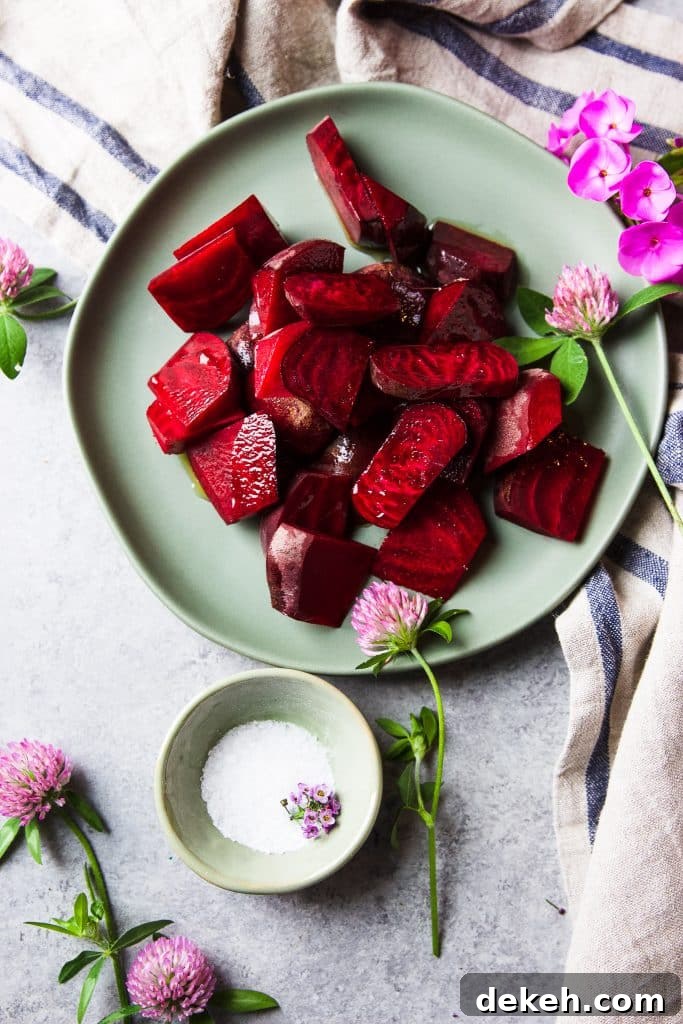
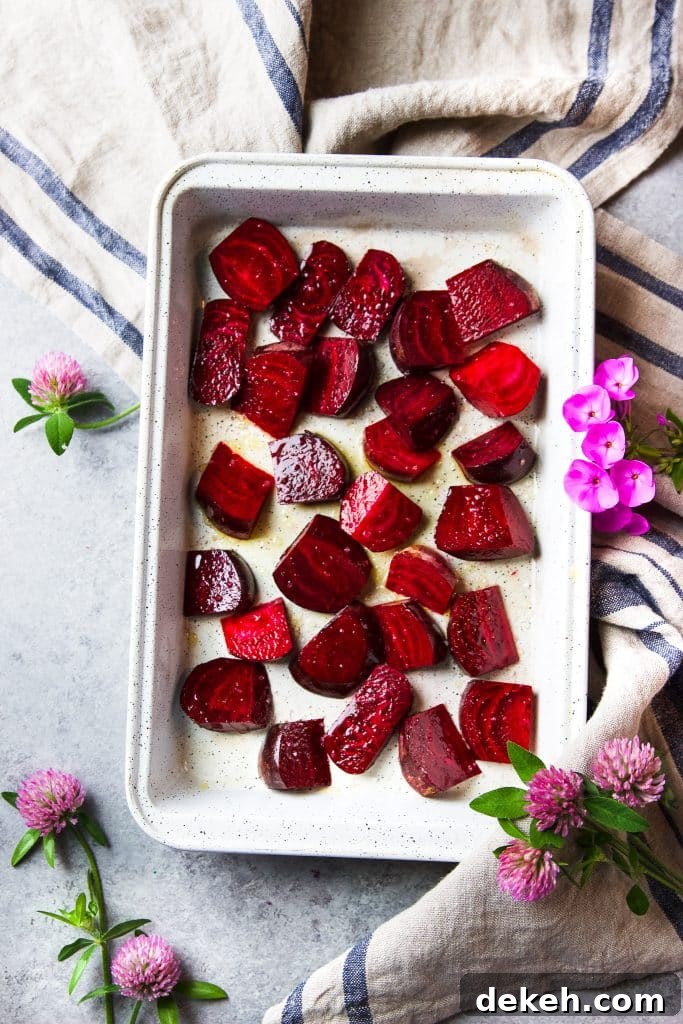
How to make balsamic roasted beets
- Choose firm, unblemished beets—organic if possible.
- Wash and trim the ends. Peeling is optional.
- Cut beets into even-sized chunks—quartered or cubed depending on size.
- Place the beets on a sheet pan, drizzle with olive oil, and sprinkle with sea salt.
- Roast at 375°F (190°C) for about 35 minutes, or until a fork easily pierces the pieces.
- Transfer to a plate and finish with a splash of balsamic vinegar.
- Serve with plant-based yogurt and fresh dill or chives, and an extra drizzle of olive oil if desired.
What to serve with roasted beets
Roasted beets pair well with creamy polenta, shredded into tacos, alongside roasted chicken and vegetables, or mixed into a roasted garlic vegetable salad.
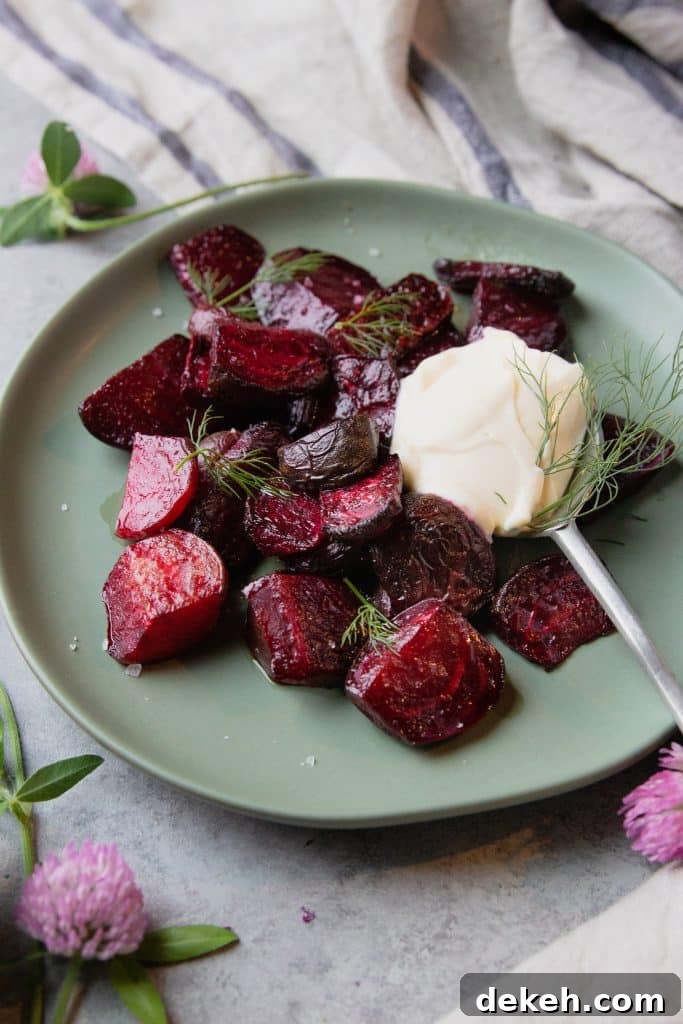
Balsamic Roasted Beets
Ingredients
- 4 – 5 beet roots
- 1 tbsp olive oil
- pinch sea salt
- 1/2 tbsp balsamic vinegar
Instructions
- Wash and trim the ends of the beets. Peeling is optional.
- Cut beets into even-sized chunks. Place on a sheet pan, drizzle with olive oil, and sprinkle with sea salt.
- Roast at 375°F (190°C) for about 35 minutes, until easily pierced with a fork.
- Transfer to a plate, add a splash of balsamic vinegar, and serve with plant-based yogurt and chives.
Nutrition information is automatically calculated and should be used as an approximation.