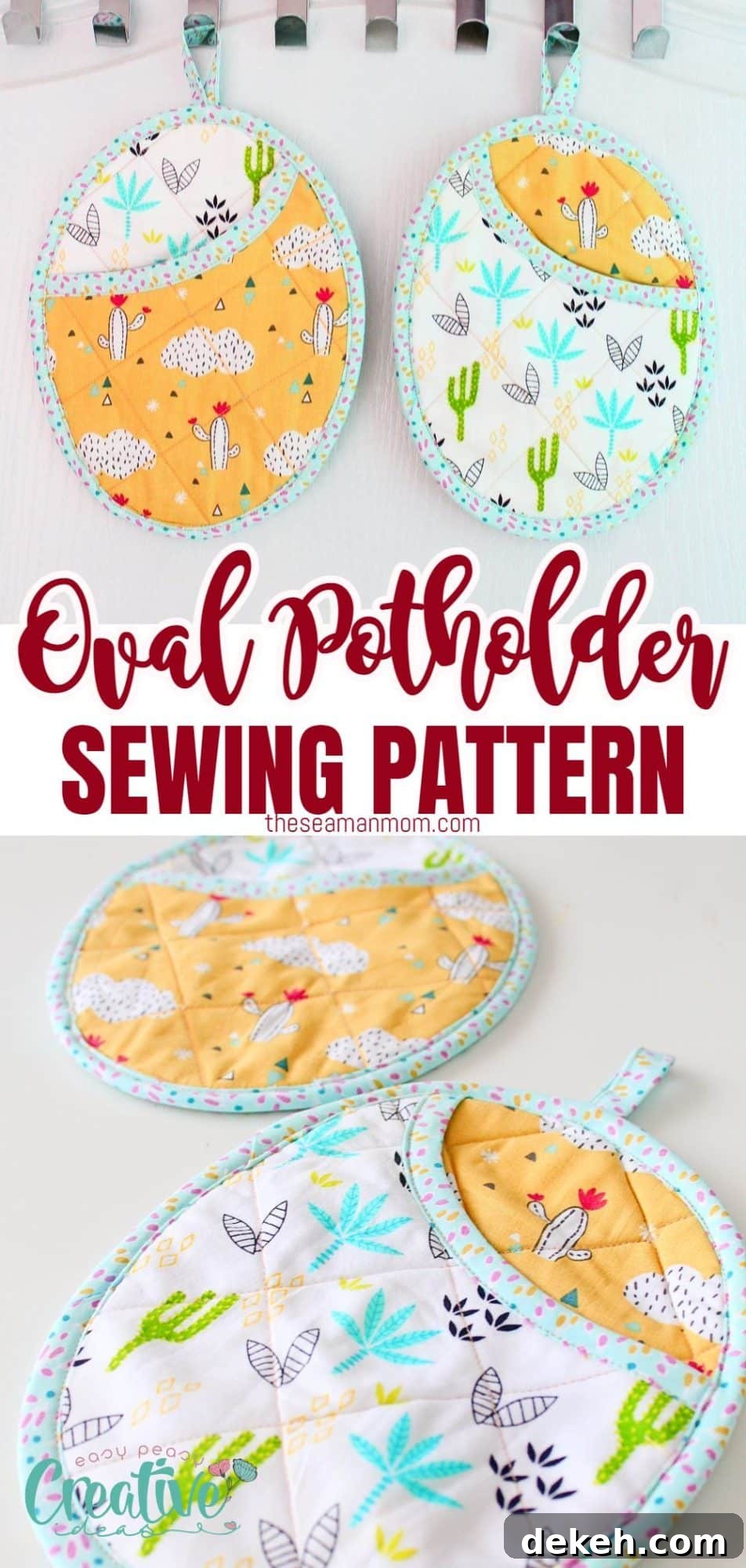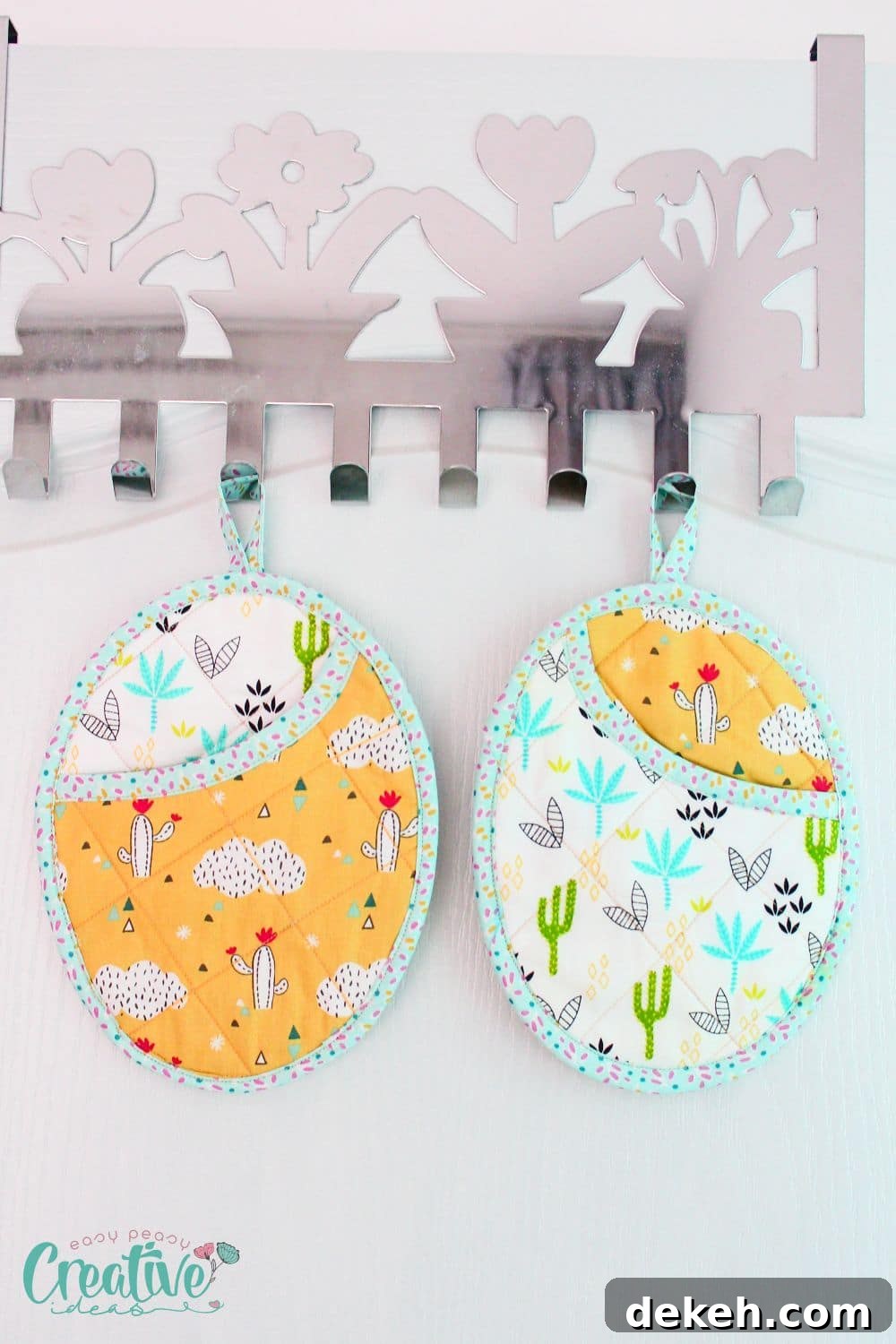
Make attractive, durable oval pocket pot holders with this easy sewing tutorial. These oval-shaped pot holders are practical for everyday kitchen use, picnics, and barbecues. Follow the step-by-step instructions below to sew your own set.
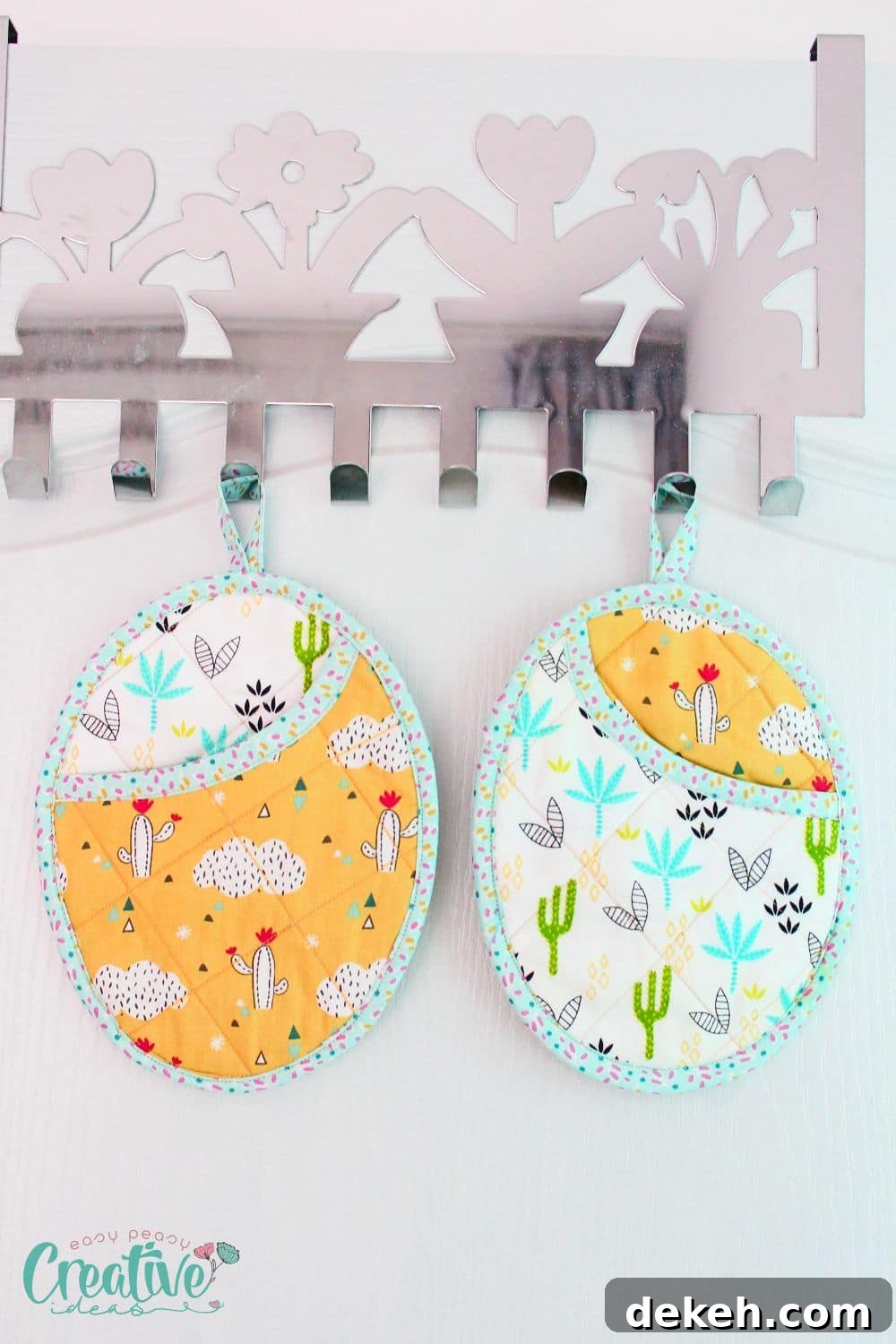
These pocket pot holders include a handy pocket that helps you grip hot pots and pans safely. They’re a great way to use fabric scraps and make charming, functional gifts for friends and family. Whether you’re a beginner or an experienced sewist, this pattern and tutorial make the project straightforward and satisfying.
How to make pocket pot holders
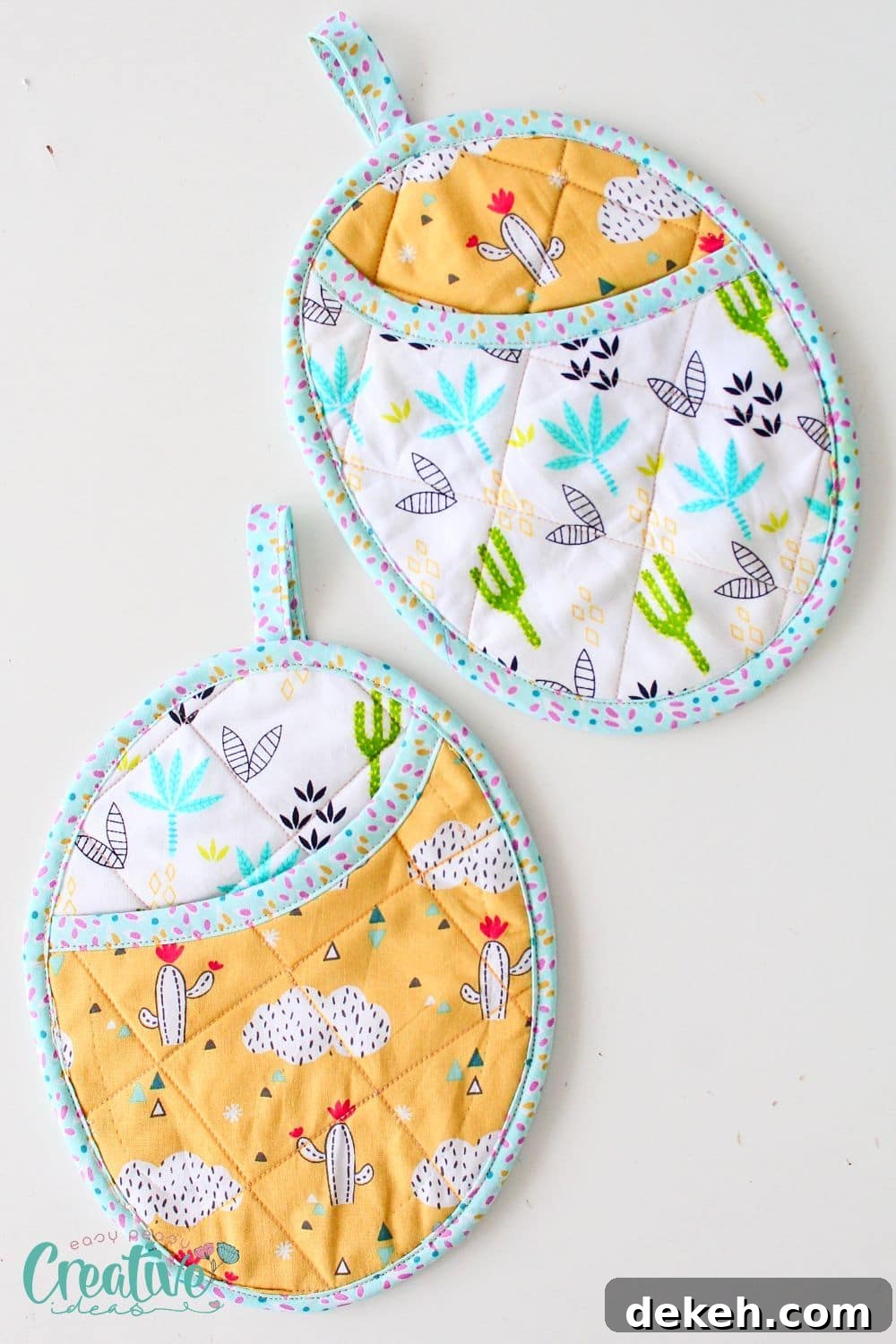
Materials needed
For quilted oval pot holders with pockets you’ll need the following materials plus the printed pattern (right- or left-hand version):
For the pot holder body:
- 1 strip of 100% cotton fabric, 16″ x 10″
- 1 strip of batting, 16″ x 10″
- Approximately 25″ of bias binding to finish the edges
For the pocket:
- 1 strip of fabric (different from the body), 16″ x 10″
- 1 strip of batting, 8″ x 10″
- Approximately 7″ of bias binding for the pocket top
Other materials and tools:
- 5″ bias binding to form the hanging loop
- Matching thread
- Sewing machine
- Walking foot (helpful for quilting through multiple layers)
- Embroidery scissors or seam ripper
- Scissors
- Quilting ruler or yardstick
- Fabric markers or chalk
- Quilting clips and pins
- Pressing iron with steam
Instructions to sew a potholder with pockets
Sewing these pocket pot holders is simple. The following steps outline the full process from quilting to finishing.
- Print the pattern version you need (right-hand or left-hand). To make a matching pair, print one pocket pattern and flip it to create the opposite side.
Quilt the fabrics
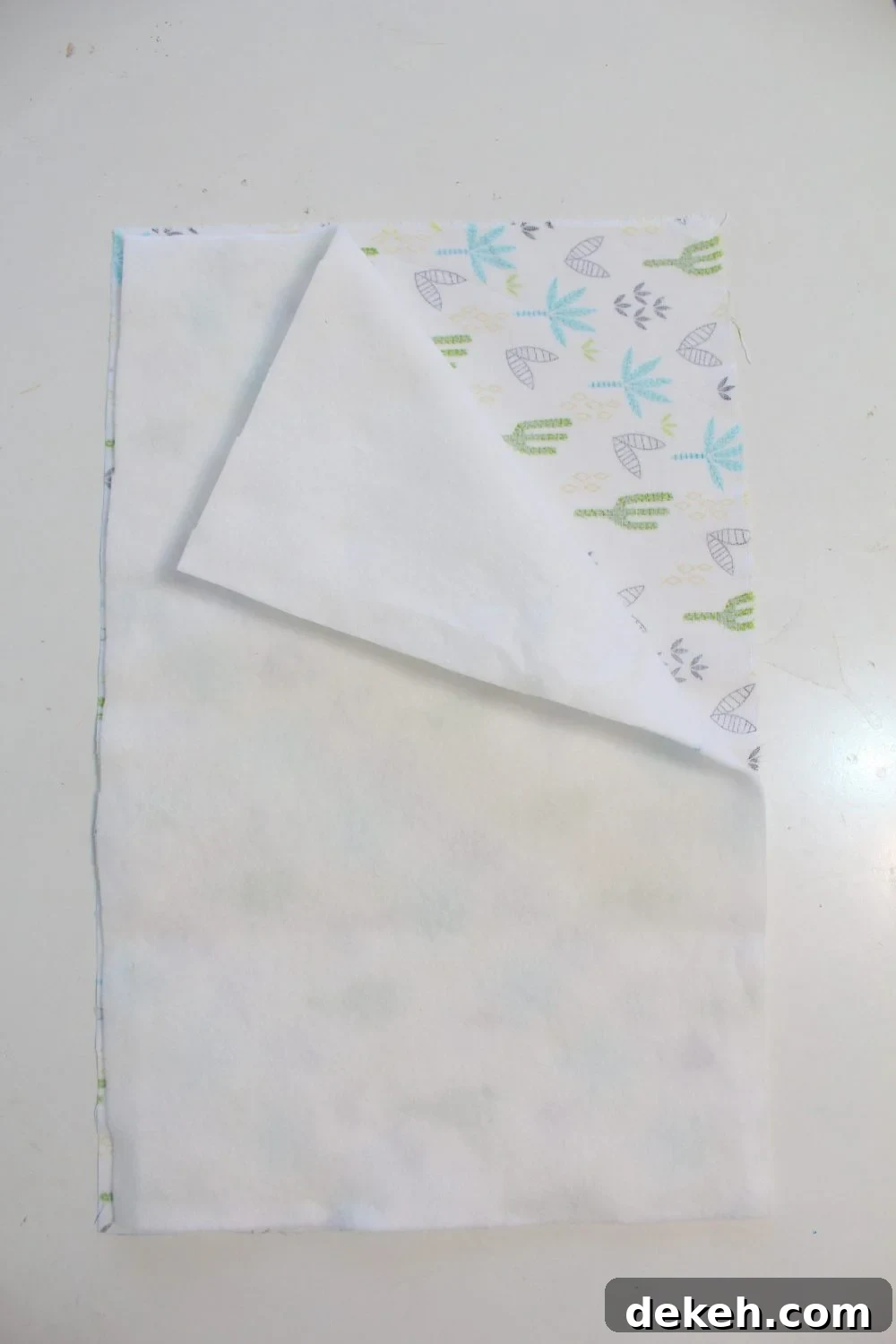
- Layer the batting on the wrong side of the fabric for the body. If the layers shift, hold them temporarily with quilting spray adhesive.
- Fold the layered fabric in half with the wrong sides together.
- Use a quilting ruler and fabric marker to draw diagonal quilting lines about 2″ apart.
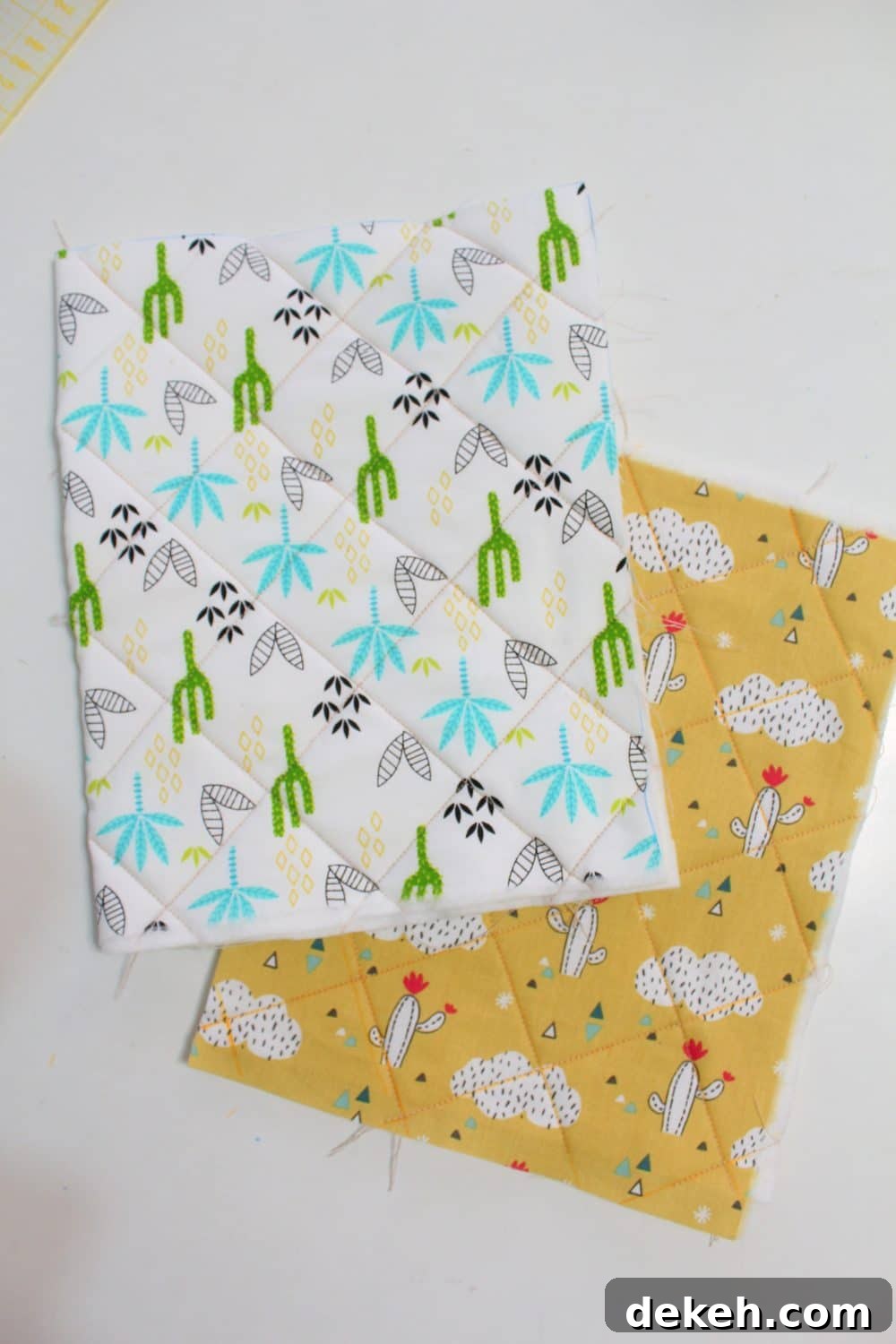
- Pin or clip the layers, then stitch along the marked lines. Starting from the center outward helps reduce shifting. Repeat this quilting process for the pocket piece.
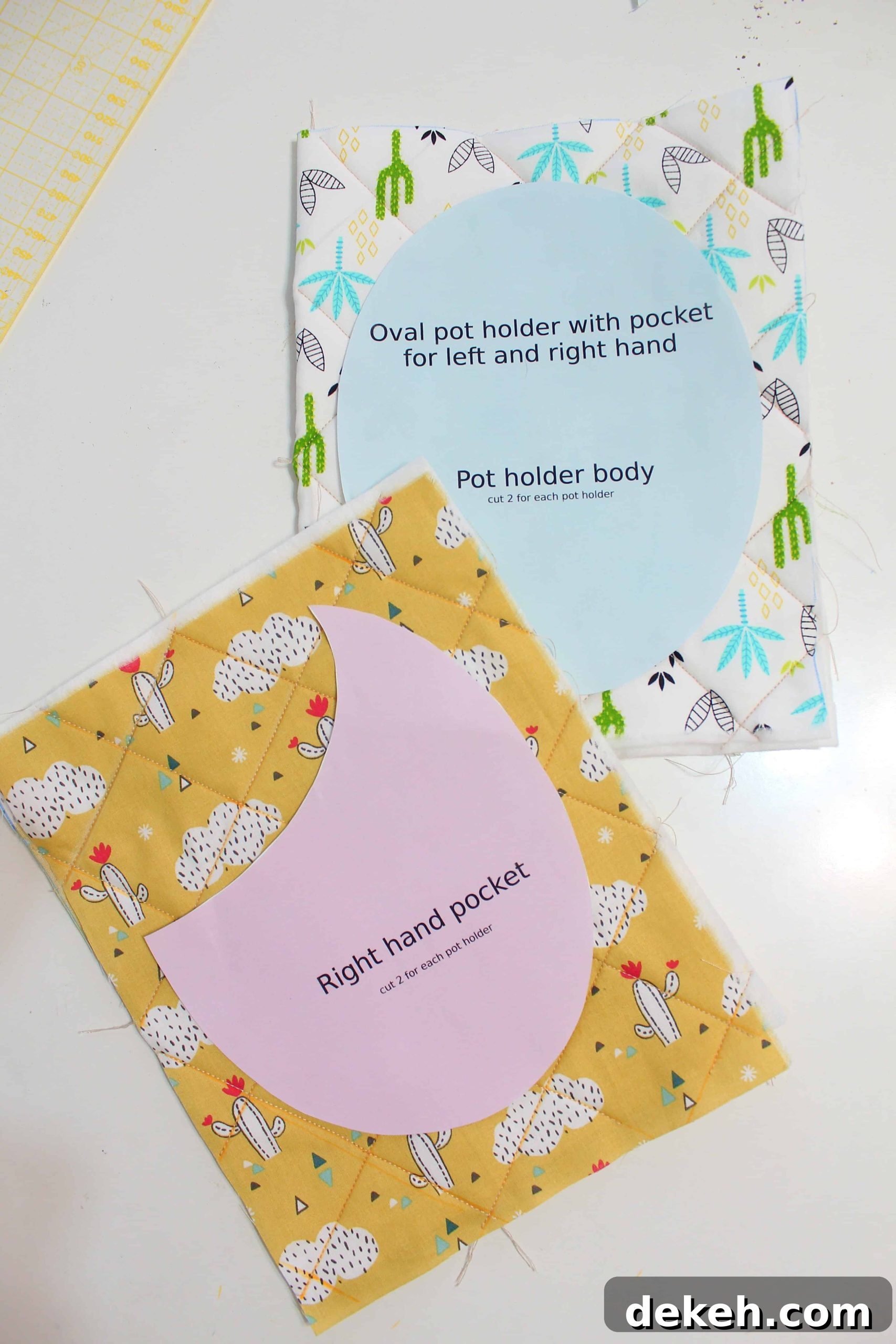
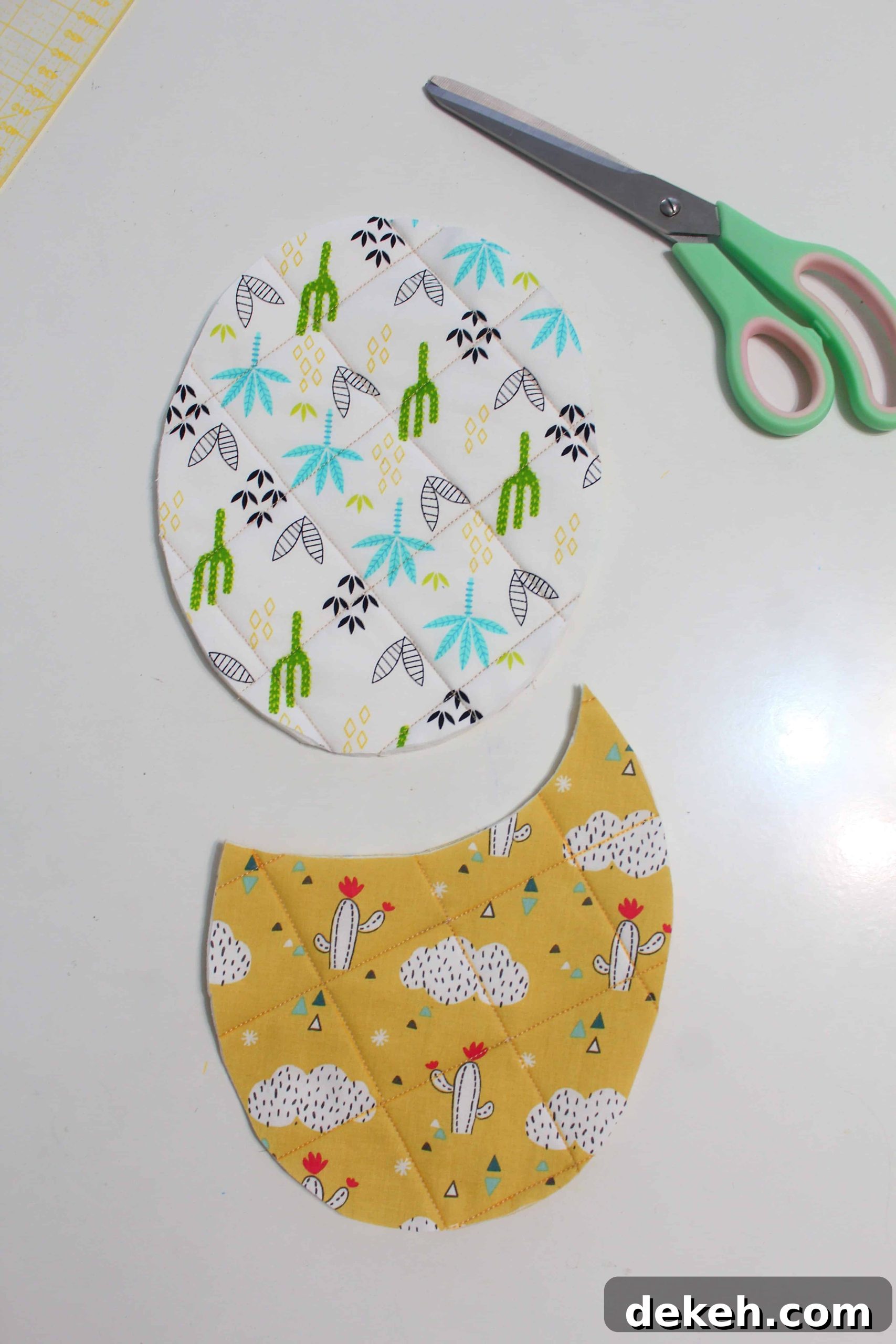
- Trace the pot holder and pocket patterns onto their respective quilted fabrics and cut out the pieces carefully.
Make the pocket
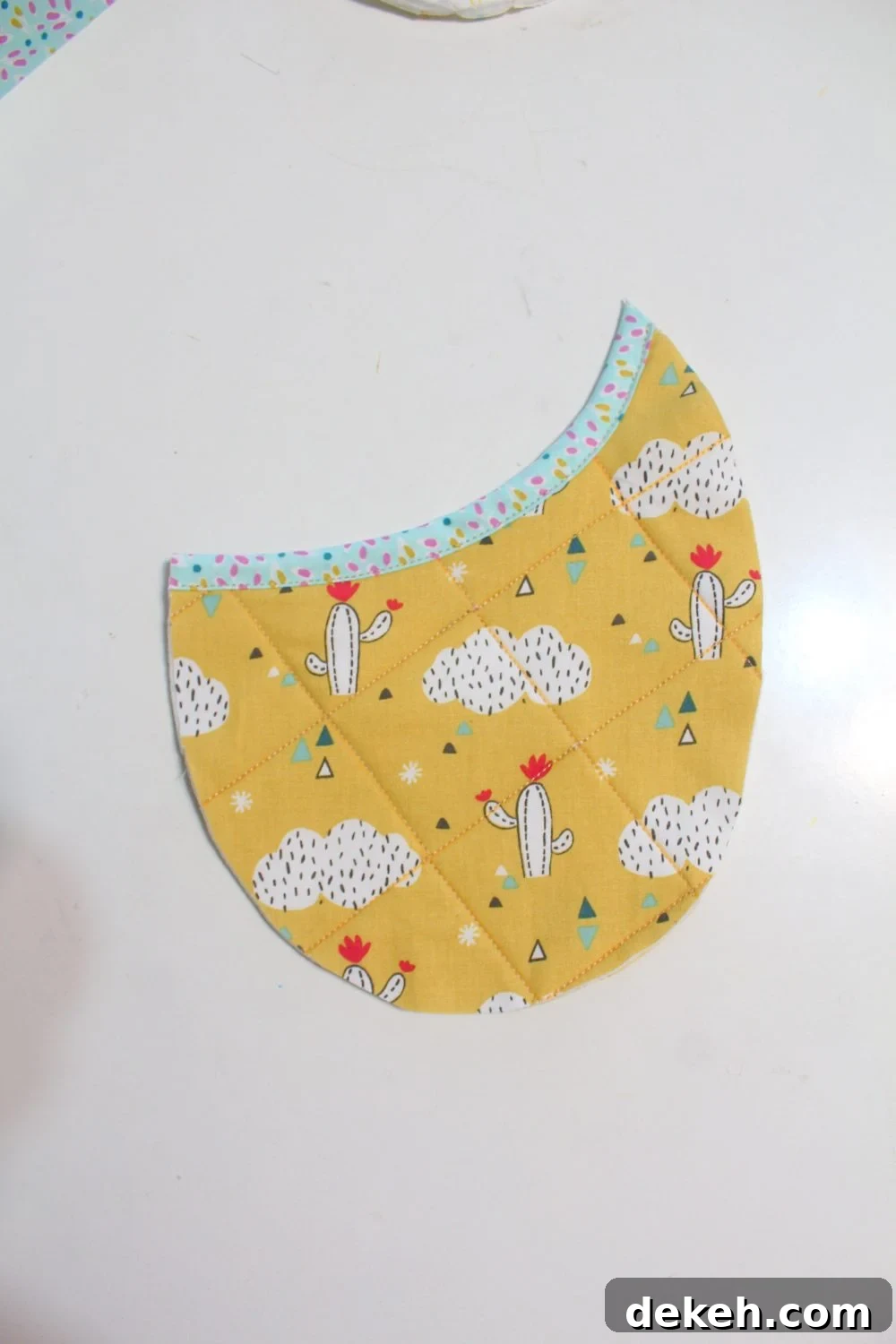
- Attach bias binding to the top edge of the pocket. Many quilters start on the front, fold to the back, then stitch in the ditch, but you can attach the binding from the back first if that gives a neater finish for you.
- Sew the binding with a 1/4″ seam allowance, fold it to the front, press, clip in place, and topstitch or stitch in the ditch to secure it.
Make the body and loop
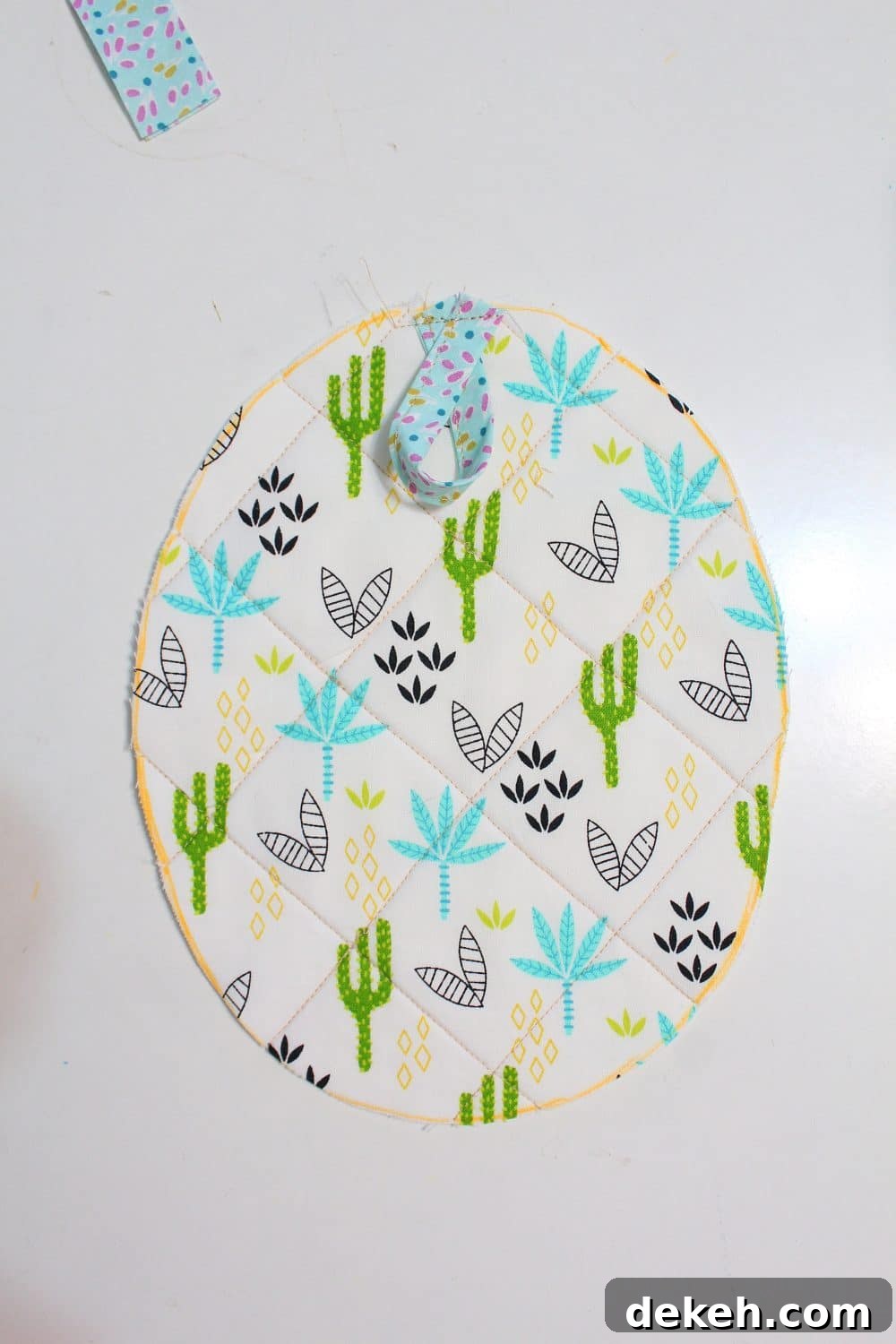
- Prepare the hanging loop by opening a 5″ strip of bias binding, folding the long edges to the center and pressing, then folding closed and topstitching the open edge to form a loop strip.
- Fold the loop in half, align raw edges, and clip it to the top of the pot holder body. Sew the loop to the body using a small seam allowance (about 1/8″).
Assemble and finish the potholder
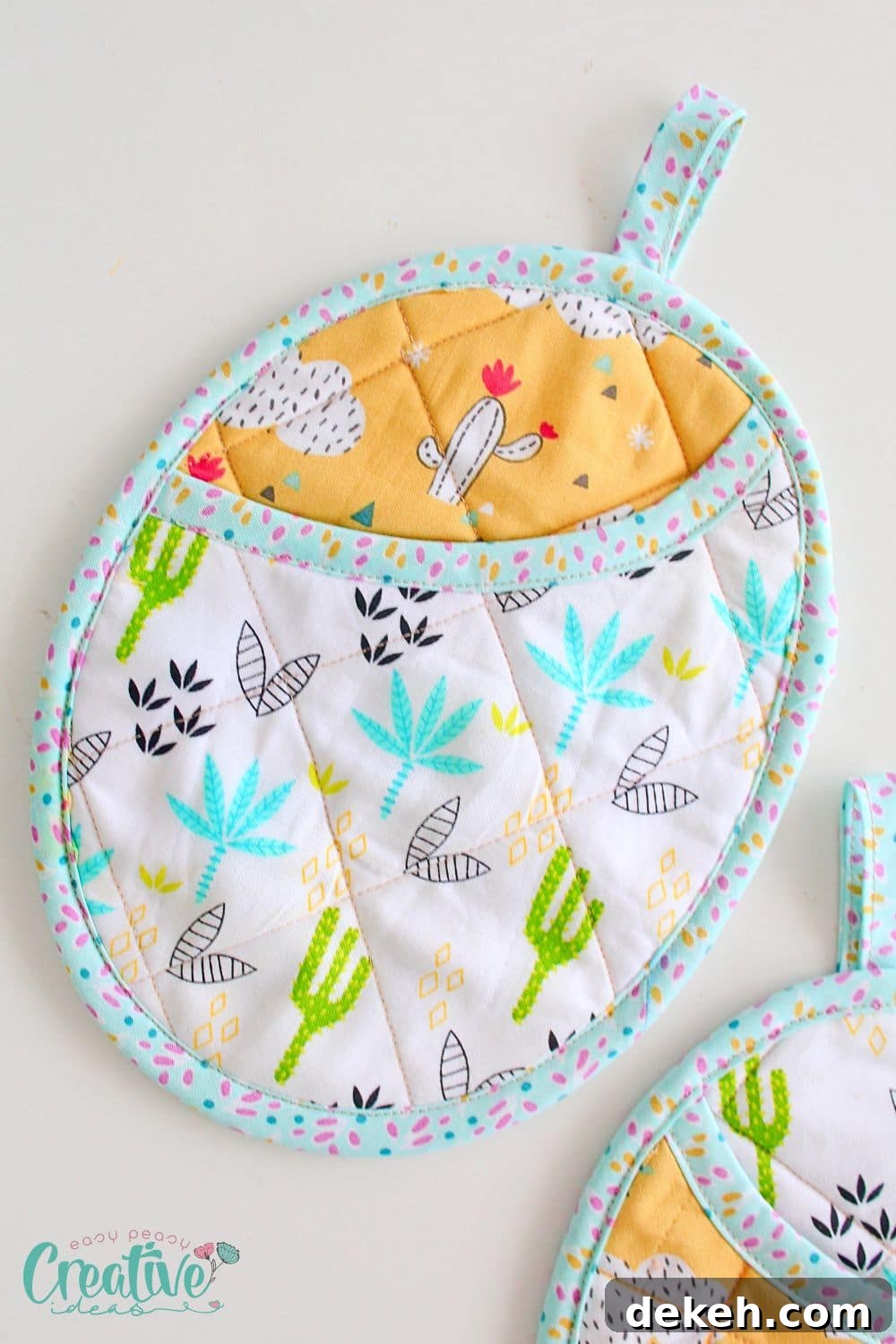
- Place the pocket piece on the front of the pot holder body (opposite the loop) and align the edges. Trim any small mismatched sections while preserving a smooth oval shape.
- Clip or pin the layers together. Optionally run two basting lines down each side to keep the pieces stable while you apply the binding.
- Apply bias binding around the raw edges exactly as you did for the pocket, folding and pressing the binding as you go. Remember to flip the hanging loop up before you finish sewing the binding so it sits correctly.
- Remove any basting stitches and press the finished pot holders with steam for a crisp look.
Frequently asked questions
What should I look for in a potholder?
Choose a potholder made from heat-resistant materials and the right size to cover your hand completely. Cotton quilting fabrics are comfortable and easy to sew; silicone options offer higher heat resistance but a different feel. Pockets add a secure grip and extra insulation for handling hot cookware.
What are the pockets on the pot holders for?
Pockets let you slide your hand in to grip hot pots and pans safely while keeping your skin away from the heat. They also serve as an extra insulating layer when handling very hot cookware.
What can I use instead of a pot holder?
Oven mitts offer extra insulation and coverage, while a thick kitchen towel can be used in a pinch. Towels may slip, so use caution.
Are pot holders and oven mitts the same?
They serve the same purpose—protecting hands from heat—but oven mitts are mitten-shaped and usually more insulated. Pot holders are flatter and more versatile for gripping or placing under hot dishes.
Are pot holders and hot pads the same?
Pot holders protect your hands when handling hot cookware. Hot pads protect surfaces from heat and are generally not intended for gripping cookware.
Do I need both pot holders and oven mitts?
Having both gives you flexibility and extra protection when handling particularly hot or heavy items, but depending on the task, one may be sufficient.
Materials and care
Cotton fabric and quality batting work well. If you want extra insulation, add a layer of Insul-Bright between the fabric and batting. Machine wash fabric pot holders on a gentle cycle with mild detergent, tumble dry low or air dry, and press with an appropriate iron setting.
How often should I replace my potholders?
Replace pot holders when they show signs of wear, thinning, or damage. Frequent home cooks may replace theirs annually or as needed to maintain safety.
Similar ideas you may like:
- Round quilted potholders
- Square kitchen potholders
- No-binding hot pads
- Fabric trivets made from fabric twine
These oval pocket pot holders are practical, attractive, and quick to sew. They make excellent gifts or a great way to use leftover quilting fabrics. Gather your materials and give this project a try—you’ll have functional, beautiful pot holders in no time.