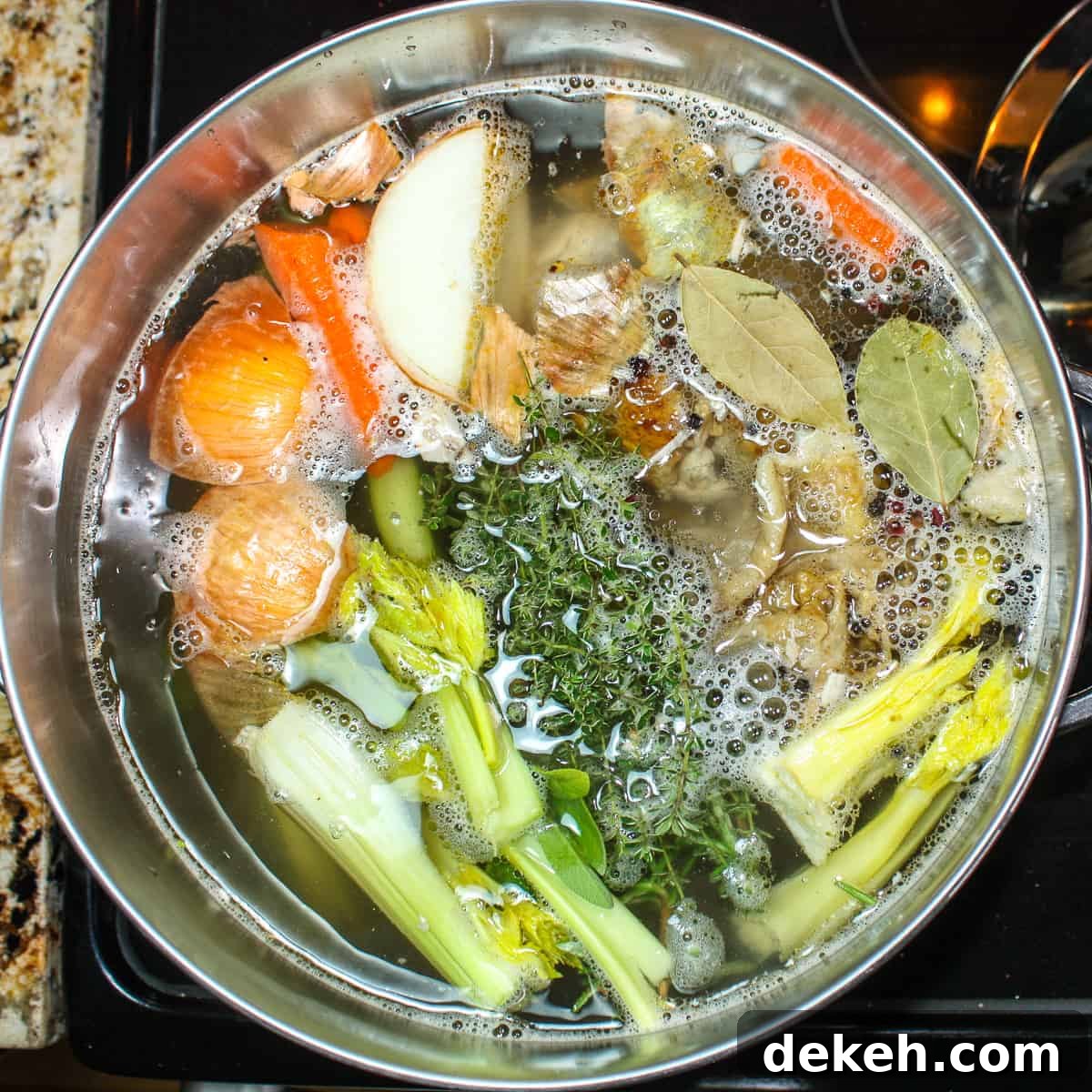
Chicken stock is a fundamental staple in many kitchens. It forms the base for countless soups, sauces, and stews, so making a good stock matters. Store-bought versions are often high in sodium and contain additives you may prefer to avoid. If you care about flavor and knowing what goes into your food, homemade chicken stock is an easy and rewarding solution.
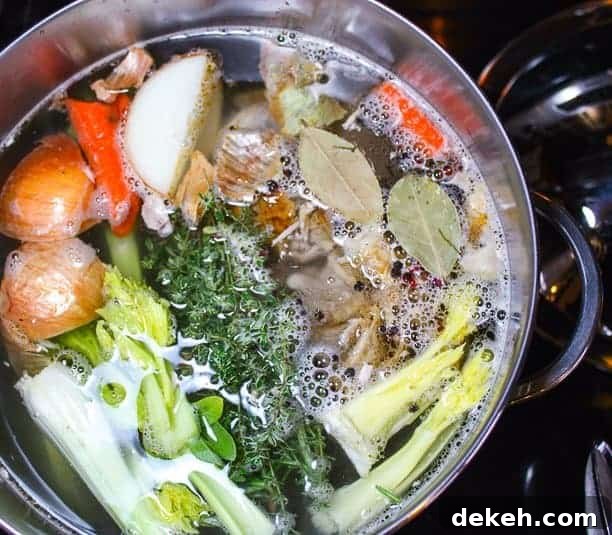
Why Homemade Is Better
Homemade chicken stock delivers deeper, more complex flavor than most canned or boxed varieties. It uses whole, identifiable ingredients and allows you to control the salt level. Making stock is also a great way to reduce food waste—leftover carcasses from a roasted chicken can be transformed into a rich, versatile liquid that enhances many dishes. Store-bought labels rarely tell you which parts of the bird were used or where they came from; when you make your own, you decide the quality and origin of the ingredients.
Ingredients for Homemade Chicken Stock
Save chicken carcasses from roasted birds in the freezer until you have three or four. There’s no need to thaw them before using. For a flavorful stock, add:
- 3–4 chicken carcasses (or 1 carcass for turkey)
- 2–3 celery stalks, leaves left on for extra flavor
- 1 onion, quartered (leave the skin on to add color)
- 1–2 carrots, halved (no need to peel)
- A few sprigs of thyme and rosemary
- 1 bay leaf
- A handful of whole black peppercorns
Three small chicken carcasses typically yield about a dozen two-cup portions of concentrated stock, perfect for freezing in small containers for later use.
How to Make the Stock
Place the carcasses and vegetables in a large stockpot and cover with cold water. Bring to a gentle boil, then reduce the heat to low and simmer gently for at least two hours; three to four hours develops more flavor. Occasionally skim any foam that rises to the surface.
When the stock has simmered long enough, let it cool slightly and strain it through a fine sieve. Pressing the solids while straining releases extra flavor but will make the stock less clear. Discard the solids after straining.
Allow the strained stock to cool completely, then skim off the fat that rises to the top. Portion the stock into two-cup freezer-safe containers and freeze. Frozen stock is convenient to have on hand for soups, sauces, gravies, and many other recipes.
You can follow the exact same method with turkey carcasses—one turkey carcass is usually enough to produce a generous amount of stock. Homemade stock is simple to make, reduces waste, and elevates the flavor of whatever you cook next.