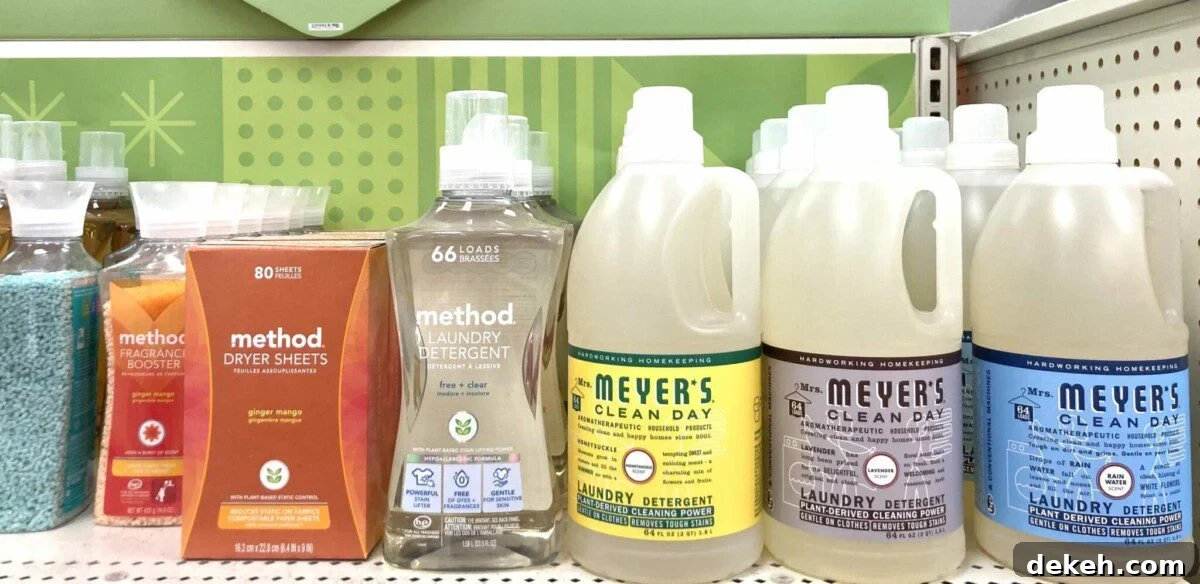
We’ve recently reviewed several well-known “green” personal care and home cleaning brands—Mrs. Meyer’s, Seventh Generation, 9 Elements, Everspring, Grove Collaborative—and now Method. These brand investigations often reveal similar patterns: many of these companies are cleaner than conventional alternatives and avoid some high-concern ingredients, but they still include irritants, dyes, or synthetic components and don’t always provide full ingredient transparency.
Method fits this general pattern. Below is a clear, balanced summary of what the brand offers, its ingredient strengths and weaknesses, sustainability efforts, and the outcome of the class action lawsuit it settled in 2021. Use this to decide whether Method products are right for your home.
IN A NUTSHELL
- Method is a consumer brand owned by S.C. Johnson that produces colorful cleaning and personal care products.
- Method avoids certain problematic ingredients such as phthalates and parabens, but some product lines include FD&C dyes, common irritants, and ingredients processed via ethoxylation. Fragrance ingredients are not fully disclosed.
- Method has sustainability initiatives like refill options and aluminum dispensers, yet much of their packaging remains plastic and many formulas are only partially plant-based or biodegradable.
- In 2021 Method settled a class action lawsuit over claims like “non-toxic” and “natural,” agreeing to a $2.25 million payout and to stop using those terms in its marketing.
Table of Contents
- IN A NUTSHELL
- A Quick Overview of the Method Brand
- A Closer Look at Method’s Ingredients (Are They Toxic?)
- Free From Certain Harmful Ingredients
- Fragrance
- Irritants
- FD&C Dyes
- Ethoxylated Ingredients
- What About Sustainability?
- What Happened With the Method Lawsuit?
- So, Is Method Greenwashing?
- PROS:
- CONS:
- More FAQs About Method
- Are Method’s Products All-Natural?
- Is Method Cruelty Free and/or Vegan?
- Who Owns Method?
- Is Method Antibacterial?
- Is Method A Target Brand?
- Is Method Cleaner Safe for Granite?
- Is Method Cleaner Safe for Wood?
This article contains affiliate links, which means we may earn a commission if you decide to make a purchase.
A Quick Overview of the Method Brand
Method launched in 2001 and was acquired by S.C. Johnson in 2017. The brand offers a wide array of household and personal care items presented with bright, design-forward packaging. Typical products include:
- Hand wash (gel and foaming)
- Body wash
- Deodorant
- Lotion
- Dish soap
- Laundry detergent
- Cleaning sprays (all-purpose, bathroom, antibacterial, glass, granite, wood)
- Cleaning wipes
- Floor cleaner
- And other household essentials
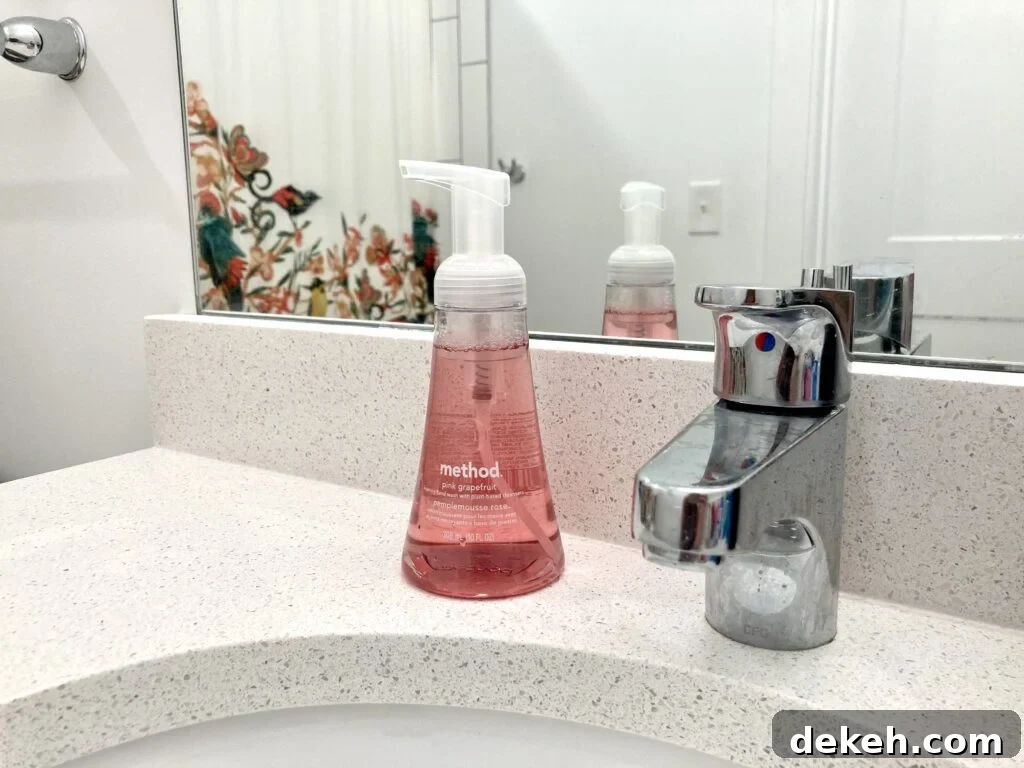
A Closer Look at Method’s Ingredients (Are They Toxic?)
Method clearly states their products are free from parabens and phthalates, both of which are widely recognized endocrine disruptors. That is a positive step. However, the company does not explicitly list every ingredient used in their fragrances, and many products contain other components that some consumers prefer to avoid.
Free From Certain Harmful Ingredients
Removing parabens and phthalates reduces certain health risks and is better than many mainstream formulations. Still, those are only two ingredient categories; other groups that matter for sensitive individuals or people avoiding synthetics may still be present in various Method products.
Fragrance
Method lists “fragrance” or “parfum” on many labels without disclosing the specific chemical components. The so-called “fragrance loophole” allows manufacturers to keep blends proprietary, which can hide allergens, sensitizers, or other concerning chemicals. While Method says their products are phthalate-free, consumers cannot easily verify what else is included in each fragrance blend when full disclosure is not provided.
Irritants
Several ingredients commonly used in Method formulas can be irritating for people with sensitive skin, eczema, asthma, or chemical sensitivities. Examples include:
- Sodium lauryl sulfate (SLS): an effective surfactant that can irritate skin for some users.
- Isothiazolinone preservatives: some synthetic preservatives, like methylisothiazolinone, are known sensitizers and can cause allergic contact dermatitis.
- Fragrance allergens: naturally derived fragrance components such as limonene or hexyl cinnamal can trigger reactions in sensitive individuals. Method’s unscented range is limited compared with some other brands.
FD&C Dyes
Colorful branding often relies on FD&C and D&C dyes (for example, FD&C Blue No. 1 or D&C Yellow No. 10). Research varies by dye, but studies have linked certain synthetic colorants to issues such as hyperactivity and hypersensitivity in children and, in some cases, cellular damage in laboratory studies. Many consumers who prioritize minimal exposure choose products without these dyes when alternatives are available.
Ethoxylated Ingredients
Ethoxylated surfactants and other ethoxylated ingredients can carry trace contaminants formed during manufacturing—principally 1,4-dioxane and ethylene oxide. These contaminants are not intentionally added and often don’t appear on labels, but both are associated with health concerns. Some brands avoid ethoxylated ingredients entirely; Method uses them in some formulations.
What About Sustainability?
Method promotes “future-friendly cleaning” and offers refill pouches for several products. Many refills use recycled plastic, and some items—like aluminum soap dispensers—replace single-use plastic with materials that are more recyclable. These steps reduce environmental impact but do not eliminate it: Method still relies heavily on plastic packaging overall, and many formulas are only partially plant-based or partially biodegradable.
Method also supports social causes through limited edition collections that donate to parks, disability arts programs, and LGBTQ+ initiatives. These efforts add social value but do not change ingredient or packaging realities.
What Happened With the Method Lawsuit?
In 2021 Method settled a class action alleging their marketing used terms like “non-toxic” and “natural” while products contained synthetic ingredients that could pose risks. The settlement required a $2.25 million payout and a commitment to stop labeling products as “non-toxic.” Specific ingredients mentioned in the case included tocopheryl acetate and propylene glycol—substances that are not necessarily harmful but are synthetic rather than natural.
Settlements do not equal admissions of guilt. Still, the case highlights the confusion that vague marketing claims can create and the importance of precise language and transparency in product labeling.
So, Is Method Greenwashing?
Method has reduced certain problematic ingredients and shifted some packaging and branding practices, especially after the lawsuit settlement. They no longer use the categories “non-toxic” or “natural” broadly, and instead state specific exclusions like “made without parabens or phthalates.” That is a more accurate approach, though not a full solution.
On sustainability, Method’s refill and aluminum options are positive but fall short of zero-waste or fully plant-based standards. Given the mix of pros and cons, Method is better than many mainstream brands but not the cleanest or most transparent option available.
PROS:
- Free from some higher-concern ingredients such as phthalates and parabens
- Laundry and dishwasher detergents are available in Free + Clear options
- Refill pouches and aluminum dispenser options help reduce plastic waste
CONS:
- Many products still include irritants, synthetic dyes, and ethoxylated ingredients
- Fragrance ingredient lists lack full transparency
- Most products do not have a Free + Clear option
- Packaging still relies heavily on plastic
More FAQs About Method
Are Method’s Products All-Natural?
No. Method uses a mix of plant-derived, naturally derived, synthetic, and semi-synthetic ingredients depending on the product.
Is Method Cruelty Free and/or Vegan?
Yes. Method is certified cruelty-free by Leaping Bunny and Cruelty Free International, and the company states its products are vegan (they do not carry a separate third-party vegan certification).
Who Owns Method?
Method was acquired by S. C. Johnson & Son in late 2017. S.C. Johnson also owns brands like Glade, Pledge, Scrubbing Bubbles, and Windex.
Is Method Antibacterial?
Most Method products are not marketed as antibacterial, but the company does offer a few antibacterial cleaning sprays.
Is Method A Target Brand?
Method is sold at Target and many other retailers, but it is not owned by Target; its parent company is S. C. Johnson & Son.
Is Method Cleaner Safe for Granite?
Many of Method’s all-purpose cleaners are formulated to be safe for granite finishes, but it’s wise to patch test in an inconspicuous area before regular use. Method also offers products specifically formulated for granite surfaces.
Is Method Cleaner Safe for Wood?
Method’s all-purpose cleaners are generally safe for finished wood surfaces, though a patch test is recommended. They also sell cleaners formulated for wood and wood floors.
Would you like us to review another brand? Tell us in the comments below. If you want weekly updates, tips, and news, consider signing up for Filtered Friday.