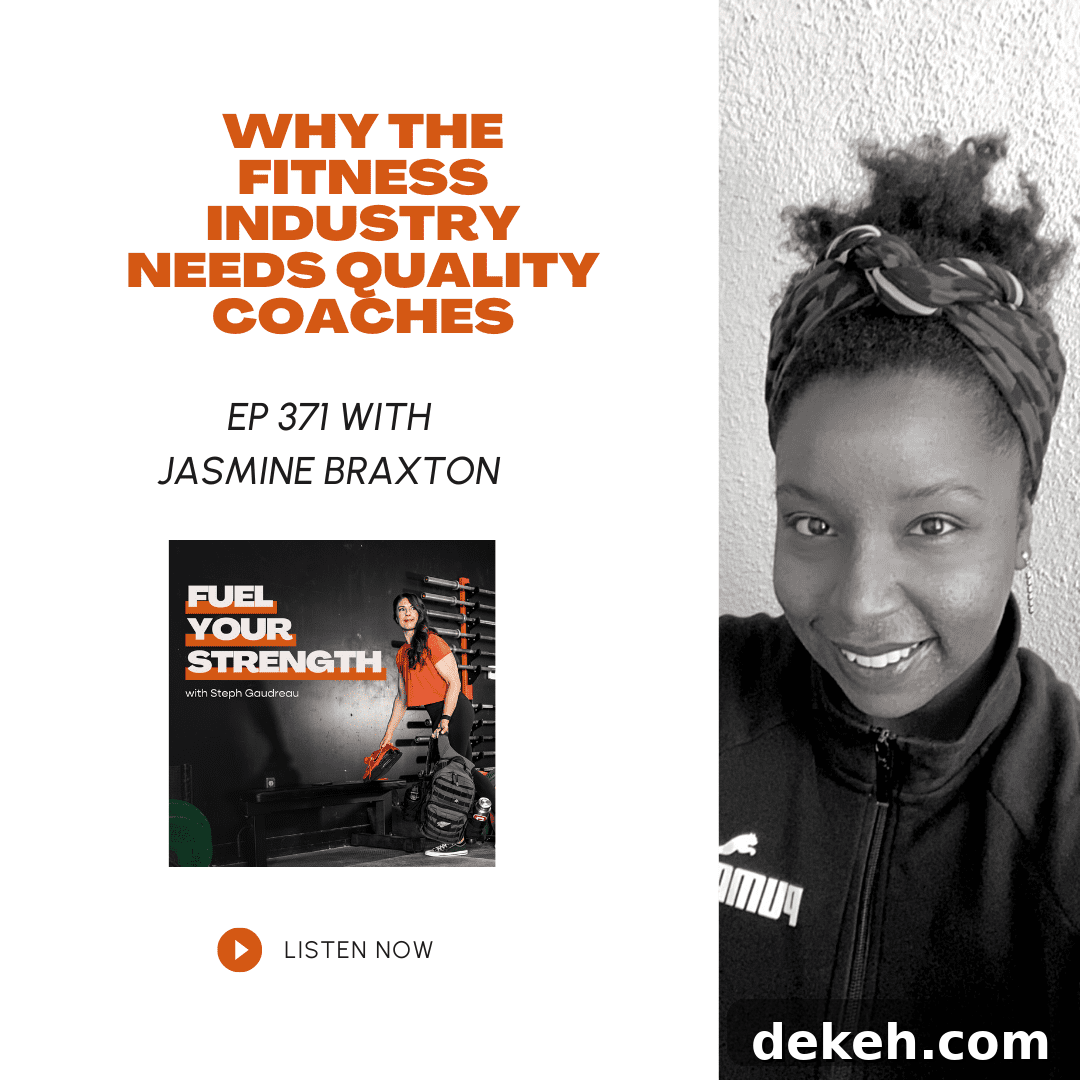
It’s no secret that the fitness industry depends on skilled coaches and personal trainers. Yet many aspiring trainers stumble into common pitfalls—self-doubt, unclear processes, and poor communication—that limit their impact. This episode highlights the essential principles every coach should know to deliver high-quality, trustworthy training.
Click play to listen right on this page, no app needed:
Or, listen on your favorite app: iTunes (Apple Podcasts) | Spotify | Stitcher
Want a free week of strength workouts? Click here to get started!
Key Takeaways
If you want to improve as a fitness coach, focus on these priorities:
- Deepen your understanding of human behavior and sharpen communication to build strong client relationships.
- Set clear boundaries and avoid advising on topics outside your expertise.
- Invest in targeted training and mentorship to launch your career with confidence and professional systems in place.
Get Your Career Toolbox with Jasmine Braxton
Jasmine Braxton helps personal trainers transform theoretical knowledge into practical coaching skills while addressing imposter syndrome. She’s committed to raising the bar for coaching quality and shares concrete strategies to help new trainers avoid common mistakes and build a sustainable, impactful career.
You Deserve to Know What You Are Doing
Certification is only the first step. Applying exercise science in real-world coaching requires skills beyond textbooks: programming effectively, assessing clients, and translating science into usable steps for diverse people. Jasmine emphasizes that understanding how people function and communicating well are two of the biggest areas new coaches must develop.
The Importance of a Good Foundation
Just like a house needs a solid foundation, a coaching career needs core systems and practices. Many trainers begin without those basics and stumble through avoidable mistakes. Learning from experience is valuable, but intentionally building your foundation—onboarding processes, assessment interpretation, program structure, legal forms, and client communication—reduces friction and accelerates success.
Are you ready to improve the quality, knowledge, and relationships in your coaching or personal training career? Share your thoughts below.
In This Episode
- How Jasmine’s approach differs from common industry practices (11:44)
- Biggest challenges in coach-client relationship building (17:13)
- How the pandemic shifted the fitness landscape and created quality-control problems (24:18)
- Why giving yourself grace as you learn matters (30:36)
- Key skills to cultivate for client success and a sustainable career (33:14)
Quotes
“For trainers, whether we are in Year 1 or Year 12, we still struggle with a lot of the same things: confidence in ourselves, our ability to program, and our ability to help clients change behaviors.” (9:23)
“Getting a certification to be a personal trainer is just stage one. It is not everything—it’s just your start.” (12:31)
“Coaching is not just about prescribing sets and reps. It’s about helping someone achieve a version of themselves they can’t see yet, with the right support.” (22:18)
“There are lots of lessons in not getting things perfectly. Putting yourself out there and learning from it is an opportunity for growth.” (31:26)
“I empathize with what it feels like to want to be in this industry but feel blocked by stumbling stones. I want to remove those barriers.” (38:19)
Featured on the Show
Apply for Strength Nutrition Unlocked Program
Jasmine Braxton Website
5 Industry Secrets to Make Program Design Simple
Join the Career Starter Waitlist Here
Book a One-on-One Call with Jasmine
The Quality Coach Podcast
Follow Jasmine on Instagram
Support the Podcast
Get 20% off Legion Supplements with code STEPH
Get your first month of Whoop free ($30 off)
Save 10% off GORUCK with code FUELYOURSTRENGTH
Follow Steph on Instagram
Rate and review on Apple Podcasts
Related Episodes
LTYB 334: How Strong Women Can Lift Each Other Up with Molly Galbraith
LTYB 367: 5 Strength Nutrition Lessons I Wish I Learned a Decade Ago
The Fitness Industry Needs Quality Coaches: How to Improve Your Skills w/ Jasmine Braxton
Steph Gaudreau — I often reflect on the coaches who shaped my early lifting years. Their guidance gave me technical skills and the confidence to believe strength was possible. Quality coaches matter. But for aspiring trainers, common challenges—self-doubt, overwhelm, and unclear systems—can stall progress. Jasmine Braxton joins to share lessons for coaches who want to make a real impact.
Steph Gaudreau — If you’re an athletic 40-something woman who loves lifting, this podcast explores evidence-based strategies for nutrition, training, and recovery. We challenge limiting industry narratives and help you train smarter as you age. Subscribe and join us.
Steph Gaudreau — Welcome to the rebranded Fuel Your Strength podcast. Today’s episode is for trainers and coaches who want practical guidance and higher-quality methods.
Steph Gaudreau — Jasmine helps trainers implement knowledge, overcome imposter syndrome, and deliver higher-quality coaching. She shares the most common pitfalls and the essential skills coaches need for successful clients and careers.
Steph Gaudreau — Before we begin, a reminder about Strength Nutrition Unlocked: a program to help active 40-somethings build strength, muscle, and better recovery. Apply at StephGaudreau.com/strong.
Jasmine Braxton — Thanks for having me, Steph. I’ve spent over a decade in fitness, starting with a kinesiology degree at the University of Virginia. Early experience as a trainer showed me how fulfilling helping people move and reduce pain could be. Over time I realized many trainers, even those with years of experience, share the same gaps: confidence, programming ability, behavior change strategies, and coaching skills. That realization led me to support other trainers professionally.
Jasmine Braxton — Too many coaches do half the job: entertaining clients without a repeatable system. Certification often doesn’t teach practical coaching skills—onboarding, assessment interpretation, or how to design an effective program. Trainers must learn to combine exercise science with relationship skills: assessing personality, motivators, and communication preferences so the program actually fits the person.
Steph Gaudreau — Who struggles more initially: excellent technicians who can’t build relationships, or extroverted communicators who lack technical skills?
Jasmine Braxton — Technicians who can’t connect struggle the most. Science feels safe and linear to them, but coaching is messy and relational. If they can’t build rapport, they often retreat to program-only solutions and miss what clients need to change behavior. Learning communication and basic psychology is essential—personality assessments, clear onboarding, and customizing how you present information make a big difference.
Jasmine Braxton — Boundaries are crucial. If a client shares issues outside your scope, hold space with empathy but be honest: “That’s outside my wheelhouse; I can help you find resources.” Saying “I don’t know” builds trust and demonstrates integrity. Avoid the ego-driven urge to be an expert on everything—clients respect honesty and it protects both you and them.
Jasmine Braxton — The pandemic accelerated online training and created a quality-control issue: a low barrier to entry plus “get rich quick” messaging led many underprepared people into coaching. When clients pay for help and don’t get it, trust in the industry erodes. Trainers deserve proper onboarding, mentorship, and a system that ensures they know what they’re doing before charging full prices. A structured apprenticeship or incubator would help the industry maintain higher standards.
Jasmine Braxton — Give yourself grace. Growth requires trial and error. Observe your work, ask for feedback, and intentionally improve. If you want faster progress, invest in systems and mentorship that remove avoidable stumbling blocks.
Jasmine Braxton — What I wish I’d had when starting: a practical career toolbox. Legal forms, onboarding templates, assessments, program templates, and consultation scripts would have saved years of trial and error. That’s why I created Career Starter for Personal Trainers: a downloadable, practical toolkit to help new coaches present as professionals and start with confidence.
Steph Gaudreau — Investing in your education and systems up front saves time, stress, and money. One-on-one guidance is invaluable; coaches need coaches.
Jasmine Braxton — My goal is to remove as many barriers as possible so trainers can build fulfilling careers that support their lives. Career Starter is designed to help trainers begin professionally, and I also offer coaching to troubleshoot problems or overhaul a trainer’s backend systems. In the future I’d love to build a community and membership for ongoing professional development.
Steph Gaudreau — How can people find you?
Jasmine Braxton — Visit JasmineBraxton.co. Start with Career Starter if you’re launching, or book one-on-one coaching to solve specific problems or revamp your systems. I’m honest, practical, and focused on helping trainers succeed.
Steph Gaudreau — This conversation underscores what the industry needs: quality, integrity, and relationships. Trainers who commit to these principles will build sustainable careers and better outcomes for clients.
Jasmine Braxton — Strength means options: the ability to live fully, enjoy family and adventures, and withstand life’s stresses. Strength creates choices.
Steph Gaudreau — Thank you, Jasmine. This episode reminds aspiring coaches that practical systems, honest boundaries, strong communication, and continual learning are the keys to making a real difference. Find links to Jasmine’s resources and the full transcript at StephGaudreau.com. If this episode helped you, please subscribe and leave a review—your support helps others discover the show. Until next time, stay strong.