
You cleaned up your diet. You removed obvious triggers, added probiotics, and cut back on foods that seemed to cause problems. Still, your gut and overall health feel off. Here’s what most gut-health advice omits: digestion isn’t only a chemistry issue — timing and rhythm matter just as much.
If you’re doing the right things and not getting results, timing could be the missing piece. Your gut runs on a 24-hour internal clock. When that clock is disrupted, your body receives mixed signals about when to be in “survival mode” versus “digest-and-repair mode.” Even with an excellent diet, a disrupted rhythm can prevent consistent digestion and healing. This article explains that rhythm and how to restore it so many stubborn symptoms can improve.

This post is meant to educate and simplify, not replace medical care.
Many people focus on food first—and while diet matters, digestion is rhythm-based. Problems arise when diet is the only focus and other rhythm-related elements (meal timing, sleep, stress, movement) are ignored. When rhythm is off, the gut can’t reliably coordinate breakdown, motility, absorption, and repair, even on a clean diet.
That’s what I mean by rhythm. Rhythm is the body’s timing system. When it’s steady, digestion and energy tend to be steadier. When it’s chaotic, the gut becomes more sensitive and reactive, often despite good nutrition. Scientifically, this timing system is the circadian rhythm: the internal clock coordinating digestion, hormones, immune activity, and sleep.
I know this from personal experience. I once believed the right nutrients alone would fix everything. After struggling, I learned that restoring rhythm made a crucial difference.
What “rhythm” means for digestion
Rhythm is about clear timing signals: when digestion turns on, when the gut cleans house, when hormones rise or fall, and when inflammation quiets down.
Your digestive system wasn’t designed to be “on” constantly. Aligning eating with your internal 24-hour circadian clock helps your body anticipate meals and prepare digestive enzymes, acid, and bile in advance.
Typical digestive cycles look like this:
- You eat — digestion turns on (acid, enzymes, bile, and motility increase).
- You stop eating — the gut rests, clears residues, and resets.
- You sleep — the body repairs and rebalances.
When rhythm is disrupted, problems can include:
- slowed motility (constipation, heaviness, bloating)
- or sped motility (urgency, loose stools)
- reflux and burping
- strong cravings
- low energy
- heightened food sensitivities
Restoring rhythm won’t fix everything overnight, but it often reduces system-wide agitation and makes other interventions more effective.
The gut rhythms that control symptoms (circadian rhythm)
“Restore rhythm” doesn’t mean a rigid schedule. It means providing consistent timing cues so digestion can turn on, reset, and repair. The most important rhythms to support are:
1) Meal rhythm (consistency and spacing)
Your gut prefers a clear start and stop. If you nibble all day, sip sweet drinks, or eat late at night, digestion may never fully reset. Between meals, the small intestine runs a housekeeping pattern that clears leftovers and bacteria. Constant grazing disrupts that clean-up process, contributing to bloating, gas, or a “fermenty” sensation.
Common signs of disrupted meal rhythm:
- reflux or burping
- constipation or incomplete emptying
- bloating that worsens through the day
- feeling unsatisfied after eating
- persistent cravings
Many people find relief when they reduce grazing and allow longer intervals between meals. Eating your last meal earlier and maintaining an overnight fast supports metabolic processes and cellular repair.
2) Light + sleep rhythm (your repair schedule)
Light and sleep act as your body’s master timekeepers. Morning light signals daytime, boosting alertness and turning on digestion-related processes. Evening darkness signals repair and sleep. Excess evening exposure to bright screens delays melatonin, disrupts sleep, and shifts repair processes later.
Poor or fragmented sleep commonly leads to fatigue, emotional reactivity, disrupted gut motility, more inflammation, and worsened food sensitivities.
3) Hydration rhythm (keep things moving)
Inconsistent hydration and low mineral intake can worsen constipation and sluggish digestion. Symptoms of low hydration include hard stools, straining, headaches, and lightheadedness. Drinking regularly earlier in the day and ensuring adequate minerals supports smooth gut function.
4) Movement rhythm (your gut loves gentle motion)
Gentle, regular movement supports digestion: walking, stretching, light activity after meals can move gas, improve motility, reduce blood sugar spikes, and calm stress. You don’t need intense workouts; consistent gentle motion often helps most when symptoms are active.
5) Blood sugar rhythm (spikes and crashes affect digestion)
Large blood-sugar swings from refined carbs or sugary drinks trigger stress hormones and disrupt gut movement. Steady meals that include sufficient protein and fats stabilize blood sugar, reduce cravings, and smooth digestive responses.
6) Menstrual cycle rhythm (for women)
Many women notice predictable gut changes across the month. Progesterone can slow motility in the luteal phase, causing constipation and bloating, while some experience looser stools around their period. Tracking patterns helps align rest, nutrition, and activity with hormonal phases.
7) Stress–recovery rhythm (not stress… but lack of slow-downs)
It’s not only the amount of stress but whether the body ever truly recovers. Humans cycle through roughly 90-minute ultradian rhythms of high activity followed by 20–30 minute dips. Without regular recovery breaks, the nervous system shifts into chronic high-alert, keeping digestion partially engaged and increasing inflammation. Short pauses—breathing, walking, time in nature—help re-establish rhythm.
Signs your rhythm is off (common patterns)
Everyday clues that your internal rhythm is disrupted:
- you feel better on weekends or vacations and worse during busy weeks
- symptoms fluctuate without a clear food trigger
- bloating grows larger by evening
- persistent gas
- constipation alternating with loose stools
- no morning bowel urge
- late-night cravings for high-calorie foods
- afternoon cravings after poor sleep
- acid reflux or nighttime heartburn after late meals
- “tired but wired” at night
- fragmented or poor-quality sleep
- new food sensitivities or heightened gut pain
- morning stiffness or pain in autoimmune conditions
If these patterns sound familiar, establishing rhythm is a practical first step before adding supplements or more extreme measures.
How rhythm connects to stress, hormones, and inflammation
When circadian rhythm is disrupted, it disturbs the Hypothalamic-Pituitary-Adrenal (HPA) axis, which governs stress and immune responses. Chronic disruption can blunt the cortisol awakening response, removing the natural morning energy surge and making daily stress harder to handle.
Circadian timing also staggers hormone release so they don’t conflict. Insulin sensitivity is higher during the day; leptin and ghrelin regulate fullness and hunger. Disrupted timing can produce late-night cravings and miss windows for growth-hormone-driven repair. Continued circadian disruption elevates inflammatory markers and weakens the intestinal barrier, which can contribute to autoimmune flares and increased pain or morning stiffness.
The cumulative impact
Rhythm disruption often begins outside the gut: in your environment. Continuous low-level stressors—bad news cycles, social media, environmental toxins, irregular schedules, and modern device use—push the nervous system toward chronic sympathetic activation. These small, repeated insults add up, dysregulating hormones and raising baseline inflammation until symptoms emerge.
Like ocean waves gradually carving rock, micro-disruptions stack over time into significant health consequences: digestive disorders, autoimmune issues, metabolic imbalance, and more. Restoring rhythm reduces that cumulative burden and allows repair mechanisms to work more effectively.
The Gut Rhythm Reset (a simple daily template)
Aligning your internal clock is about predictable environmental signals. Small, consistent habits help the brain and gut coordinate digestion, energy, and repair. Try this practical daily template:
Morning: set the tone
- get daylight exposure soon after waking
- hydrate early in the day
- eat your first meal without rushing when possible
- choose a protein-rich breakfast to reduce later cravings
Midday: keep it steady
- eat a substantial, balanced meal rather than multiple mini-meals
- aim for consistent meal timing
- choose whole foods you enjoy
- limit daytime naps
Evening: protect digestion and sleep
- if reflux or bloating are issues, try an earlier dinner
- finish eating three hours before sleep when possible
- take a short walk after dinner
- avoid caffeine, nicotine, alcohol, and intense evening exercise
- dim lights and reduce screen time to encourage melatonin production
Synchronizing your lifestyle with natural light–dark cycles shifts the nervous system out of constant emergency mode and into rhythmic recovery. That balance stabilizes hormones, supports the intestinal barrier, and reduces unnecessary stress responses.
This approach can help people who have persistent gut symptoms, abnormal cravings, energy crashes, poor sleep, chronic fatigue, or ongoing inflammation despite a clean diet. It’s also useful for parents with interrupted sleep, shift workers, frequent travelers, and anyone who wants more predictable energy and digestion.
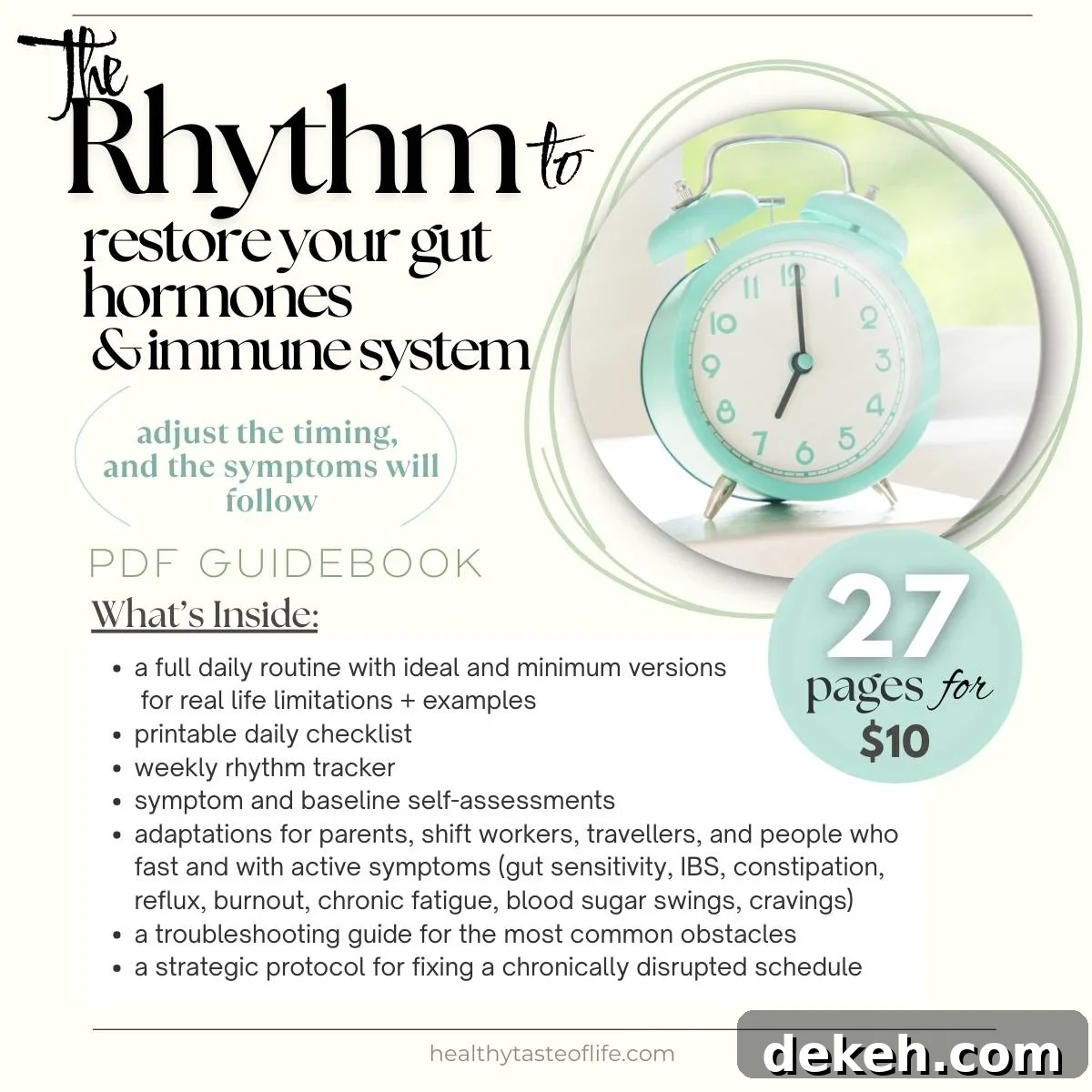
Rhythm Reset Guide (PDF) Regulate your body’s internal clock
Inside you’ll find: a practical system based on circadian biology that shows how timing signals restore the rhythm your gut, hormones, and immune system depend on. It’s aimed at people who already eat well but still struggle with function and symptoms.
Inside:
- a full daily routine with ideal and minimum versions for real life
- printable daily checklist
- weekly rhythm tracker
- symptom and baseline self-assessments
- adaptations for parents, shift workers, travelers, and those with active symptoms
- a troubleshooting guide for common obstacles
- a protocol for fixing severely disrupted schedules
- a section on deeper layers when lifestyle changes alone aren’t enough
If this article helped, consider leaving a comment and sharing which part of rhythm feels hardest for you.
To be clear, this is educational information based on experience and research, not medical advice.