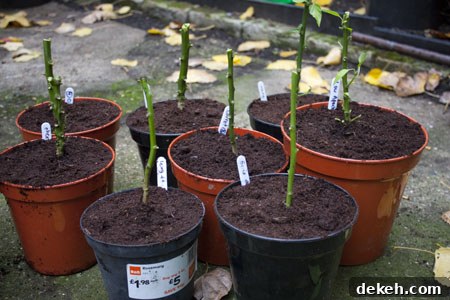
Now that winter is approaching, I’ve started preparing my chilli plants for the colder months. As noted in our over-wintering article, most chillies are not true annuals. By overwintering healthy plants, you can give yourself a big head start for next season and enjoy many more ripe chillies earlier in the year.
I chose nine of the strongest, healthiest specimens: 3 Chocolate Habanero, 2 Orange Habanero, 1 Bird’s Eye, 1 Apache, 1 Bulgarian Carrot and 1 Super Chilli F1. I expect the habaneros to benefit most because they took a long time to produce ripe fruit this year. Having established plants ready in early spring should yield many more pods from those slower-growing varieties.
The first step was to harvest all remaining fruit. Cold weather had halted ripening, so any unripe peppers removed must ripen off the plant. Ripe chillies will be eaten over the next few weeks or frozen for use through the winter.
Many of the habanero pods are still quite small — a handy size for cooking if you want heat without overpowering a dish. Because I planted late this season, some of these were the first pods to be picked from certain plants.
To improve winter survival, I cut the plants back severely so they won’t waste energy maintaining foliage or attempting to ripen fruit during dormancy.
In the photo above you can see I reduced the stem so only about 10–15 cm remained above the root ball. This looks drastic but increases the chances the plant will survive the winter.
Along with cutting back the top growth, I gently removed some old compost from the root ball and trimmed the roots slightly where needed. I then repotted each plant with a little fresh compost to support early-season growth next spring.
I’ll move the pots indoors and place them near a south-facing windowsill to maximise light and keep temperatures fairly steady through winter. Chilli plants don’t need much water during this period; I’ll just ensure the compost doesn’t dry out completely, usually watering about once a week depending on indoor conditions.
Keep the labels with each plant so when they burst back into life in spring you’ll know which variety is which. I’ll share an update later in the winter with progress and tips for bringing the plants back into full growth.