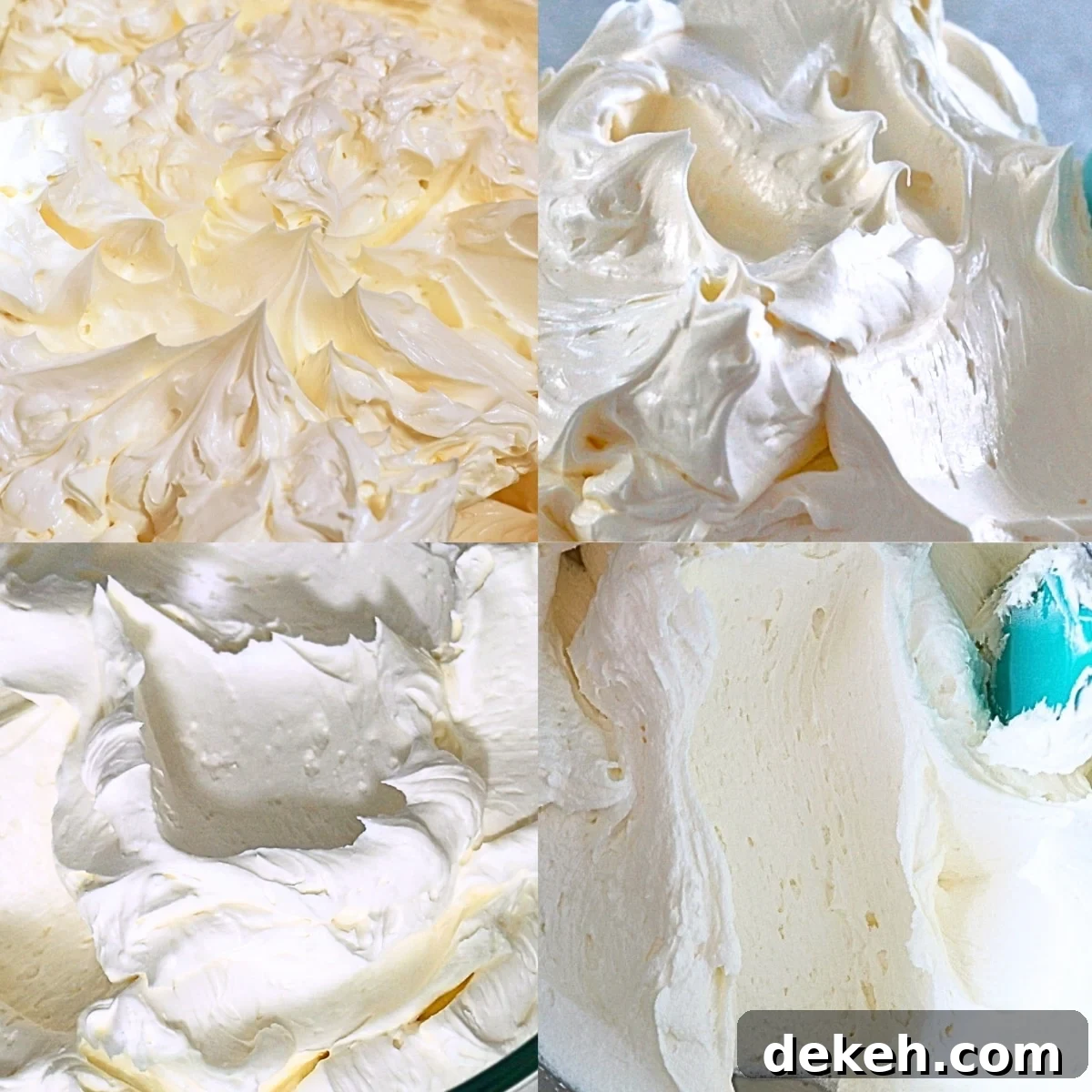
Discover the 8 types of buttercream frosting and learn how they differ so you can choose the best one for your dessert.
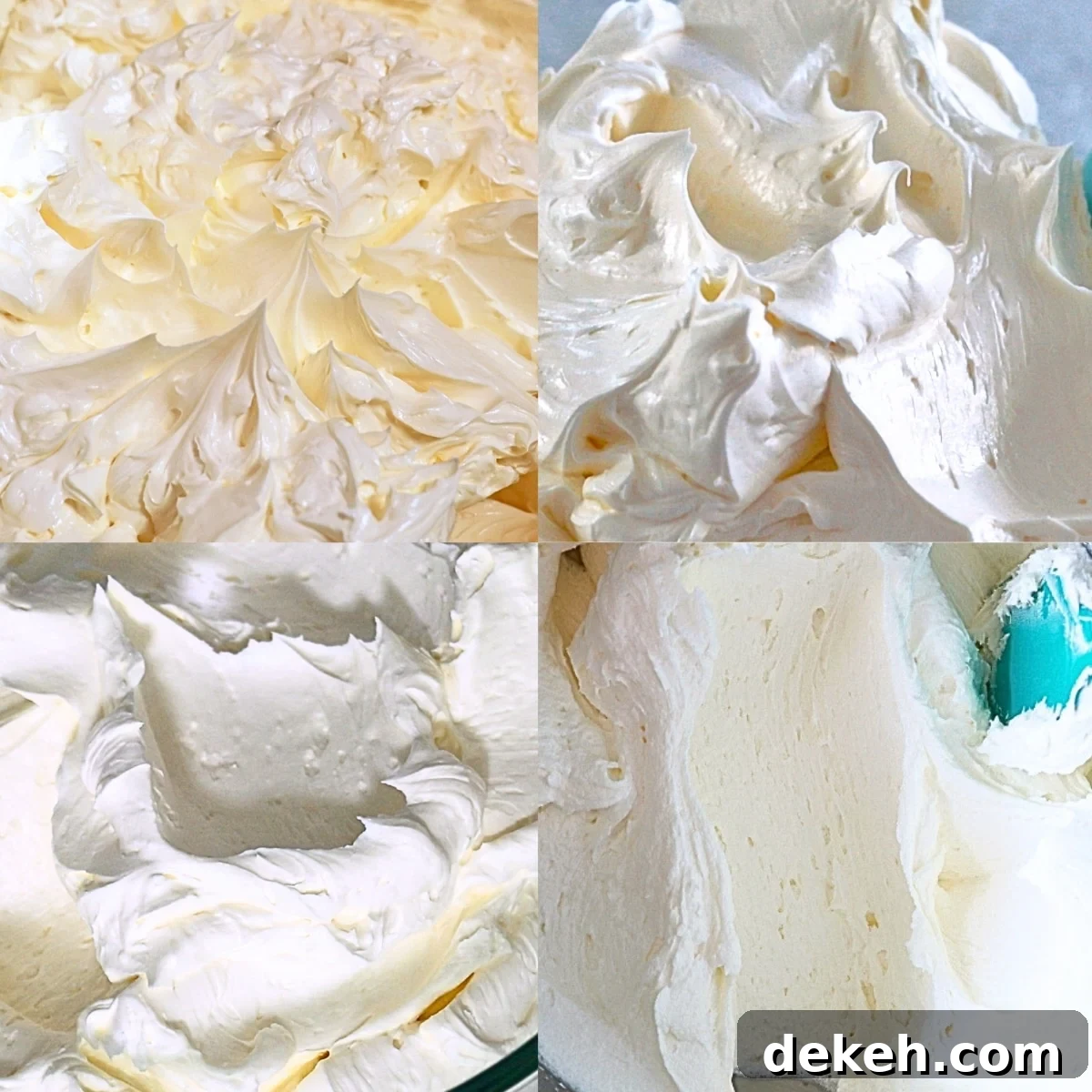
American buttercream, Italian buttercream, Swiss buttercream — there are many variations of buttercream.
One common question is: how are they different? This guide breaks down the differences clearly and simply so you can decide which buttercream suits your dessert.
Let’s get started!
What Is Buttercream?
Buttercream is a spreadable or pipeable mixture where whipped butter is combined with a sweetening or thickening element.
In short, buttercream should be:
- Made with whipped butter as the main ingredient
- Sweet or thickened by another ingredient
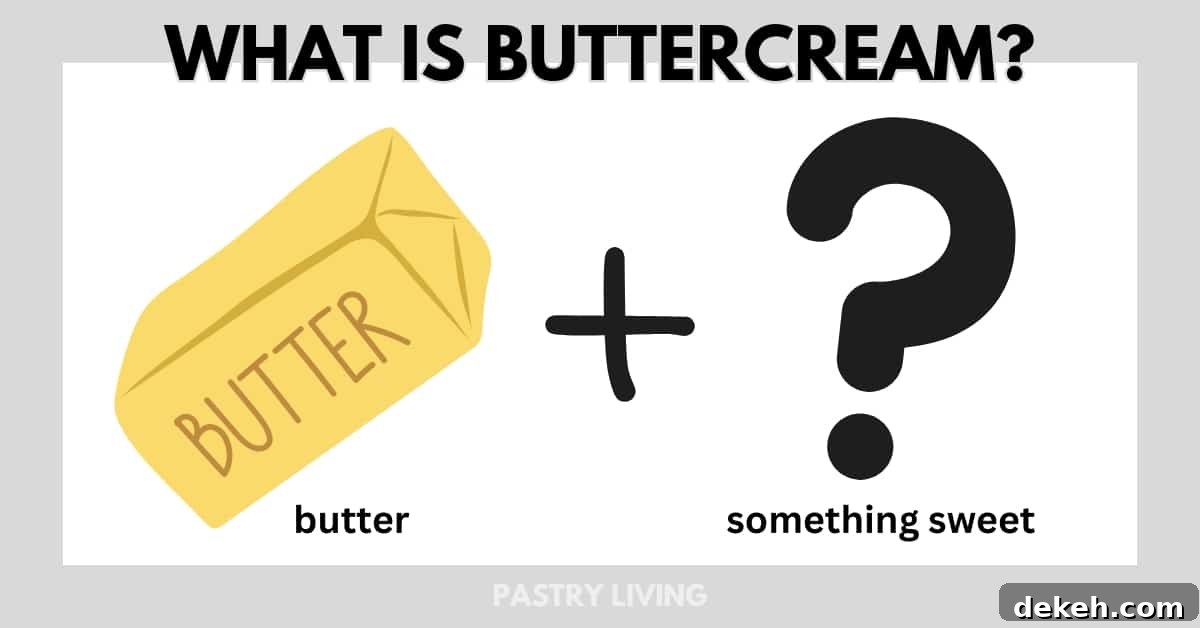
The main difference between types is the sweetening or stabilizing component. Below are the eight common types and what makes each unique.
1. American Buttercream (AKA Basic Buttercream)
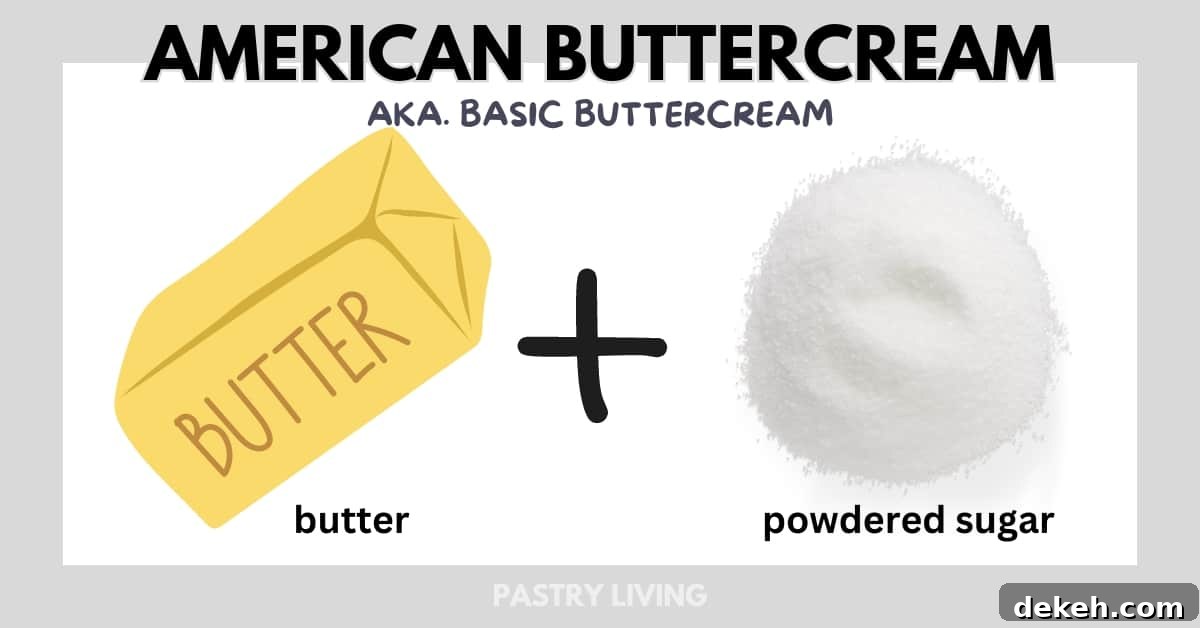
Butter + powdered sugar + (optional: milk or cream, salt, extracts, coloring) = American buttercream
This is the simplest buttercream: no cooking required. Whip confectioners’ sugar into softened butter and add cream or milk and flavorings to taste.
You’ll love American buttercream if you want:
- Very easy preparation
- Buttercream that accepts bold food coloring
- A firm, pipeable consistency
Cons of American buttercream
- Very sweet
- Can feel slightly grainy from powdered sugar
- Dries quickly when exposed to air
- Tends to get very firm when refrigerated
2. Italian Buttercream (AKA Italian Meringue Buttercream)
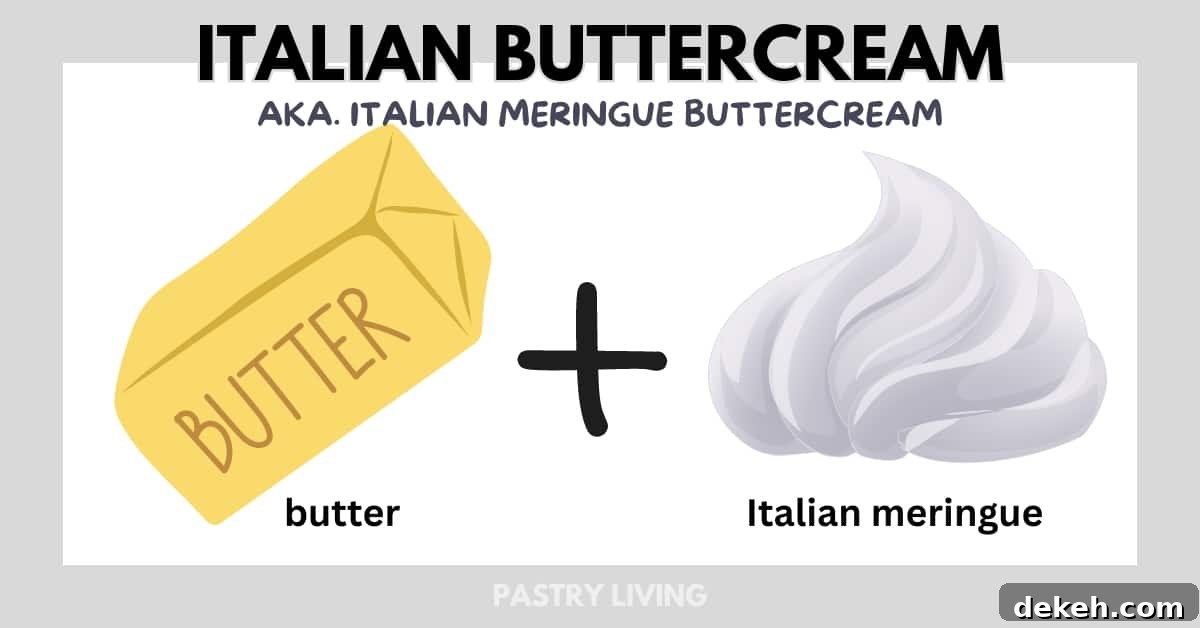
Butter + Italian meringue (hot sugar syrup whipped into egg whites) + optional flavorings = Italian meringue buttercream.
Italian meringue is created by pouring hot sugar syrup into whipped egg whites, producing a stable, airy meringue. When butter is incorporated, the result is a light, smooth, and stable buttercream that is less sweet than American buttercream.
You’ll love Italian buttercream if you want:
- A less-sweet, silky buttercream
- Stable buttercream suitable for cakes
- A light, airy texture
Cons of Italian buttercream
- More time-consuming than American buttercream
- Food coloring tends to come out more pastel than vivid
3. Swiss Buttercream (AKA Swiss Meringue Buttercream)
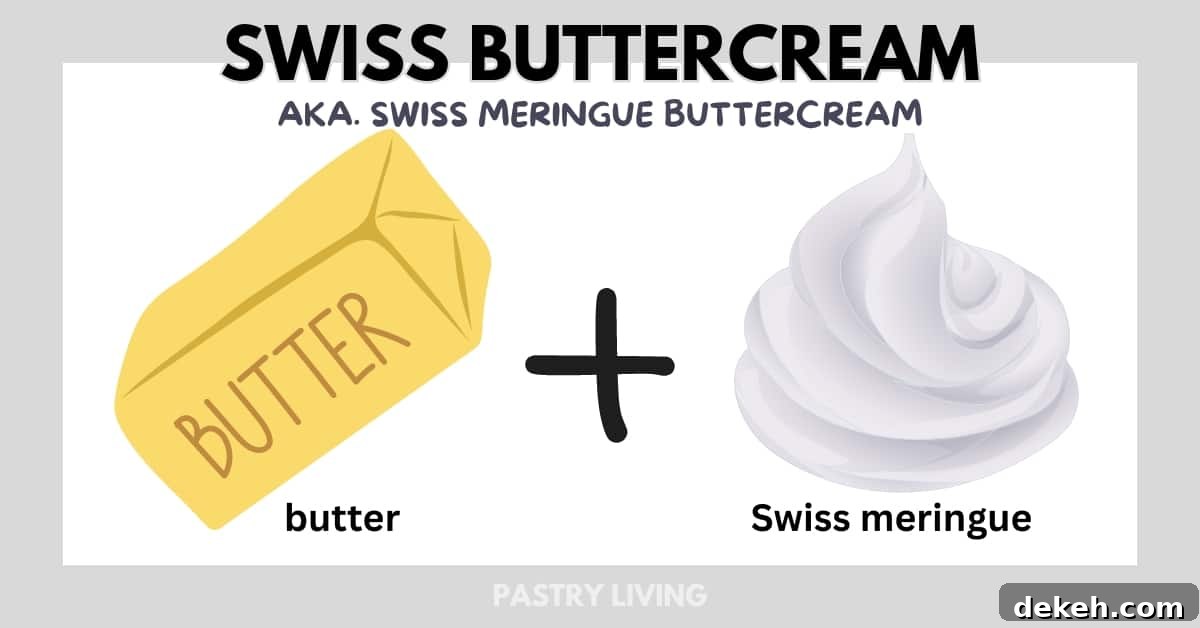
Butter + Swiss meringue (egg whites and sugar heated then whipped) + optional flavorings = Swiss buttercream
Swiss meringue is made by gently heating egg whites and sugar together and then whipping them into a glossy meringue. It yields a buttercream that is light yet very stable and ideal for precise piping and smooth cake finishes.
You’ll love Swiss buttercream if you want:
- A less-sweet result
- Very stiff, stable buttercream for intricate piping
- A light, airy texture
Cons of Swiss buttercream
- Takes more time and attention
- Whisking heated egg whites can be tiring
- Colors may appear more pastel than bright
4. French Buttercream (AKA Pâte à Bombe Buttercream)
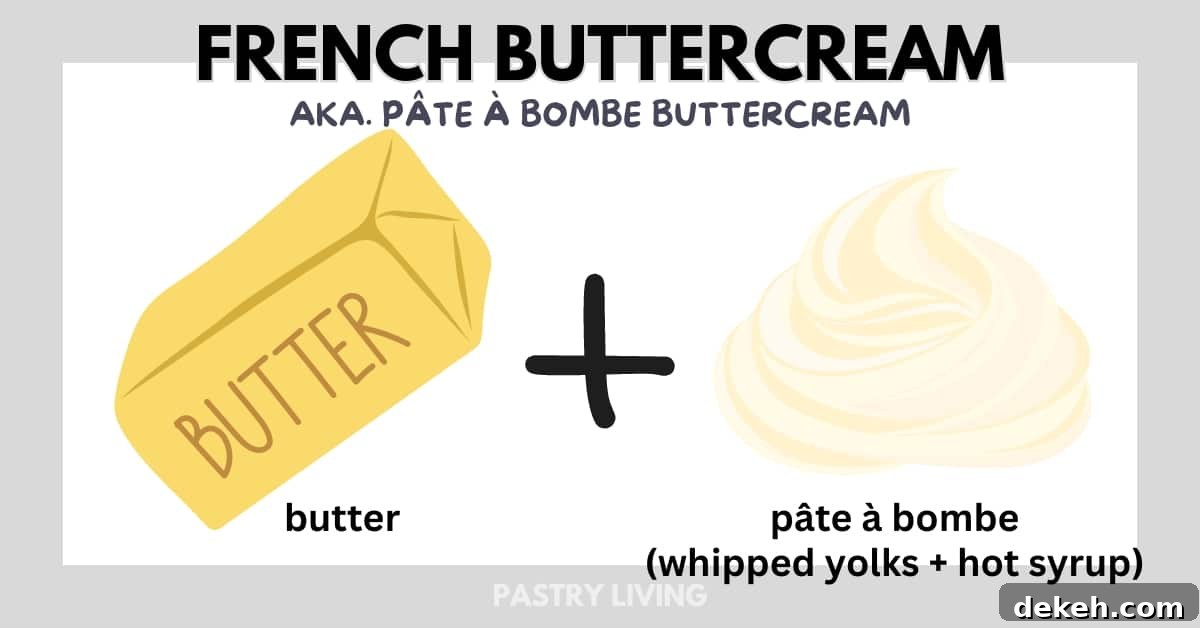
Butter + pâte à bombe (whipped egg yolks and hot sugar syrup) + optional flavorings = French buttercream
Pâte à bombe is a whipped mixture of egg yolks and hot sugar syrup that produces a rich, silky base. French buttercream is particularly flavorful and often used in fillings like macarons or layer cakes where richness is desired.
You’ll love French buttercream if you want:
- A rich, less-sweet buttercream
- A way to use extra egg yolks
- A smooth, luxurious texture
Cons of French buttercream
- Requires time and attention
- Has a pale yellow tint from the yolks
- Less stiff than meringue-based buttercreams
5. German Buttercream (AKA Crème Mousseline)
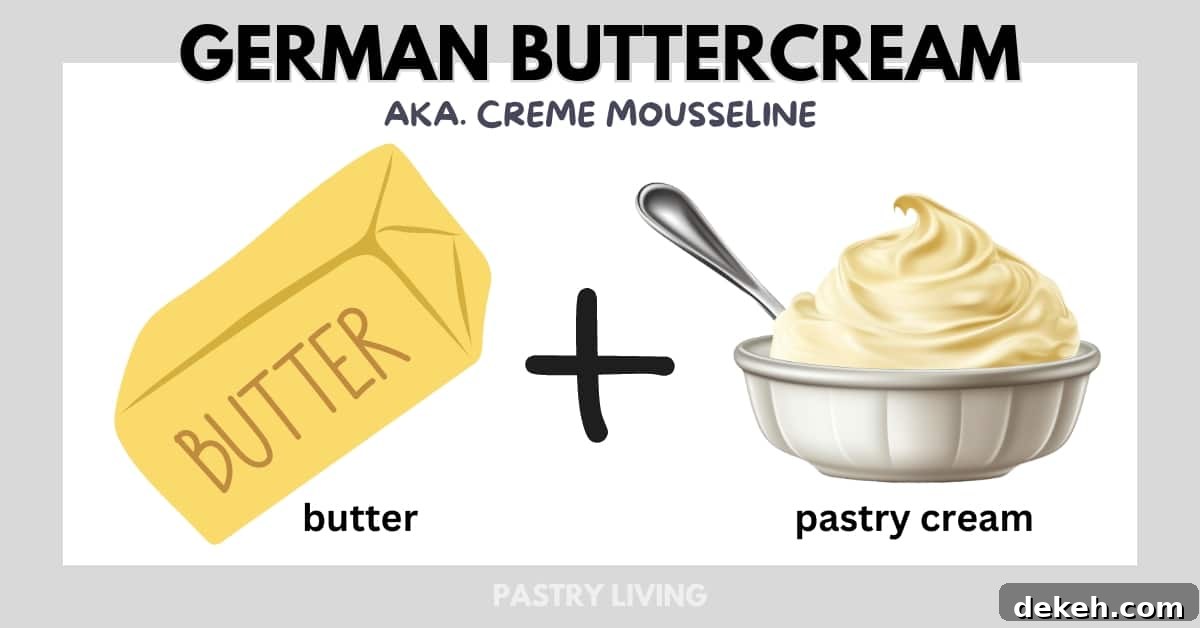
Butter + pastry cream + optional flavorings = German buttercream
German buttercream, also called crème mousseline, blends pastry cream with butter for a rich, silky filling that is less dense than meringue-based buttercreams. It’s common in classic pastries and layer cakes.
You’ll love German buttercream if you want:
- A rich, balanced buttercream
- A way to incorporate pastry cream’s texture
- A less-sweet option for traditional desserts
Cons of German buttercream
- Time-consuming to make
- Pale yellow tint from yolks
- Pastry cream can contain flour; use cornstarch for gluten-free versions
6. Russian Buttercream (AKA Condensed Milk Buttercream)
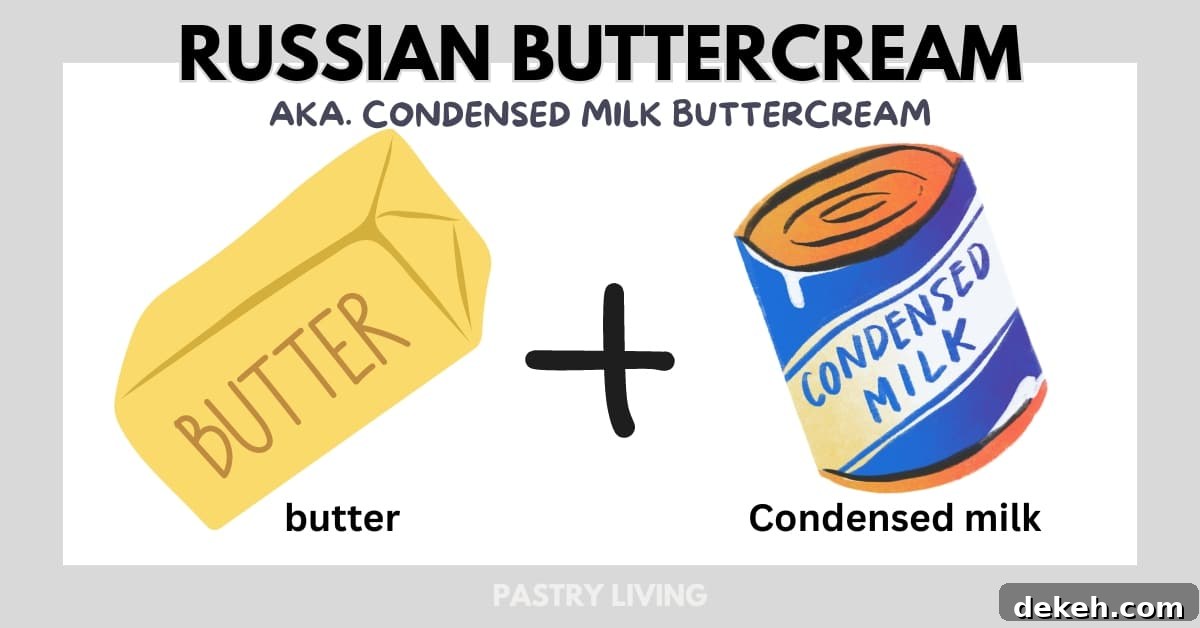
Butter + sweetened condensed milk + optional flavorings = Russian buttercream
Made with sweetened condensed milk, this buttercream is smooth, glossy, and simple to prepare. It’s popular when you want an egg-free option that still tastes indulgent.
You’ll love Russian buttercream if you want:
- An easy, egg-free buttercream
- A glossy, creamy finish
Cons of Russian buttercream
- Not entirely from-scratch unless you make condensed milk yourself
- Very dairy-rich, which may be a concern for some
7. English Buttercream (AKA Anglaise Buttercream)
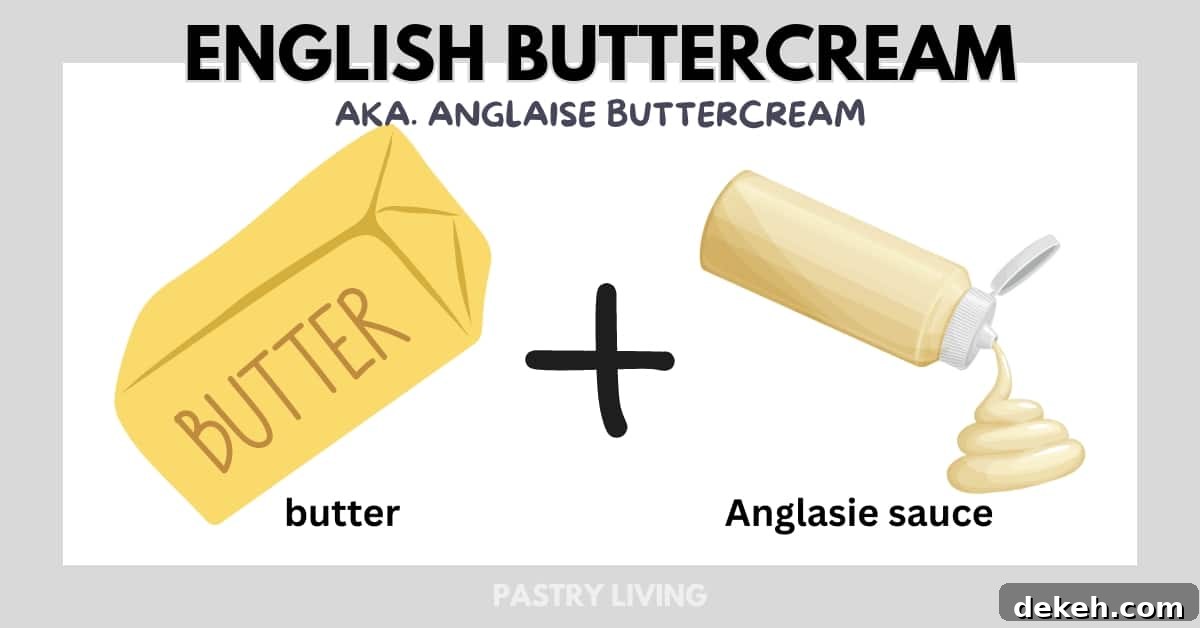
Butter + crème anglaise (custard sauce of yolks, sugar, and milk) + optional flavorings = English buttercream
Crème anglaise is a custard sauce used in many desserts. When whipped into butter, it produces a rich, smooth buttercream that is less stiff than meringue-based versions and excellent for flavor-forward applications like opera cake.
You’ll love English buttercream if you want:
- A rich, not overly stiff buttercream
- A way to use extra yolks
- A less-sweet, custard-like flavor
Cons of English buttercream
- Time-consuming
- Very dairy-rich
- Looser texture compared with meringue-based buttercreams
8. Ermine Buttercream (AKA Boiled-Milk or Flour Buttercream)
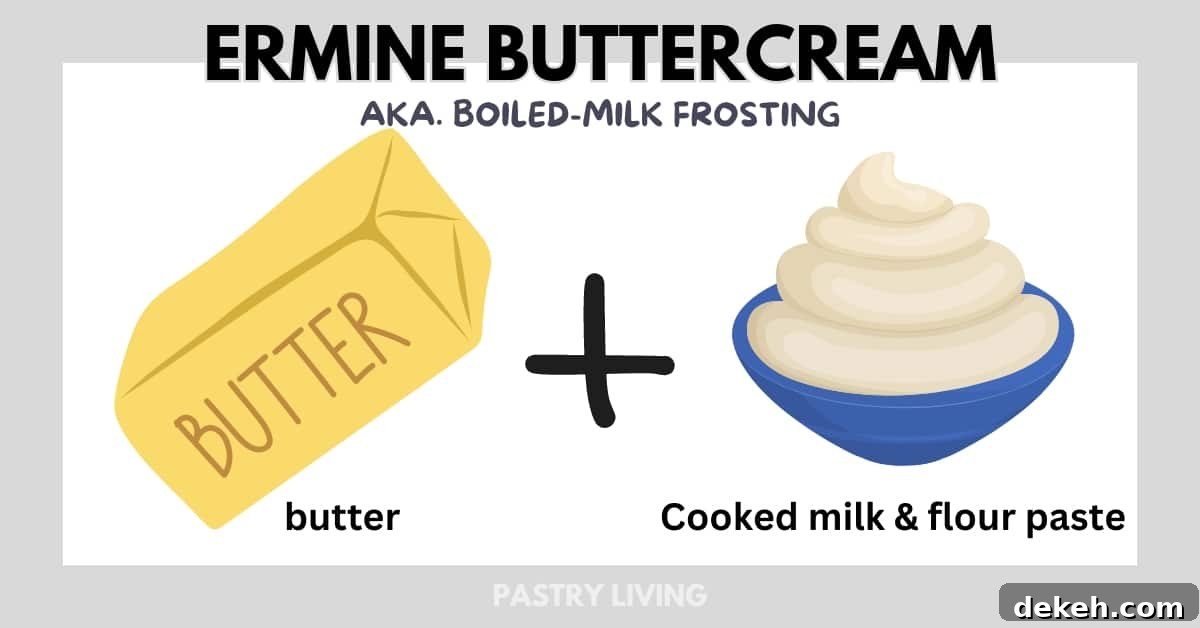
Butter + cooked milk-and-flour paste + optional flavorings = Ermine buttercream
Ermine buttercream uses a cooked flour-and-milk paste to thicken instead of eggs. The result is a creamy, smooth frosting that is typically less sweet and quite stable, making it a reliable choice in warmer conditions.
You’ll love Ermine buttercream if you want:
- An egg-free option
- A stable buttercream that holds up in warmer weather
Cons of Ermine buttercream
- Requires cooking the flour paste
- Contains flour, which affects texture and isn’t gluten-free unless modified
That covers the eight most common buttercreams. There are other minor variations, but these types will let you create nearly any cake or pastry you want.
My Favorite Types of Buttercream
Here are my personal picks for different uses. These preferences are subjective but can help you choose one to try next.
1. For frosting cakes and cupcakes
- Swiss meringue buttercream — very stiff and stable, ideal for small to large cakes and precise piped decorations.
- Italian meringue buttercream — slightly less stiff but still great for frosting, especially cupcakes, with a light, airy texture.
2. For piping intricate designs
- Swiss meringue buttercream — its firmness makes it perfect for detailed piping, like floral designs and sculpted decorations.
3. For flavor
- Italian meringue buttercream — airy, silky, and not overly sweet.
- French buttercream — rich and smooth, great when you want a luxurious mouthfeel.
Your final choice depends on the flavor profile and texture you want to pair with your cake.
4. When you want bright colors
- American buttercream — holds bold colors well, making it ideal for vibrant themed designs.
5. Overall pick
- Swiss meringue buttercream — a versatile option: very stiff and stable for structure and piping, yet light and not overly sweet, suitable for many desserts.
Each buttercream offers different attributes. Choose the one that best fits your cake’s flavor, texture, and appearance goals.
How To Flavor Buttercream
You can flavor any buttercream base. Ideas include:
- Cream cheese — for cream cheese frosting (great with red velvet)
- Extracts — vanilla, almond, coffee, etc.
- Lemon curd — for bright lemon buttercream
- Melted chocolate or cocoa — for chocolate buttercream
- Matcha powder — for matcha-flavored buttercream
- Caramel sauce — for a caramel buttercream
- Jam — like strawberry jam for fruit-flavored buttercream
- Nut paste — pistachio or hazelnut paste for nutty buttercream
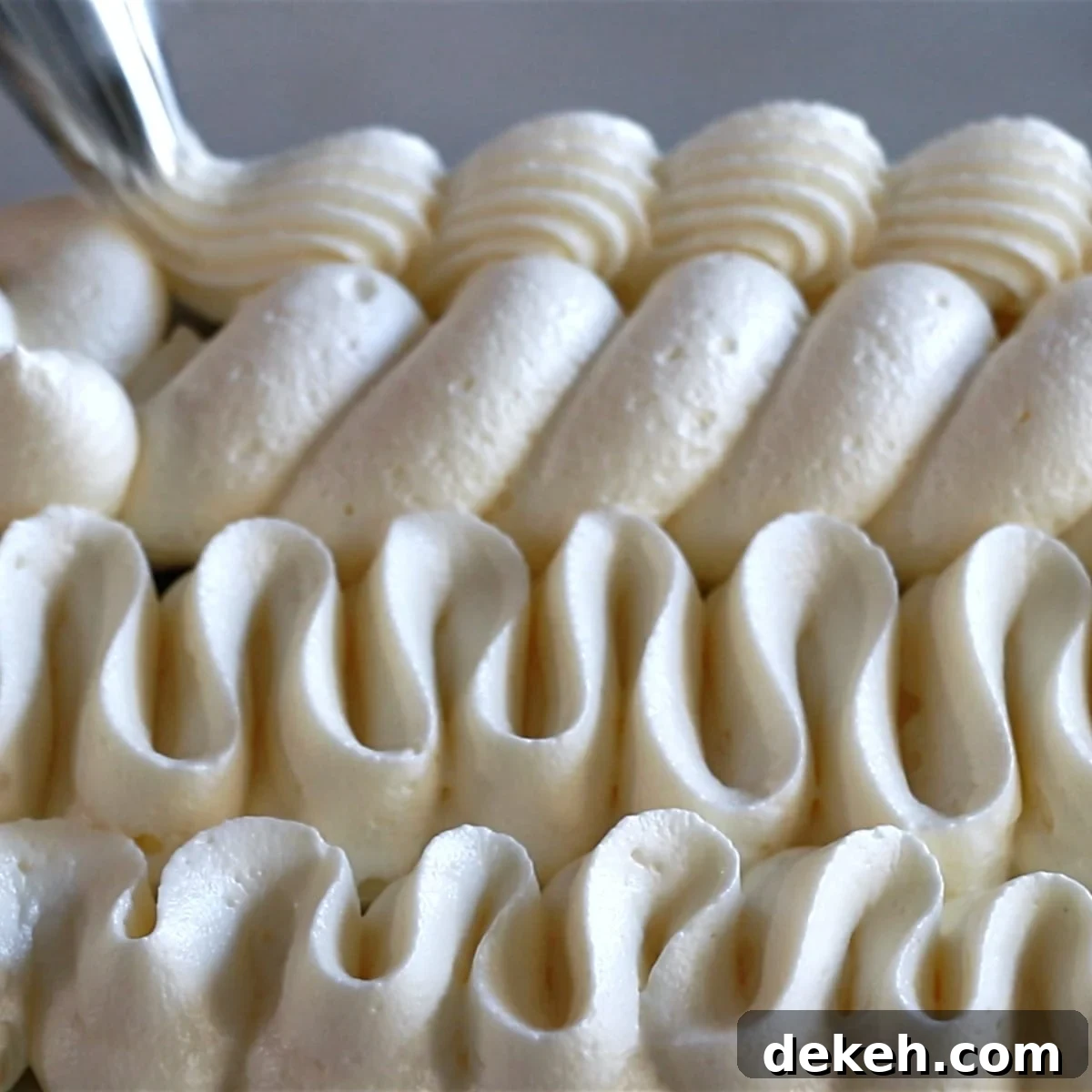
How To Color Buttercream
Use gel or paste food coloring rather than liquid colors to avoid thinning the buttercream and to achieve more vivid shades.
How To Store Buttercream
Store buttercream in an airtight container. Shelf life varies by type; when in doubt, refrigerate or freeze. Most buttercreams can be frozen and thawed in the refrigerator overnight. Allow chilled buttercream to come to room temperature and rewhip if needed before use.