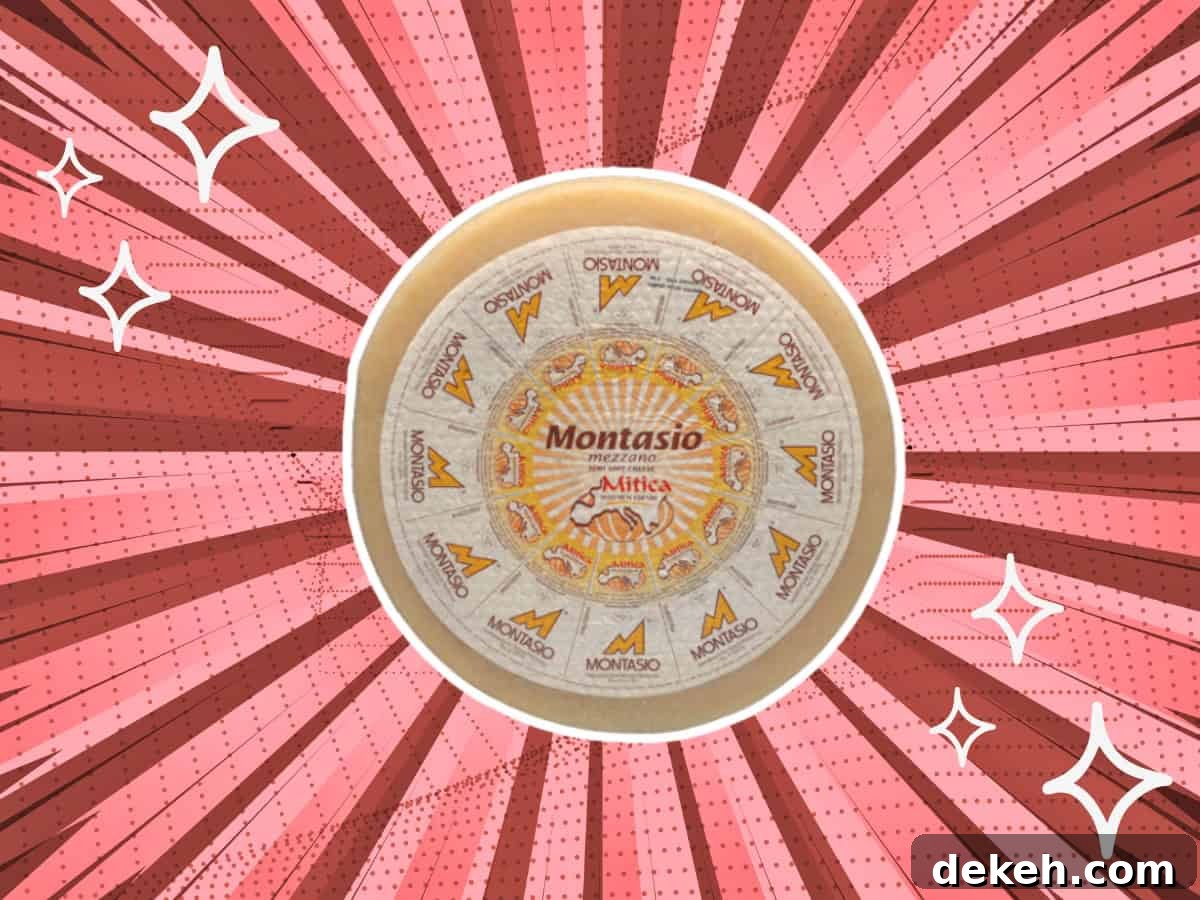
Montasio cheese is a versatile Italian semi-hard cow’s milk cheese from Friuli-Venezia Giulia, prized for its nutty, buttery flavor and firm texture. But when it’s not available at your local store, what can you use instead?
Below are excellent, easy-to-find substitutes that capture Montasio’s balance of flavor and melting qualities. Each offers a slightly different profile, so you can pick the one that best suits your recipe—whether you’re grating, melting, or serving it on a board.
Read on for practical guidance and straightforward 1:1 swap ratios to help you cook without compromise.
6 Easy Substitutes for Montasio Cheese
Montasio is known for a mild to medium intensity nutty flavor, buttery notes, and a semi-hard texture that melts well. The substitutes below closely match either the flavor, the texture, or both, making them suitable alternatives in pasta, risotto, sandwiches, gratins, and cheese plates.
1 – Parmesan (Parmigiano-Reggiano)
Why it works: Parmesan brings a nutty, savory depth that overlaps with Montasio’s flavor profile. While Parmesan is generally harder and saltier, it grates and distributes flavor similarly in sauces and pastas.
How to use: Swap on a 1:1 basis for grating or mixing into hot dishes. For applications where a milder melt is desired, consider combining Parmesan with a milder cheese to temper the sharpness.
2 – Asiago
Why it works: Asiago resembles Montasio in both flavor and texture—nutty, slightly sweet, and available in younger (softer) and aged (firmer) varieties.
How to use: Use an equal amount as a direct substitute. Young Asiago melts cleanly for risotto and sauces, while aged Asiago can add more bite when grated over finished dishes.
3 – Gruyère
Why it works: Gruyère delivers a rich, nutty character and excellent melting properties. It tends to be slightly more pronounced in flavor than Montasio, adding depth to baked and creamy dishes.
How to use: Swap 1:1 in recipes like mac and cheese, gratins, or croque-style sandwiches where a creamy melt and a deeper flavor are welcome.
4 – Pecorino Romano
Why it works: Pecorino Romano is sharper and saltier because it’s made from sheep’s milk, so it’s best when you want a more assertive, savory note in pasta, pizza, or finishing dishes.
How to use: Use the same quantity (1:1) but be mindful of salt—reduce added salt in the recipe when using Pecorino to avoid over-seasoning.
5 – Manchego
Why it works: Manchego offers a pleasant nutty and slightly tangy flavor with a semi-hard texture that melts reasonably well, making it a compatible alternative for both grating and topping.
How to use: Substitute in equal amounts for dishes that benefit from a milder tang—try it in baked pasta, gratins, or on a cheese board paired with cured meats and olives.
6 – Provolone
Why it works: Provolone provides a mild, creamy profile and superb meltability. It’s an especially good stand-in for Montasio when a smooth, gooey texture is the goal.
How to use: Swap 1:1 for melting purposes—pizza, sandwiches, and casseroles all benefit from provolone’s supple texture and subtle flavor.
Frequently Asked Questions
Yes. Parmesan works well as a substitute, particularly grated over pasta or stirred into sauces. It is firmer and saltier, so adjust seasoning if needed.
Yes. Asiago is a close match in both texture and taste, especially younger Asiago for melting and risotto applications.
Yes. Gruyère melts wonderfully and adds rich, nutty complexity to risotto and other creamy dishes.
Yes, if you want a sharper, saltier flavor. Use it sparingly or reduce added salt elsewhere in the recipe.
Yes. Manchego’s semi-hard texture and nutty-tangy flavor make it a suitable all-purpose substitute for grating and melting.
Choosing the best Montasio substitute depends on whether you need similar melting behavior, a close flavor match, or a specific salt level. Parmesan and Asiago are the safest all-around options, Gruyère adds richness, Pecorino boosts sharpness, Manchego brings gentle tang, and provolone gives silky melt—so pick the one that best suits your dish and enjoy a seamless swap.