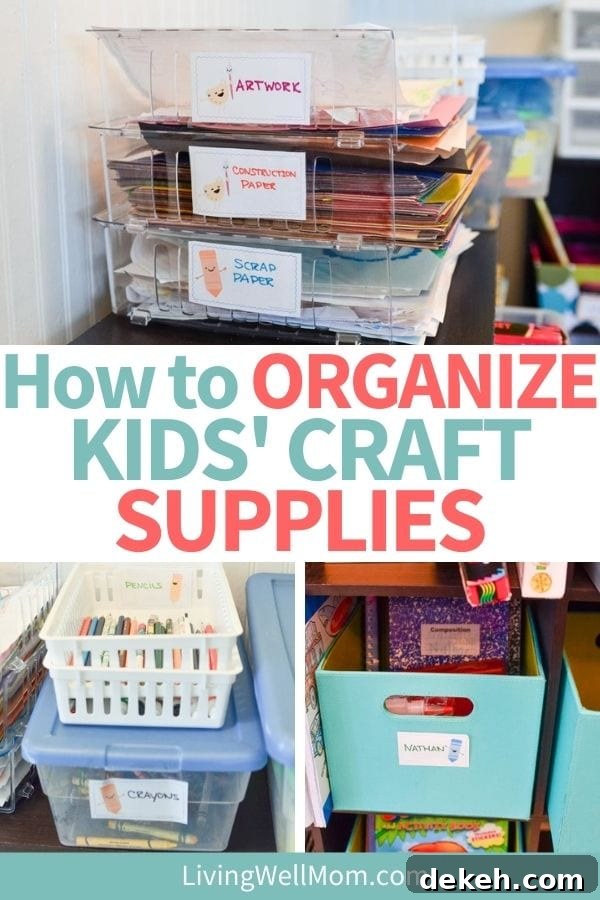
These practical tips and clever hacks will help you organize kids’ craft supplies so you can finally enjoy a tidy craft area. Whether everything is kept on a single shelf in your office or tucked into a bedroom, these ideas make it easy to keep supplies sorted and findable when your children want them.
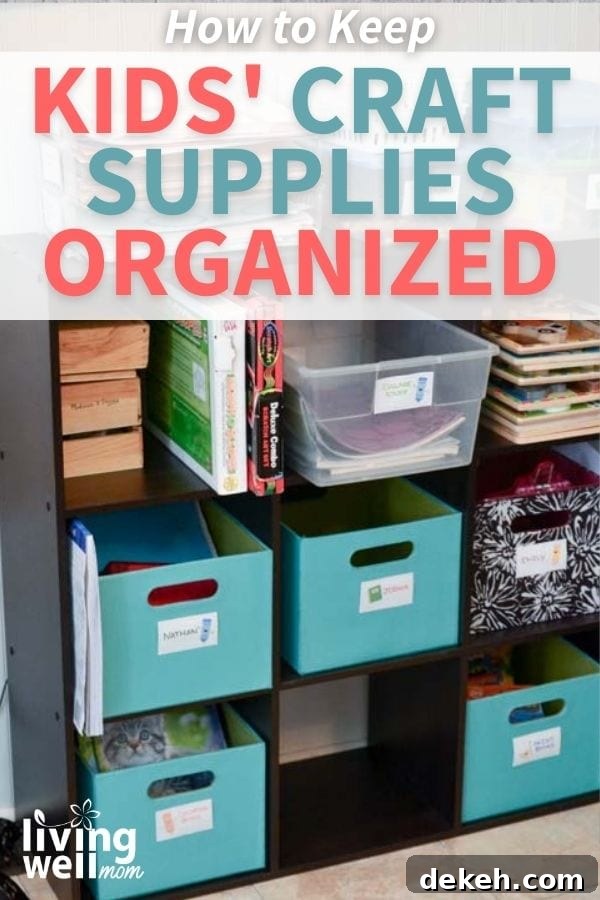
I’ve been on an organizing kick lately. I’ve tried spurts of organizing before, but those systems rarely lasted. This time, my goal was to create a setup that actually works for my kids (starting with organizing our homeschool space and then extending to their crafts).
With ages 2, 3, 6, and 9, I’m realistic: I know I’ll need to help tidy sometimes, but I want the kids to be able to put things away by themselves. That means the system needs to be simple and easy to follow. If it isn’t, it won’t hold up.
Be Realistic: Organizing Kids Crafts Supplies
I decided to tackle our overflow of kids’ craft supplies: coloring books, crayons, markers, pencils, notebooks, art kits, puzzles, playdough, paint books, and more. It was a lot more than I realized.
Previous attempts failed because they weren’t realistic for the kids. I might be willing to shuffle through a drawer to find a specific coloring book, but a young child won’t. So I created straightforward, accessible solutions.
Below are the steps I used to organize our supplies. They’re simple, kid-friendly, and have made a real difference.
1) Use a 9-Cube Organizer
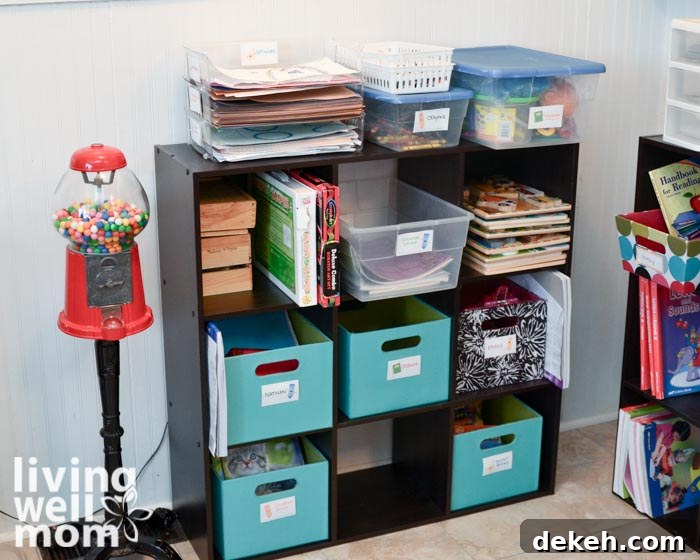
After organizing our homeschool area earlier in the month, adding a second 9-cube organizer for crafts was a natural next step. These cube units make it easy to divide supplies into distinct, reachable sections.
Before this, supplies were scattered: coloring books in a top-shelf bin, extra paper and notebooks in plastic drawers stored in an unheated barn, unused puzzles in crates, and crayons in random containers. It was chaotic.
I set up the cube organizer so each type of supply has its own home, which immediately reduced the mess and made everything much easier to find.
2) Sort and Separate Papers
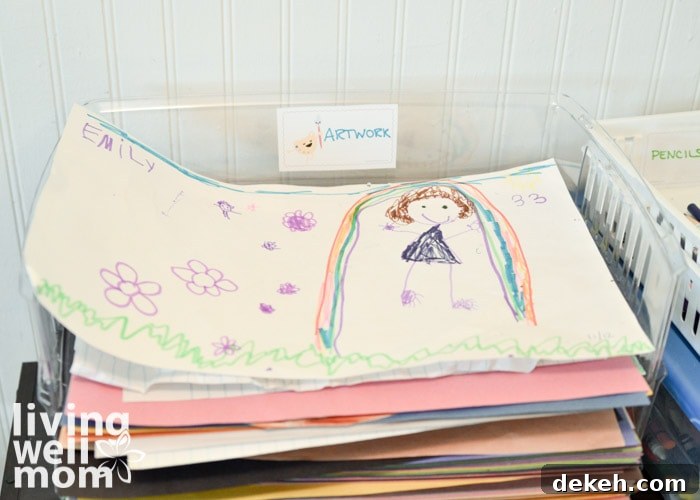
Children generate a surprising amount of paper: blank paper for projects and finished artwork to keep. I needed an accessible spot for both supplies and completed pieces.
Letter trays are perfect for this: one or more trays hold scrap and construction paper for projects, while a labeled tray collects finished artwork. Every week or two I sort the finished art, keep favorites, and recycle the rest. This keeps the collection manageable without hurting feelings.
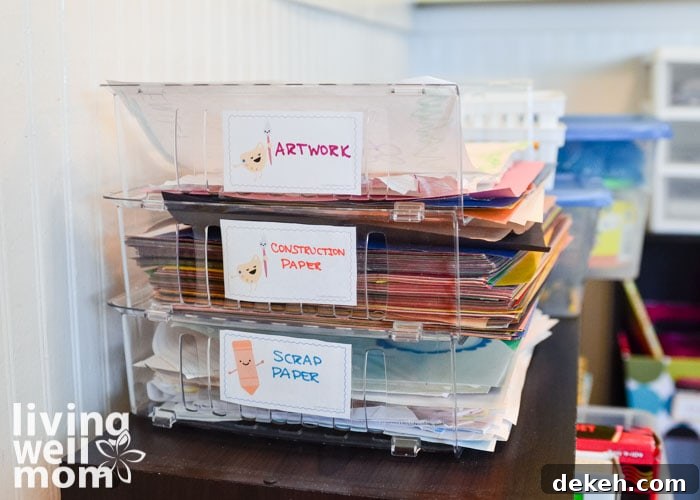
Having clear spots for papers gives the kids a consistent routine—where to grab supplies and where to put completed pieces—which helps them develop responsibility.
3) Use Separate Bins for Crayons & Markers
Keep crayons, markers, and colored pencils separated in clearly labeled bins so children can find what they need quickly. We use a shoebox-size bin for crayons, a tray bin for markers, and another tray for colored pencils. This keeps writing tools organized and prevents frantic rummaging.
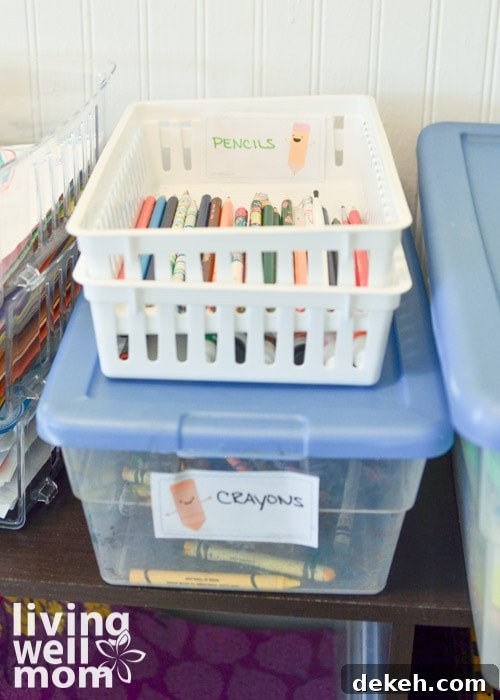
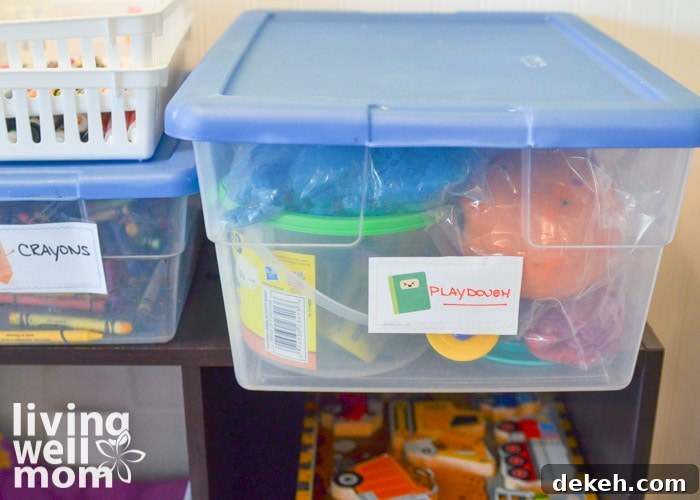
Playdough and accessories live in a larger bin on a higher shelf so younger children can’t reach them unsupervised.
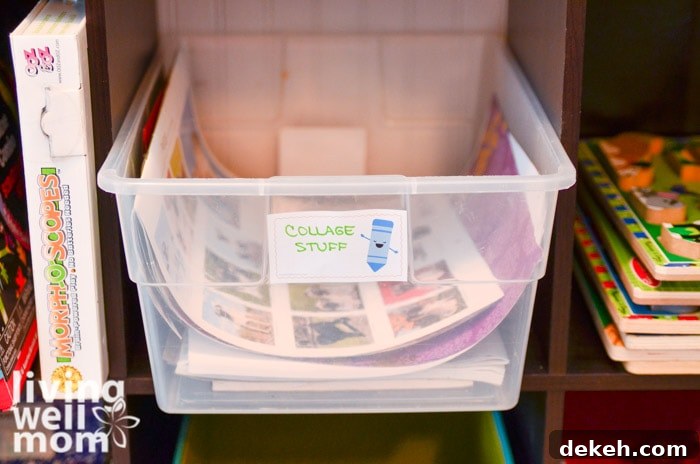
4) Create a Collage Bin
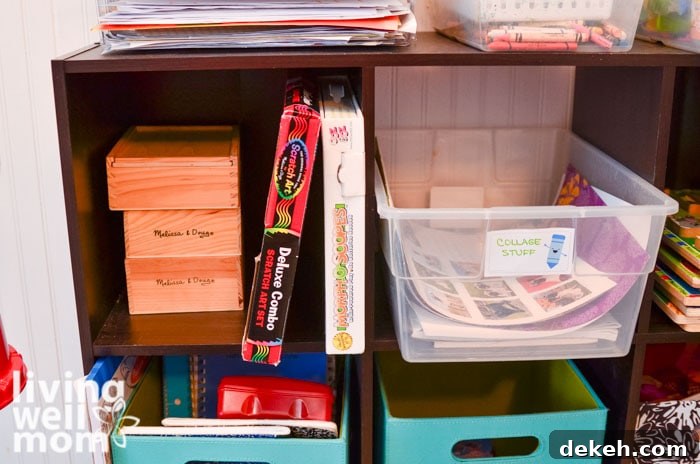
The collage bin is simply a place for assorted materials to cut and glue: catalogs, old calendars, interesting pictures, stickers, and small scraps that previously had no home. Tossing these items into one bin gives kids a ready supply for collage projects without loose clutter everywhere.
5) Stack Puzzles
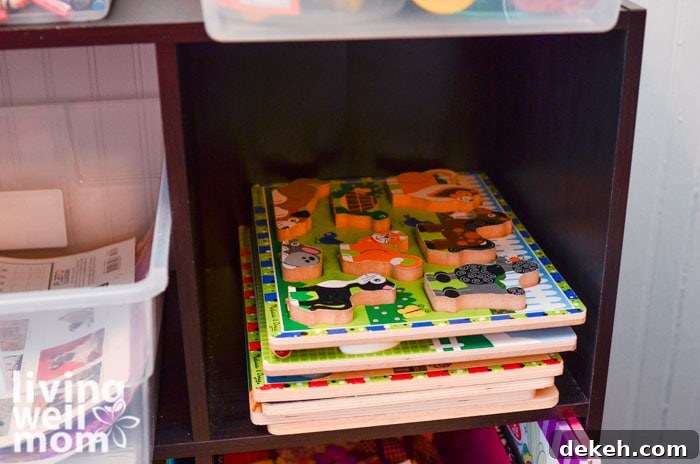
Puzzles are easy to store when stacked or grouped by age and complexity. We keep simple puzzles for the youngest children in one cube, Melissa & Doug favorites in another, and more advanced sets and art kits in a separate space. Stacking keeps boxes neat and accessible.
6) Give Each Child Their Own Bin
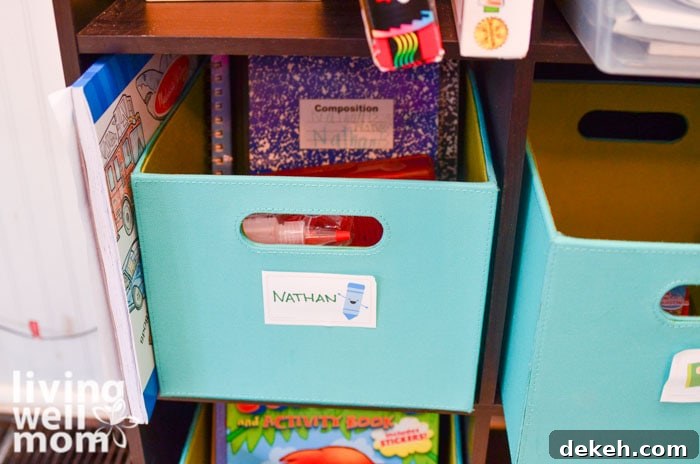
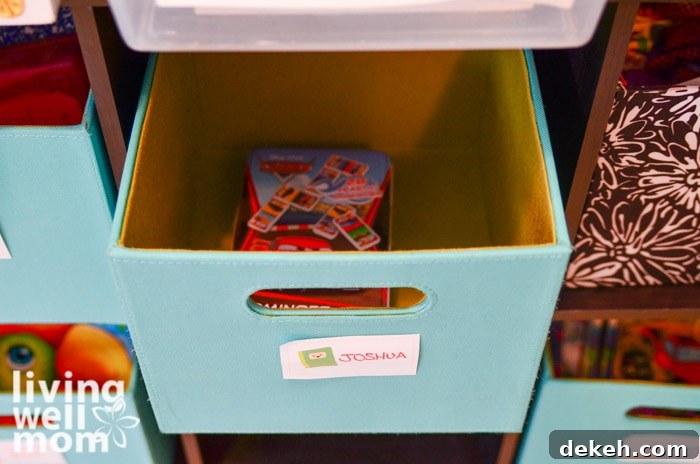
Each child has different interests, so giving them each a personal bin for special treasures and kits encourages ownership and responsibility. I used sturdy fabric bins for individual items: notebooks, special craft kits, and favorite small toys or tools go into each child’s bin.
Nathan’s bin holds science notebooks and a few special items. Joshua’s currently has a domino set he loves. Emily’s contains sticker books, a special project, and her favorite markers. There’s room for Luke on the bottom shelf when he’s ready for his own bin.
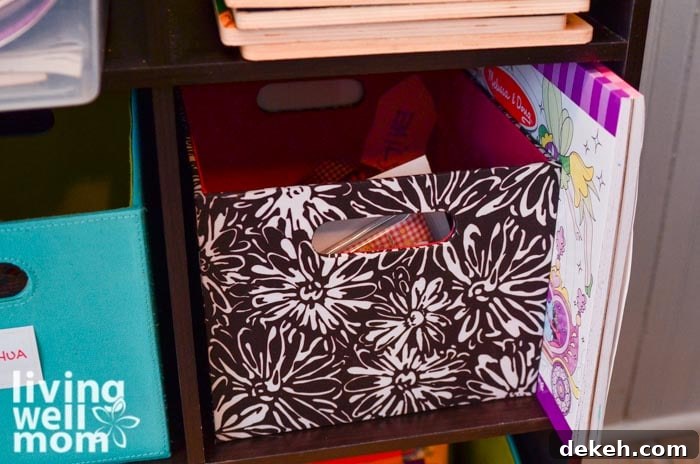
Two simple rules for the personal bins:
- Do not take items from another child’s bin — only your own.
- You can put anything you want in your bin, but when it gets full you need to sort and decide what to keep.
These personal bins have quickly become one of my favorite parts of our craft storage. The kids understand the rules and the system has been working well.
7) Organize Coloring Books and Paint Books
Coloring books accumulate fast. Instead of separating them by child, place most coloring books in a shared bin so everyone can easily find and use them. Reserve a couple of special books for individual children when needed. Sharing a single, labeled bin reduces confusion and keeps things simple for little ones.
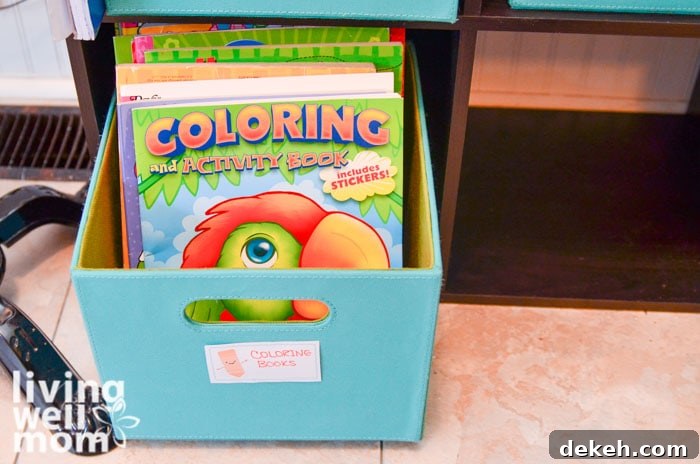
Paint books were a favorite but were stored out of reach before. Putting them in a dedicated paint book bin made them accessible and popular again.
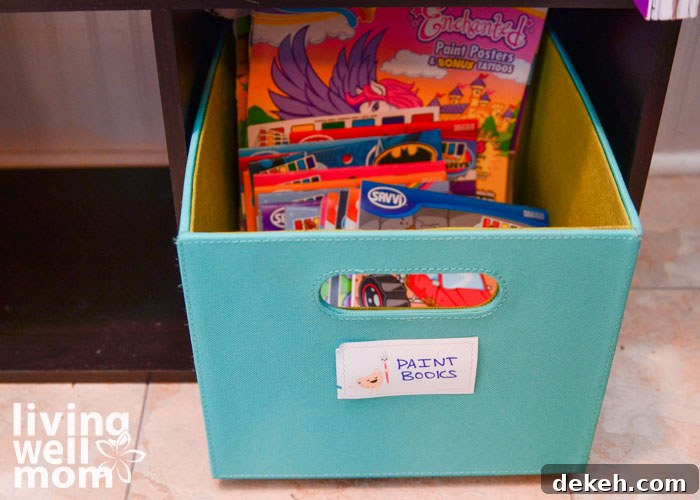
We’ve used this system for nearly a month and it’s proving successful because it’s simple. The kids know where things belong and where to find them—even my three-year-old can follow it. An extra benefit is that I don’t get asked for expensive computer paper anymore; the kids know where their paper is.
That’s the point of organizing: a system that works for the whole family. I’m thrilled with the results.
More Home Organization Articles
As you keep organizing other parts of your home, here are a few more topics you might explore.
- How To Organize A Bathroom Vanity
- Tips For Organizing Small Kitchen Drawers
- How To Organize Kids’ Toys
Pin the image below to save these ideas for later.